Artwork
View of the Island of Rhodes
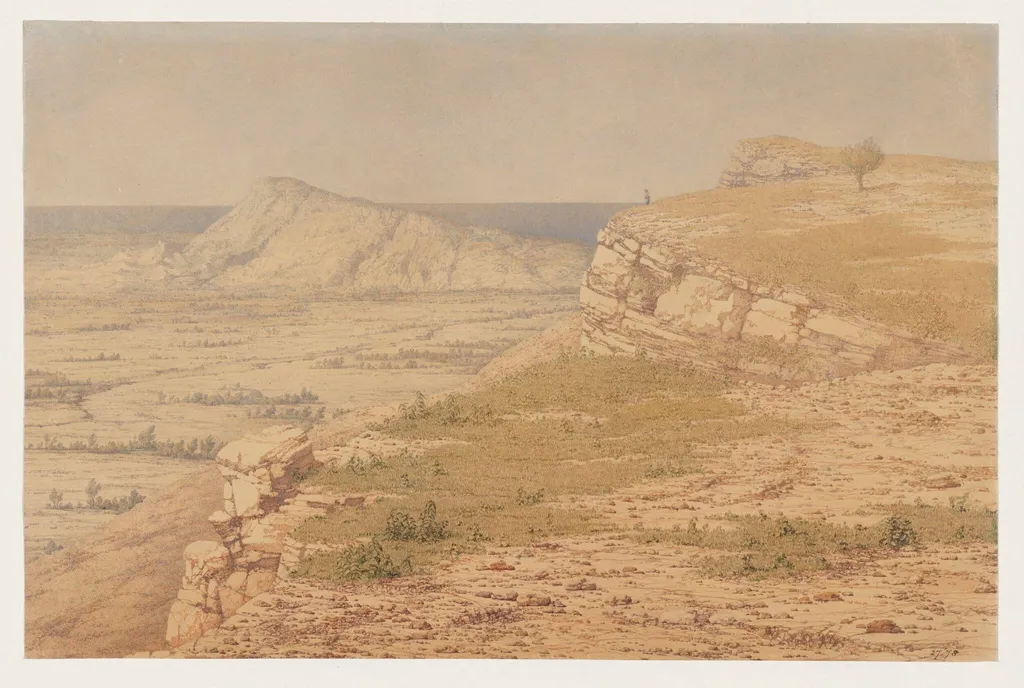
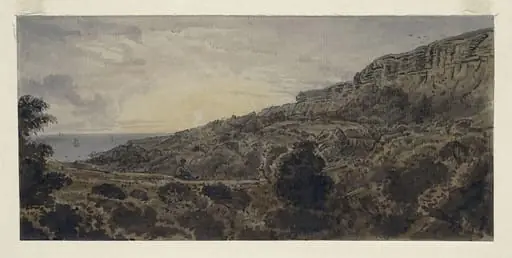
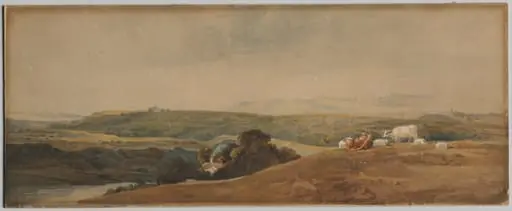
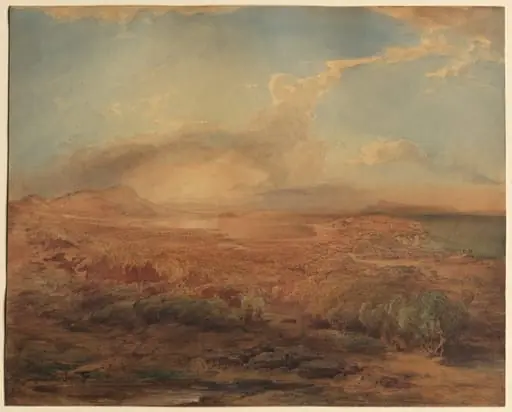
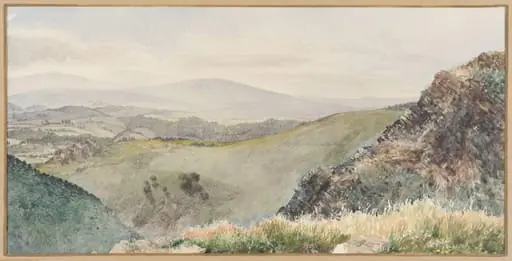
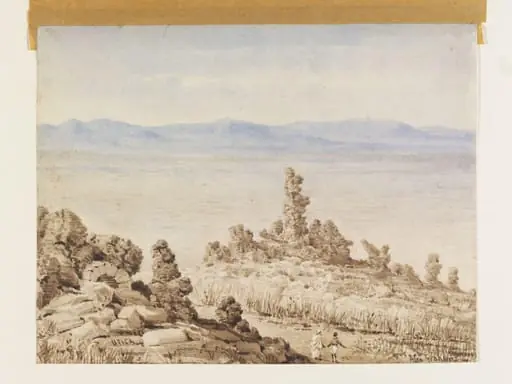
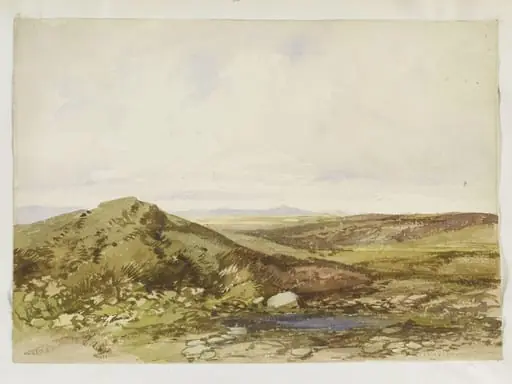
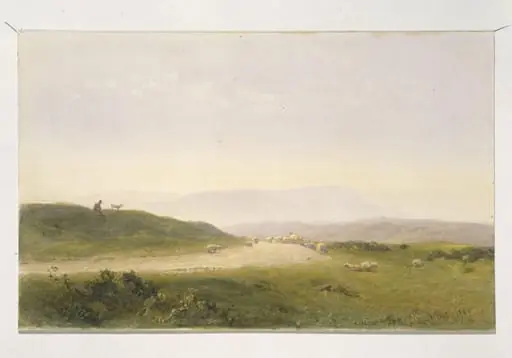
View of the Island of Rhodes is a watercolor work on paper by the Romanticist artist Richard Dadd. It dates from 1845 and is held in the collection of the Victoria and Albert Museum.
About this work
This watercolour shows a landscape from Rhodes. Richard Dadd painted it around 1845.
The artist sketched this scene during a trip with his patron. Soon after, Dadd became ill in Egypt. This led to years in an asylum, where he refined his tiny, precise brushwork. His method here turns light and color into a shimmering haze.
Look up the Victoria and Albert Museum.
Overview
Richard Dadd’s watercolour, executed around 1845, depicts a coastal view of the island of Rhodes. The composition presents a sun‑lit landscape rendered in delicate washes that suggest a luminous atmosphere. The work measures modestly and is characteristic of Dadd’s early travel sketches, offering a quiet observation of the Mediterranean terrain.
Subject & Meaning
The scene captures the shoreline and surrounding hills of Rhodes, emphasizing the interplay of sea, sky, and distant architecture. The hazy treatment of light conveys a heightened visual perception, inviting viewers to experience the intensity of Mediterranean brightness and the fleeting quality of a moment observed during a brief excursion.
Technique & Style
Dadd employs a meticulous stippling method, applying minute dabs of pigment to build gradients of colour and tone. This approach creates a subtle, almost shimmering haze that modulates the landscape’s illumination. The precision of the brushwork reflects a disciplined, almost scientific observation of light effects, distinguishing the piece from broader, looser watercolour traditions.
History & Provenance
Shortly after leaving the island, the pair travelled to Egypt, where Dadd suffered a severe sunstroke that precipitated a mental breakdown.
The watercolour was produced during a sightseeing and sketching tour undertaken by Dadd and his patron, Sir Thomas Philips, on Rhodes. Shortly after leaving the island, the pair travelled to Egypt, where Dadd suffered a severe sunstroke that precipitated a mental breakdown. He spent subsequent years in a criminal lunatic asylum, during which he refined the fine‑point technique evident in this work.
Context
Created in the mid‑19th century, the piece reflects the period’s fascination with travel and exotic locales, a trend among British artists accompanying patrons abroad. Dadd’s experience aligns with contemporary interests in documenting foreign landscapes through direct observation, while his later institutionalisation adds a poignant layer to the work’s historical narrative.
Artist & collection
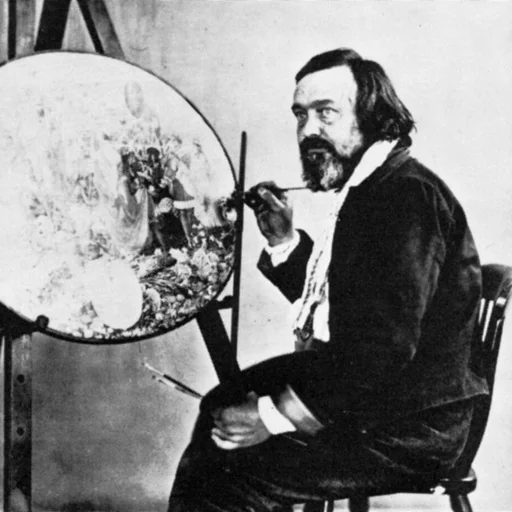
Artist
Richard Dadd (1 August 1817 – 7 January 1886) was an English painter of the Victorian era, noted for his depictions of fairies and other supernatural subjects, Orientalist scenes, and enigmatic genre scenes, rendered with obsessively…