Artwork
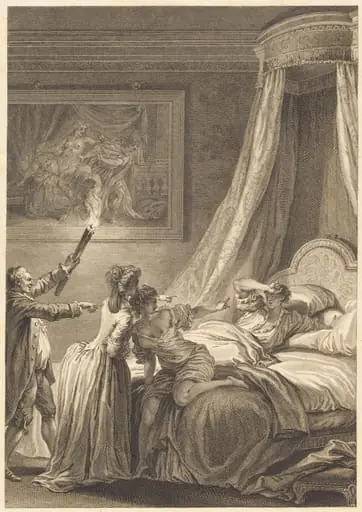
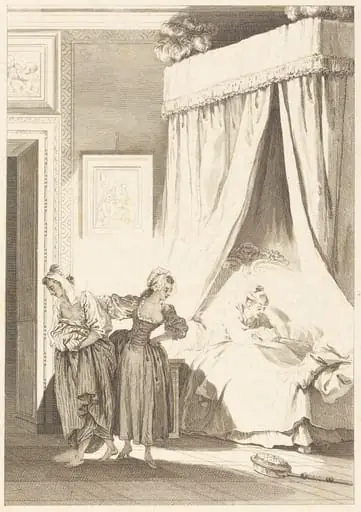
La gageure des trois commeres: La servante
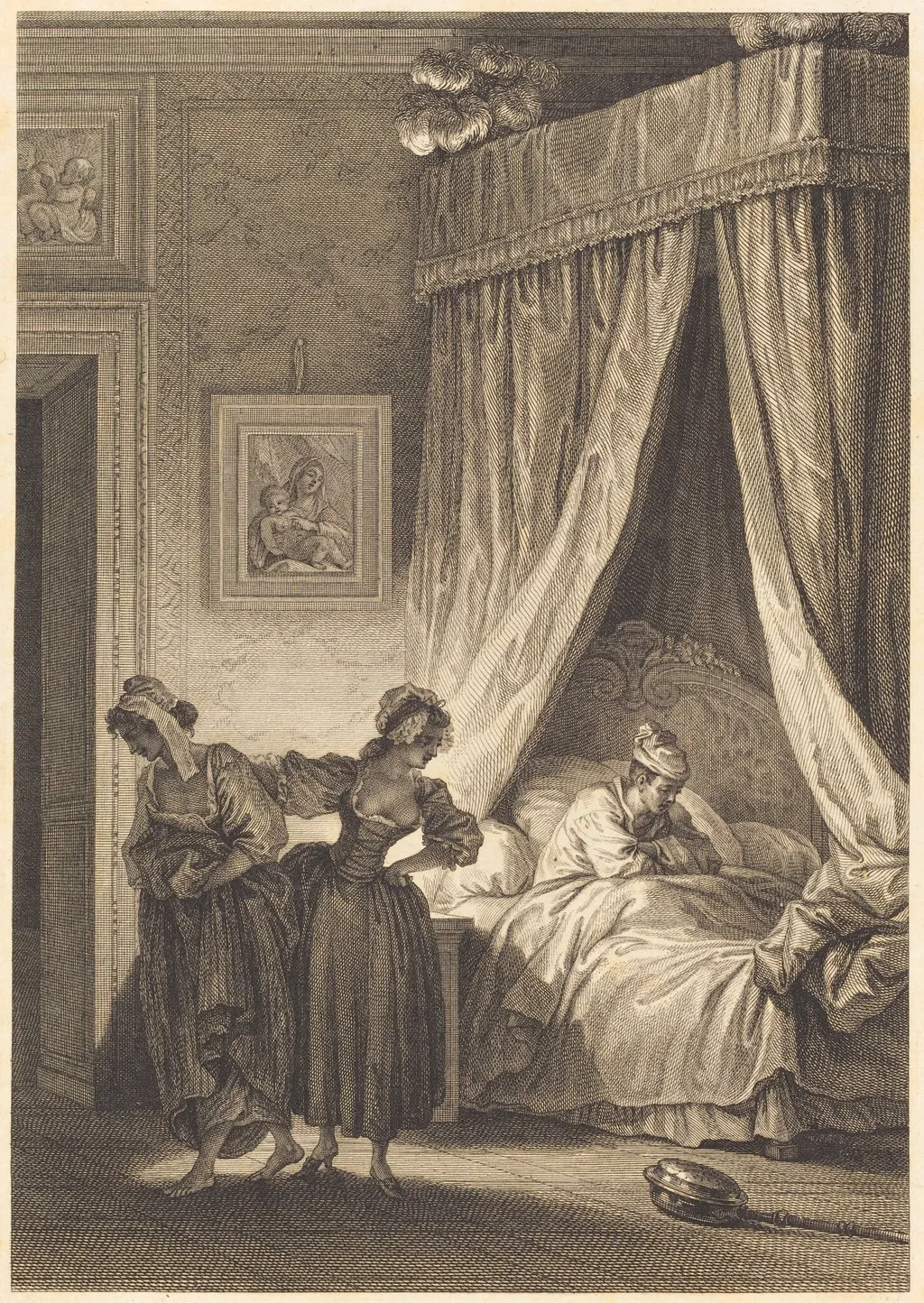
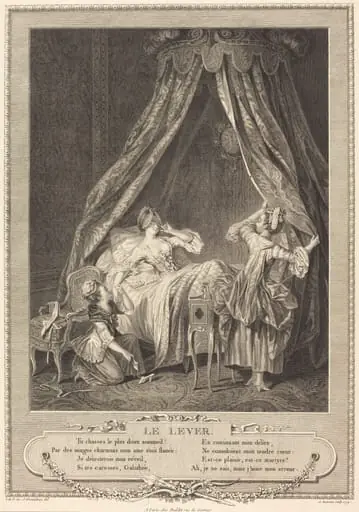
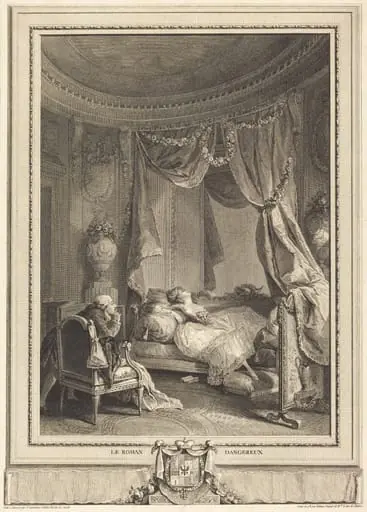
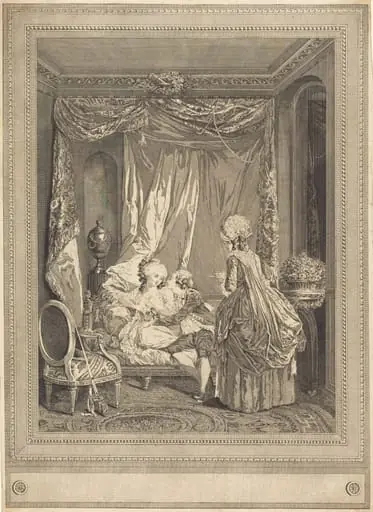
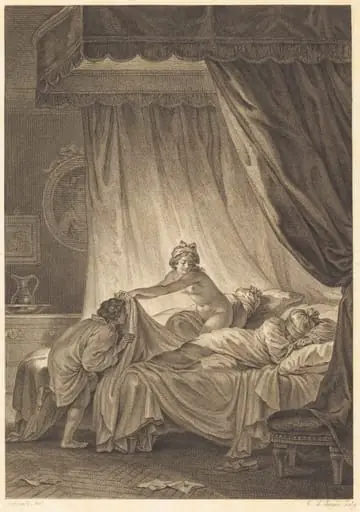
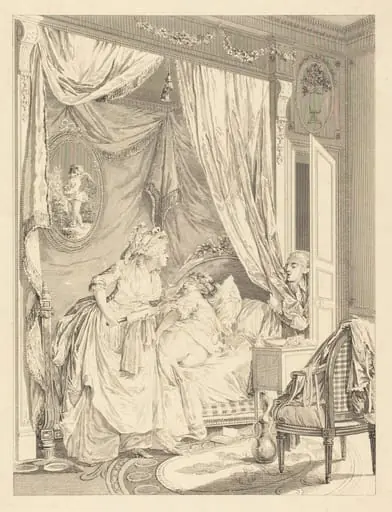
La gageure des trois commeres: La servante is an ink print by the Romanticist artist Antoine-Jean Duclos. It dates from 1786 and is held in the collection of the National Gallery of Art.
About this work
Overview
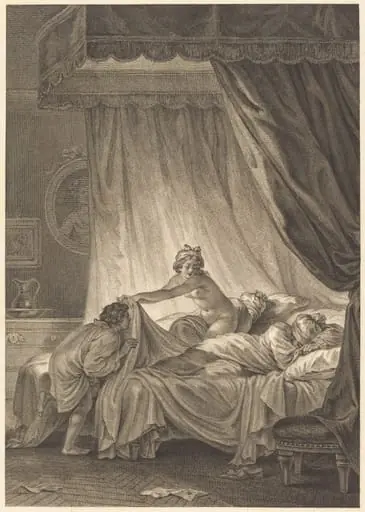
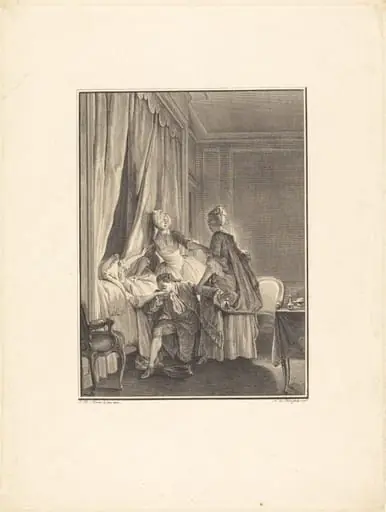
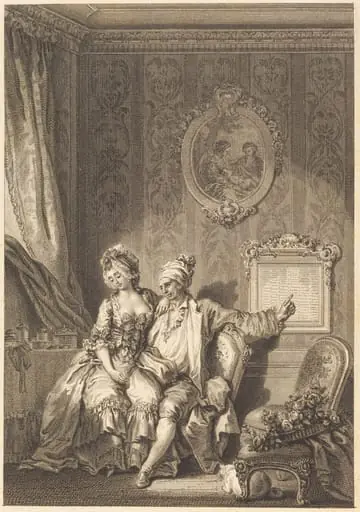
Antoine‑Jean Duclos produced the print La gageure des trois commeres: La servante in 1786. Executed as an engraving, the work presents a nocturnal interior populated by three women, one reclining on a bed with a book, the others standing nearby. The composition is rendered in monochrome, with a focus on chiaroscuro that isolates the figures against a receding, shadowy background.
Subject & Meaning
The scene suggests a private, perhaps intimate moment among domestic servants.
The scene suggests a private, perhaps intimate moment among domestic servants. The reclining figure’s engagement with a book hints at literacy or personal contemplation, while the candle‑bearing woman provides illumination, emphasizing the act of reading. The third figure’s downward gaze may convey attentiveness or a quiet interaction, inviting viewers to consider the roles and relationships of women within a modest household setting.
Technique & Style
Duclos employed fine, closely spaced lines typical of engraving to model volume and texture, creating subtle gradations of shadow. The delicate hatching defines the folds of the period costume, the heavy drapery, and the reflective surfaces of objects such as the hat and framed picture. The overall effect is a dramatic contrast between illuminated figures and the enveloping darkness, a hallmark of late‑18th‑century printmaking.
History & Provenance
Created in the final decade before the French Revolution, the print reflects the period’s interest in genre scenes of everyday life. While specific ownership records are scarce, the work is catalogued among Duclos’s prints and has appeared in several 19th‑century collections of French engravings, indicating its circulation among connoisseurs of the medium.
Artist & collection