Artwork
Tablou, ulei pe pânză, „Elena Ceaușescu”, semnat Dan Hatmanu și datat 1989 în partea stângă jos. Tabloul o prezintă pe Elena Ceaușescu într-un cadru festiv, cu un buchet de flori în brațe, primind urale din partea unui grup de femei (membrele Consiliului Nașional al Femeilor). Comandat de Consiliul Național al Femeilor și oferit cu ocazia aniversării zilei de naștere (ianuarie 1989).
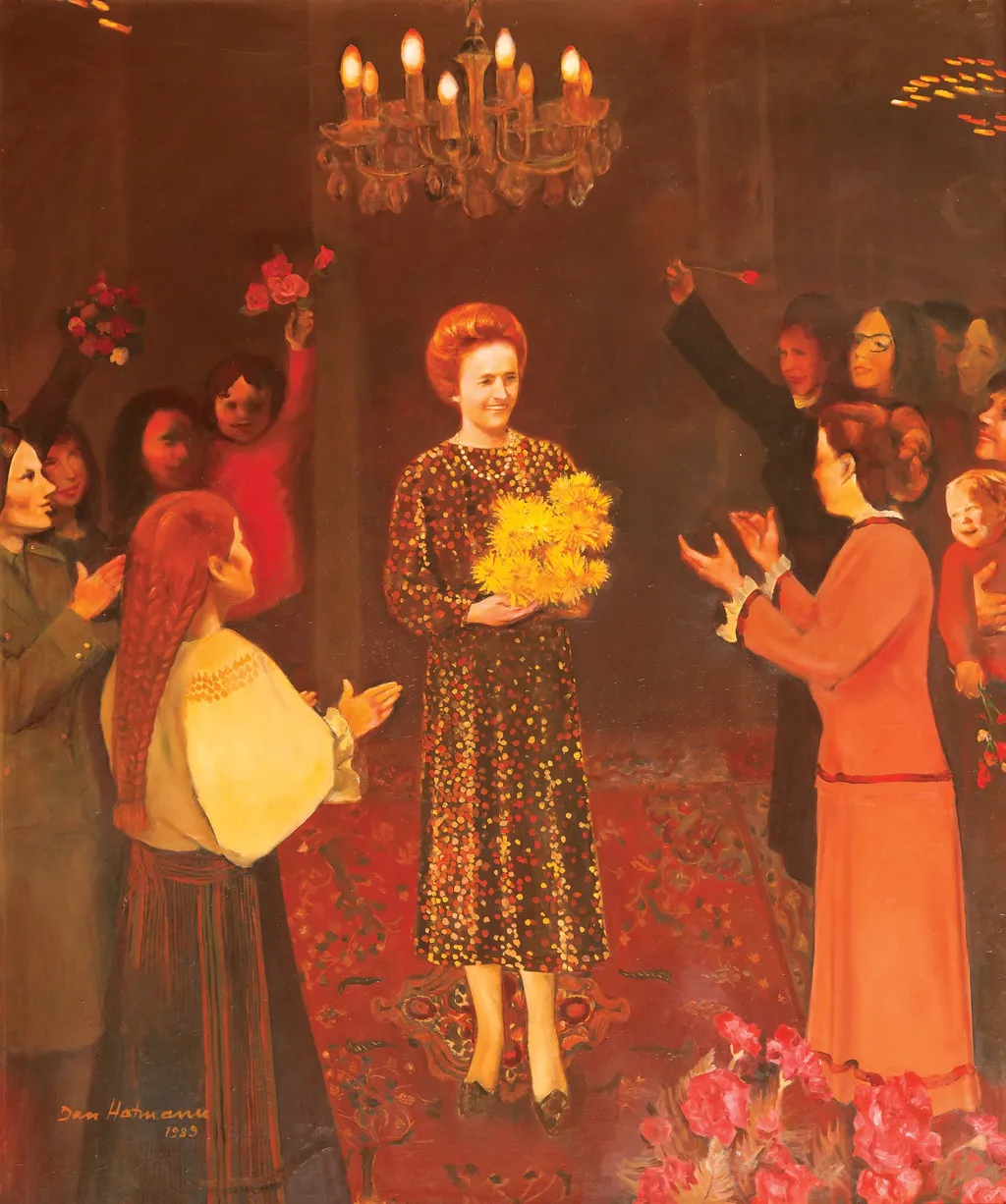
Tablou, ulei pe pânză, „Elena Ceaușescu”, semnat Dan Hatmanu și datat 1989 în partea stângă jos. Tabloul o prezintă pe Elena Ceaușescu într-un cadru festiv, cu un buchet de flori în brațe, primind urale din partea unui grup de femei (membrele Consiliului Nașional al Femeilor). Comandat de Consiliul Național al Femeilor și oferit cu ocazia aniversării zilei de naștere (ianuarie 1989). is a print by Dan Hatmanu. It is held in the collection of the National Museum of Romanian History.
About this work
She’s holding bright yellow flowers and smiling, while a crowd of women around her clap or wave.
In front of you is a woman in a dark, glittery dress standing at the center. She’s holding bright yellow flowers and smiling, while a crowd of women around her clap or wave. The room glows with warm red and orange light, and a chandelier with lit candles hangs above. The women are dressed in simple, dark clothes, and some hold red flowers.
The woman’s dress sparkles with tiny dots of light. The crowd looks like they’re celebrating her—maybe for a special day. The artist signed the painting in the corner with the year 1989.
Next, look up Dan Hatmanu to see how he shaped this scene.
Overview
A 1989 oil painting by Dan Hatmanu depicts Elena Ceaușescu, wife of Romania’s communist leader, as the central figure in a ceremonial portrait. Commissioned by the National Council of Women, the work was presented to her on the occasion of her birthday in January 1989. She stands amid a group of women, holding a bouquet of yellow flowers, surrounded by an atmosphere of orchestrated celebration.
Subject & Meaning
The painting portrays Elena Ceaușescu as a symbol of maternal and ideological authority, framed within the state-sanctioned cult of personality. Surrounded by women in plain attire, she is elevated through lighting, dress, and gesture, suggesting both personal charm and institutional reverence. The flowers and applause reinforce a narrative of popular adoration, carefully constructed to align with state propaganda.
Technique & Style
Hatmanu employs a polished, realistic style with heightened theatrical lighting. The dark, glittering dress of the subject catches light with minute metallic flecks, contrasting with the muted tones of the crowd. Warm red and orange hues bathe the scene, enhancing the sense of festivity. The composition directs focus to the central figure, while the background chandelier and clustered figures suggest a formal, state-sponsored event.
History & Provenance
Commissioned by the National Council of Women, the painting was created as a birthday gift for Elena Ceaușescu in early 1989, just months before the fall of the regime. Its production reflects the institutionalized use of art to legitimize the Ceaușescus’ rule. After the 1989 revolution, the work was likely seized by state authorities and later transferred to a public collection.
Context
The portrait emerged during the final phase of Nicolae and Elena Ceaușescu’s rule, when state propaganda intensified efforts to cultivate their public image. Artistic commissions like this one were tools of ideological reinforcement, portraying the First Lady as a benevolent, revered figure. The National Council of Women, a state-controlled body, played a key role in orchestrating such displays of loyalty.
Legacy
The painting survives as a historical artifact of late communist Romania’s visual culture, illustrating how art was mobilized to sustain political mythmaking. It is now studied not for aesthetic innovation but as evidence of state-controlled representation. Its existence underscores the role of portraiture in authoritarian regimes, where imagery served to mask reality with ritualized reverence.
Artist & collection
Artist
Dan Hatmanu made large oil-on-canvas portraits and history scenes for state orders in late-1980s Romania.

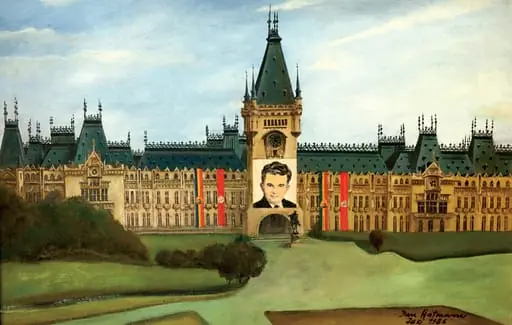 Tablou, „Iașul în sărbătoare”, semnat Dan Hatmanu și datat dreapta jos. Taboul prezintă Palatul Culturii din Iași, în centru portretul lui Nicolae Ceaușescu dispus pe turnul central. În stânga și în dreapta turnului steagurile Republicii Socialiste România. Comandat de Comitetul Județean de Partid Iași (1986).
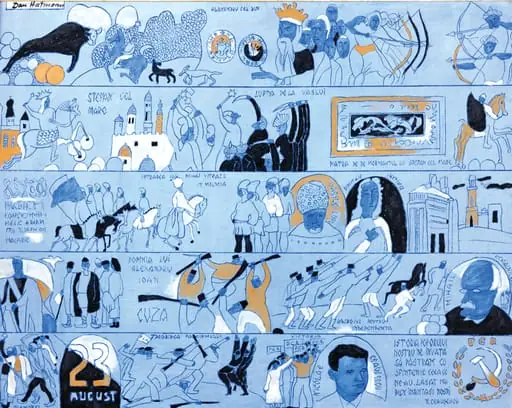 Tablou, „Momente din istoria neamului”, semnat în stânga sus Dan Hatmanu. Acuarelă/ pânză. Înrămat Comandat de Comitetul Județean de Partid Iași, 14 octombrie 1981
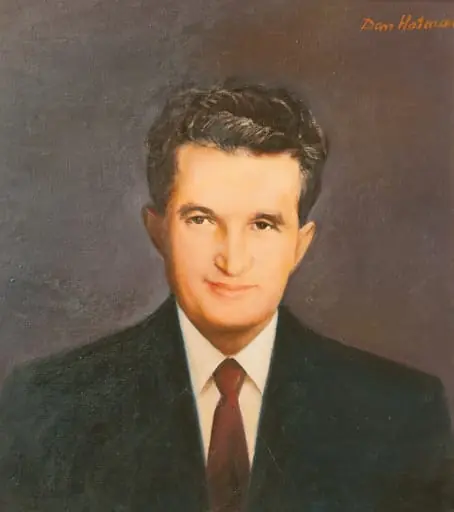 Tablou ulei pe pânză, „Nicolae Ceaușescu” semnat Dan Hatmanu în partea dreaptă sus, nedatat. Comandat de Consiliul Național al Femeilor și oferit cu ocazia aniversării zilei de naștere (ianuarie 1989).
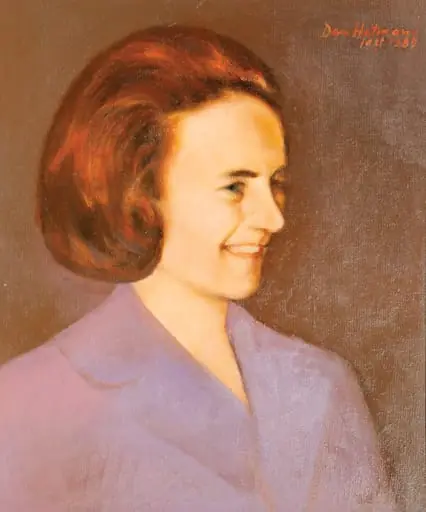 Tablou ”Portret Elena Ceaușescu” semnat Dan Hatmanu și datat dreapta sus.Ulei/pânză. Comandat de Comitetul Județean de Partid Iași și oferit cadou Elenei Ceaușescu cu ocazia aniversării a 70 de ani (ianuarie 1989).
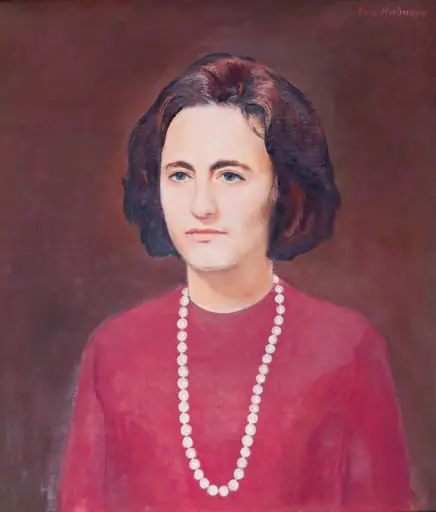 Tablou, ulei pe pânză, „Elena Ceaușescu”, semnat în partea dreaptă sus Dan Hatmanu. Oferit de autor, 6 ianuarie 1979.
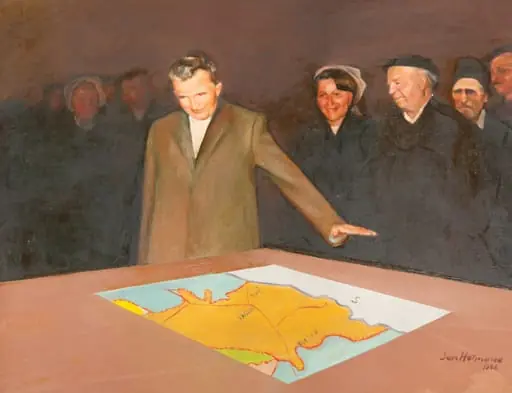 Tablou „Vizită la Vaslui”, semnat Dan Hatmanu și datat dreapta jos. Tabloul îl prezintă pe Nicolae Ceaușescu în timpul unei vizite de lucru alături de oamenii muncii. Comandat pe Comitetul Județean de Partid Vaslui și oferit lui Nicolae Ceaușescu la împlinirea vârstei de 70 de ani (ianuarie 1988).
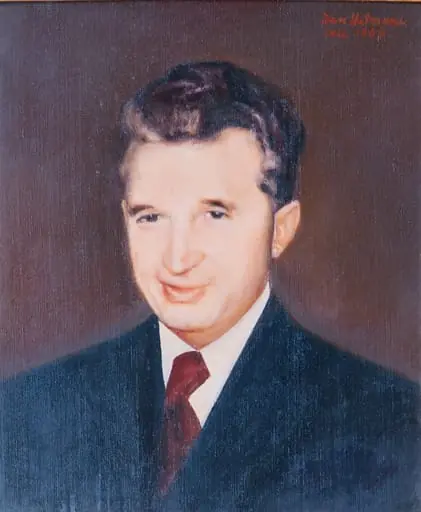 Tablou reprezentându-l pe Nicolae Ceaușescu, semnat Dan Hatmanu. Comandat de Comitetul Județean de Partid Iași și oferit cu ocazia zilei de naștere a președintelui RSR (ianuarie 1989).
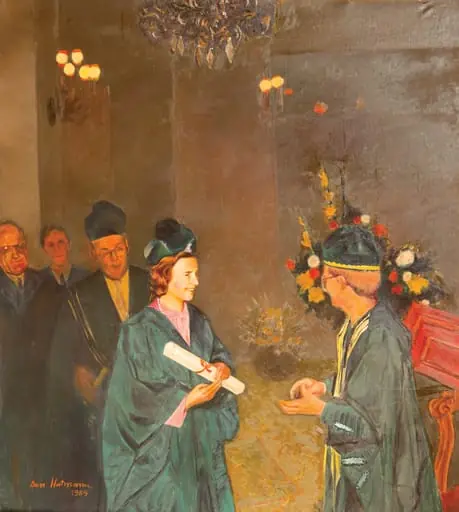 Tablou ”Tovarășa academician Elena Ceaușescu”, semnat și datat stânga jos ”Dan Hatmanu 1989”. Tablou comandat de Comitetul Municipal de Partid București. Luând în considerare vestimentația, autorul a surprins o ceremonie de acordare a unui titlui de Doctor Honoris Causa de către o instituție de știință din străinătate.
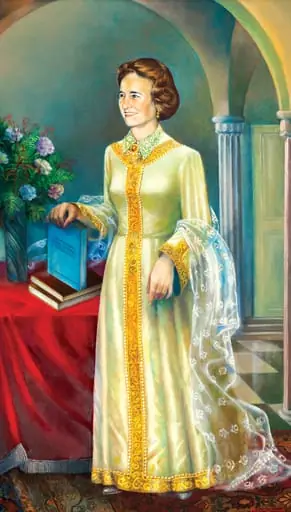 Tablou, ulei pe pânză, portret Elena Ceaușescu, semnat R. Constantinescu și datat în partea dreaptă jos. Elena Ceaușescu este reprezentată în ținută de pințesă medievală, pe fundal o sală cu arcade dând impresia unui palat; în mâna dreaptă a Elenei Ceaușescu lucrarea sa de doctorat ”Polimerizarea stereospecifică a izoprenului”. Comandat și oferit de Comitetul Județean de Partid Argeș (1983).
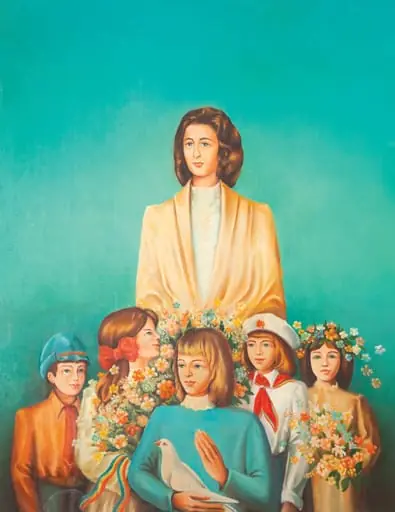 Tablou, ulei pe pânză, „Elena Ceușescu cu un grup de copii”, nesemnat, atribuit Constantin Oprea. Elena Ceaușescu este prezentată înconjurată de copii, șoimi ai patriei, pionieri. Autorul tabloului o înfățișează pe Elena Ceaușescu ca pe o profesoară, o îndrumătoare a tinerei generații. Comandat și oferit de Comitetul Județean de Partid Caraș Severin (1984).
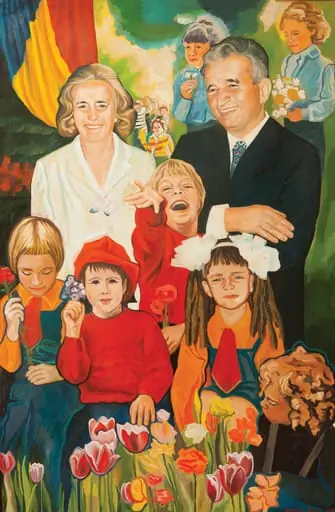 Tablou, ulei pe pânză, „Nicolae și Elena Ceaușescu în mijlocul unui grup de pioneri și șoimi ai patriei”, semant în partea dreaptă jos Cornelia Ionescu și datat 1981. Comandat și oferit de Consiliul Național al Pionerilor, 14.X.1981.
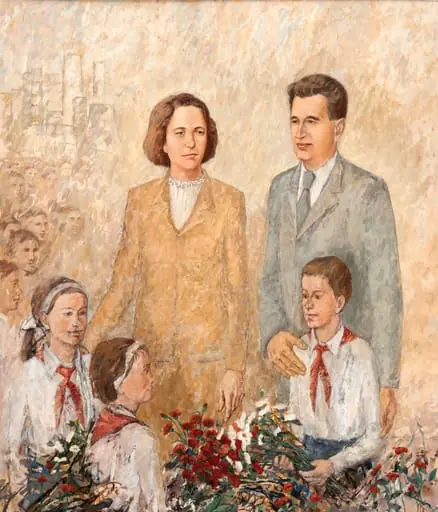 Tablou ulei pe pânză, „Omagiu”, semnat M.B, I.Ș. (atribuit Mircea Bejgu, Ion Șincă), datat 1984 în partea dreaptă jos. Elena și Nicolae Ceaușescu alături de pionieri. Comandat și oferit de Comitetul Județean de Partid Argeș (1984).
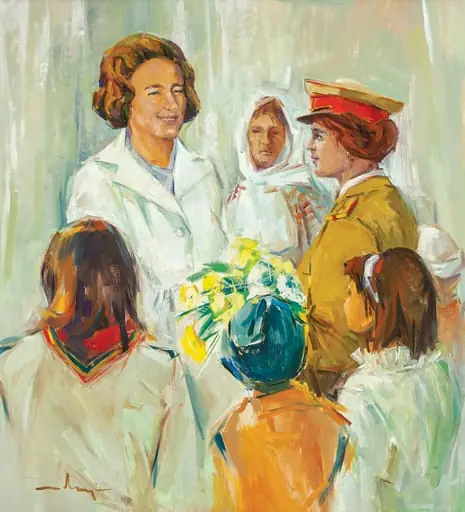 Tablou, ulei pe pânză, „Omagiu” , semnat stânga jos indescifrabil, atribuit Ion Țarălungă. Elena Ceaușescu într-un grup de copii și tineri, o tânără femeie militar îi oferă un buchet de flori. Comandat și oferit de Ministerul Apărării Naționale (1984).
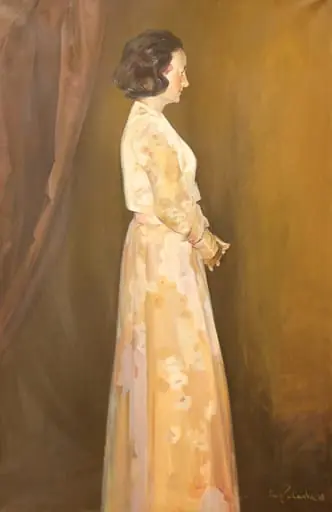 Tablou - portret întreg Elena Ceaușescu din profil, semnat și datat dreapta jos ”Eugen Palade 78”. Tablou comandat de Consiliul Culturii și Educației Socialiste și oferit în dar Elenei Ceaușescu la împlinirea vârstei de 60 de ani (ianuarie 1979).
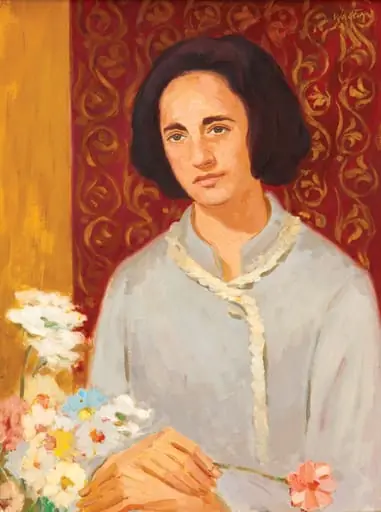 Tablou, ulei pe pânză, Portret Elena Ceaușescu, atribuit lui Fredric Bytoy. Elena Ceaușescu reprezentată înt-o atitudine melancolică alături de un buchet de flori. Comandat și oferit de Comitetul de Partid Maramureș, 7 ianuarie 1979.
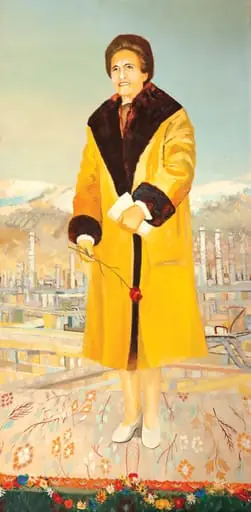 Tablou ulei pe pânză, „Elena Ceaușescu”, atribuit lui Ioan Florea, nedatat. Elena Ceaușescu îmbrăcată într-o haină de blană, este reprezentată pe un covor cu motive tradiționale din zona Mehedinți, pe fundal un combinat petrochimic, ținând în mâna dreaptă o garoafă roșie, iar în mâna stângă o carte (probabil lucrarea sa de doctorat). Tablou comandat de Comitetul Județean de Partid Mehedinți și oferit Elenei Ceaușescu cu ocazia aniversării vârstei de 70 de ani (ianuarie 1989).