Artwork
Tablou, „Iașul în sărbătoare”, semnat Dan Hatmanu și datat dreapta jos. Taboul prezintă Palatul Culturii din Iași, în centru portretul lui Nicolae Ceaușescu dispus pe turnul central. În stânga și în dreapta turnului steagurile Republicii Socialiste România. Comandat de Comitetul Județean de Partid Iași (1986).
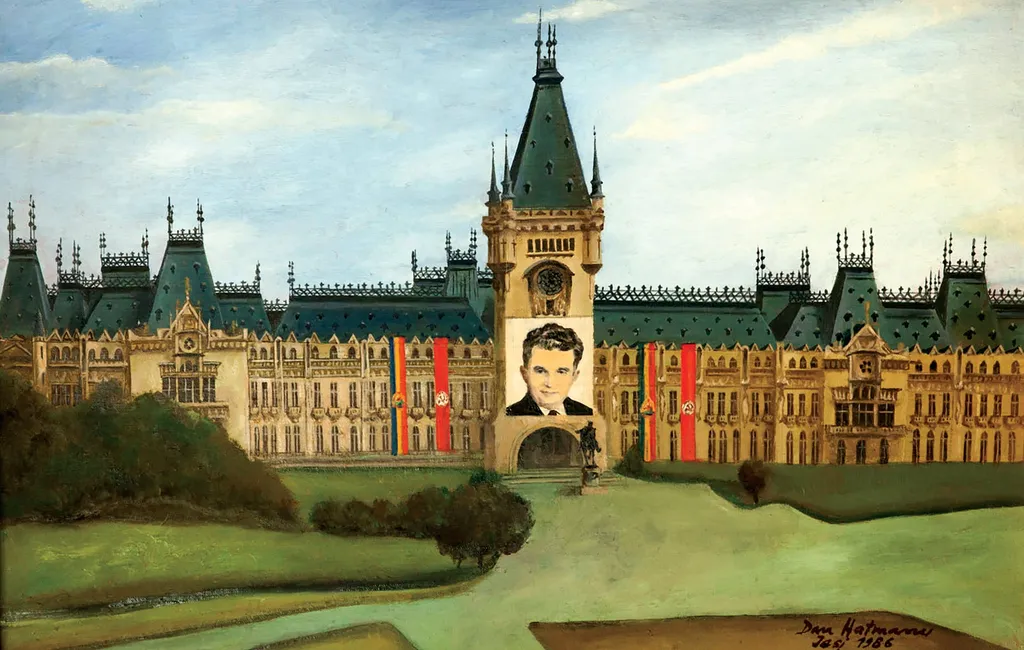
Tablou, „Iașul în sărbătoare”, semnat Dan Hatmanu și datat dreapta jos. Taboul prezintă Palatul Culturii din Iași, în centru portretul lui Nicolae Ceaușescu dispus pe turnul central. În stânga și în dreapta turnului steagurile Republicii Socialiste România. Comandat de Comitetul Județean de Partid Iași (1986). is a print by Dan Hatmanu. It is held in the collection of the National Museum of Romanian History. This 1986 painting depicts the Palace of Culture in Iași, rendered in a detailed, realistic style.
About this work
Overview
The central tower bears a photographic portrait of Nicolae Ceaușescu, affixed as if pasted onto the masonry.
This 1986 painting depicts the Palace of Culture in Iași, rendered in a detailed, realistic style. The central tower bears a photographic portrait of Nicolae Ceaușescu, affixed as if pasted onto the masonry. Two Romanian Socialist Republic flags flank the structure. Commissioned by the Iași County Party Committee, the work merges architectural realism with politically mandated imagery, reflecting state-driven visual propaganda of the era.
Subject & Meaning
The painting centers on the Palace of Culture, a symbol of civic pride, overlaid with the portrait of the nation’s leader. Ceaușescu’s image, applied as a printed insert rather than painted, signals its artificial insertion into the public sphere. The flags reinforce state authority. The composition transforms a historic building into a stage for personality cult imagery, merging architecture with political symbolism to assert ideological dominance.
Technique & Style
The building is rendered with precise architectural detail, using muted tones and soft lighting to mimic realism. The portrait of Ceaușescu, however, contrasts sharply—its photographic quality and flat surface suggest it was mechanically reproduced and pasted on. This dissonance between painted architecture and applied imagery creates a jarring visual effect, highlighting the manufactured nature of the political message.
History & Provenance
Commissioned in 1986 by the Iași County Party Committee, the painting was likely displayed in a public or administrative building to reinforce state ideology. Signed by Dan Hatmanu and dated in the lower right, it reflects the state’s control over artistic production during the late Ceaușescu regime. Its creation was not an independent act but a directive, typical of official commissions under socialist realism.
Context
In mid-1980s Romania, public art was tightly regulated to glorify the regime. Portraits of Ceaușescu appeared ubiquitously, often superimposed on civic landmarks. The Palace of Culture, already a symbol of national identity, was repurposed as a canvas for loyalty. This painting exemplifies how state institutions co-opted cultural heritage to legitimize authoritarian rule through visual saturation.
Legacy
After 1989, such works were removed from public view, deemed relics of a discredited regime. The painting survives as a historical artifact, illustrating the intersection of art, power, and propaganda. Its physical juxtaposition of painted architecture and applied imagery now serves as a visual record of how political authority manipulated public space through controlled aesthetics.
Artist & collection
Artist
Dan Hatmanu made large oil-on-canvas portraits and history scenes for state orders in late-1980s Romania.

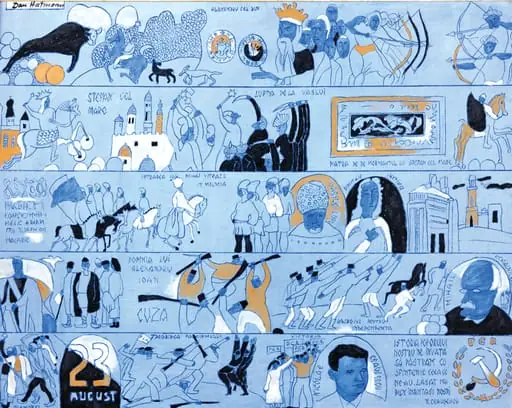 Tablou, „Momente din istoria neamului”, semnat în stânga sus Dan Hatmanu. Acuarelă/ pânză. Înrămat Comandat de Comitetul Județean de Partid Iași, 14 octombrie 1981
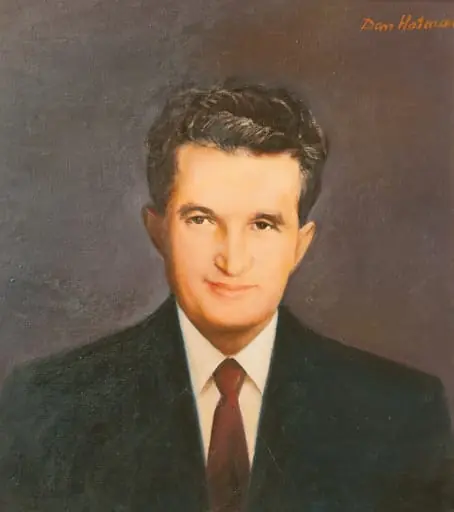 Tablou ulei pe pânză, „Nicolae Ceaușescu” semnat Dan Hatmanu în partea dreaptă sus, nedatat. Comandat de Consiliul Național al Femeilor și oferit cu ocazia aniversării zilei de naștere (ianuarie 1989).
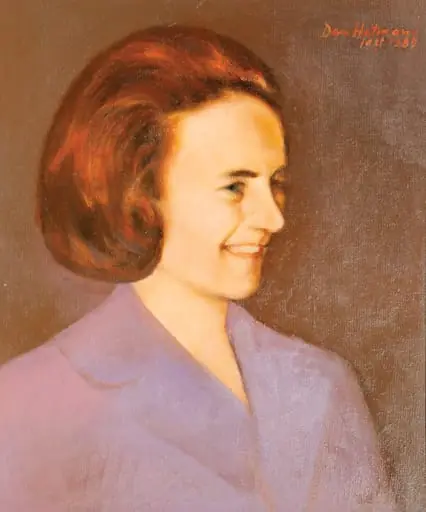 Tablou ”Portret Elena Ceaușescu” semnat Dan Hatmanu și datat dreapta sus.Ulei/pânză. Comandat de Comitetul Județean de Partid Iași și oferit cadou Elenei Ceaușescu cu ocazia aniversării a 70 de ani (ianuarie 1989).
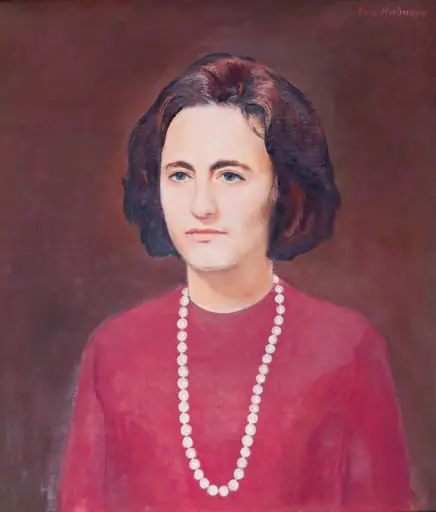 Tablou, ulei pe pânză, „Elena Ceaușescu”, semnat în partea dreaptă sus Dan Hatmanu. Oferit de autor, 6 ianuarie 1979.
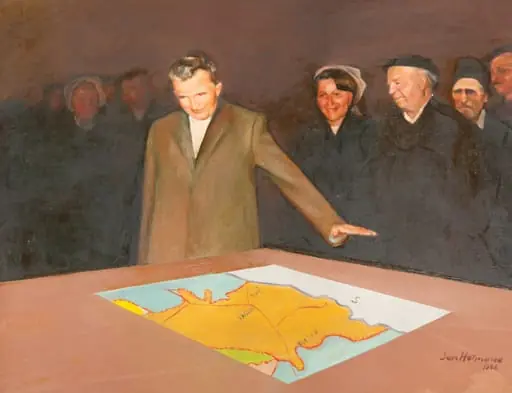 Tablou „Vizită la Vaslui”, semnat Dan Hatmanu și datat dreapta jos. Tabloul îl prezintă pe Nicolae Ceaușescu în timpul unei vizite de lucru alături de oamenii muncii. Comandat pe Comitetul Județean de Partid Vaslui și oferit lui Nicolae Ceaușescu la împlinirea vârstei de 70 de ani (ianuarie 1988).
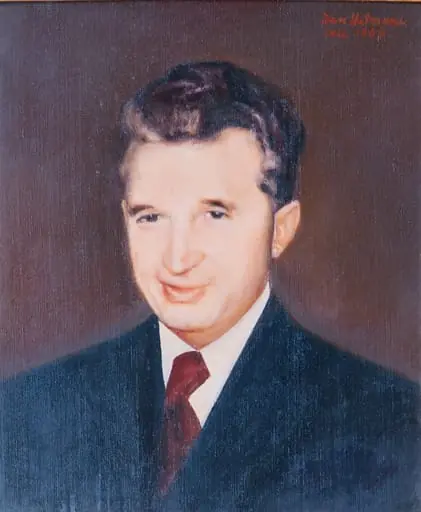 Tablou reprezentându-l pe Nicolae Ceaușescu, semnat Dan Hatmanu. Comandat de Comitetul Județean de Partid Iași și oferit cu ocazia zilei de naștere a președintelui RSR (ianuarie 1989).
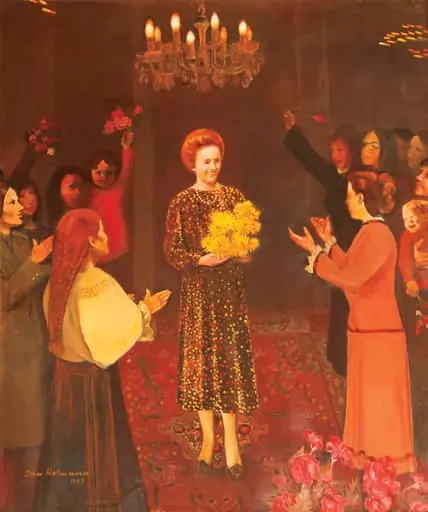 Tablou, ulei pe pânză, „Elena Ceaușescu”, semnat Dan Hatmanu și datat 1989 în partea stângă jos. Tabloul o prezintă pe Elena Ceaușescu într-un cadru festiv, cu un buchet de flori în brațe, primind urale din partea unui grup de femei (membrele Consiliului Nașional al Femeilor). Comandat de Consiliul Național al Femeilor și oferit cu ocazia aniversării zilei de naștere (ianuarie 1989).
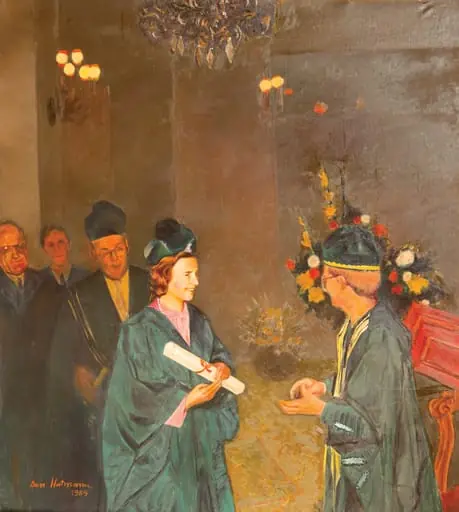 Tablou ”Tovarășa academician Elena Ceaușescu”, semnat și datat stânga jos ”Dan Hatmanu 1989”. Tablou comandat de Comitetul Municipal de Partid București. Luând în considerare vestimentația, autorul a surprins o ceremonie de acordare a unui titlui de Doctor Honoris Causa de către o instituție de știință din străinătate.
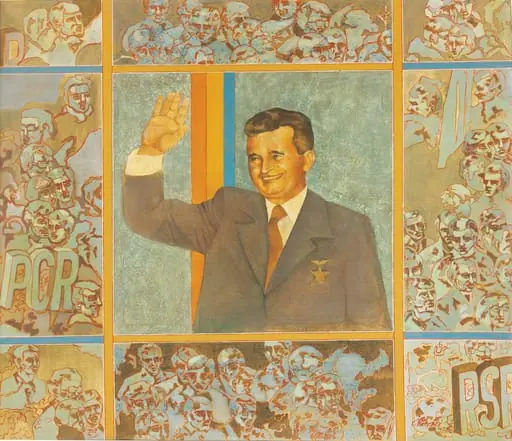 Tablou, ulei pe pânză, „Portret Nicolae Ceaușescu”, semnat în partea dreaptă jos C.Macavei și datat 1978. Tablou împărțit în mai multe registre, în plan central Nicolae Ceaușescu salutând oamenii muncii din celelalte registre. Comandat și oferit de Comitetul Județean de Partid Ilfov, 23 ianuarie 1978.
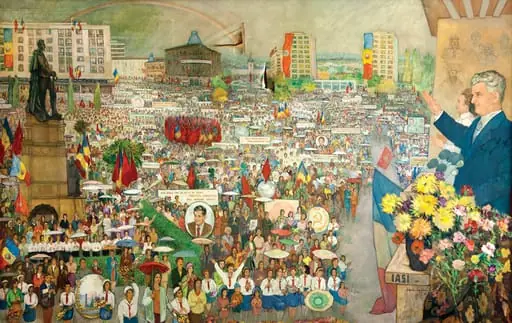 Tablou ”Mitingul din Piața Unirii din Iași de la 15 septembrie 1980”, semnat Costache Agafiței și datat în partea dreaptă jos. Tabloul îi înfățișază pe Elena și pe Nicolae Ceaușescu la balcon salutând mulțimea adunată în Piața Unirii din Iași. Comandat de Comitetul Județean de Partid Iași și dăruit soților Ceaușescu în octombrie 1981.
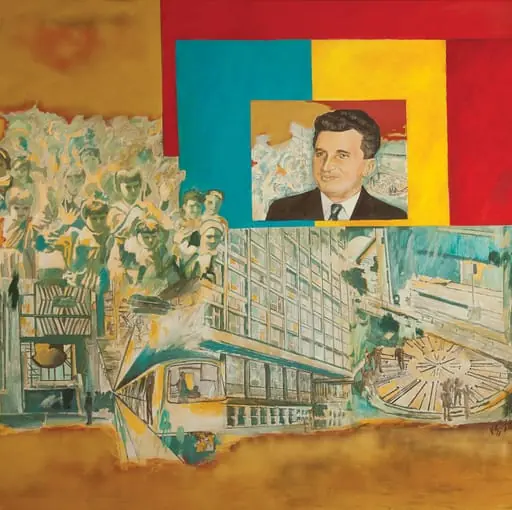 Tablou „Omagiu”, semnat Ion Bitzan și Vladimir Setran.Tabloul prezintă portretul lui Nicolae Ceaușescu încadrat de tricolor în partea dreaptă sus. Restul tabloului este completat de realizările epocii socialiste. Comandat de Comitetul Municipal de Partid 1981.
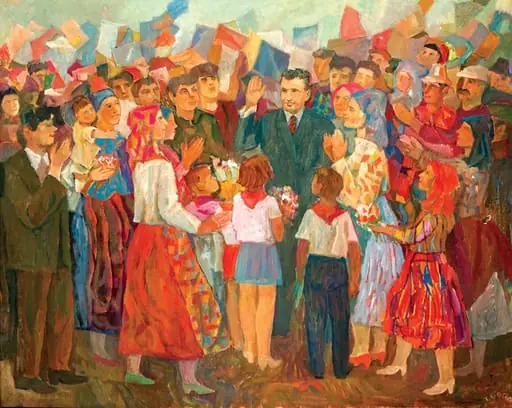 Tablou, ulei pe pânză, „Moment de sărbătoare bihoreană”, semnat T. Goga în partea dreaptă jos. Nicolae Ceaușescu este reprezentat în mijlocul oamenilor munci și al tinerilor din județul Bihor care-l întâmpină cu flori și aplauze. Comandat de Comitetul Județean de Partid Bihor,oferit lui Nicolae Ceaușescu în ianuarie 1978.
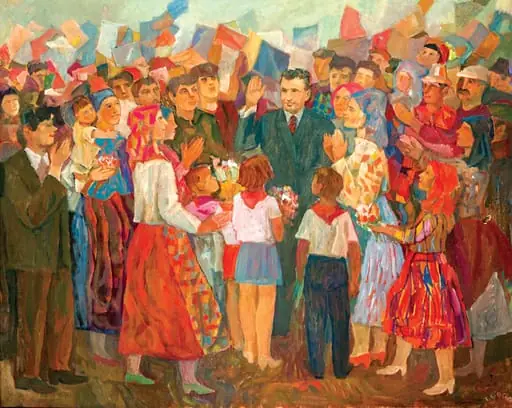 Tablou, ulei pe pânză, „Moment de sărbătoare bihoreană”, semnat în partea dreaptă jos T. Goga. Nicolae Ceaușescu este prezentat în mijolocul oamenilor muncii, bărbați si femei îl înconjoară, pionierii îi oferă flori în semn de bun venit. Oferit de Comitetul Județean de Partid Bihor, 22 ianuarie 1978.
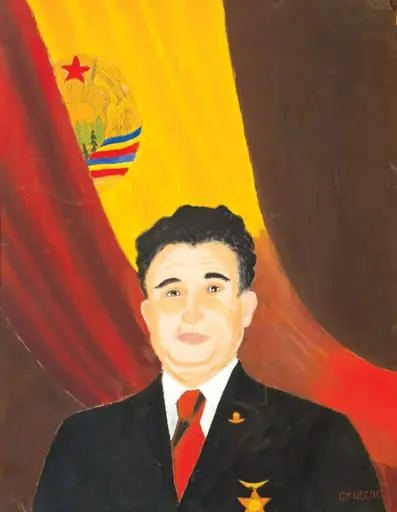 Tablou, ulei pe carton, ”Nicolae Ceaușescu”, semnat Gh. Nechita în partea dreaptă jos. Nicolae Ceaușescu este prezentată cu o figură veselă, în piept are însemnul de ”Erou al Republicii Socialiste România. În spatele său s-a vrut a fii reprezentat steagul cu stema RSR, numai ca, nu există culoarea albastru ea fiind înlocuită de culoarea maro. Oferit lui Nicolae Ceaușescu de către autor Gheorghe Nechita din Baia Mare, 26 ianuarie 1976.