Artwork
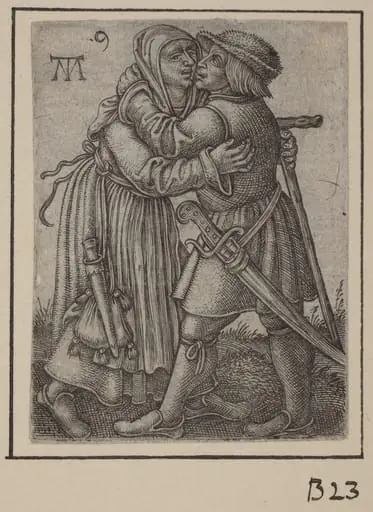
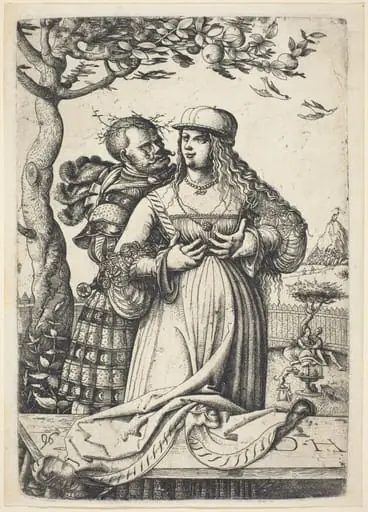
Soldier Embracing a Woman
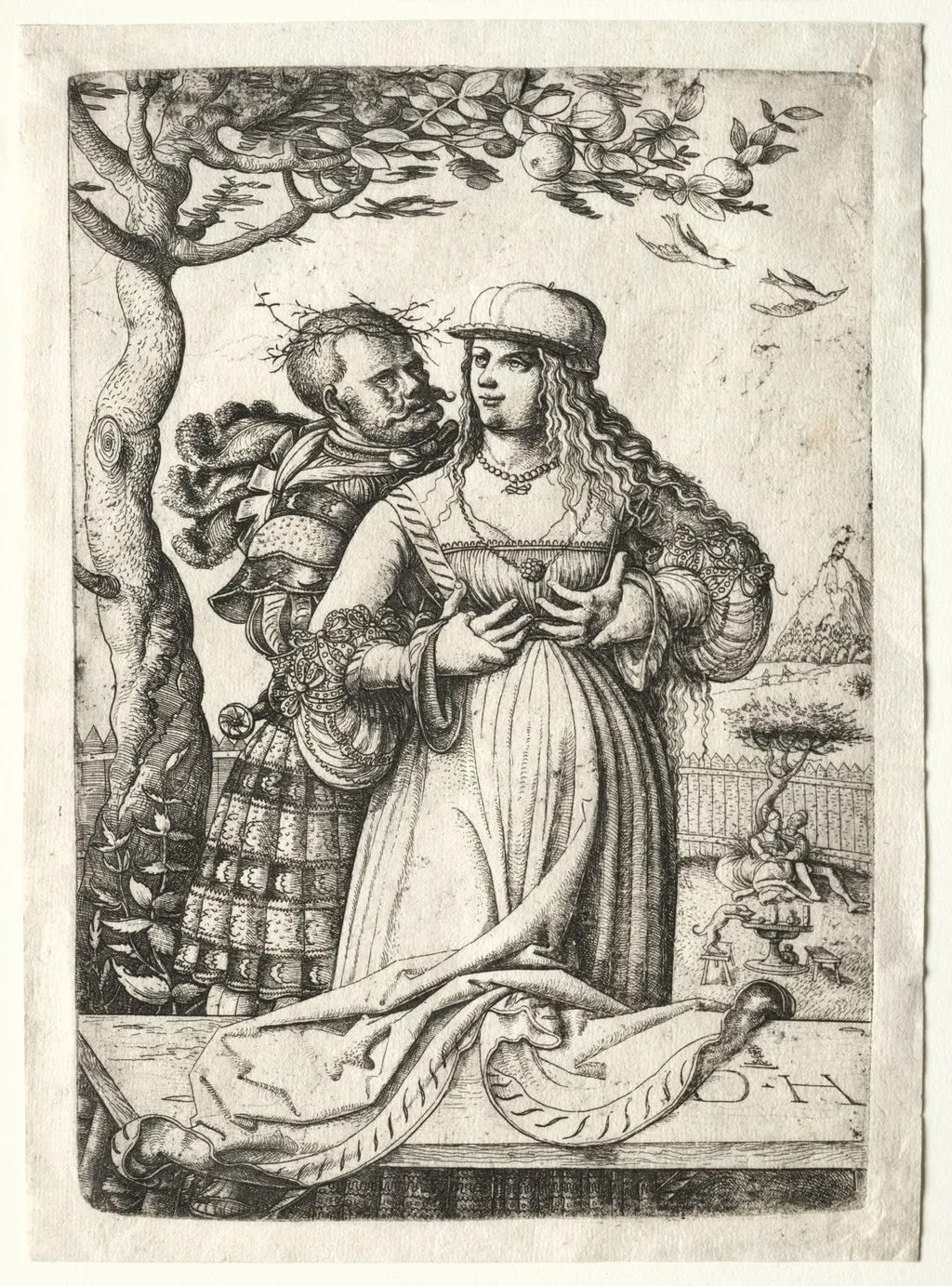
Soldier Embracing a Woman is a print by the Renaissance artist Daniel Hopfer. It dates from 1520 and is held in the collection of the Cleveland Museum of Art.
About this work
This print shows a soldier hugging a woman in a garden. The man’s flashy outfit and mock laurel wreath hint that love and war mix here.
Prints like this often poked fun at German mercenaries for their loose morals. The couple’s pose and her bold look pushed the limits of what was decent in the 1500s.
Check out more works by Daniel Hopfer (German, c. 1470–1536).
Overview
The print depicts a soldier embracing a woman within a garden setting. The male figure wears a flamboyant costume and a twig‑like laurel wreath, while the female figure looks directly at him, her hair long, her bodice open and her skirt lifted, suggesting intimacy. The composition balances elements of romance and militarism.
Subject & Meaning
The soldier is identified as a German mercenary, a figure frequently satirized in early‑modern prints for perceived licentiousness.
The soldier is identified as a German mercenary, a figure frequently satirized in early‑modern prints for perceived licentiousness. The laurel wreath functions as a tongue‑in‑cheek symbol of triumph, linking the themes of love and warfare. The woman's direct gaze and the suggestive attire place the scene at the limits of contemporary propriety, evoking an Edenic garden motif that underscores both desire and moral ambiguity.
Technique & Style
Executed as a print, the work relies on line work and contrast to delineate the figures and surrounding foliage. The decorative details of the soldier’s costume and the delicate rendering of the woman's hair demonstrate the artist’s skill in portraying texture within the constraints of the medium.
Context
Printed in the early sixteenth century, the image reflects a broader trend of caricaturing mercenary soldiers, who were often accused of immoral behavior. Such prints circulated among a public familiar with the social tensions surrounding hired soldiers and their reputed excesses.
Legacy
The work contributes to the visual record of how military figures were represented in popular art of the period, illustrating the interplay between satire, eroticism, and moral commentary that characterized many contemporary prints.
Artist & collection

Artist
Daniel Hopfer (c. 1470 – 1536) was a German artist who is widely believed to have been the first to use etching in printmaking, at the end of the 15th century. He also worked in woodcut. Although his etchings were…

 Interior of the Church of Saint Maria Magdalena with the Parable of the Offering of the Widow
 Emperor Charles V
 Emperor Charles V
 The Virgin Mary Taking Leave of Christ
 Jesus Christ Giving the Mission to the Apostles and Other New Testament Scenes
 Soldier Embracing a Woman
 Girolamo da Siena
 The Virgin and Child with Saint Anne by a Portal