Artwork
Girolamo da Siena
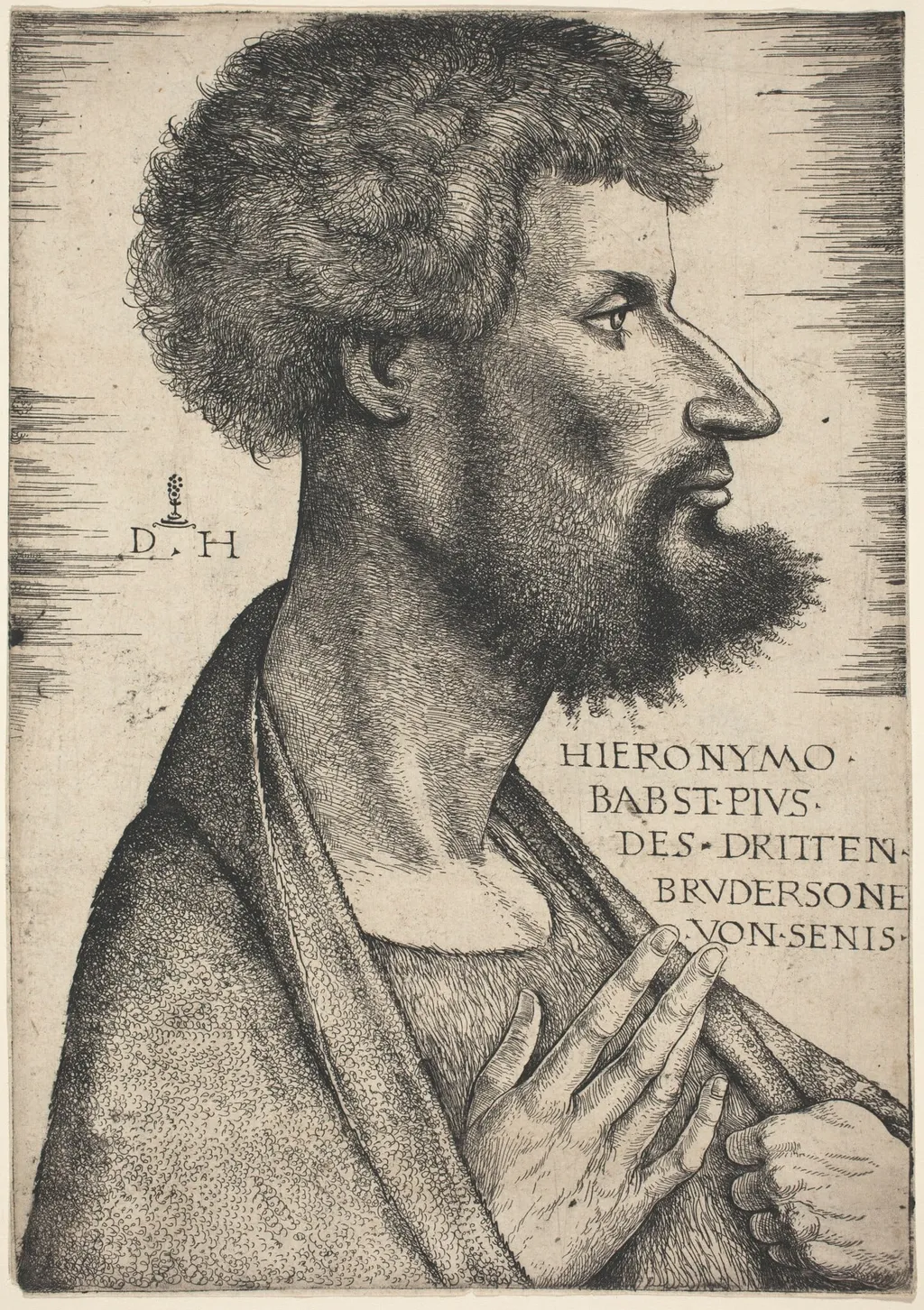
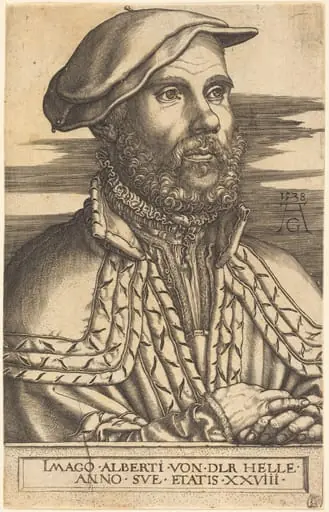
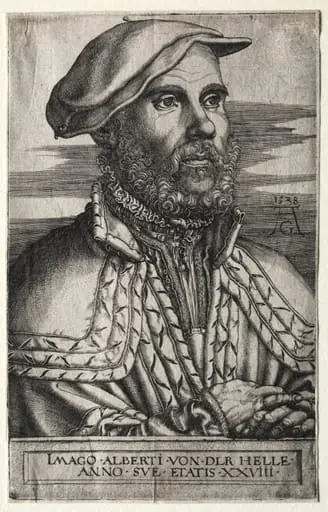
Girolamo da Siena is an ink print by the Renaissance artist Daniel Hopfer. It dates from 1503 and is held in the collection of the National Gallery of Art.
About this work
Overview
Hopfer, a German artist from Augsburg, was among the first to adapt metalworking techniques from armor decoration to printmaking.
Created in 1503 by Daniel Hopfer, this etching on iron plate depicts a bearded man identified as Girolamo da Siena. Hopfer, a German artist from Augsburg, was among the first to adapt metalworking techniques from armor decoration to printmaking. His use of iron rather than copper distinguished his early prints and contributed to the development of etching as a standalone medium during the transition from medieval craft to Renaissance artistic practice.
Subject & Meaning
The portrait represents Girolamo da Siena, likely a religious or scholarly figure, given the inscription 'HIERONYMO BABST-PIVS' beneath the image. His clasped hands and solemn expression suggest piety or contemplation. The plain background and minimal detail focus attention on the face and posture, reinforcing a devotional tone common in early printed portraits. The title and inscription imply a connection to ecclesiastical authority, though the subject’s exact identity remains uncertain.
Technique & Style
Hopfer employed acid to etch fine, linear patterns into an iron plate, a method derived from his experience decorating steel armor. The resulting print features dense, textured lines that mimic hand-drawn marks, creating subtle gradations of tone without wash or shading. Unlike later copper etchings, iron’s hardness limited detail but produced a distinctive, slightly rough aesthetic. The work exemplifies the early technical experimentation that defined printmaking’s formative years.
History & Provenance
The print was produced in Augsburg during the early 16th century, a period when print culture was expanding rapidly. Hopfer’s workshop likely produced multiple impressions for sale, making this one of the earliest examples of commercially distributed etchings. Though largely ignored by later art historians, surviving impressions in museum collections suggest it circulated among collectors and artisans. Its survival reflects its role in the nascent print market rather than elite patronage.
Context
Hopfer’s work emerged as woodcut dominated German printmaking, yet his etchings offered new possibilities for fine line and repetition. His choice of iron, though less common than copper, aligned with regional metalworking traditions. The portrait’s simplicity and inscription reflect the blending of religious imagery with emerging secular print commerce. This piece illustrates how craft skills from armor-making were repurposed to meet the growing demand for affordable, reproducible images.
Legacy
Hopfer’s innovations laid groundwork for the etching techniques later refined by artists like Albrecht Dürer and Rembrandt. Though his iron plates wore down quickly, his methods demonstrated that etching could be both technically precise and commercially viable. Recent scholarship has reevaluated his role not as a minor craftsman but as a pioneer who helped establish printmaking as an independent art form with its own production and distribution networks.
Artist & collection

Artist
Daniel Hopfer (c. 1470 – 1536) was a German artist who is widely believed to have been the first to use etching in printmaking, at the end of the 15th century. He also worked in woodcut. Although his etchings were…

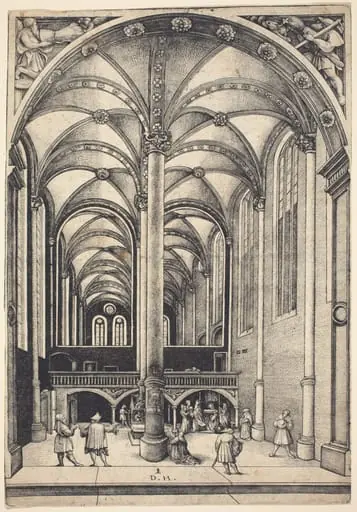 Interior of the Church of Saint Maria Magdalena with the Parable of the Offering of the Widow
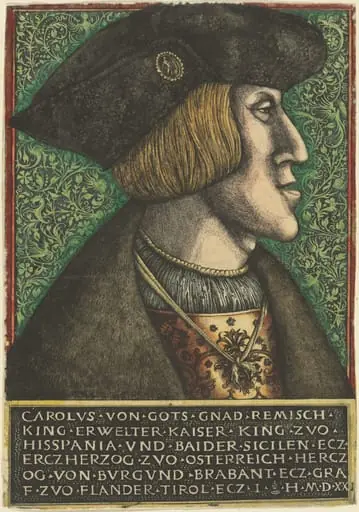 Emperor Charles V
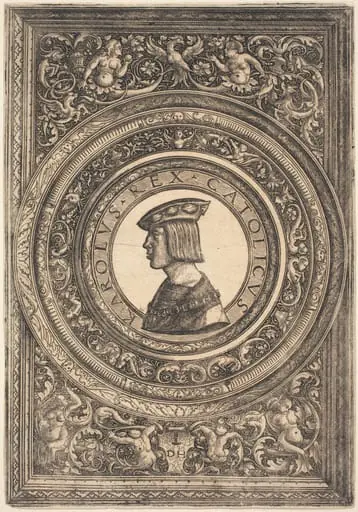 Emperor Charles V
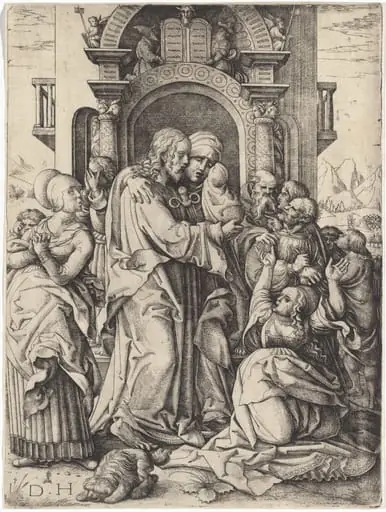 The Virgin Mary Taking Leave of Christ
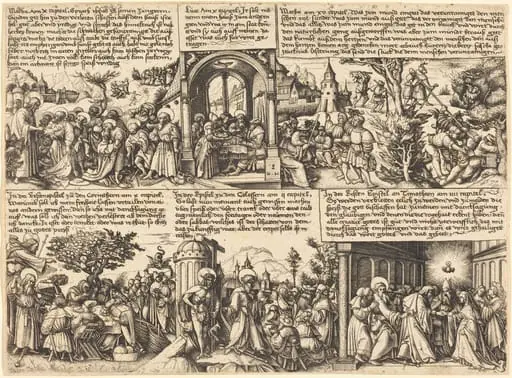 Jesus Christ Giving the Mission to the Apostles and Other New Testament Scenes
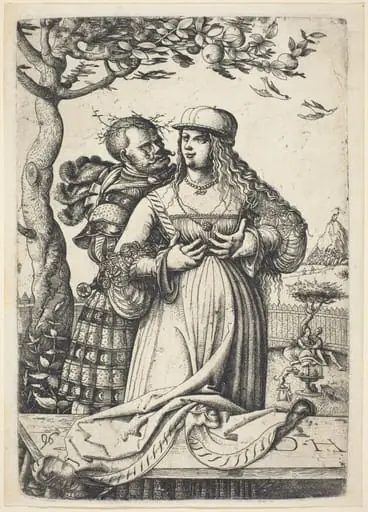 Soldier Embracing a Woman
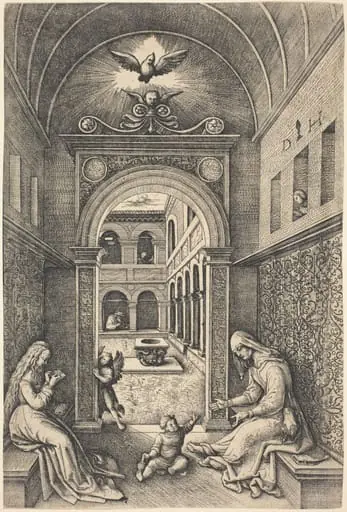 The Virgin and Child with Saint Anne by a Portal
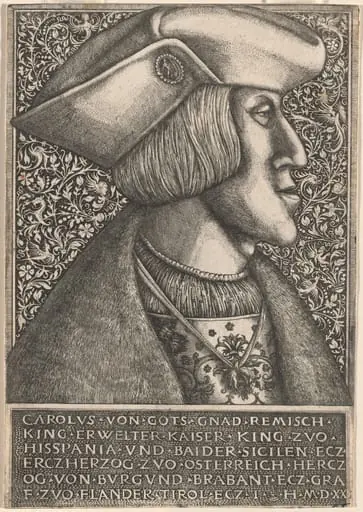 Emperor Charles V