Artwork
Jesus Christ Giving the Mission to the Apostles and Other New Testament Scenes
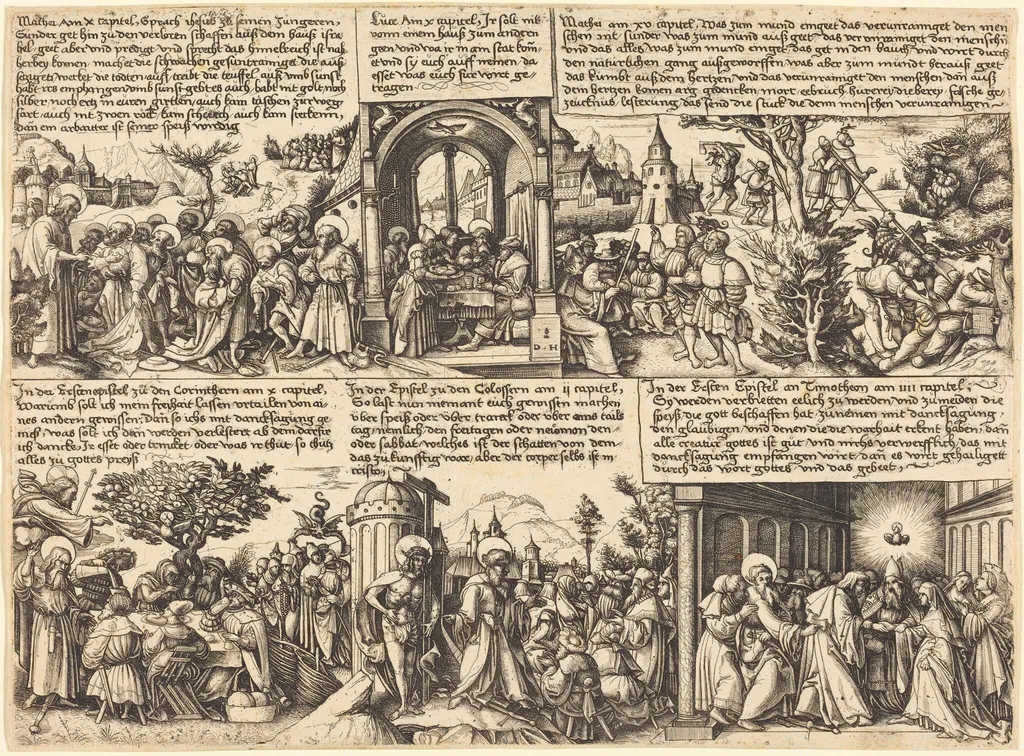
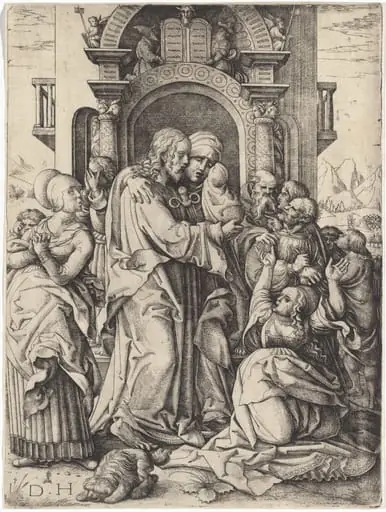
Jesus Christ Giving the Mission to the Apostles and Other New Testament Scenes is an ink print by the Renaissance artist Daniel Hopfer. It dates from 1530 and is held in the collection of the National Gallery of Art.
About this work
Overview
Created around 1530 by the German artist Daniel Hopfer, this iron etching presents multiple episodes from the New Testament in a single, densely composed scene.
Created around 1530 by the German artist Daniel Hopfer, this iron etching presents multiple episodes from the New Testament in a single, densely composed scene. Hopfer, known for his technical experimentation, used iron plates—unusual for printmaking at the time—likely drawing on his experience in armor-making. The result is a complex, linear network of figures and architecture, rendered with a distinctive, scratchy texture that distinguishes his work from smoother copper engravings.
Subject & Meaning
The print combines several biblical moments, including Christ commissioning the Apostles, surrounded by other events from the Gospels. Figures are arranged in layered groups, some kneeling in reverence, others gesturing in discourse. The central platform, marked by a cross-like form, anchors the narrative, while surrounding scenes—possibly the Ascension or Pentecost—extend the theological scope. The inclusion of dense German text in framed panels suggests a didactic purpose, intended for private devotion or instruction.
Technique & Style
Hopfer employed direct etching on iron, using acid to bite lines into the plate, a method derived from his work decorating steel armor. The resulting lines are sharp yet irregular, creating a tactile, almost haphazard surface that contrasts with the precision of copper engraving. This roughness enhances the sense of movement and urgency in the crowded compositions. The lack of tonal gradation emphasizes linear definition, making each figure and architectural element stand out as a distinct, interwoven element.
History & Provenance
Hopfer’s prints were produced in Augsburg, a center of metalwork and print culture in early 16th-century Germany. His use of iron plates was both practical and innovative, allowing for durable molds that could yield multiple impressions. Though fewer of his works survive compared to contemporaries, his techniques laid groundwork for later printmakers. The commercial potential of his method attracted publishers, helping to establish etching as a viable medium beyond fine art into broader circulation.
Context
Produced during the early Reformation, Hopfer’s print reflects a period when religious imagery was being redefined for lay audiences. The inclusion of vernacular text and multiple biblical episodes catered to a growing literate public seeking accessible devotional material. His fusion of armor-making techniques with printmaking mirrored broader shifts in artisanal specialization, where craftsmanship from one field informed innovations in another.
Legacy
Hopfer’s adaptation of iron etching influenced the technical evolution of printmaking in Northern Europe. Though his style was eventually superseded by finer copper etchings, his emphasis on narrative density and direct line work contributed to the development of expressive graphic storytelling. His work helped transition etching from a decorative craft to a medium capable of complex religious and moral narratives, paving the way for later artists like Dürer and Rembrandt.
Artist & collection

Artist
Daniel Hopfer (c. 1470 – 1536) was a German artist who is widely believed to have been the first to use etching in printmaking, at the end of the 15th century. He also worked in woodcut. Although his etchings were…

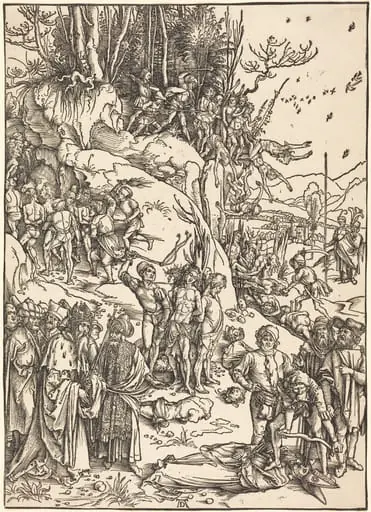 The Martyrdom of the Ten Thousand
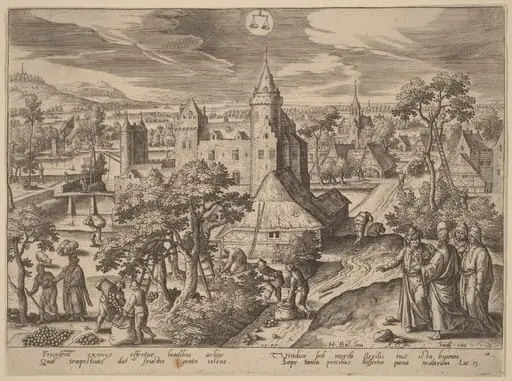 The Parable of the Barren Fig Tree
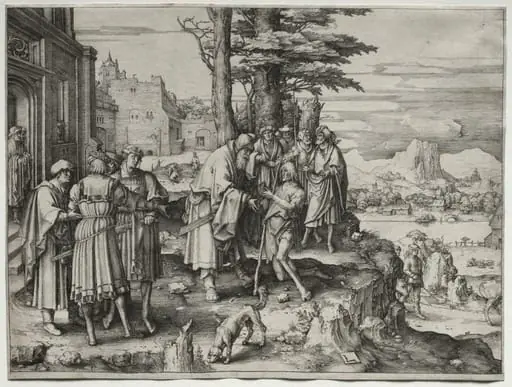 Return of the Prodigal Son
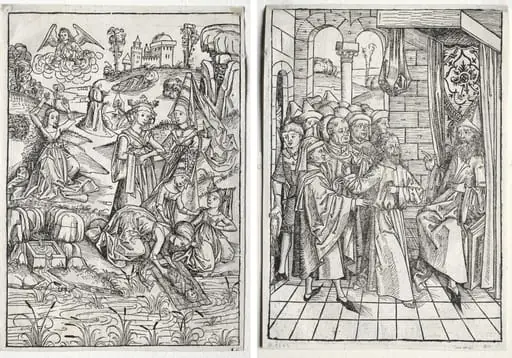 Der Schatzbehalter: Moses Found by Pharaoh's Daughter (recto); Der Schatzbehalter: Christ before Caiaphas (verso)
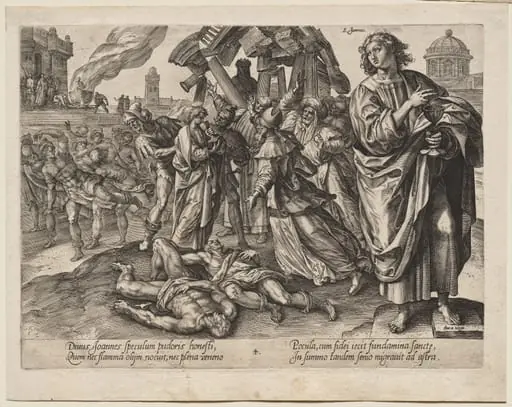 St. John
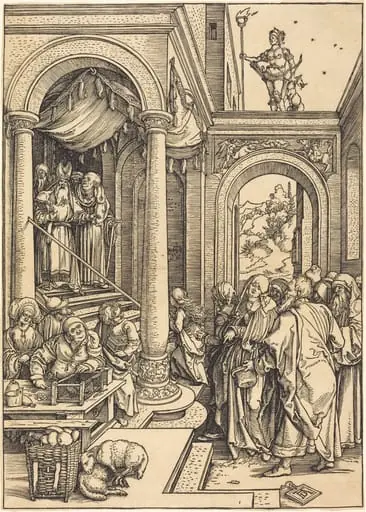 The Presentation of the Virgin in the Temple
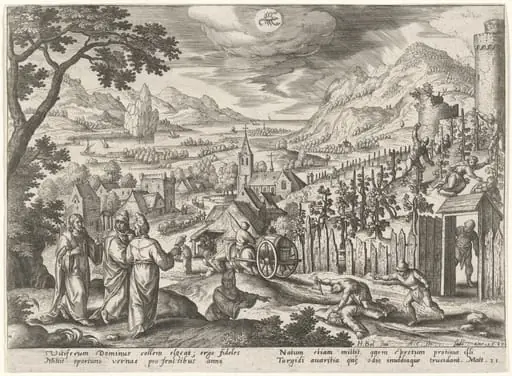 The Parable of the Unjust Husbandmen
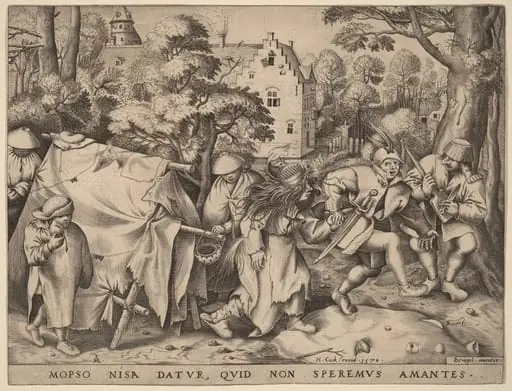 The Wedding of Mopsus and Nisa
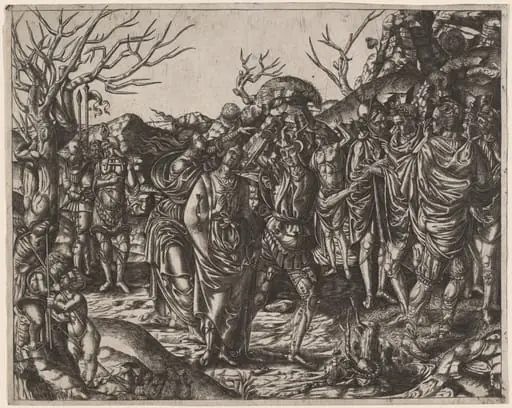 The Death of Virginia
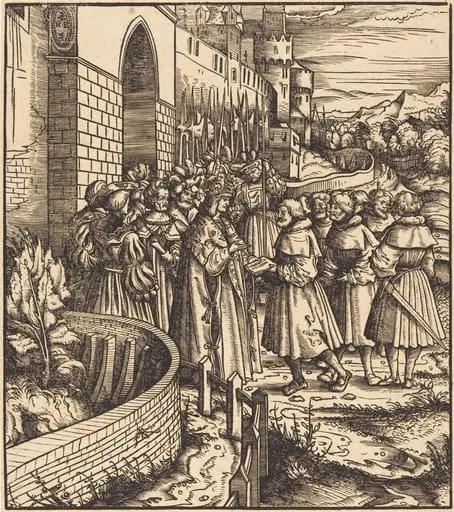 The Swiss Embassy against the Blue King
![Allegory of the Life of a Scholar in a Rich Household [fol. 3 verso / 4 recto], by French 16th Century](https://artifactworldgallery.com/img/french-16th-century--allegory-of-the-life-of-a-scholar-in-a-rich-household-fol-3--52df746155b443e5-w320.webp) Allegory of the Life of a Scholar in a Rich Household [fol. 3 verso / 4 recto]
Allegory of the Life of a Scholar in a Rich Household [fol. 3 verso / 4 recto]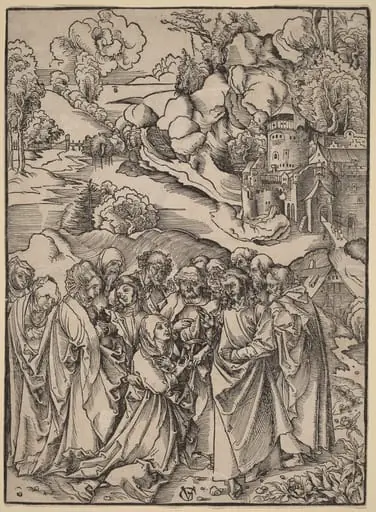 Christ and the Apostles and the Holy Women