Artwork
Henrietta Maria on Horseback
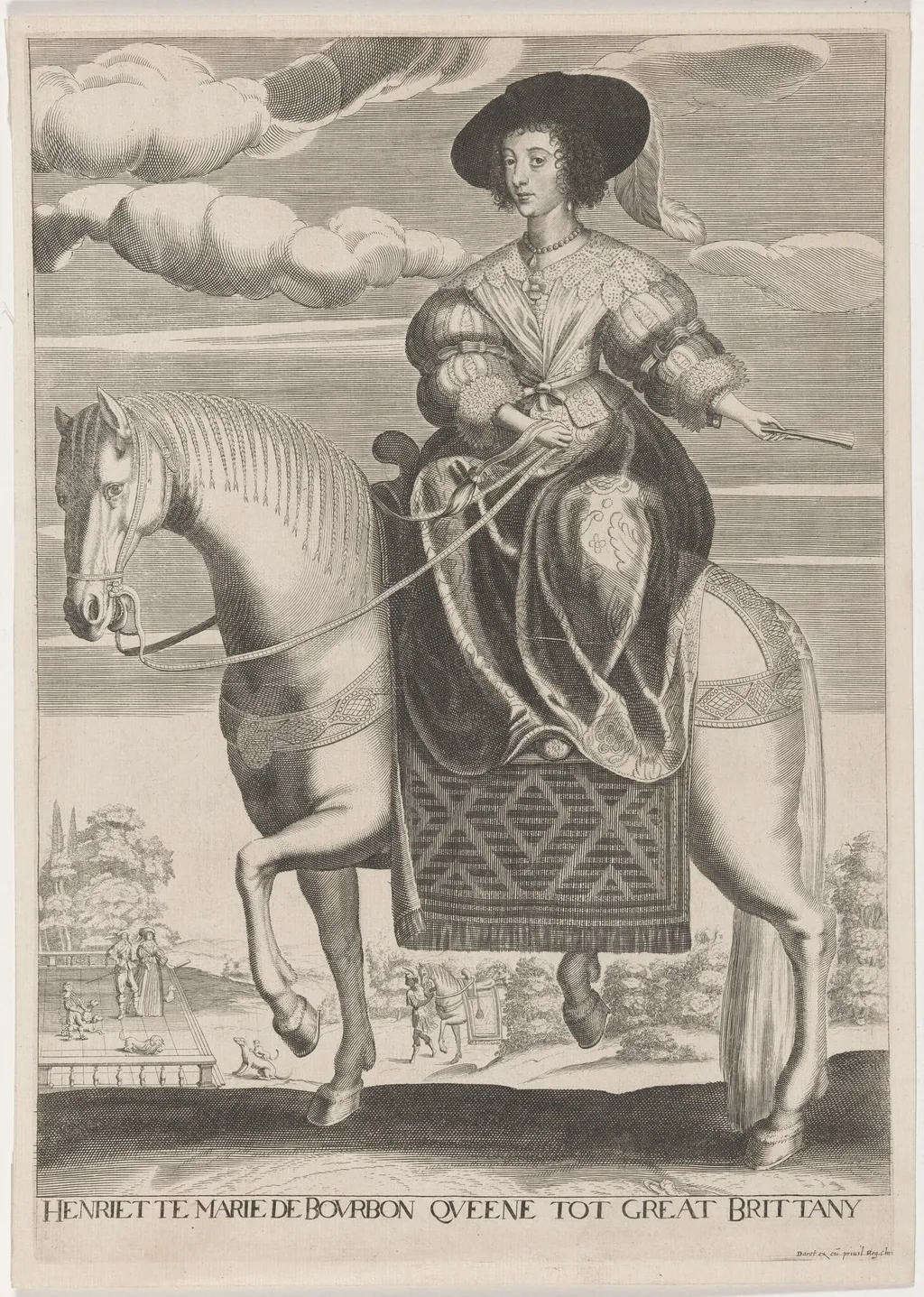
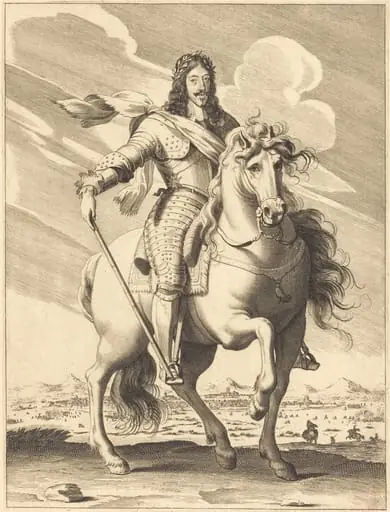
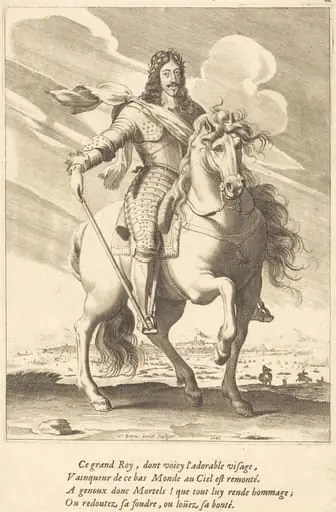
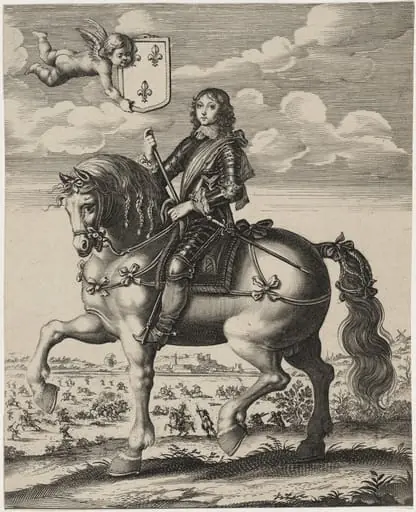
Henrietta Maria on Horseback is an ink print by the Baroque artist Pierre Daret de Cazeneuve. It dates from 1641 and is held in the collection of the National Gallery of Art.
About this work
Overview
The composition centers the queen in formal equestrian attire, framed by subtle architectural and natural elements behind her.
This 1641 engraving by Pierre Daret de Cazeneuve depicts Henrietta Maria, queen consort of England, mounted on horseback. Rendered in monochrome, the print combines portraiture with a miniature landscape background. The composition centers the queen in formal equestrian attire, framed by subtle architectural and natural elements behind her. Fine linear techniques define texture and depth, typical of mid-17th-century reproductive printmaking.
Subject & Meaning
Henrietta Maria is portrayed as a sovereign figure, not merely a royal consort. Her upright posture and commanding presence on horseback convey authority, aligning with contemporary ideals of queenship. The inclusion of garden and landscape scenes behind her suggests a connection to royal leisure and cultivated power. The inscription explicitly identifies her as Queen of Great Britain, reinforcing her official status amid political tensions of the era.
Technique & Style
The artist employs precise cross-hatching and fine parallel lines to model form and suggest volume. Textures in the horse’s mane, the queen’s ruffled collar, and the folds of her dress are rendered through layered strokes, creating contrast without tone. The background elements are simplified, using lighter, sparser lines to recede visually. This method reflects the conventions of engraved portraiture, prioritizing clarity and detail over atmospheric effect.
History & Provenance
Created in 1641, the engraving emerged during a period of increasing political unrest in England. As a French-born queen married to Charles I, Henrietta Maria was a polarizing figure. This print likely served as a propagandistic or commemorative object, circulated among courtiers and foreign dignitaries. Its survival suggests it was valued as a representation of royal dignity amid rising opposition to the monarchy.
Context
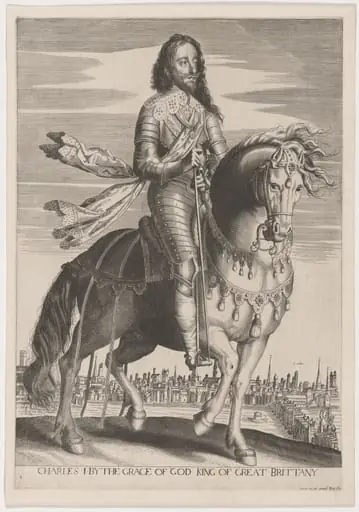
In early 17th-century England, equestrian portraiture was reserved for monarchs and high nobility, symbolizing control and legitimacy. Henrietta Maria’s depiction follows continental traditions, particularly French and Flemish court imagery, where queens were shown in regal, active roles. The engraving reflects the influence of continental styles on English visual culture, even as domestic tensions grew over royal authority and religious policy.
Legacy
The engraving remains a rare visual record of Henrietta Maria’s public image before the English Civil War. It documents how royal women were visually constructed as symbols of order and continuity. Though not widely reproduced, it informed later portraiture and contributed to the visual language of monarchy during a time when print media began shaping public perception of royalty.
Artist & collection