Artwork
Saint Jerome
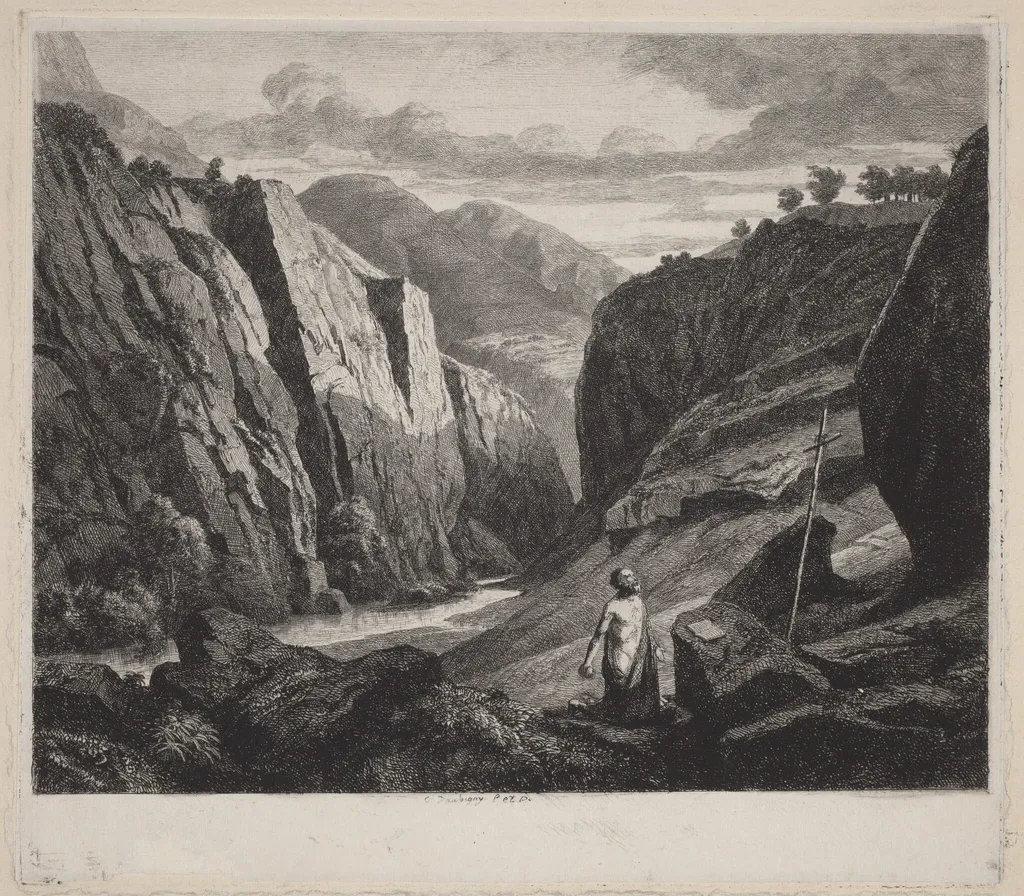
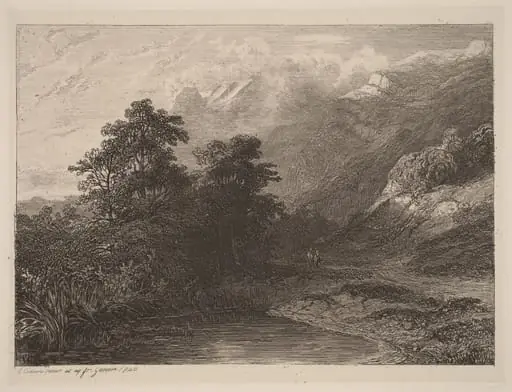
Saint Jerome is an ink print by the Romanticist artist Charles François Daubigny. It dates from 1840 and is held in the collection of the National Gallery of Art.
About this work
Overview
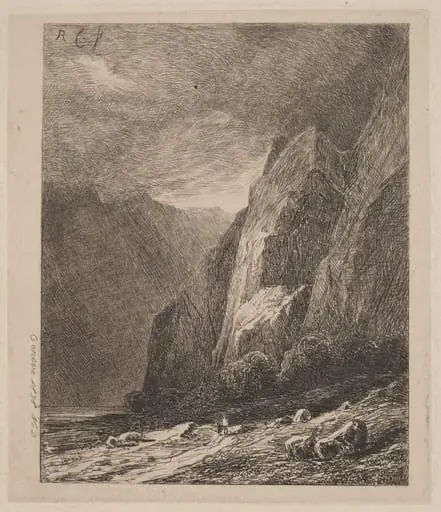
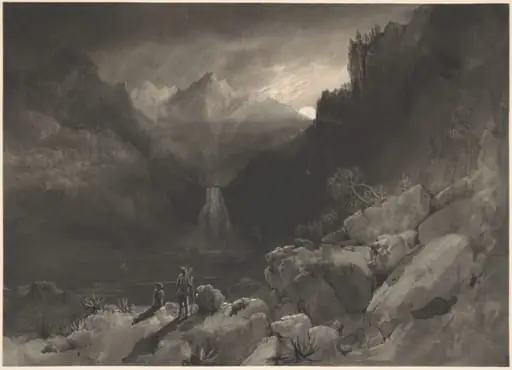
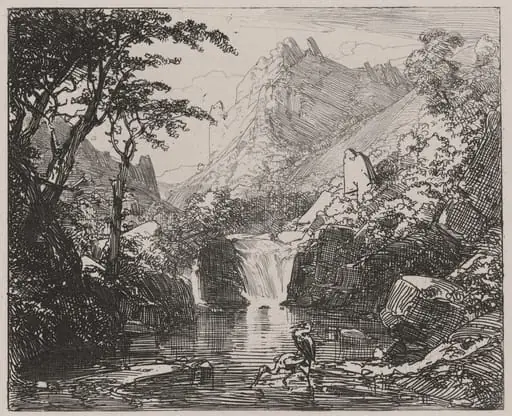
Created circa 1840, this print by Charles‑François Daubigny presents Saint Jerome amid a rugged, cliff‑filled landscape. Executed as an etching proof on chine collé, the composition balances a solitary, pilgrim‑like figure with the dramatic natural surroundings, conveying a sense of isolation within a wild, untamed environment.
Subject & Meaning
The central figure, identified by his staff crowned with a cross, evokes the hermit‑saint’s ascetic life and scholarly pursuits. Placed against steep rocks and a narrow winding path, the image suggests a spiritual journey through hardship, aligning the saint’s contemplative vocation with the formidable forces of nature.
Technique & Style
Daubigny employed fine, closely spaced lines to render the texture of stone and grass, achieving a subtle three‑dimensional effect. The use of chine collé—a paper‑on‑paper technique—provides a smooth, delicate surface for the etching, while the proof quality reveals the artist’s experimental approach to printmaking during a period of renewed interest in etching processes.
History & Provenance
Although primarily known for his landscape paintings, Daubigny was an active printmaker who contributed to the mid‑nineteenth‑century revival of etching and related techniques such as cliché verre. This work exemplifies his willingness to explore religious subjects alongside his more typical natural scenes, reflecting the broader artistic currents of the Barbizon school and early Impressionist influences.
Artist & collection
Artist
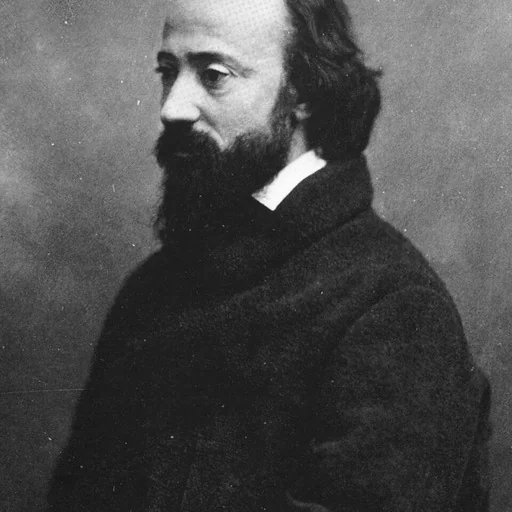
Charles-François Daubigny ( DOH-bin-yee, US: DOH-been-YEE, doh-BEEN-yee, French: ; 15 February 1817 – 19 February 1878) was a French painter, one of the members of the Barbizon school, and is considered an important precursor of…