Artwork
Steam Boats (Les Bateaux a vapeur)
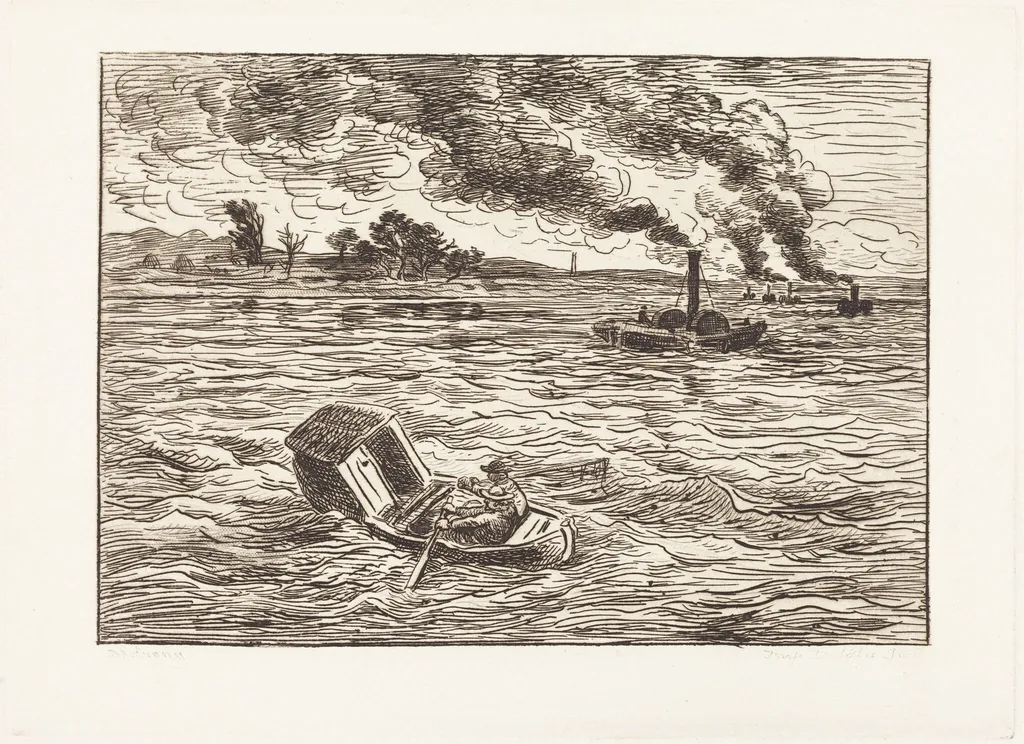
Steam Boats (Les Bateaux a vapeur) is an ink print by the Impressionist artist Charles François Daubigny. It dates from 1862 and is held in the collection of the National Gallery of Art.
About this work
Overview
Though rooted in the Barbizon tradition, the work reflects his engagement with modern life, using the medium of etching to convey movement and atmosphere.
Charles-François Daubigny produced the etching *Steam Boats (Les Bateaux à vapeur)* in 1862, capturing a quiet riverside scene with emerging industrial elements. Though rooted in the Barbizon tradition, the work reflects his engagement with modern life, using the medium of etching to convey movement and atmosphere. Unlike grand historical narratives, Daubigny focused on ordinary moments along waterways, elevating them through careful tonal gradations and delicate line work.
Subject & Meaning
The scene depicts a tranquil river with a steamboat releasing a wisp of smoke in the distance, while a small rowboat with a solitary figure drifts near the foreground. The juxtaposition of the steam-powered vessel with the quiet human presence suggests a quiet coexistence between nature and industrial progress. Daubigny avoids dramatic tension, instead inviting contemplation of everyday life unfolding along the water’s edge.
Technique & Style
Daubigny employed etching to achieve subtle variations in tone and texture, using fine, fluid lines to render water, clouds, and the steamboat’s plume. The soft gradations suggest atmospheric depth without heavy shading, aligning with his broader interest in capturing light and mood. His approach to printmaking was experimental, favoring spontaneity and naturalism over rigid detail, a hallmark of his transition toward Impressionist sensibilities.
History & Provenance
Created in 1862, this etching emerged during a period when Daubigny was increasingly focused on printmaking as a means of direct expression. He often produced small editions of his prints, distributing them among collectors and fellow artists. While specific early ownership records are sparse, the work is documented in major collections of 19th-century French prints, reflecting its recognition within artistic circles of the time.
Context
In the 1860s, France was rapidly industrializing, and steam-powered vessels became common on rivers like the Seine. Daubigny, living near such waterways, observed these changes firsthand. Rather than rejecting modernity, he integrated it into his landscapes with restraint, aligning with the Barbizon ethos of truthful observation. His prints offered an alternative to academic art, emphasizing personal perception over idealized composition.
Legacy
Daubigny’s etchings, including this one, influenced later artists seeking to capture transient effects in print form. His willingness to depict modern subjects with poetic subtlety helped bridge Barbizon realism and Impressionism. Though less celebrated than his paintings, his prints are now valued for their quiet innovation and their role in expanding the expressive potential of etching as a medium for landscape.
Artist & collection
Artist
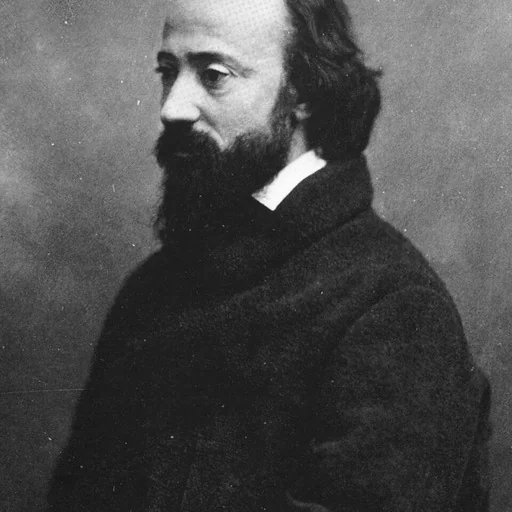
Charles-François Daubigny ( DOH-bin-yee, US: DOH-been-YEE, doh-BEEN-yee, French: ; 15 February 1817 – 19 February 1878) was a French painter, one of the members of the Barbizon school, and is considered an important precursor of…

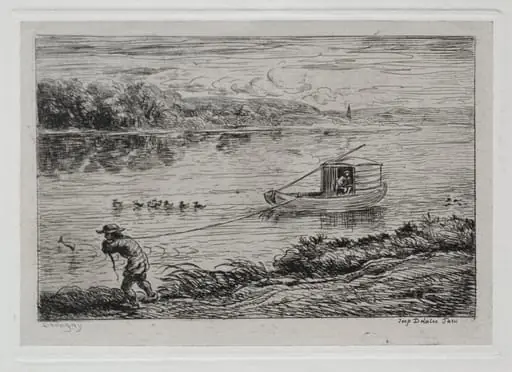 The Boat Trip: Cabin Boy Hauling the Tow-Rope or Hauling by Rope
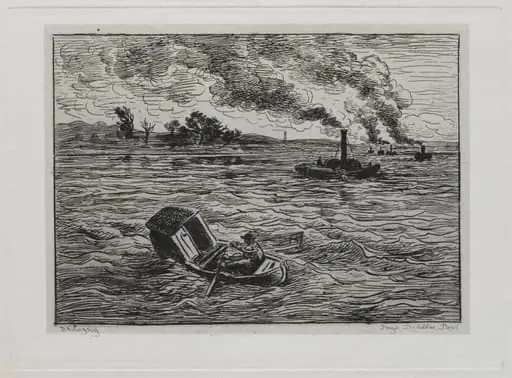 The Boat Trip: The Steamboats or Watch Out for the Steamers
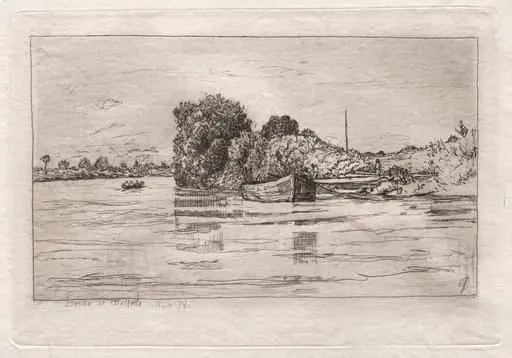 Danube at Walhalla
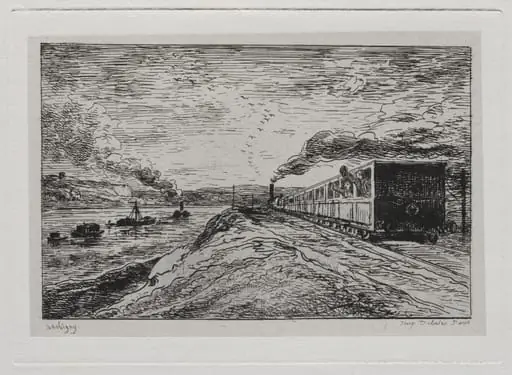 The Boat Trip: The Departure (The Return)
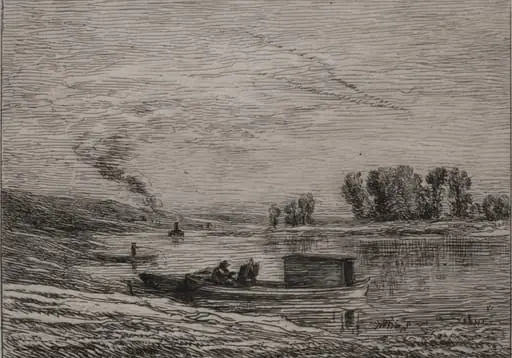 The Boat in Conflans
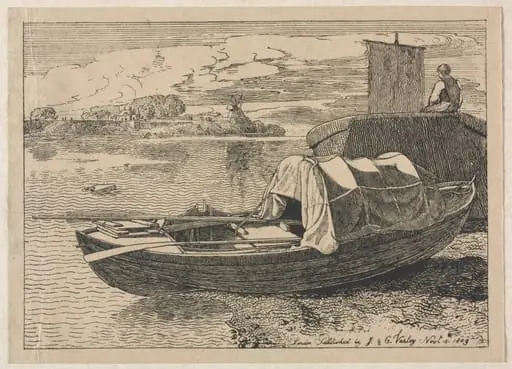 Boats on a River, Windmill in Distance
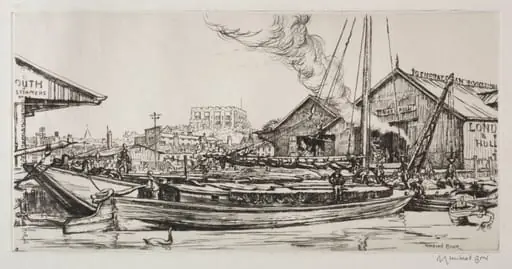 Norwich Castle
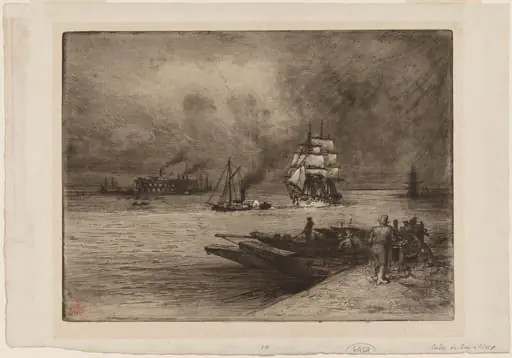 Near Gravesend: Souvenir of the Thames
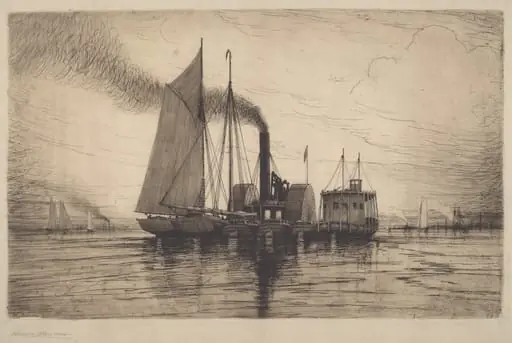 The Tow
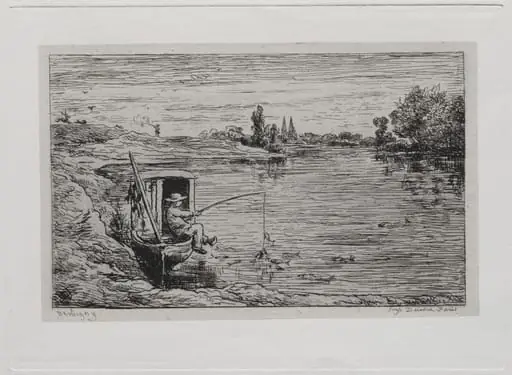 The Boat Trip: The Cabin Boy Fishing (Line Fishing)
 Un Vieux Chantier à Rochester (The Old Dock-yard at Rochester)
 Le Port aux Mouettes (Port with Seagulls)