Artwork
A Naples - Le meilleur des rois... (2nd plate)
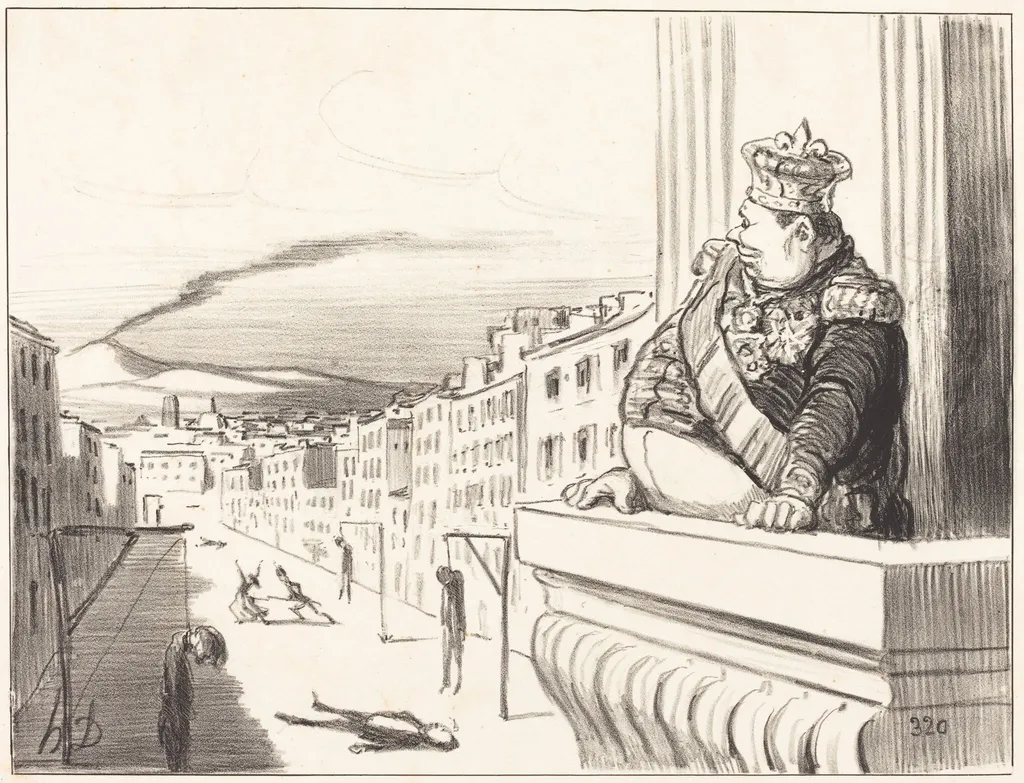
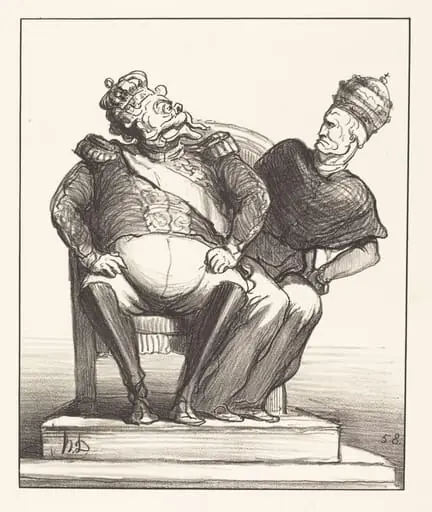
A Naples - Le meilleur des rois... (2nd plate) is an ink print by the Impressionist artist Honoré Daumier. It dates from 1851 and is held in the collection of the National Gallery of Art.
About this work
Overview
Executed in the medium of stone lithography, it reflects his prolific output for satirical journals like *Le Charivari*.
Created in 1851, this lithograph is one of two plates from Honoré Daumier’s series targeting European monarchies. Executed in the medium of stone lithography, it reflects his prolific output for satirical journals like *Le Charivari*. The work belongs to a body of prints that used visual wit to challenge authority during a politically tense era in France, following the 1848 revolution and the rise of Louis-Napoléon Bonaparte.
Subject & Meaning
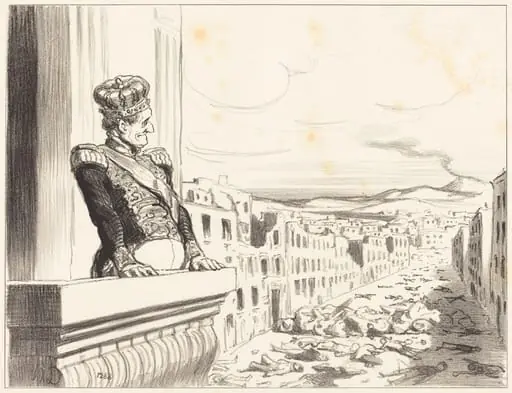
The figure depicted, adorned with a crown-like hat and ornate attire, is a caricature of a monarch—likely Louis-Philippe—peering from a window as if addressing the populace below. His gesture, mimicking a pipe or letter, suggests performative authority. The contrast between his isolated, elevated position and the disheveled, active crowd beneath underscores themes of detachment and social inequality, critiquing the monarchy’s disconnect from the people’s struggles.
Technique & Style
Daumier employed lithography to achieve rapid, expressive lines, drawing directly onto a limestone surface. The sketchlike quality—loose, energetic, and minimally shaded—conveys immediacy and spontaneity. The technique allowed for mass reproduction, aligning with his goal of reaching a broad public. Ink tones are restrained, emphasizing form and gesture over detail, reinforcing the work’s satirical urgency.
History & Provenance
This print was published as the second plate in a series responding to the political climate of early 1850s France. Daumier had been imprisoned in 1832 for earlier caricatures, yet continued producing subversive imagery under the radar. The series was likely circulated through underground channels or periodicals, avoiding direct censorship while still conveying its critique to literate urban audiences.
Context
The print emerged amid France’s transition from a constitutional monarchy to an authoritarian empire. Daumier’s work responded to the suppression of press freedoms and the glorification of royalty under Louis-Napoléon. His satires drew from popular theater and street life, transforming public perception of power into visual farce. The choice of Naples as a setting may allude to Bourbon rule or serve as a coded reference to distant, irrelevant monarchs.
Legacy
Daumier’s lithographs, including this one, helped redefine political satire in print. His ability to distill complex social critique into a single, vivid image influenced later generations of cartoonists and illustrators. Though often dismissed as ephemeral in his time, these works are now recognized for their formal innovation and enduring commentary on power, class, and representation.
Own this work as a print
Artist & collection

Artist
Honoré-Victorin Daumier was a French painter, sculptor, and printmaker, whose many works offer commentary on the social and political life in France, from the Revolution of 1830 to the fall of the Second French Empire in 1870.









 Trop étroit pour deux
 Trop étroit pour deux
 Sur le point de se noyer ...
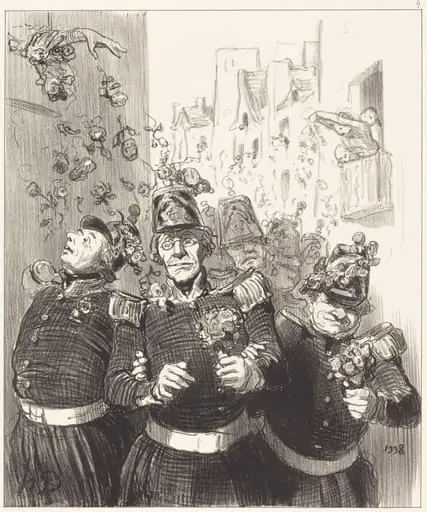 Rifolard est plus charmé que jamais...
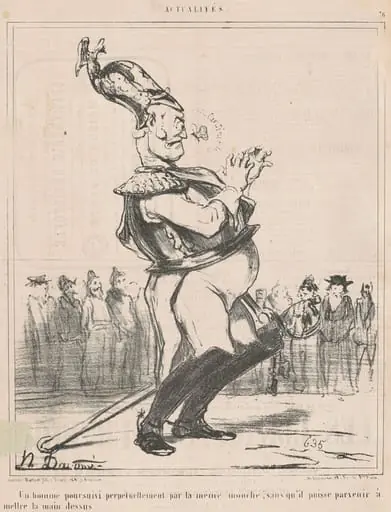 Un homme poursuivi ...
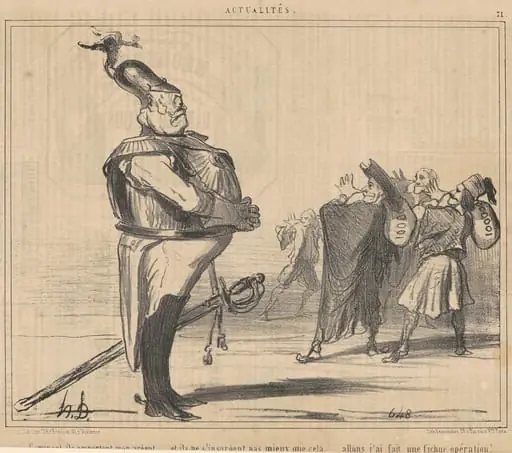 Comment, ils emportent mon argent ...
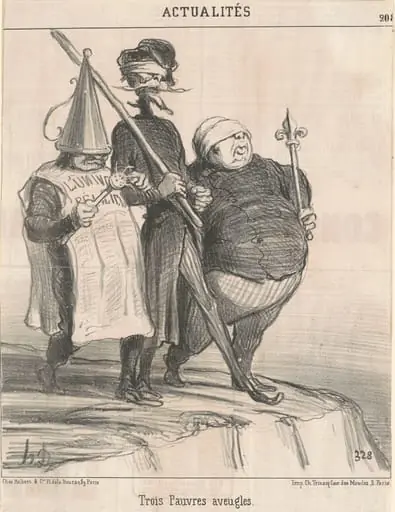 Trois Pauvres aveugles
 Le roi des grecs ...
 Les fricoteurs politiques
 Votre maison me fait l'effet de devoir ...
 A Naples - Le meilleur des rois... (1st plate)
 Trop étroit pour deux