Artwork
Au Havre
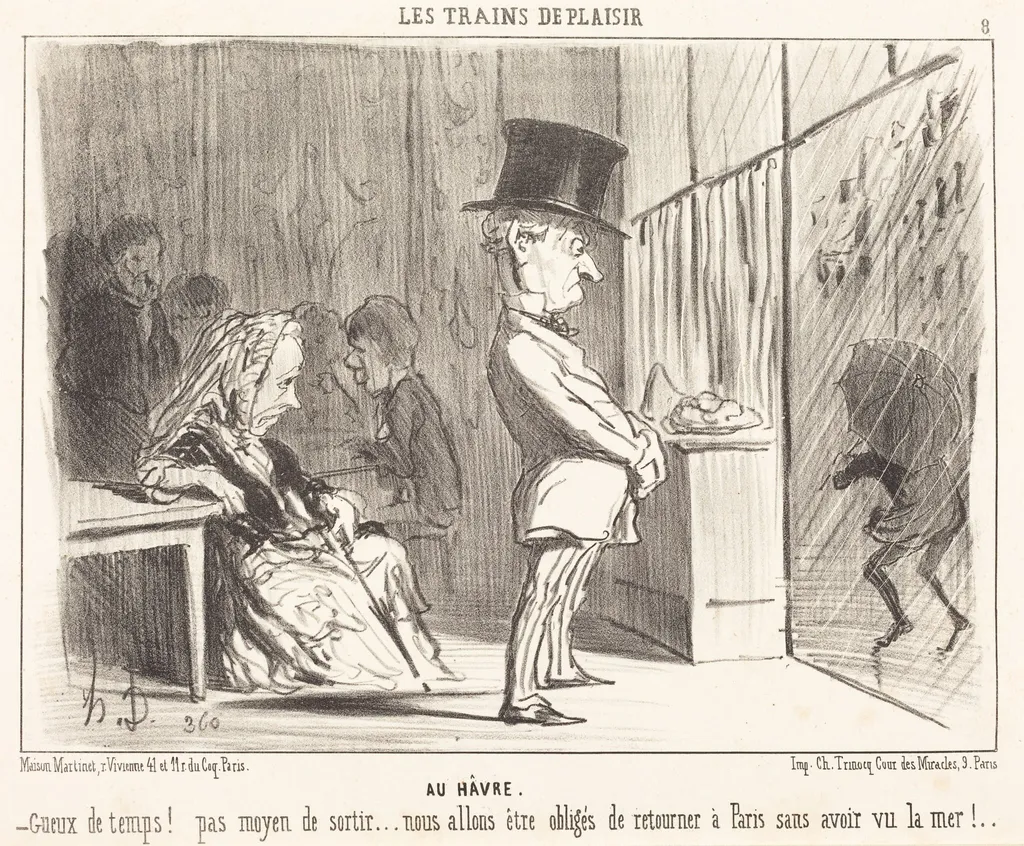
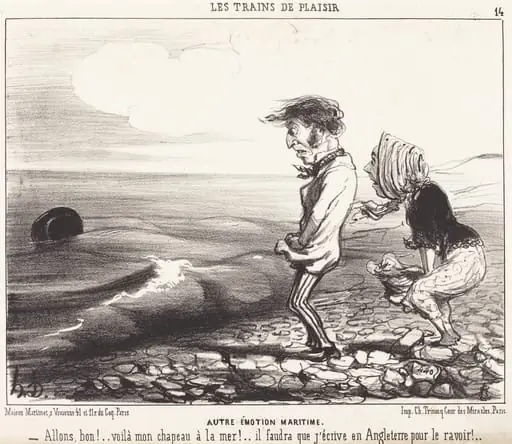
Au Havre is an ink print by the Impressionist artist Honoré Daumier. It dates from 1852 and is held in the collection of the National Gallery of Art.
About this work
Overview
Daumier’s focus on everyday social dynamics reflects his commitment to documenting the lives of ordinary people amid France’s turbulent political climate.
Created in 1852, *Au Havre* is a lithograph by French artist Honoré Daumier, part of his extensive body of graphic work produced for periodicals. The print captures a moment of public spectacle in a coastal town, rendered with the immediacy characteristic of newspaper illustration. Daumier’s focus on everyday social dynamics reflects his commitment to documenting the lives of ordinary people amid France’s turbulent political climate.
Subject & Meaning
The scene centers on a man in a top hat, possibly a street performer or demagogue, addressing a small crowd gathered around a table with food. His gesture draws the attention of onlookers, including a seated woman and several bystanders. The composition suggests a critique of public gullibility or the performative nature of authority, themes Daumier often explored through subtle, observational satire rather than overt caricature.
Technique & Style
Daumier employed bold, fluid lines and dense tonal shading to convey movement and focus. The lithographic medium allowed rapid execution, suited to his journalistic pace. Contrast between the illuminated central figure and the shadowed, indistinct crowd heightens the drama. His economy of detail—suggested rather than rendered—invites the viewer to infer social relationships from posture and gesture.
History & Provenance
The print was likely published in a French illustrated journal during the early years of the Second Republic, a time when press censorship fluctuated. Daumier had previously faced imprisonment for political satire, making his work a cautious yet persistent form of social commentary. *Au Havre* survives as part of a larger archive of prints documenting urban life, now held in major museum collections.
Context
In 1852, France was transitioning from republican ideals to the authoritarian rule of Napoleon III. Daumier’s work, though not overtly political here, reflects the broader cultural anxiety around public persuasion and the rise of charismatic figures. The seaside setting of Le Havre, a port city with mixed social classes, provided a microcosm of national tensions between spectacle and substance.
Legacy
*Au Havre* exemplifies Daumier’s enduring influence on modern graphic art and social realism. His ability to distill complex social dynamics into single, resonant images paved the way for later illustrators and cartoonists. Though produced for ephemeral publication, the print endures as a quiet but incisive record of 19th-century public behavior and the power of visual narrative.
Own this work as a print
Artist & collection

Artist
Honoré-Victorin Daumier was a French painter, sculptor, and printmaker, whose many works offer commentary on the social and political life in France, from the Revolution of 1830 to the fall of the Second French Empire in 1870.









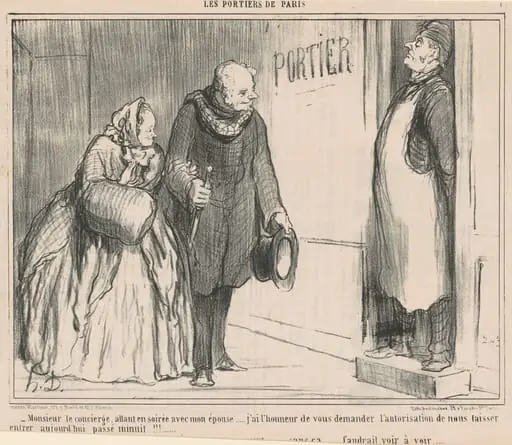 Monsieur le concierge, allant en soirée
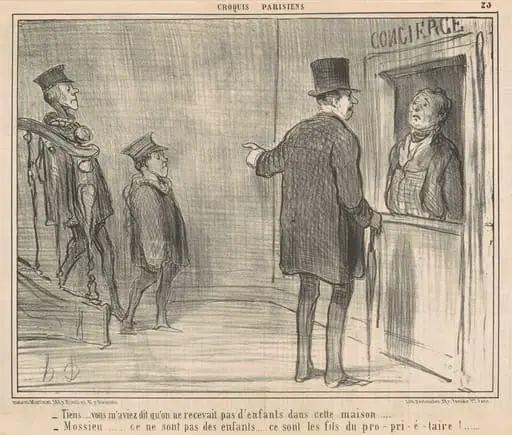 Tiens ... vous m'aviez dit ...
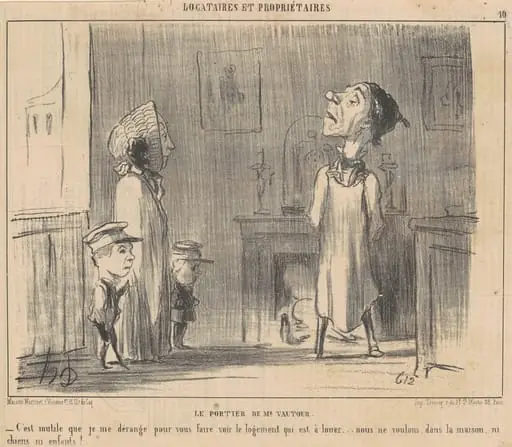 Le portier de Mr Vautour
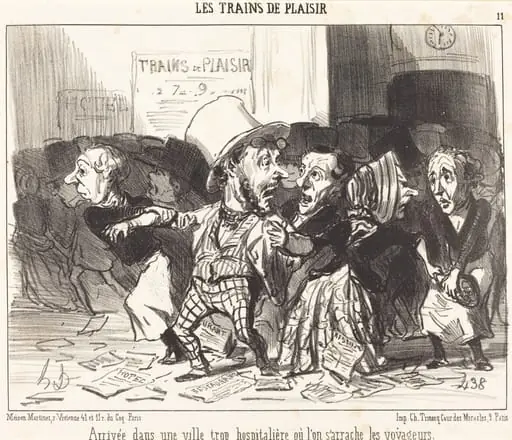 Arrivée dans une ville trop hospitalière...
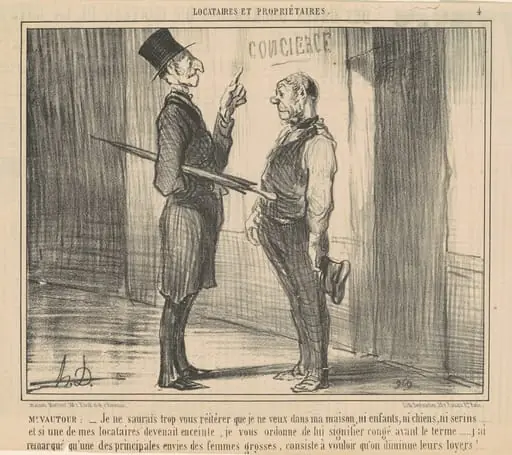 M. Vautour: Je ne saurais trop ...
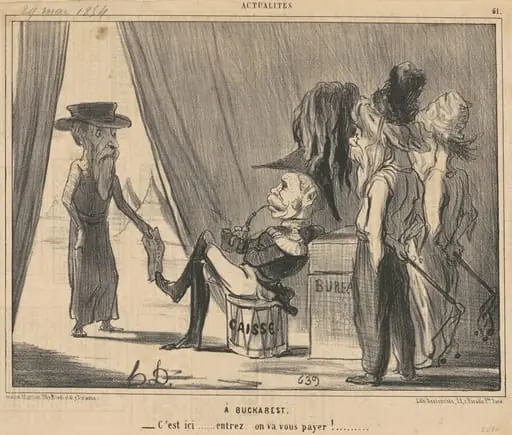 A Bucharest
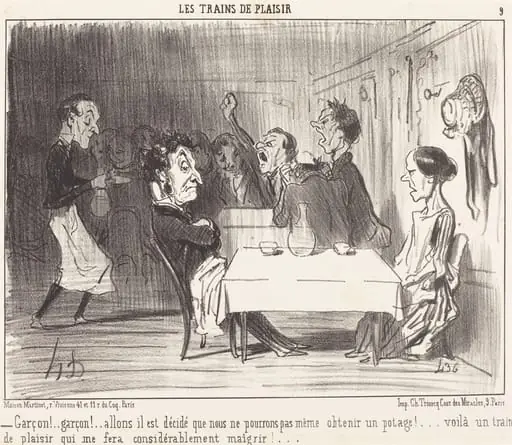 Garçon!... garçon!... allons il est décidé...
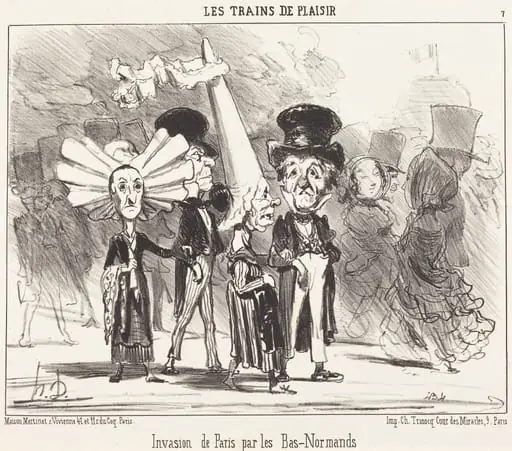 Invasion de Paris par les Bas-Normands
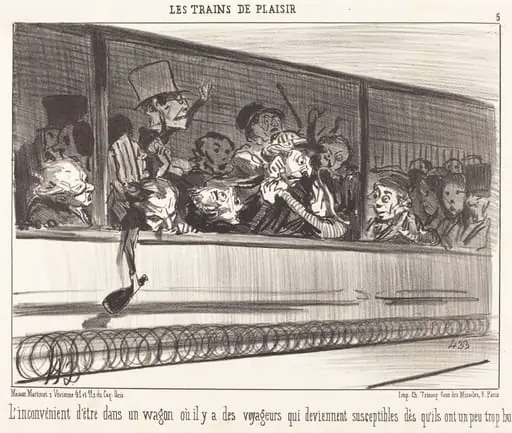 L'Inconvénient d'être dans un wagon...
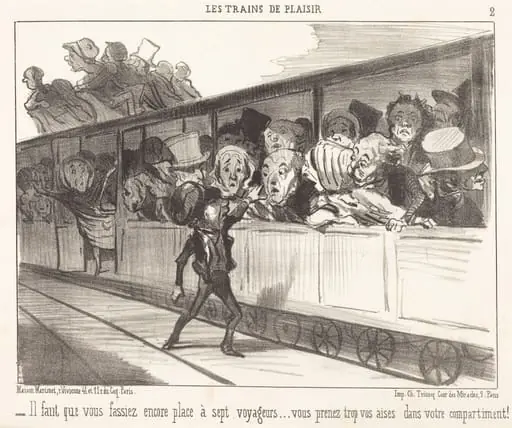 Il faut que vous fassiez encore place...
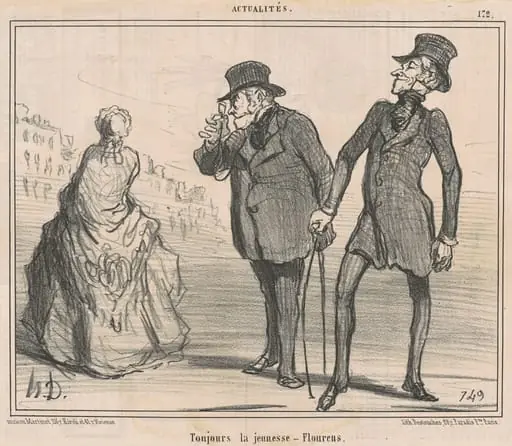 Toujours la heunesse-flourens
 Autre émotion maritime