Artwork
Garçon!... garçon!... allons il est décidé...
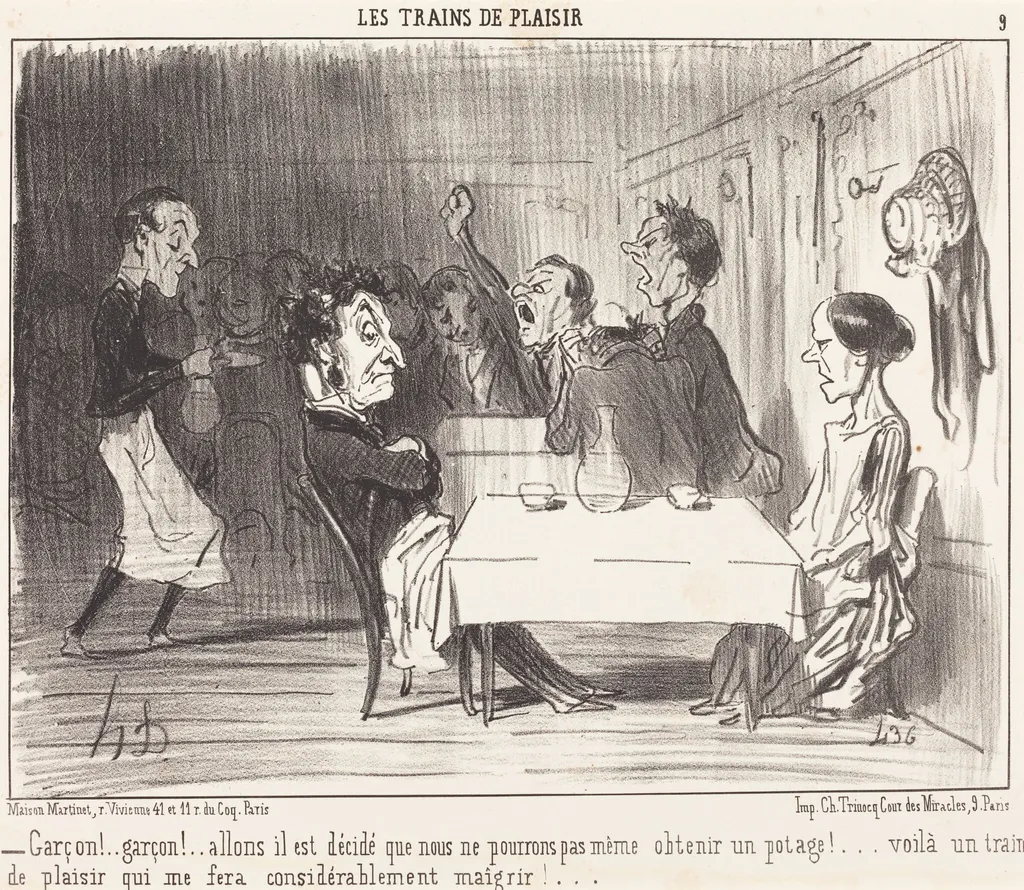
Garçon!... garçon!... allons il est décidé... is an ink print by the Impressionist artist Honoré Daumier. It dates from 1852 and is held in the collection of the National Gallery of Art.
About this work
Overview
Created in 1852, this lithograph by Honoré Daumier captures a moment of domestic chaos in mid-19th century France. Executed in the artist’s signature pen-and-ink style, the print was produced for mass circulation through illustrated journals, reflecting his commitment to reaching a broad public with visual commentary on everyday life.
Subject & Meaning
The French title, repeated like a plea, underscores the futility of their demands, satirizing bourgeois entitlement amid social disorder.
The scene depicts a group of individuals in a cluttered interior, their gestures and expressions conveying frustration over unmet needs—likely food or transportation. One figure slumps in resignation while others gesture aggressively. A dog and wine bottle suggest neglect and indulgence coexisting. The French title, repeated like a plea, underscores the futility of their demands, satirizing bourgeois entitlement amid social disorder.
Technique & Style
Daumier employed lithography to achieve rapid, expressive lines that mimic spontaneous sketching. His use of dense hatching and stark contrasts heightens the emotional tension, while loose, almost hurried strokes convey movement and disorder. The absence of fine detail focuses attention on posture and gesture, characteristic of his caricatural approach to human behavior.
History & Provenance
The print appeared in *Le Charivari*, a Parisian satirical journal where Daumier regularly published political and social critiques. Produced during the early years of Louis-Napoléon Bonaparte’s rule, it reflects the artist’s ongoing resistance to authoritarianism. Though not politically explicit, its depiction of failed social order resonated with republican audiences wary of rising repression.
Context
In 1852, France transitioned from the Second Republic to the Second Empire, curtailing press freedoms and silencing dissent. Daumier’s work, though often veiled in domestic scenes, subtly critiqued the erosion of civic life. His focus on mundane conflicts—like a household’s inability to secure basic services—mirrored broader societal frustrations under tightening state control.
Legacy
Daumier’s lithographs, including this one, helped redefine printmaking as a vehicle for social observation rather than mere illustration. His ability to distill complex human dynamics into a single frame influenced later generations of cartoonists and realist artists, establishing a precedent for visual satire grounded in everyday observation.
Artist & collection

Artist
Honoré-Victorin Daumier was a French painter, sculptor, and printmaker, whose many works offer commentary on the social and political life in France, from the Revolution of 1830 to the fall of the Second French Empire in 1870.









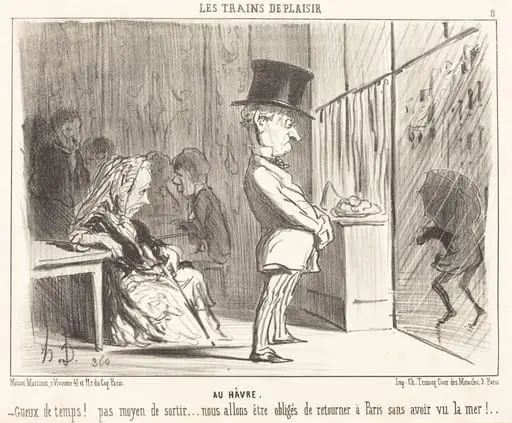 Au Havre
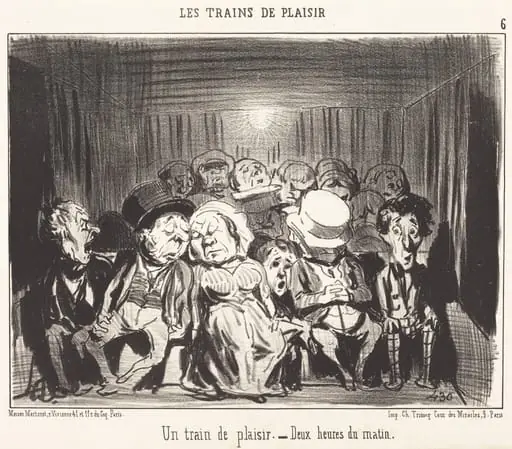 Un Train de plaisir
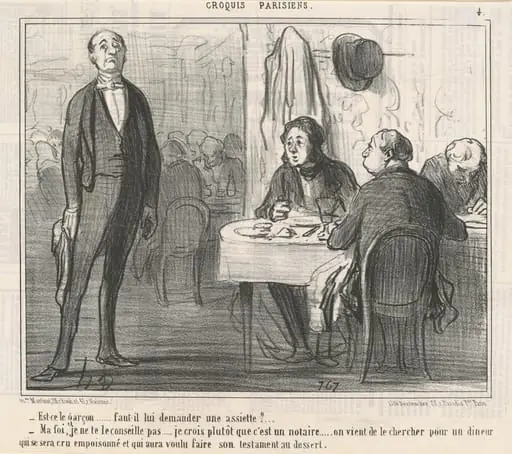 Est-ce le garçon?
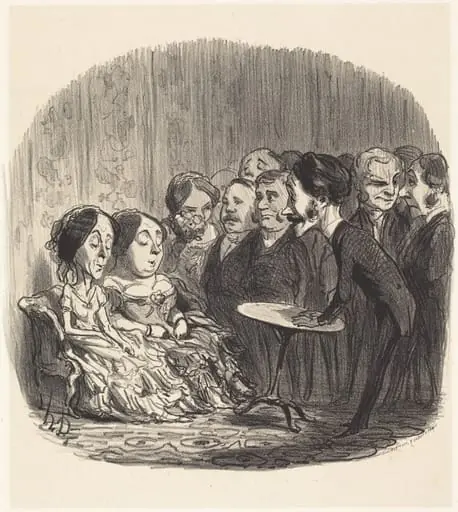 L'Esprit frappeur
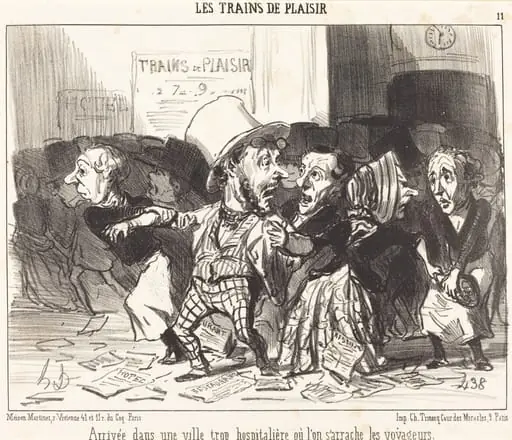 Arrivée dans une ville trop hospitalière...
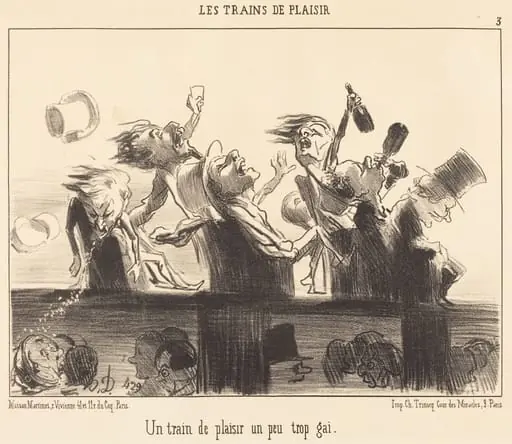 Un Train de plaisir un peu trop gai
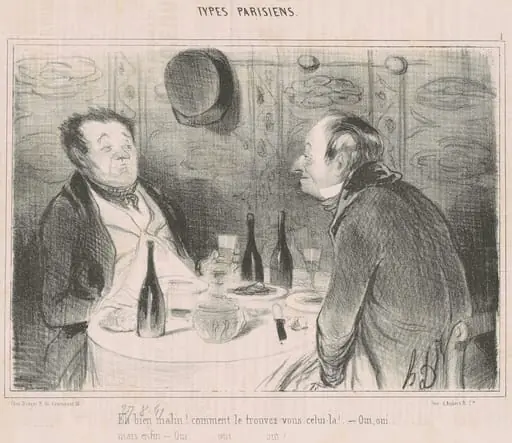 Eh bien Malin! comment le trouvez vous celui-la!
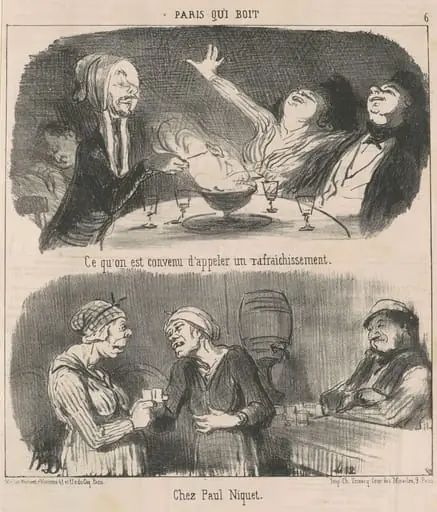 Ce qu'on est convenue d'appeler un rafraichissement
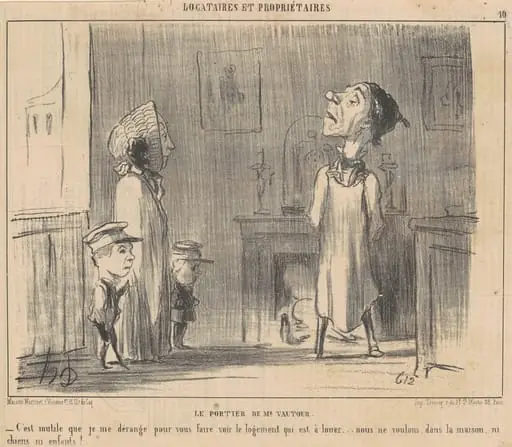 Le portier de Mr Vautour
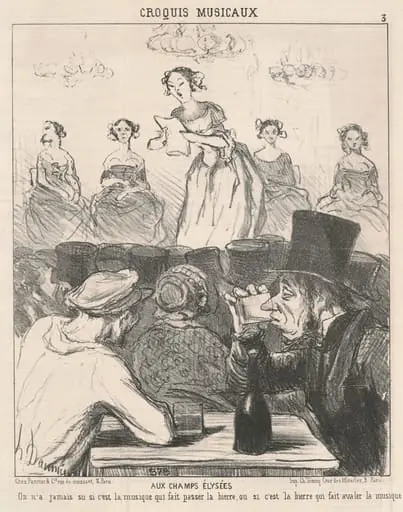 Aux Champs-Elysées
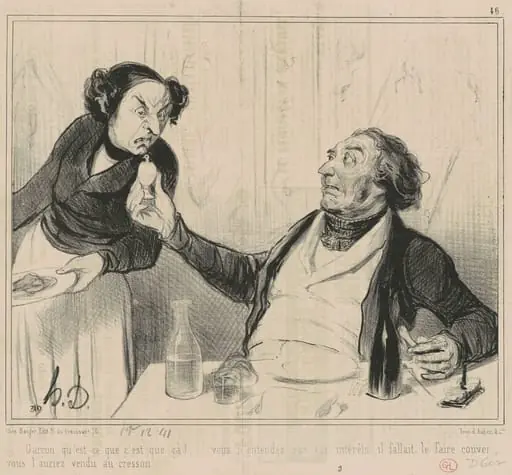 Garçon, qu'est-ce que c'est que ça?...
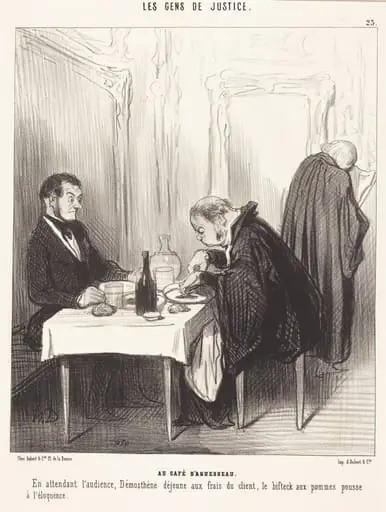 Au Café d'Aguesseau