Artwork
Barbé-Marbois
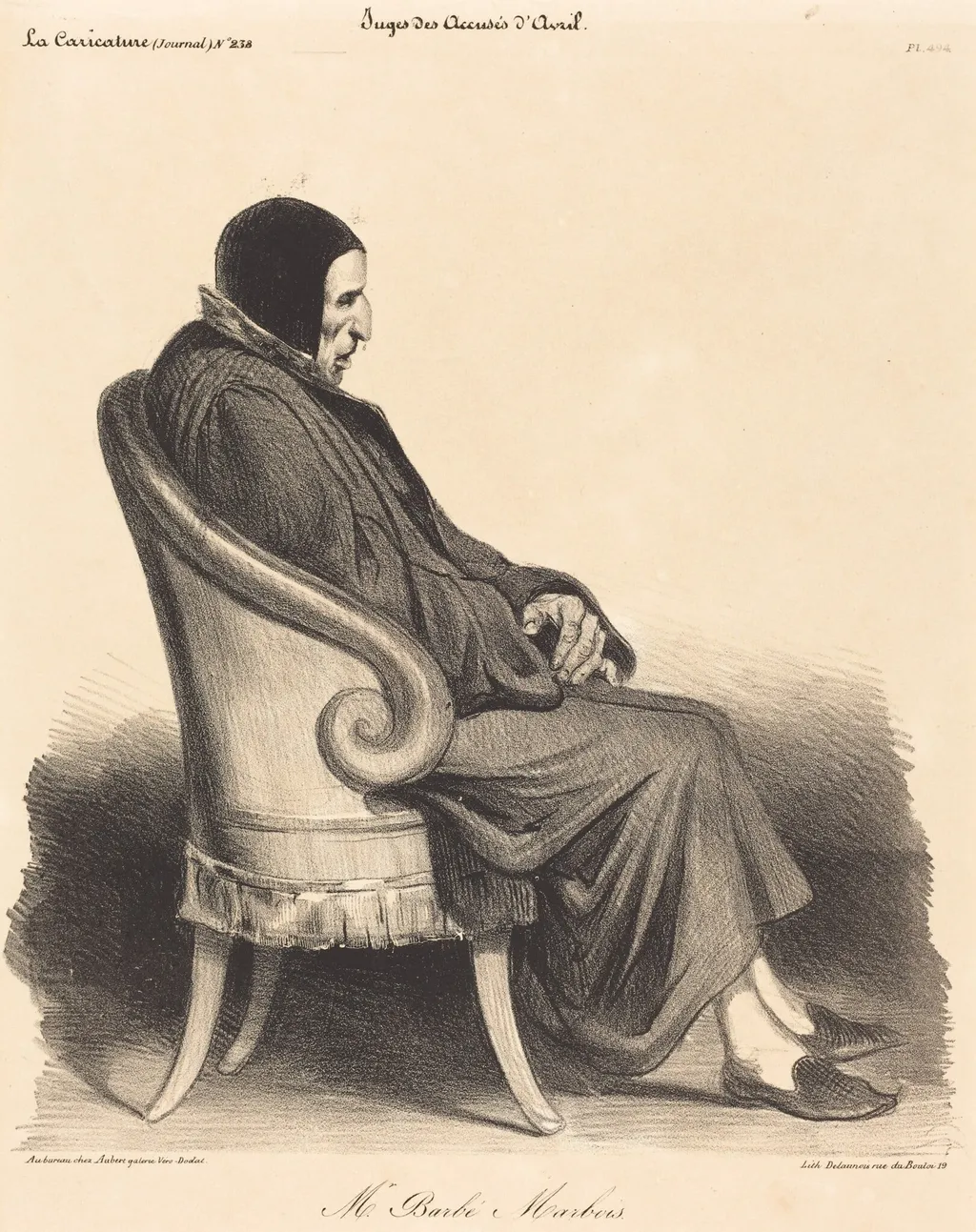
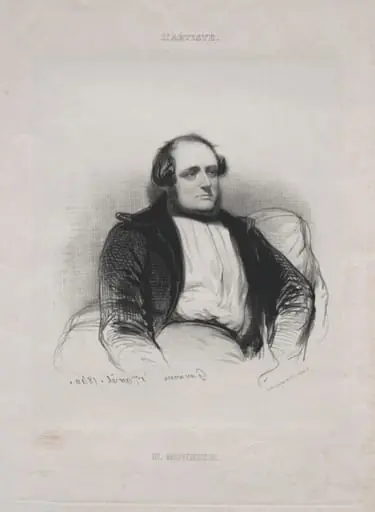
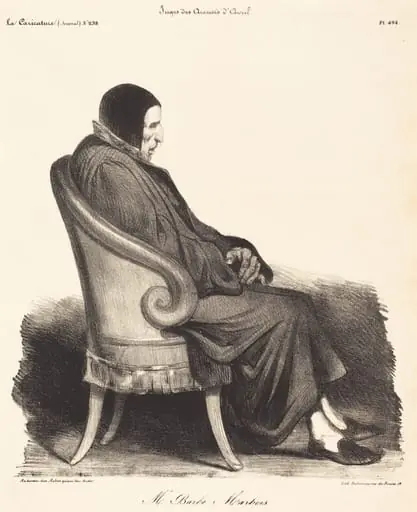
Barbé-Marbois is an ink print by the Romanticist artist Honoré Daumier. It dates from 1835 and is held in the collection of the National Gallery of Art.
About this work
Overview
Rendered in a loose, sketch‑like manner, the image shows the man in a high‑backed chair, his coat and fringed trousers rendered with minimal line work.
Created in 1835, this lithograph by Honoré Daumier depicts a seated figure identified as Barbé‑Marbois. Rendered in a loose, sketch‑like manner, the image shows the man in a high‑backed chair, his coat and fringed trousers rendered with minimal line work. The composition was originally published in a satirical periodical, reflecting Daumier’s engagement with political caricature during the July Monarchy.
Subject & Meaning
The work portrays Barbé‑Marbois, a public figure of the era, positioned sideways with crossed legs and a downward gaze, suggesting a moment of contemplation or perhaps a subtle mockery. Daumier’s republican sympathies often led him to satirize members of the aristocracy and government, and this portrayal likely serves as a visual commentary on the subject’s status or demeanor within contemporary political discourse.
Technique & Style
Executed in lithography, the image relies on swift, gestural strokes that convey the figure’s posture and attire with economy. Daumier’s characteristic use of loose lines creates a sense of immediacy, bordering on a doodle, while still preserving enough detail to identify clothing elements such as the long coat and fringed pants. The medium allowed for rapid production suitable for newspaper circulation.
History & Provenance
The lithograph first appeared in a satirical journal of the 1830s, part of Daumier’s prolific output for publications like La Caricature and Le Charivari. It exemplifies his practice of using print media to disseminate political critique. The work has since been catalogued among Daumier’s early caricatures, illustrating his role in shaping visual satire during the July Monarchy.
Artist & collection

Artist
Honoré-Victorin Daumier was a French painter, sculptor, and printmaker, whose many works offer commentary on the social and political life in France, from the Revolution of 1830 to the fall of the Second French Empire in 1870.