Artwork
Carotte du restaurant
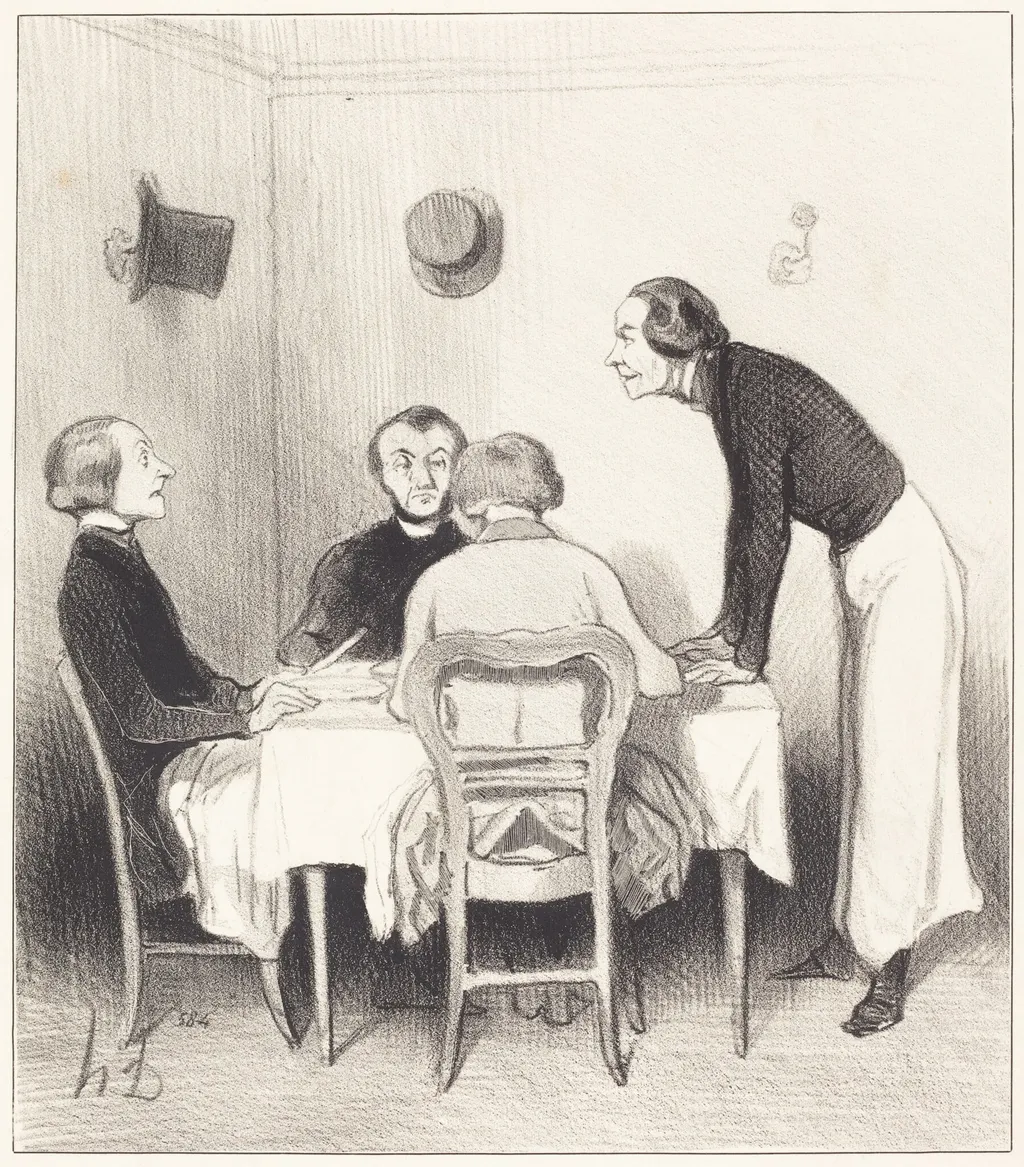
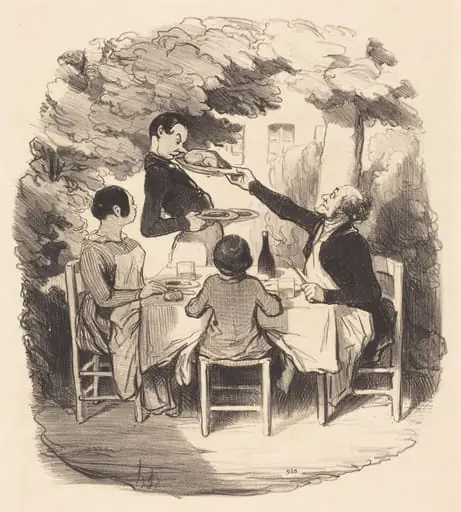
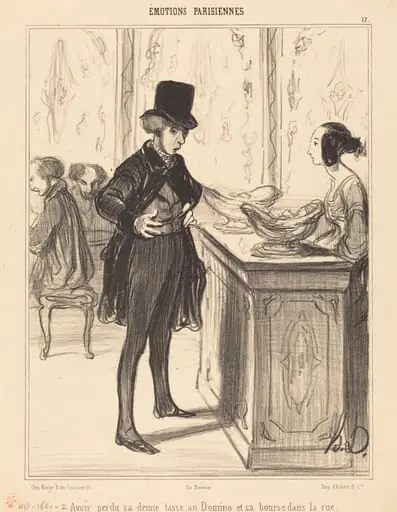
Carotte du restaurant is an ink print by the Romanticist artist Honoré Daumier. It dates from 1844 and is held in the collection of the National Gallery of Art.
About this work
Overview
Honoré Daumier’s lithograph Carotte du restaurant, produced in 1844, is a small-scale print that appears in the satirical press of the period. The image presents four men gathered around a modestly set table, their dark clothing contrasting with a lighter‑shirted figure. A single carrot lies on the tablecloth, drawing attention amid the otherwise restrained scene.
Subject & Meaning
The central carrot functions as a visual punchline, mocking the pretensions of bourgeois dining and, by extension, the political airs of the July Monarchy. By isolating a humble vegetable within a formal setting, Daumier underscores the disparity between outward respectability and underlying simplicity, inviting viewers to question social hierarchies.
Technique & Style
Executed in lithography, the work relies on a monochrome palette of grays, employing fine shading and textural marks to model forms and suggest depth. Daumier’s line work balances precise detailing of the figures with a slightly exaggerated realism of the carrot, a hallmark of his caricatural yet observational approach.
History & Provenance
Carotte du restaurant originally circulated in the Parisian journals La Caricature and Le Charivari, venues through which Daumier regularly critiqued contemporary politics. The print later entered museum collections as part of broader acquisitions of 19th‑century French satirical prints, reflecting its role in documenting the visual culture of the era.
Artist & collection
Artist
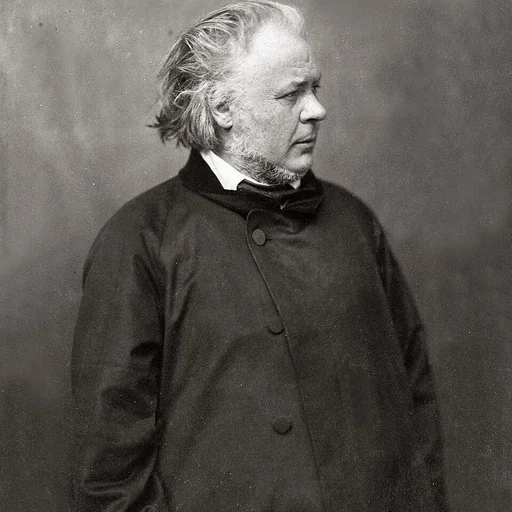
Honoré-Victorin Daumier was a French painter, sculptor, and printmaker, whose many works offer commentary on the social and political life in France, from the Revolution of 1830 to the fall of the Second French Empire in 1870.