Artwork
Ce qu'on est convenue d'appeler un rafraichissement
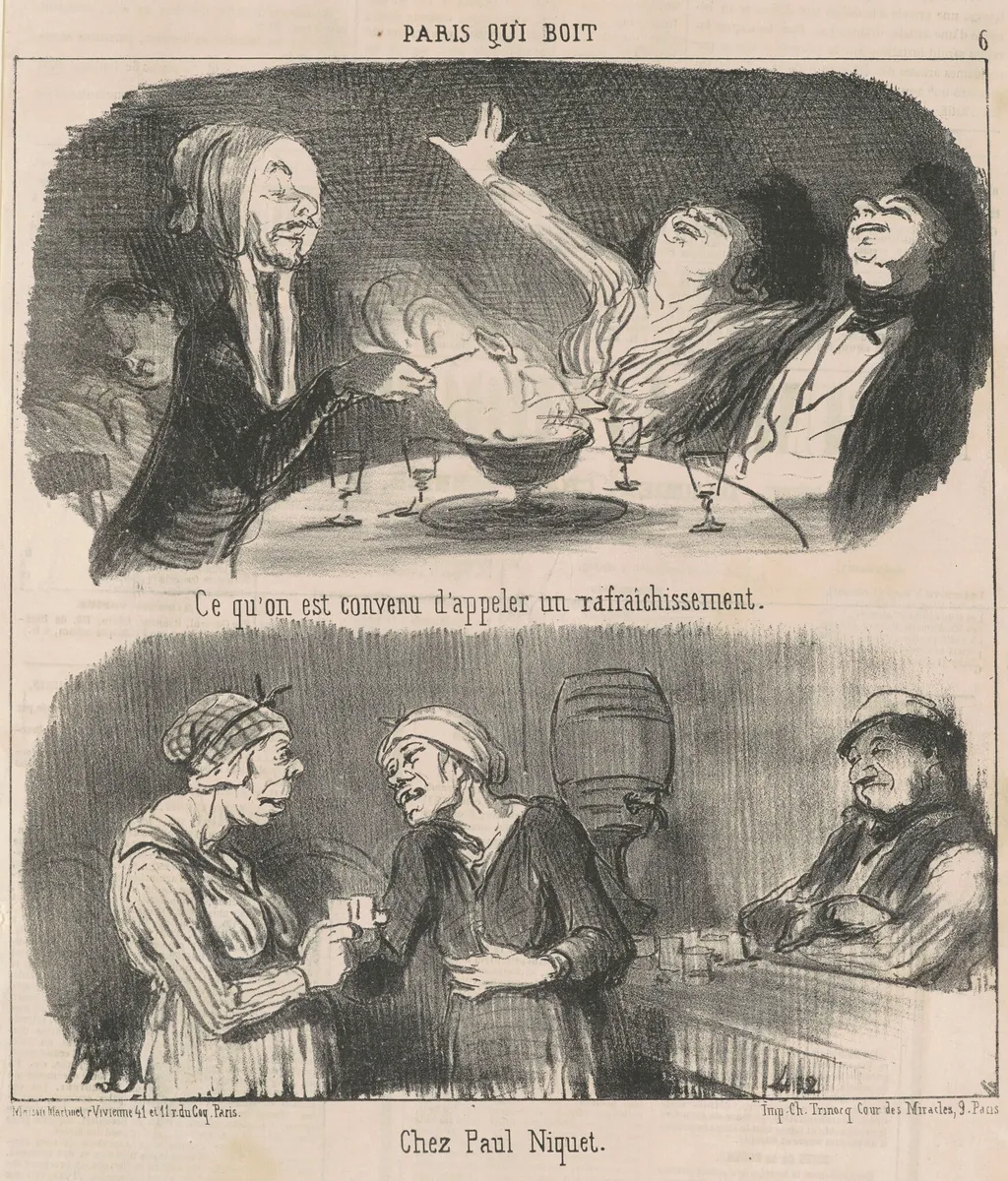
Ce qu'on est convenue d'appeler un rafraichissement is an ink print by the Impressionist artist Honoré Daumier. It dates from 1852 and is held in the collection of the National Gallery of Art.
About this work
Overview
Ce qu'on est convenue d'appeler un rafraichissement is a lithograph created by Honoré Daumier in 1852, exemplifying his use of printmaking as a vehicle for social commentary on 19th-century French society.
Subject & Meaning
The print depicts three men of the emerging middle class engaged in leisurely activities at a table, with exaggerated postures and simple pleasures that serve as a satirical commentary on their lifestyle and social status.
Technique & Style
Daumier utilized caricature in this lithograph, a hallmark of his style, to convey social critique through exaggerated representation, consistent with his work in satirical publications like *La Caricature* and *Le Charivari*.
History & Provenance
Produced in the 1850s, this work aligns with Daumier's broader thematic concerns of the period, reflecting his republican democratic views through critiques of public behavior and class dynamics.
Context
This lithograph is situated within Daumier's body of work that targeted the social and political hierarchies of mid-19th century France, using satire to challenge prevailing norms.
Legacy
As part of Daumier's satirical oeuvre, *Ce qu'on est convenue d'appeler un rafraichissement* contributes to the artist's enduring legacy as a keen observer and critic of societal evolution, particularly the rise of the middle class.
Artist & collection

Artist
Honoré-Victorin Daumier was a French painter, sculptor, and printmaker, whose many works offer commentary on the social and political life in France, from the Revolution of 1830 to the fall of the Second French Empire in 1870.









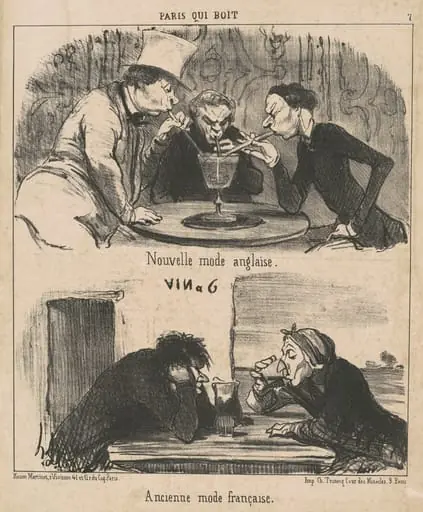 Nouvelle mode anglaise
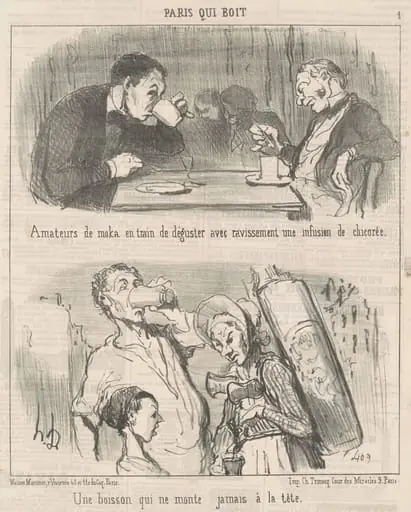 Une boisson qui ne monte jamais à tête
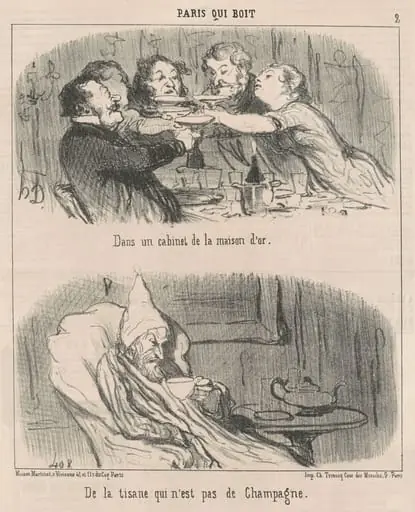 Dans un cabinet de la maison d'or
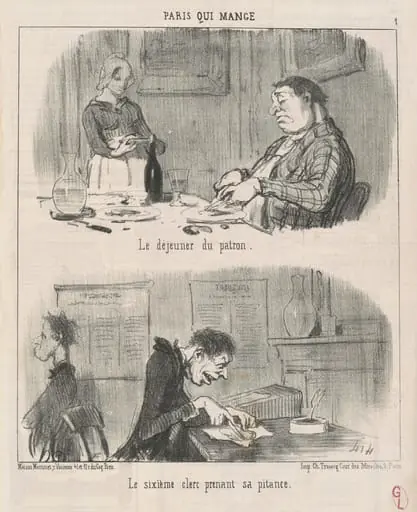 Le déjeuner du patron le sixiéme clerc ...
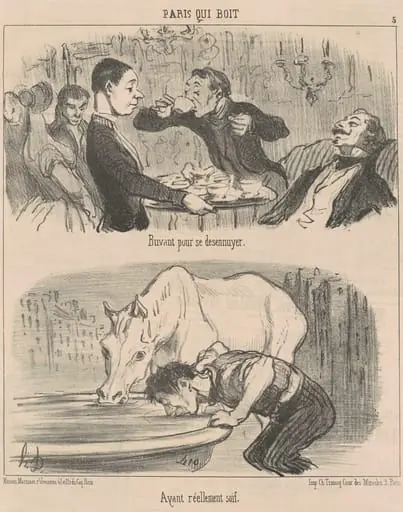 Bavant pour se desennuyer
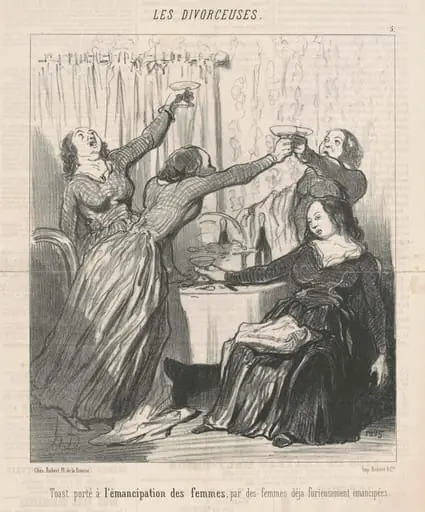 Toast porté a l'émancipation des femmes ...
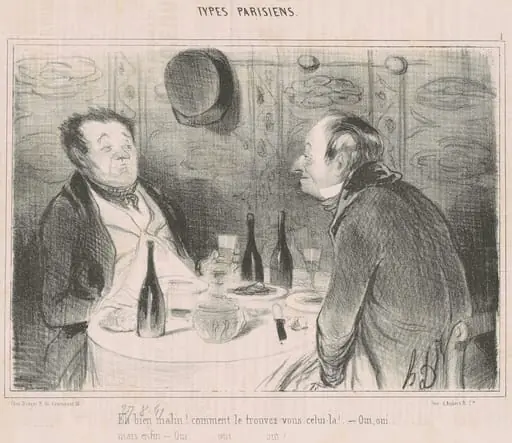 Eh bien Malin! comment le trouvez vous celui-la!
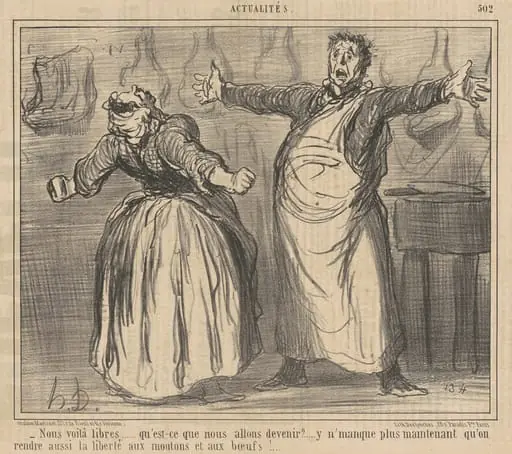 Nous voila libres ...
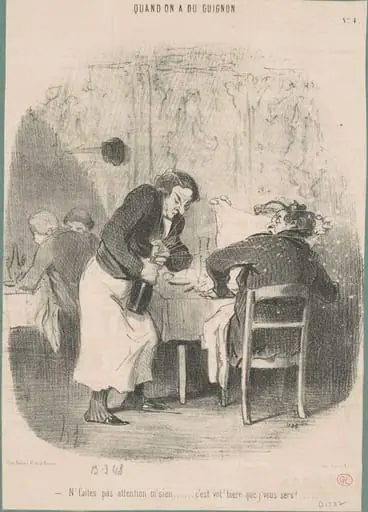 N'faites pas attention m'sieu ...
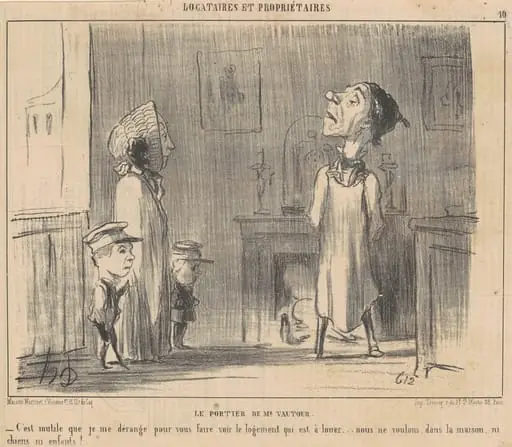 Le portier de Mr Vautour
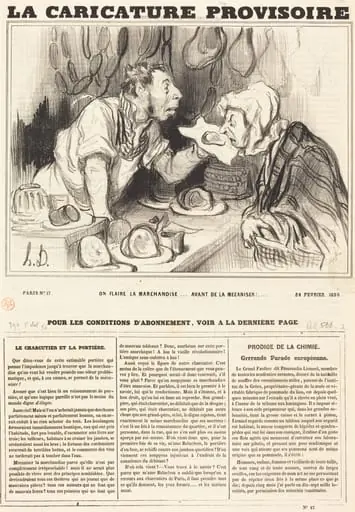 On flaire la marchandise... avant de la mécaniser!...
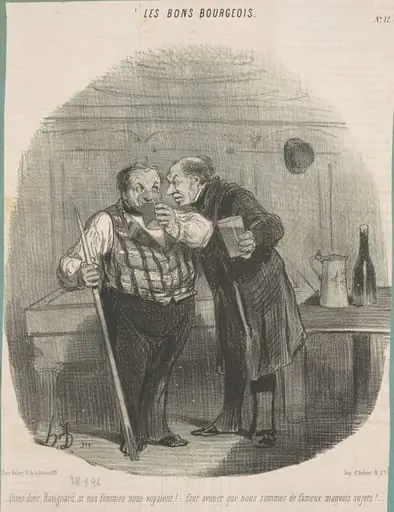 Dis donc, ravignard, si nos femmes nous voyaient! ...