Artwork
Ce que l'Angleterre appelle un trait-d'union
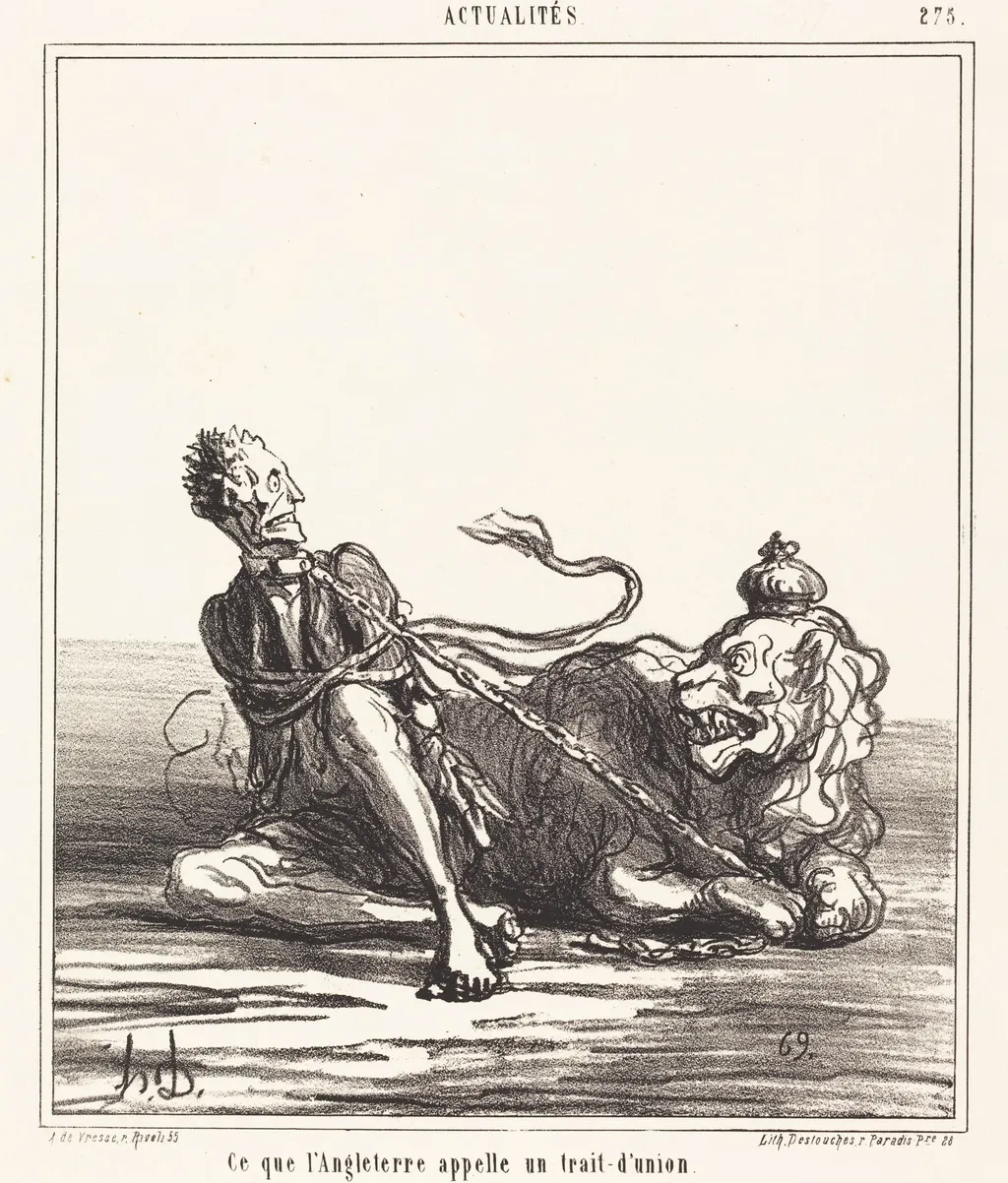
Ce que l'Angleterre appelle un trait-d'union is an ink print by the Impressionist artist Honoré Daumier. It dates from 1867 and is held in the collection of the National Gallery of Art.
About this work
The man's facial expression conveys a sense of fear and desperation, while the lion's posture suggests aggression and power.
The image depicts a man sitting on the ground, bound by ropes and chains. He is dressed in dark attire, with his head tilted back and his mouth open in a scream. A large lion lies beside him, its mouth open and teeth bared, as if it is about to attack. The scene is set against a plain background, with no discernible details or context.
The man's facial expression conveys a sense of fear and desperation, while the lion's posture suggests aggression and power. The use of dark colors and bold lines adds to the dramatic effect of the scene.
This image is a lithograph by Honoré Daumier, titled "Ce que l'Angleterre appelle un trait-d'union," created in 1867. It is held at the National Gallery of Art, Washington, and is an example of Impressionism and Realism. To learn more about this style, explore the movement: Realism.
Overview
Created in 1867, this lithograph by Honoré Daumier bears the French title *Ce que l'Angleterre appelle un trait‑d’union*. The work presents a stark, monochrome scene in which a bound man lies on the ground beside an open‑mawed lion, both poised in a moment of imminent violence. The image is part of the National Gallery’s collection.
Subject & Meaning
The composition juxtaposes a terrified, rope‑bound figure with a threatening animal, suggesting a clash between human vulnerability and brute power. Daumier’s choice of a lion—a traditional emblem of strength—against a helpless captive may allude to political oppression or social injustice, themes recurrent in his satirical oeuvre.
Technique & Style
Executed as a lithograph, the piece relies on bold, decisive lines and a limited tonal range to heighten drama. Daumier’s handling of chiaroscuro through dense dark areas and stark contrasts emphasizes the tension between the figures, while the plain background strips away extraneous detail, focusing attention on the central confrontation.
History & Provenance
Daumier, a prolific caricaturist for 19th‑century French periodicals such as *La Caricature* and *Le Charivari*, produced this print during a period of heightened political commentary. The work entered the National Gallery’s holdings in the early 20th century, though the precise acquisition details remain undocumented in public records.
Context
The lithograph emerges from a decade marked by French republicanism and social upheaval, when Daumier frequently targeted the monarchy, aristocracy, and clergy. By invoking England in the title, the artist may be drawing a comparative critique of foreign or domestic power structures, a common device in his satirical repertoire.
Artist & collection

Artist
Honoré-Victorin Daumier was a French painter, sculptor, and printmaker, whose many works offer commentary on the social and political life in France, from the Revolution of 1830 to the fall of the Second French Empire in 1870.









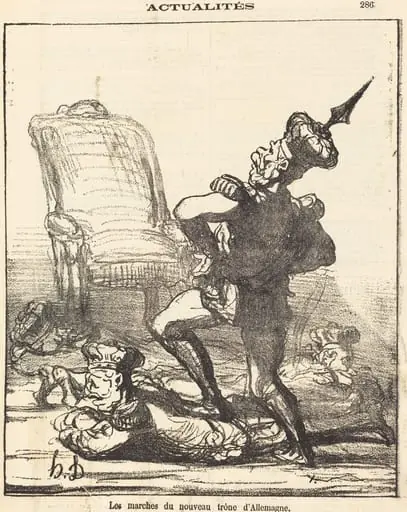 Les marches du nouveau trone d'Allemagne
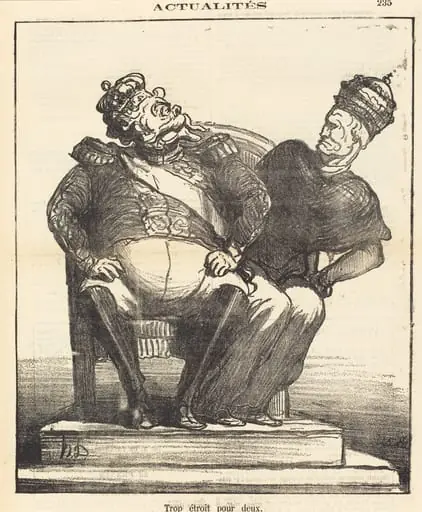
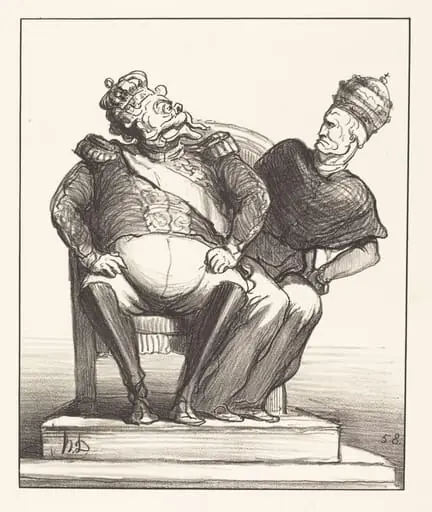 Trop étroit pour deux
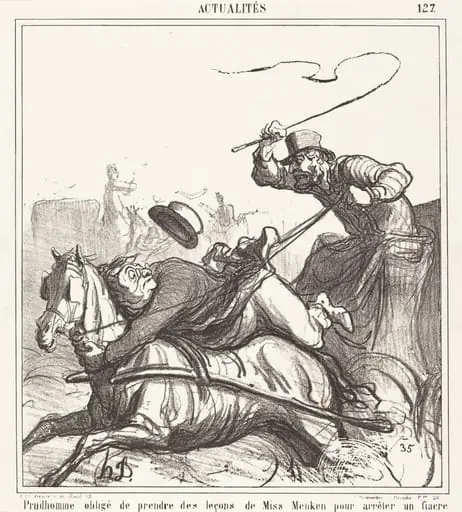 Prudhomme obligé de prendre des leçons...
 Pour s'habiteur a attendre le lion ...
 Une assembleé modèle ...
 Le Sommeil du lion
 La paix a tout prix
 Hercules Strangling the Lion of Nimes
 Un citoyen exaspéré par les buffleteries
 Lion Devorant un Cheval (Lion Devouring a Horse)
 Oedipe chez le Sphinx
 Trop étroit pour deux