Artwork
Décidément nous nous amusons trop, Guillochard!...
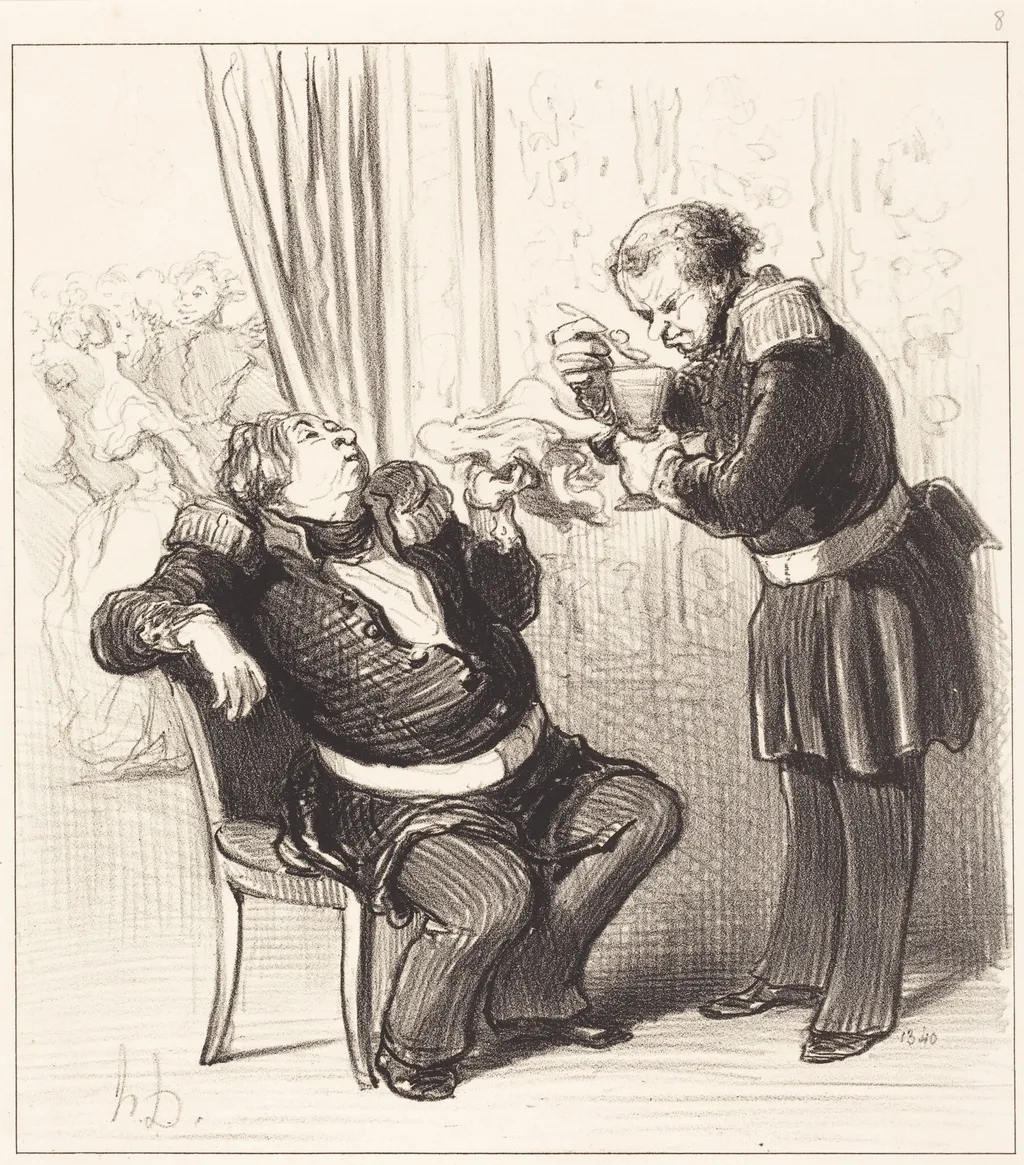
Décidément nous nous amusons trop, Guillochard!... is an ink print by the Romanticist artist Honoré Daumier. It dates from 1849 and is held in the collection of the National Gallery of Art.
About this work
Overview
Created in 1849, this lithograph by Honoré Daumier is one of many satirical prints produced during his tenure with French illustrated newspapers.
Created in 1849, this lithograph by Honoré Daumier is one of many satirical prints produced during his tenure with French illustrated newspapers. It captures a moment of informal interaction between two figures, rendered with the sharp wit and social observation characteristic of his work. Daumier used lithography to reach a broad audience, turning everyday scenes into subtle critiques of power and behavior.
Subject & Meaning
The image portrays two men in military attire engaged in lighthearted exchange, one seated and amused, the other standing with a goblet and animated gesture. The title, translating to 'Clearly we're having too much fun, Guillochard!', suggests irony rather than celebration. Daumier often used such scenes to mock the excesses and self-indulgence of those in authority, hinting at the instability of post-revolutionary French society.
Technique & Style
Daumier employed lithography to achieve rapid, expressive lines with tonal variation, allowing for both detail and spontaneity. His figures are rendered with economical strokes, emphasizing posture and gesture over precise anatomy. The background is minimally suggested—window, curtain, table—keeping focus on the interaction. The contrast between the relaxed seated figure and the animated stander heightens the narrative tension.
History & Provenance
The print was produced during Daumier’s active years with *Le Charivari*, where he regularly published political cartoons under the threat of censorship. Though the specific publication context of this image is unrecorded, it aligns with his output from the late 1840s, a period of political upheaval following the 1848 Revolution. Many of his works from this era were later collected by institutions and private collectors.
Context
In 1849, France was navigating the fragile transition from the Second Republic to the rise of Louis-Napoléon Bonaparte. Daumier’s prints responded to the tensions between democratic ideals and emerging authoritarianism. While not overtly political, this scene reflects broader anxieties about the moral and behavioral conduct of the military and elite classes during a time of shifting power structures.
Legacy
Daumier’s lithographs, including this one, helped redefine printmaking as a vehicle for social commentary. His influence extended to later generations of caricaturists and realist artists, who adopted his blend of observational precision and ironic tone. Though less known than his larger political satires, works like this reveal his nuanced understanding of human behavior within institutional settings.
Own this work as a print
Artist & collection
Artist
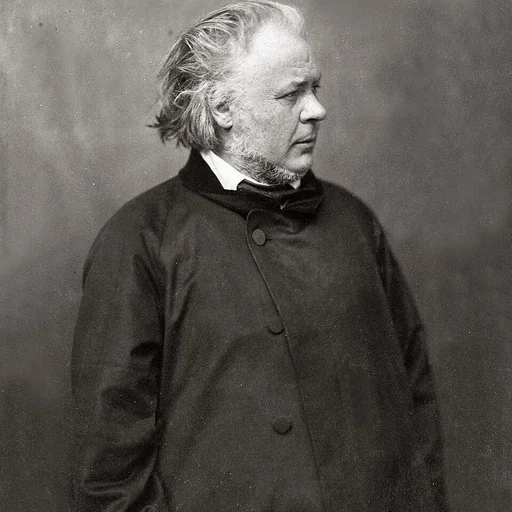
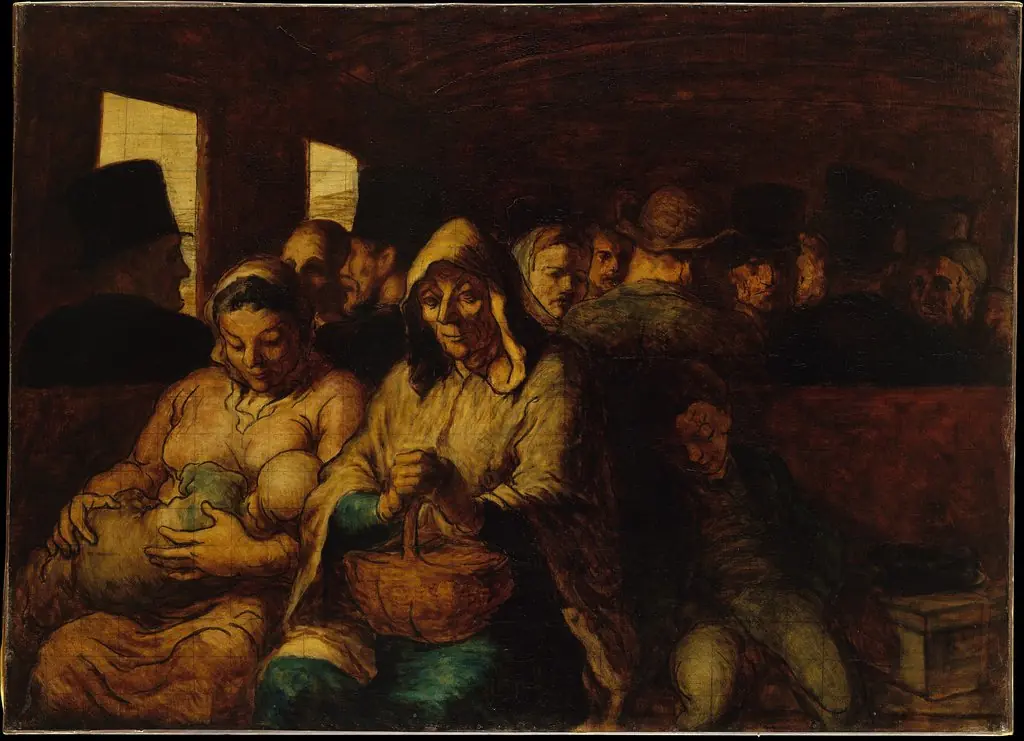
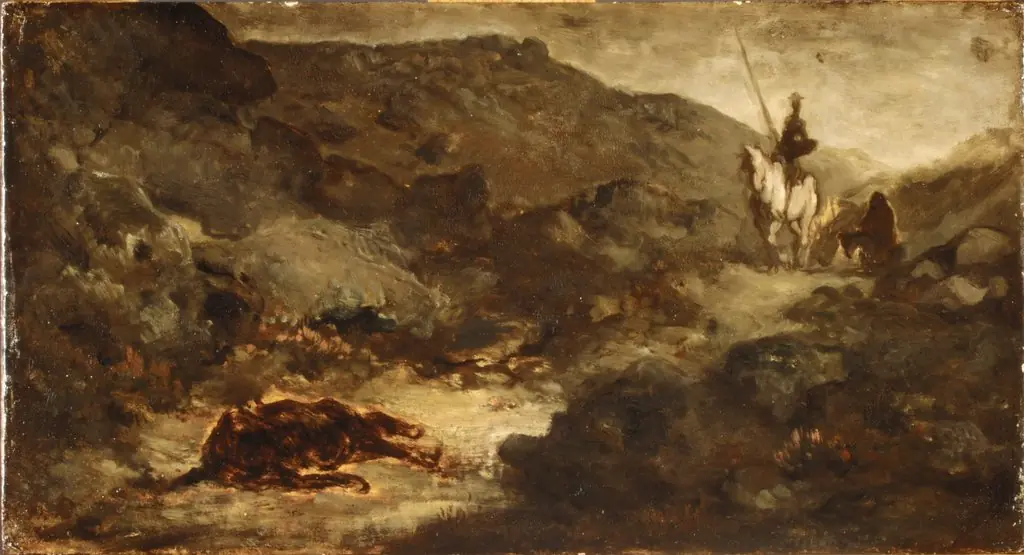
Honoré-Victorin Daumier was a French painter, sculptor, and printmaker, whose many works offer commentary on the social and political life in France, from the Revolution of 1830 to the fall of the Second French Empire in 1870.

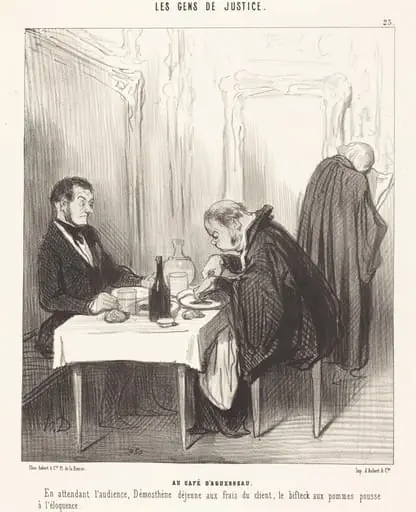 Au Café d'Aguesseau
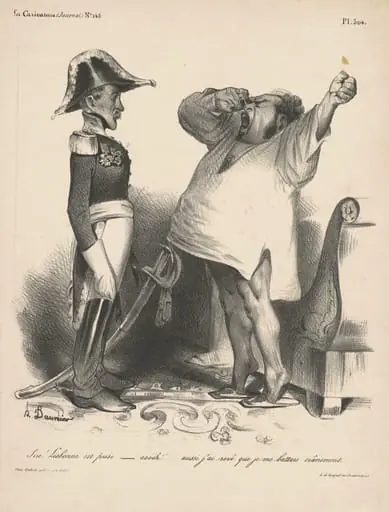 Sire! Lisbonne est prise... (Sire! Lisbon has been captured...)
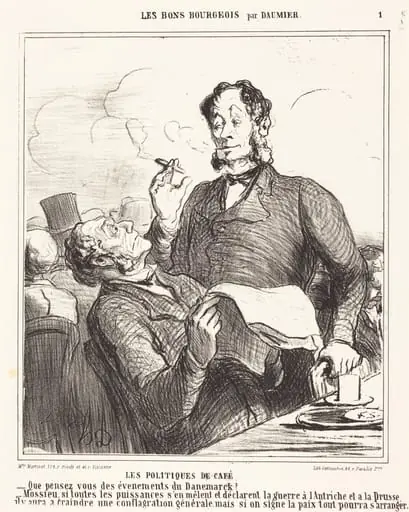 Les Politiques de café
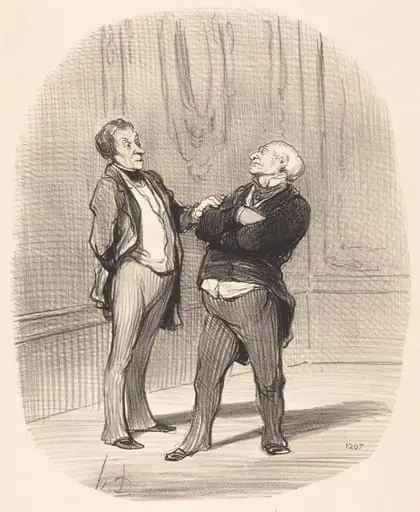 Il y a la guerre... les loyers vont... diminuer...
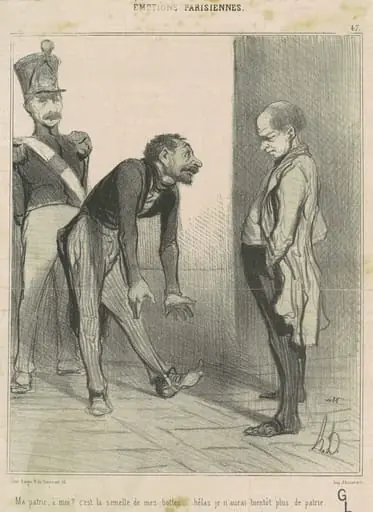 Ma patrie, a moi?...
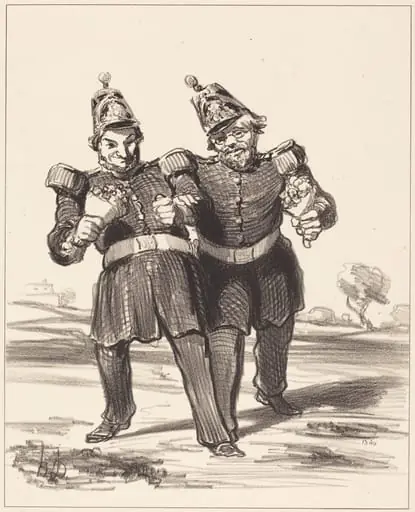 Les Deux banqueteurs en joie
 Expliquez-moi donc, monsieur Badoulard...
 Tiens... je ne te reconnaissais pas...
 Trop étroit pour deux
 Les Cigarettes de camphre
 Un Jour de Grande Tenue
 Actionnaires Californiens