Artwork
Docteur... je ne suis pas aussi malade...
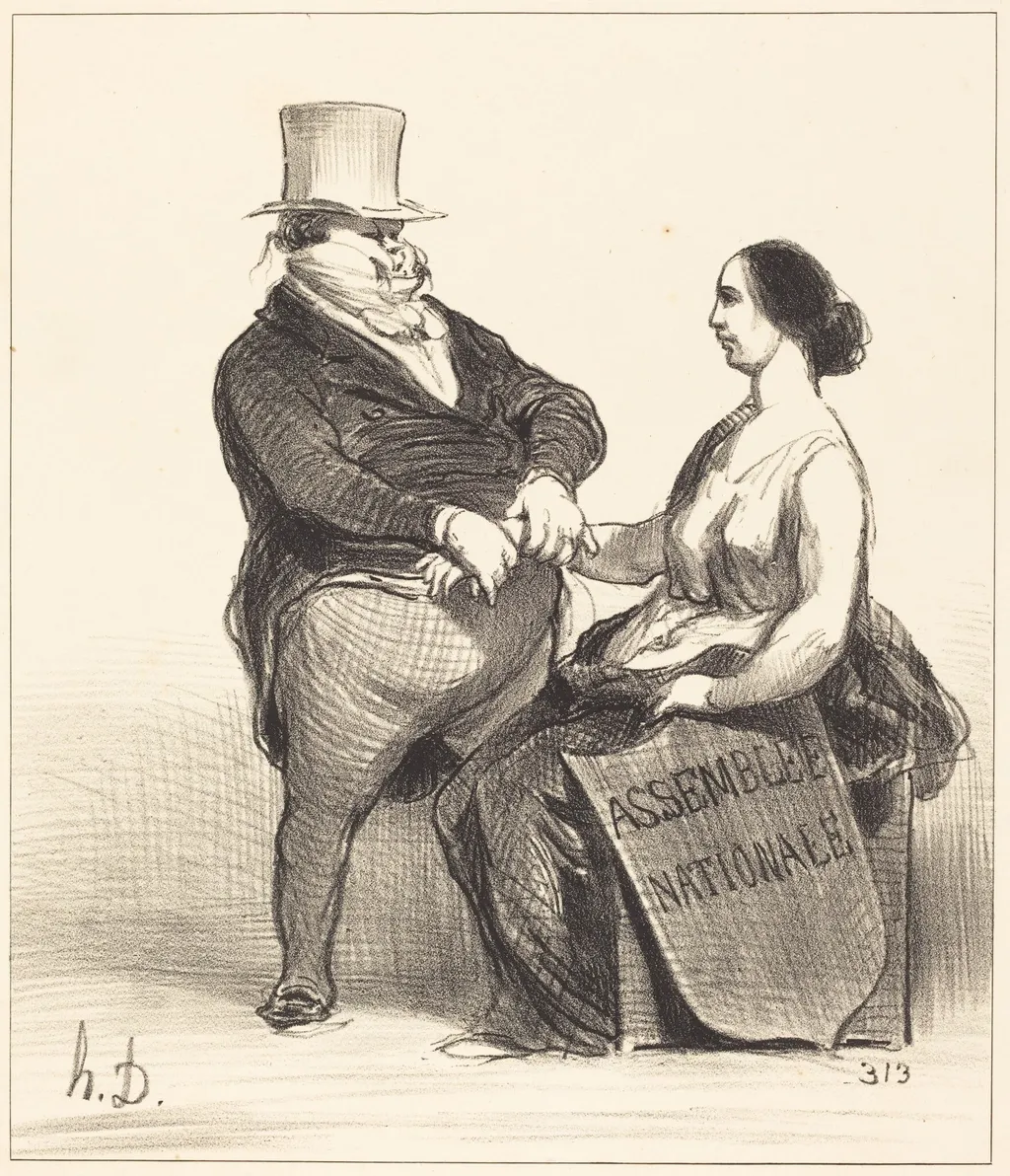
Docteur... je ne suis pas aussi malade... is an ink print by the Impressionist artist Honoré Daumier. It dates from 1851 and is held in the collection of the National Gallery of Art.
About this work
The artwork showcases a doctor and a patient in a realistic setting, with the doctor sitting on a chair and the patient standing beside him.
The image depicts a lithograph titled "Docteur... je ne suis pas aussi malade..." by Honoré Daumier, created in 1851. The artwork showcases a doctor and a patient in a realistic setting, with the doctor sitting on a chair and the patient standing beside him. The doctor is dressed in a formal attire, while the patient wears a simple robe.
The lithograph is rendered in a detailed and realistic style, characteristic of the Realism movement. The use of lithography as a medium allows for a high level of detail and texture, adding depth to the scene.
For more information on the artist's work and technique, explore the art of Honoré Daumier.
Overview
Honoré Daumier’s 1851 lithograph *Docteur… je ne suis pas aussi malade…* presents a domestic scene in which a formally dressed physician sits while a modestly clothed patient stands nearby. Executed in the detailed manner typical of Daumier’s prints, the work captures a moment of interaction that invites viewers to consider the social dynamics of mid‑century France.
Subject & Meaning
The composition juxtaposes the authority of the medical professional with the humility of the patient, hinting at a subtle critique of professional pretensions. By portraying the doctor in formal attire and the patient in a simple robe, Daumier underscores class distinctions and invites reflection on the credibility of those who claim expertise.
Technique & Style
Created with lithographic stones, the image achieves a fine range of line and texture, allowing Daumier to render facial expressions and clothing folds with precision. The realistic rendering aligns with the broader Realist tendency of the period, emphasizing observable detail over idealisation while retaining the artist’s characteristic satirical edge.
History & Provenance
Daumier produced the lithograph while working for the satirical journals *La Caricature* and *Le Charivari*, outlets that disseminated his republican‑leaning commentary. The print emerged during a volatile era between the 1830 Revolution and the collapse of the Second Empire, a time when his work frequently addressed the political and social tensions of French society.
Context
In the 1850s, French print culture served as a primary vehicle for public debate. Daumier’s position as a caricaturist allowed him to comment on everyday life and institutional authority, using accessible media to reach a broad audience. This lithograph reflects that milieu, blending everyday observation with pointed social observation.
Own this work as a print
Artist & collection

Artist
Honoré-Victorin Daumier was a French painter, sculptor, and printmaker, whose many works offer commentary on the social and political life in France, from the Revolution of 1830 to the fall of the Second French Empire in 1870.









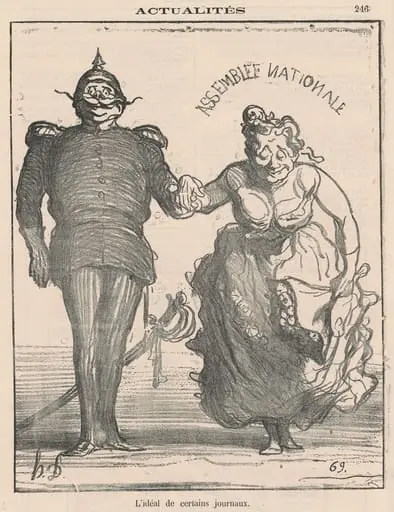 L'idéal de certains journaux
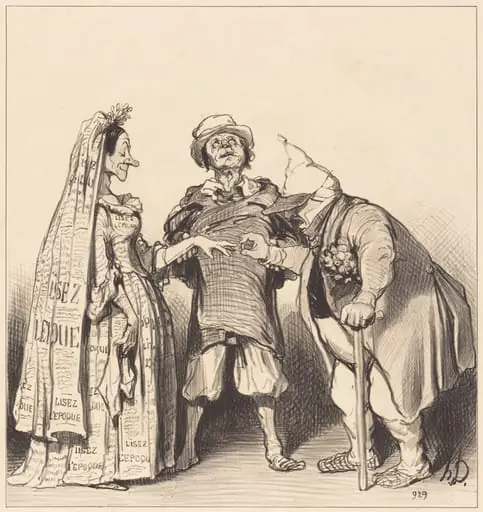 Mariage de l'Époque et du Constitutionnel
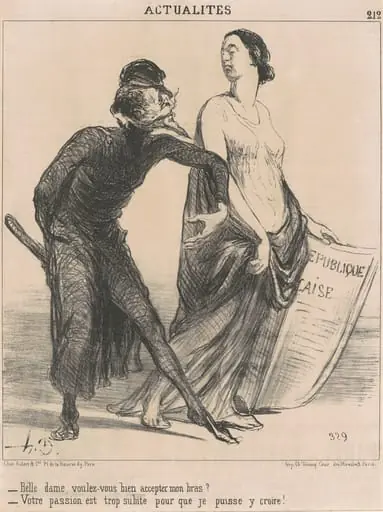 Belle dame voulez-vous ... accepter mon bras?
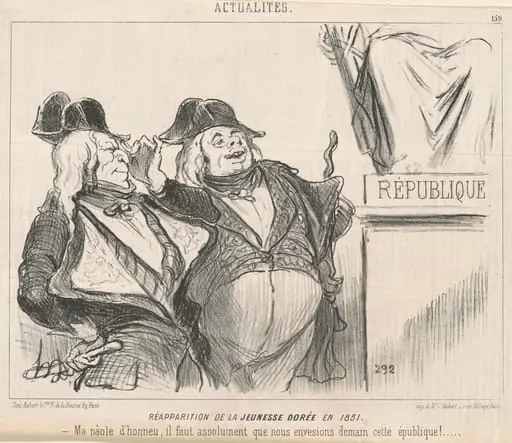 Réapparition de la jeunesse dorée en 1851
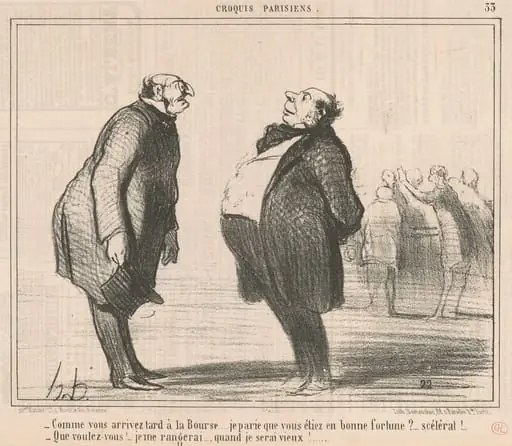 Comme vous arrivez tard a la bourse ...
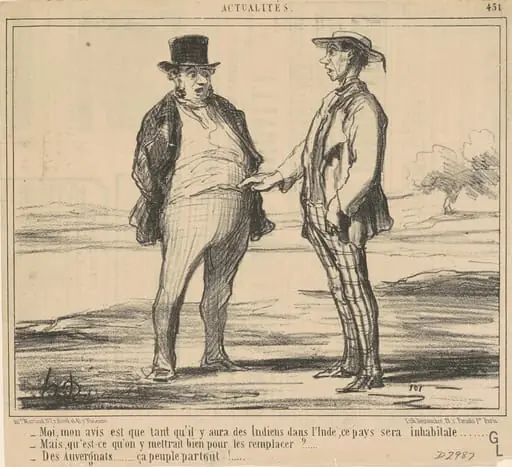 Mois, mon avis est ...
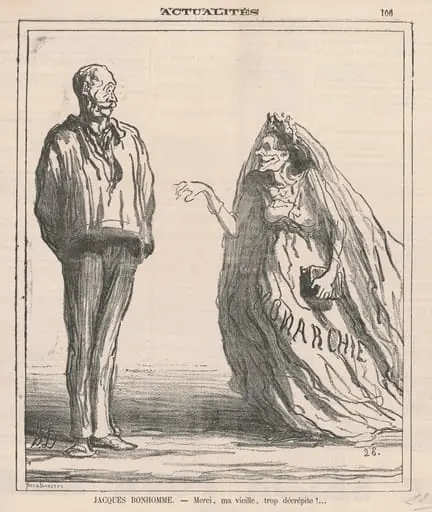 Merci, ma vieille, trop décrépite! ...
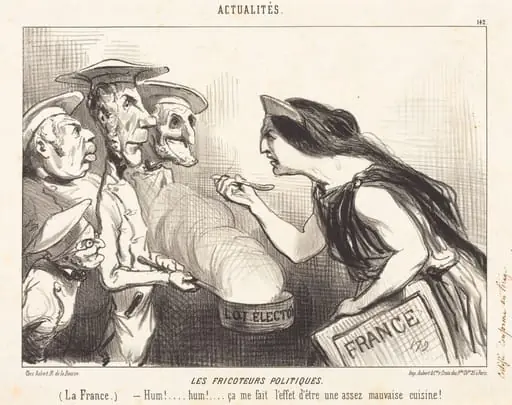 Les Fricoteurs politiques
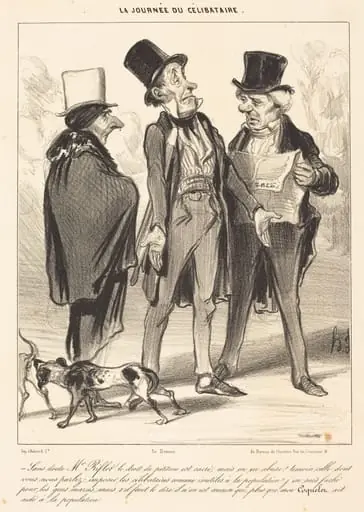 Sans doute M. Riflot le droit...
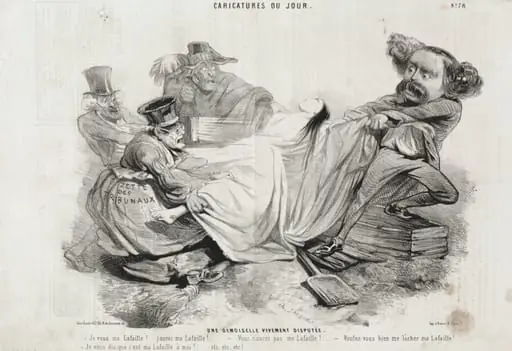 An Intensely Contested Young Woman
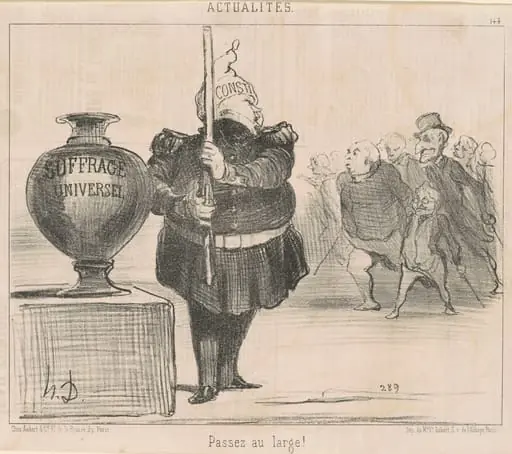 Passez au large!
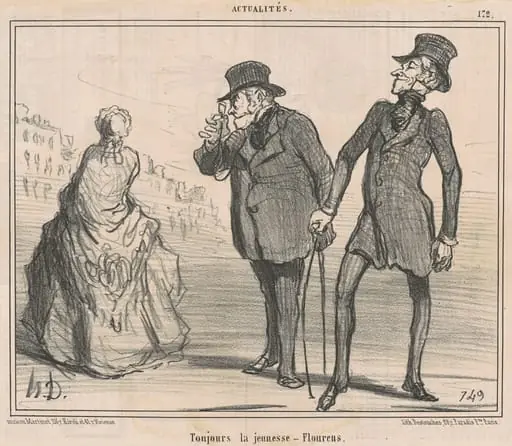 Toujours la heunesse-flourens