Artwork
Mais monsieur le propriétaire, voyez...
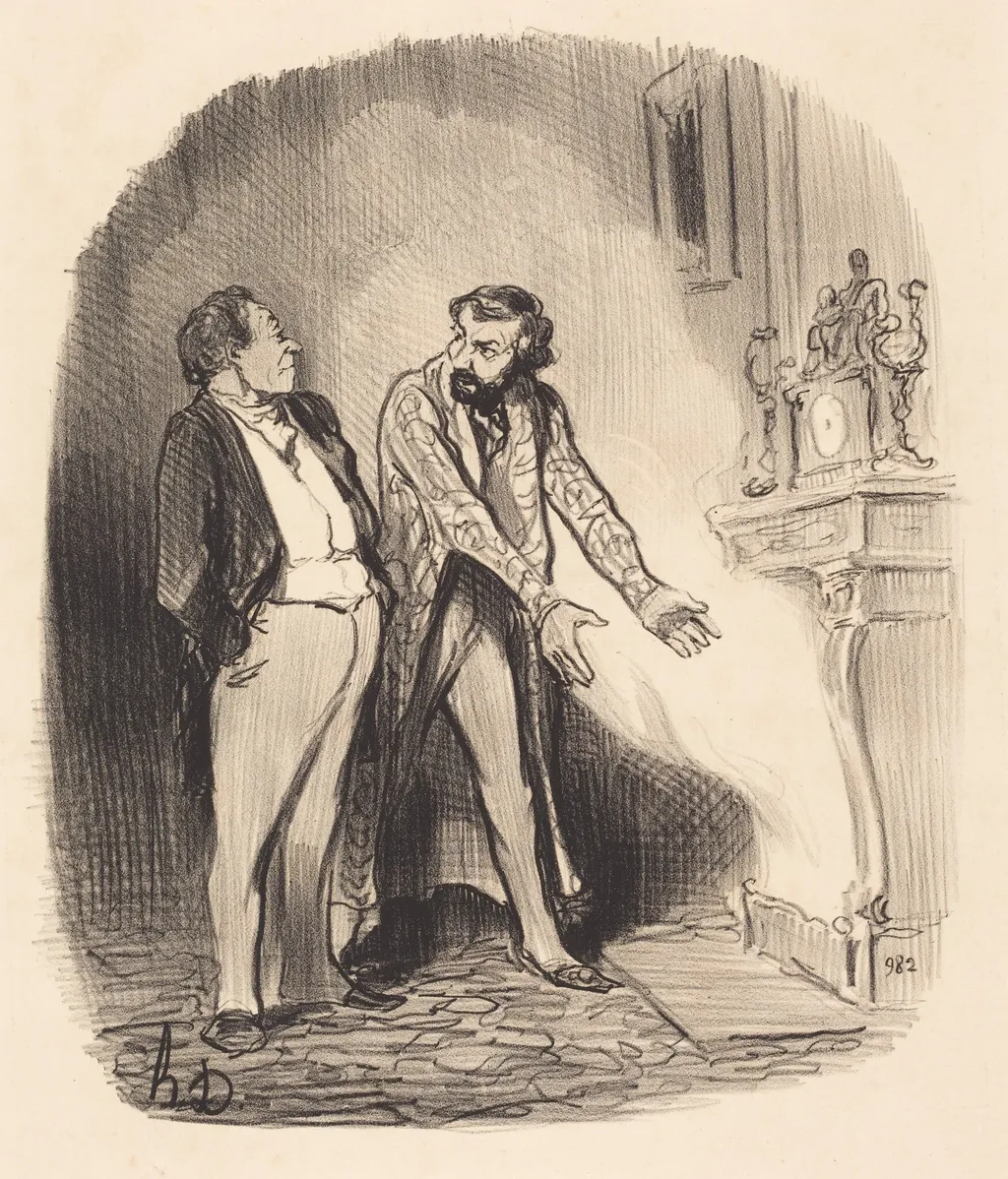
Mais monsieur le propriétaire, voyez... is an ink print by the Romanticist artist Honoré Daumier. It dates from 1847 and is held in the collection of the National Gallery of Art.
About this work
Overview
Created in 1847, this lithograph by Honoré Daumier captures a tense domestic encounter between two men, likely a tenant and a landlord.
Created in 1847, this lithograph by Honoré Daumier captures a tense domestic encounter between two men, likely a tenant and a landlord. Executed with rapid, expressive lines, the work exemplifies Daumier’s skill in translating social friction into visual narrative. As a prolific printmaker for satirical journals, he used lithography to reach a broad audience, turning everyday scenes into quiet indictments of class imbalance.
Subject & Meaning
The scene depicts a moment of confrontation, possibly over rent or housing conditions. The tenant, standing with clasped hands, appears deferential yet strained; the landlord, gesturing broadly in disheveled attire, embodies careless authority. The dim interior, marked by a luxury clock and a modest lamp, underscores the disparity between appearances and reality. The work critiques the power dynamics of urban tenancy without overt caricature, relying instead on subtle psychological tension.
Technique & Style
Daumier employed lithography to achieve immediacy and tonal variation, using loose, sketch-like strokes to suggest motion and emotion. The figures are rendered with minimal detail, yet their postures convey narrative clarity. Shadows are suggested through ink washes rather than precise shading, enhancing the sense of intimacy and unease. The composition’s asymmetry and cropped edges reflect the spontaneity of journalistic illustration, prioritizing emotional impact over formal polish.
History & Provenance
Produced during the July Monarchy, the print likely appeared in *Le Charivari*, where Daumier regularly published social commentary. Though the original publication context is unrecorded, the work survives in museum collections as part of a broader body of prints that challenged social norms. Its preservation reflects its status as a document of mid-century urban life, valued for its unembellished observation rather than its artistic novelty.
Context
In 1840s Paris, rising urban populations and housing shortages intensified landlord-tenant conflicts. Daumier’s prints responded to these pressures, offering visual commentary on the everyday struggles of the working class. While political satire dominated his earlier work, this piece shifts focus to domestic economy, revealing how systemic inequality permeated private life. The absence of overt political symbols underscores the normalization of economic coercion in bourgeois society.
Legacy
Daumier’s lithographs, including this one, influenced later realist and modernist artists by demonstrating how ordinary moments could carry social weight. His use of gesture and atmosphere over detail prefigured developments in 20th-century graphic art. Though less celebrated than his political cartoons, works like this reveal his enduring sensitivity to the quiet dramas of urban existence, securing his place as a chronicler of French middle-class life.
Own this work as a print
Artist & collection

Artist
Honoré-Victorin Daumier was a French painter, sculptor, and printmaker, whose many works offer commentary on the social and political life in France, from the Revolution of 1830 to the fall of the Second French Empire in 1870.









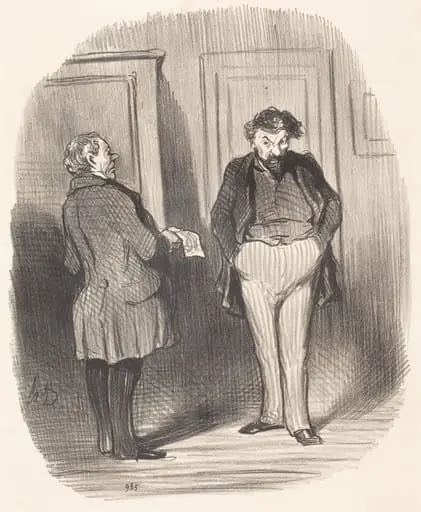 Pourriez-vous me dire...? J'ai la grippe!...
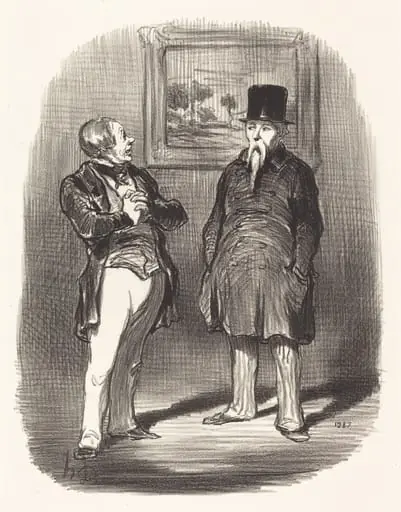 Tiens... je ne te reconnaissais pas...
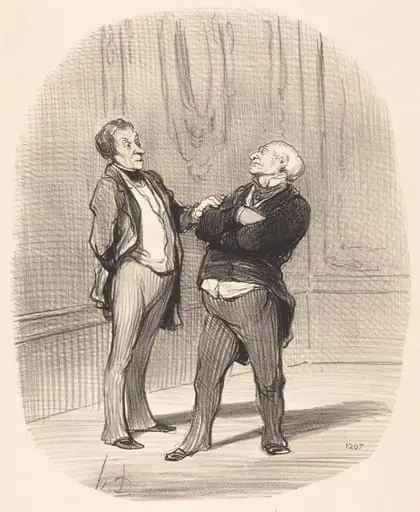 Il y a la guerre... les loyers vont... diminuer...
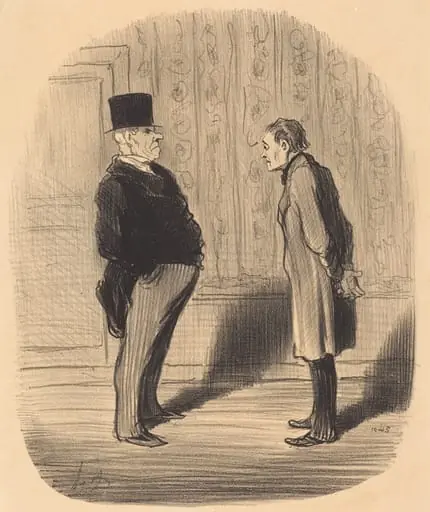 Eh! bien monsieur et mes trois termes...
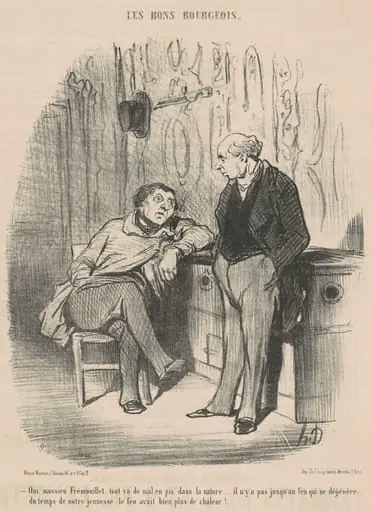 Oui, Mossieu Fremouillet, tout va de mal en pis ...
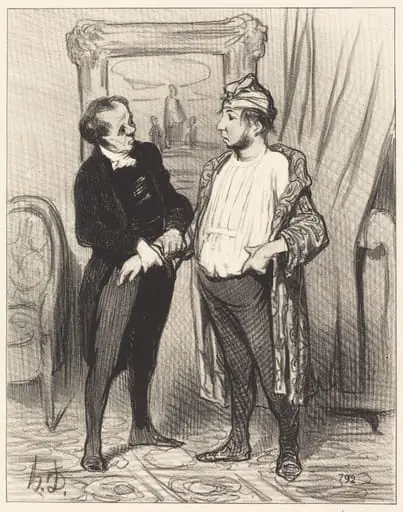 Mon cher je t'assure que je te...
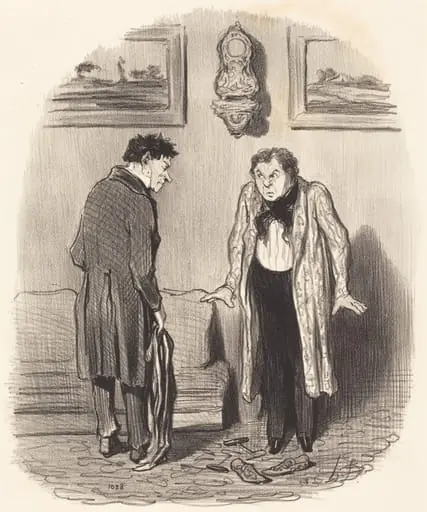 Mais quand je vous dis que je ne peux pas remuer les pieds...
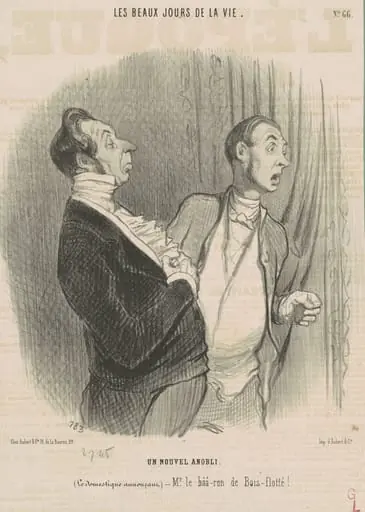 Un nouvel anobli