Artwork
Entrez Messieurs... voici de magnifiques...
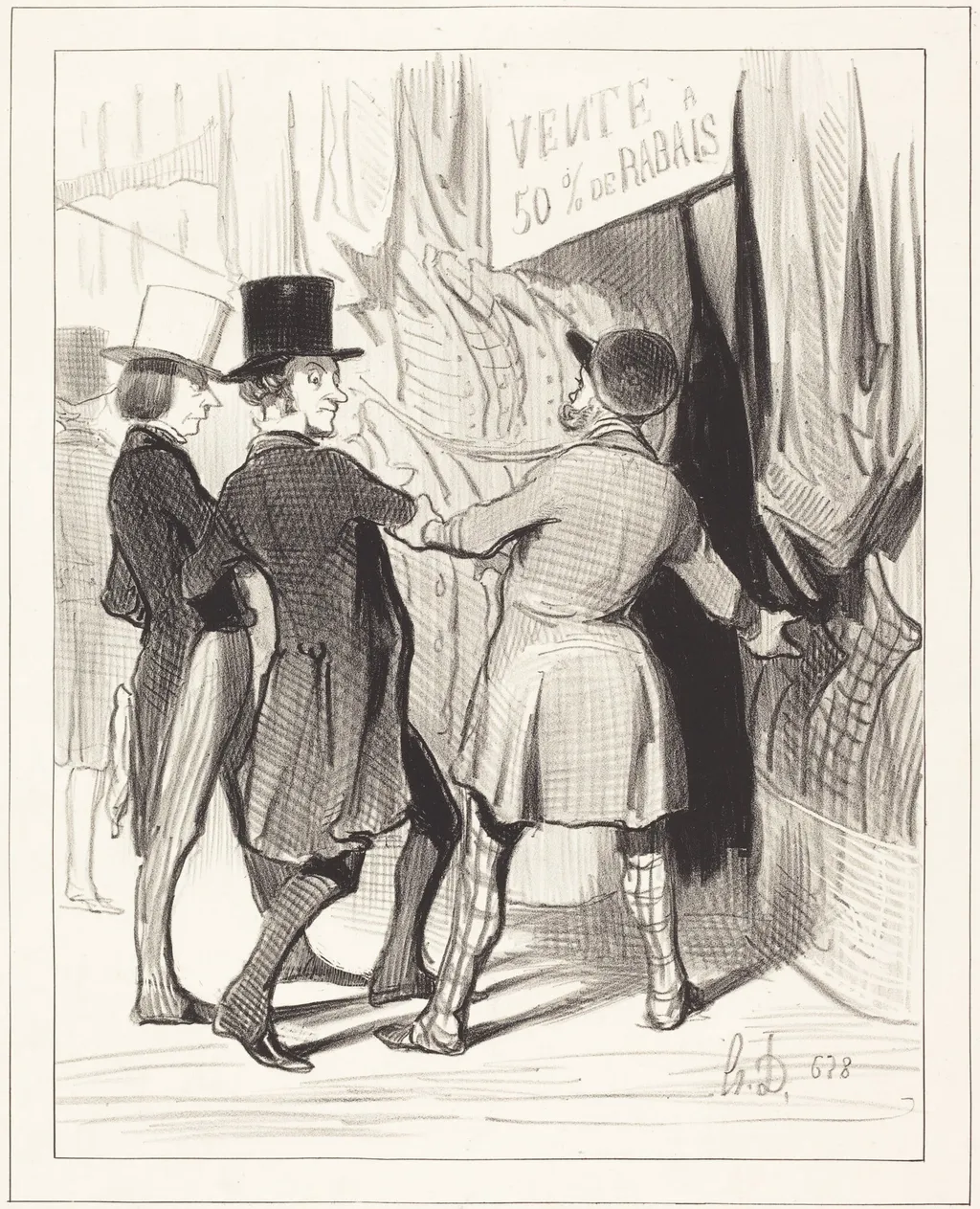
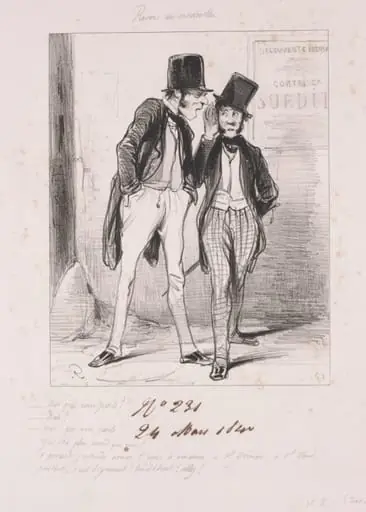
Entrez Messieurs... voici de magnifiques... is an ink print by the Romanticist artist Honoré Daumier. It dates from 1844 and is held in the collection of the National Gallery of Art.
About this work
Overview
Created in 1844, this lithograph by Honoré Daumier is one of many satirical prints produced during France’s July Monarchy and early Second Republic.
Created in 1844, this lithograph by Honoré Daumier is one of many satirical prints produced during France’s July Monarchy and early Second Republic. Executed with rapid, expressive lines, it captures a fleeting urban moment, reflecting Daumier’s commitment to using printmaking as a tool for social observation. His work appeared regularly in periodicals like *Le Charivari*, where visual wit served as a form of public critique.
Subject & Meaning
Three men, distinguished by their headwear and long coats, stroll toward a shop entrance marked by a sign announcing a 50% discount. The scene subtly mocks consumerism and the performative nature of bourgeois leisure. Daumier does not caricature the men as grotesques but instead reveals their ordinary complicity in commercial culture, inviting viewers to question the values driving such daily rituals.
Technique & Style
Daumier employed lithography for its immediacy, using ink and stone to produce loose, sketch-like lines that convey motion and spontaneity. The composition is uncluttered, with minimal shading and no background detail, focusing attention on the figures and the sign. His economy of line captures gesture and expression without embellishment, aligning with the urgency of journalistic satire.
History & Provenance
The print emerged during a period of heightened political tension and press censorship in France. Daumier’s association with radical publications led to imprisonment in 1832, yet he continued producing work for mass-circulation journals. This piece, like others from the era, was distributed widely, reaching audiences beyond elite circles and reinforcing printmaking’s role as a democratic medium.
Context
In 1840s Paris, commercial advertising was expanding rapidly, and public spaces became arenas for both economic activity and social performance. Daumier’s depiction of men drawn to a discount sign reflects broader anxieties about materialism and the erosion of traditional hierarchies. His work responds not only to politics but to the shifting rhythms of urban life under industrial capitalism.
Legacy
Daumier’s lithographs laid groundwork for modern graphic journalism and social realism in art. His ability to distill complex societal behaviors into single, resonant images influenced later artists from Toulouse-Lautrec to George Grosz. This print, though modest in scale, exemplifies how everyday scenes could carry critical weight when rendered with precision and restraint.
Artist & collection
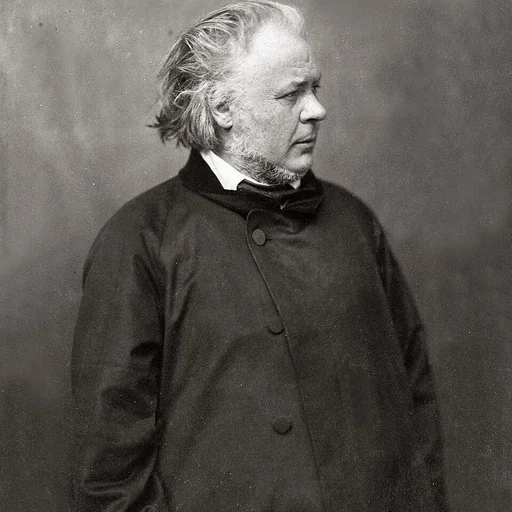
Artist
Honoré-Victorin Daumier was a French painter, sculptor, and printmaker, whose many works offer commentary on the social and political life in France, from the Revolution of 1830 to the fall of the Second French Empire in 1870.


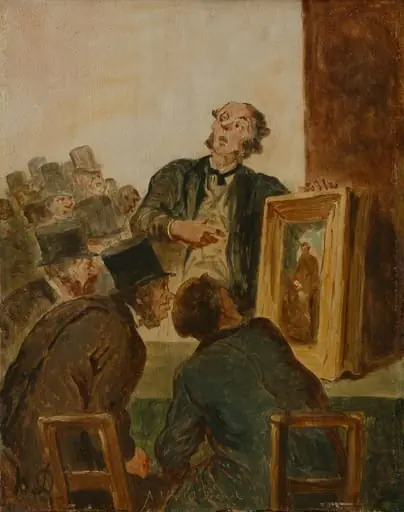
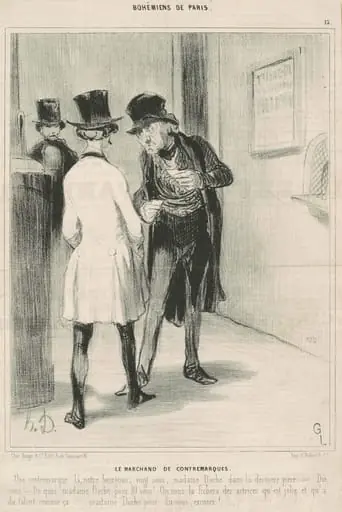 Le marchand de contremarques
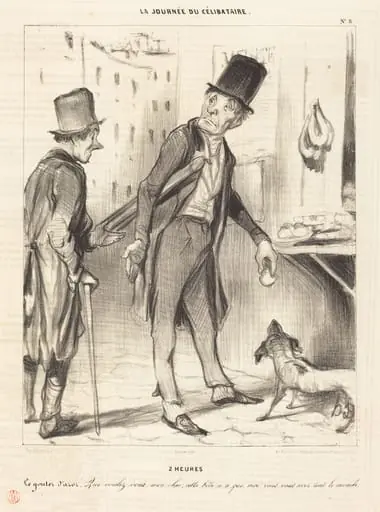 2 heures - Le gouter d'Azor
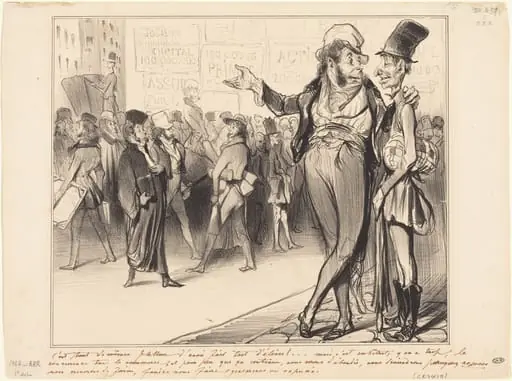 C'est tout de même flatteur d'avoir fait tant d'élèves!...
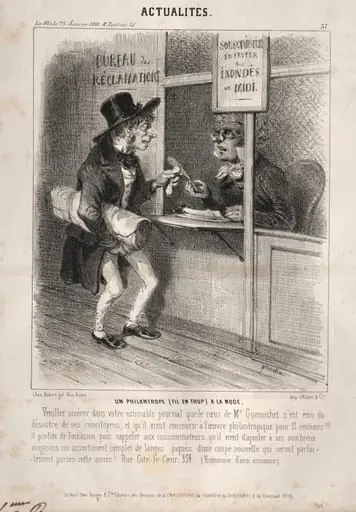 Actualités: Un Philantrope à la mode
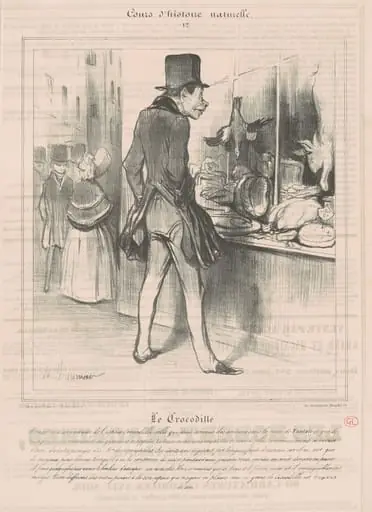 Le Crocodile
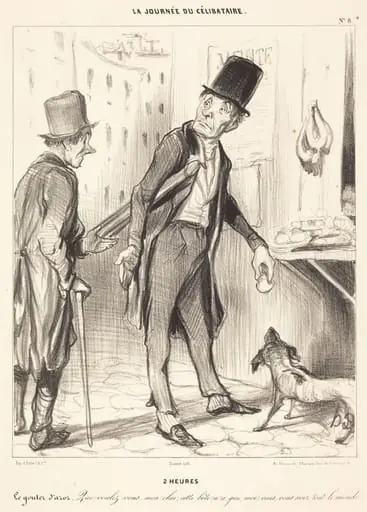 2 heures
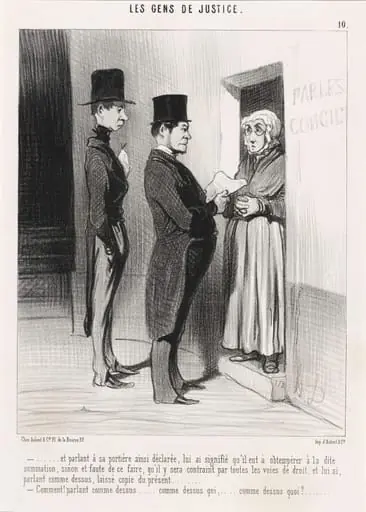 Et parlant a sa portière ainsi déclarée...
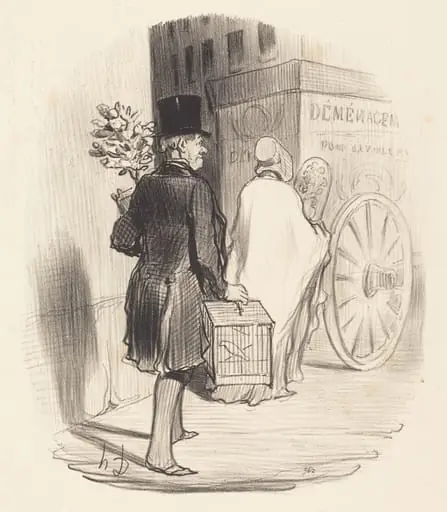 Parisien transportant dans un autre quartier...
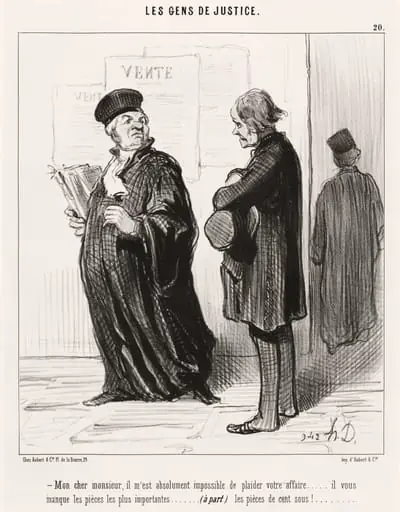 Mon cher monsieur... impossible de plaider votre affaire
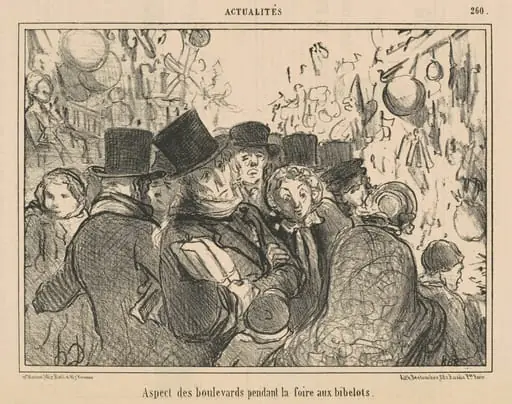 Aspect des boulevards pendant la foire aux bibelots
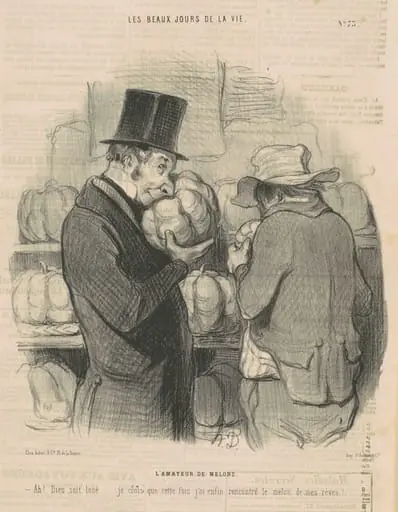 L'amateur de melons
 Revers des médailles: Moi qui vous parle