Artwork
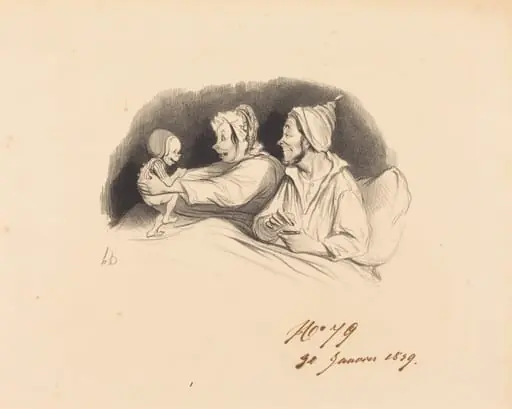
Est-il joli!... ce chérubin!...
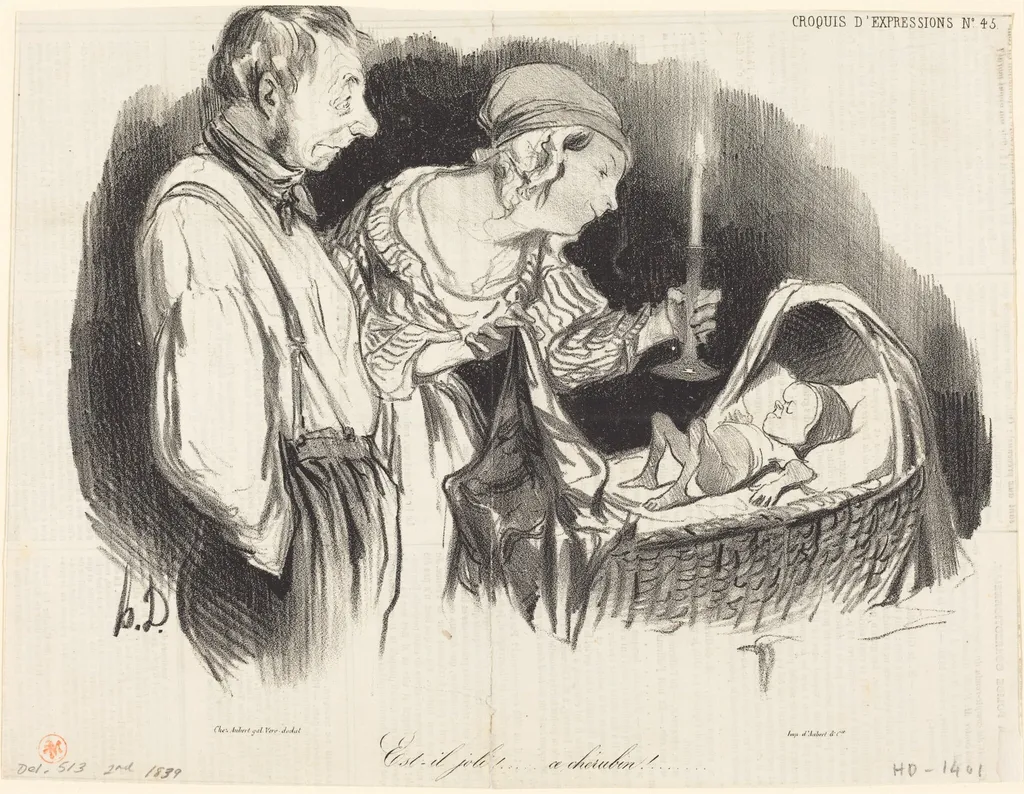
Est-il joli!... ce chérubin!... is an ink print by the Romanticist artist Honoré Daumier. It dates from 1839 and is held in the collection of the National Gallery of Art.
About this work
Overview
Created in 1839, this lithograph on newsprint is one of thousands by Honoré Daumier produced for Parisian satirical journals. Executed with rapid, expressive lines, it captures a quiet domestic moment rather than a overt political scene. Though made for mass circulation, its intimacy and informal technique distinguish it from more overtly polemical works in his oeuvre.
Subject & Meaning
An elderly couple leans over a basket containing a sleeping infant, their hands suspended near the child as if hesitant to disturb it.
An elderly couple leans over a basket containing a sleeping infant, their hands suspended near the child as if hesitant to disturb it. The title, ironically tender, contrasts with their worn appearances, suggesting a commentary on misplaced sentiment or the performative nature of familial affection under social pressure. The cherub reference may mock idealized portrayals of childhood in bourgeois culture.
Technique & Style
Daumier employed lithography on inexpensive newsprint, using swift, fluid strokes and minimal shading to convey form. The sketchlike quality—loose contours, unrefined edges, and absence of detail—reflects its origin as a rapid study for publication. The medium’s immediacy aligns with the urgency of journalistic satire, prioritizing expressive gesture over finish.
History & Provenance
Produced for *La Caricature* or *Le Charivari*, the print emerged during Daumier’s most active period as a political caricaturist under the July Monarchy. Though not among his most famous works, it exemplifies his daily output for periodicals that faced censorship and legal threats. Its survival in public collections underscores its role in documenting 19th-century visual culture.
Context
Daumier worked amid rising tensions between the monarchy and republican critics, using print media to reach a broad public. While many of his works targeted politicians and lawyers, this piece turns inward, observing private behavior as a mirror of societal values. The contrast between the infant’s innocence and the adults’ aged, weary forms reflects broader anxieties about class, duty, and emotional authenticity.
Legacy
This lithograph exemplifies Daumier’s ability to infuse everyday scenes with subtle critique. Its informal style influenced later generations of artists who valued spontaneity and social observation over academic polish. Though modest in scale, it remains a testament to his commitment to documenting ordinary life with unvarnished honesty.
Artist & collection
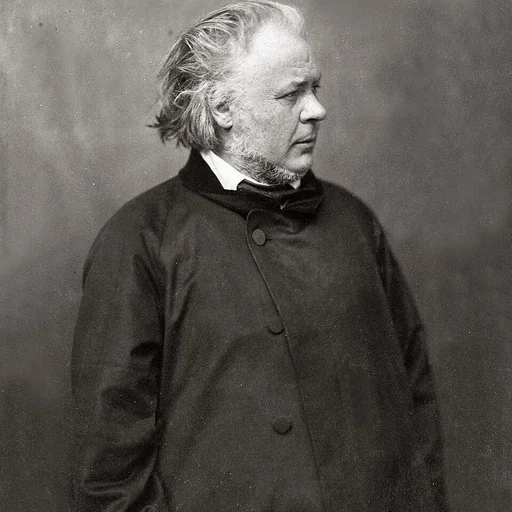
Artist
Honoré-Victorin Daumier was a French painter, sculptor, and printmaker, whose many works offer commentary on the social and political life in France, from the Revolution of 1830 to the fall of the Second French Empire in 1870.








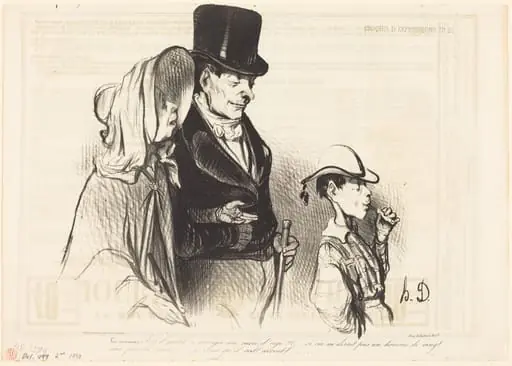 La Maman - Est-il gentil a manger son sucre d'orge!...
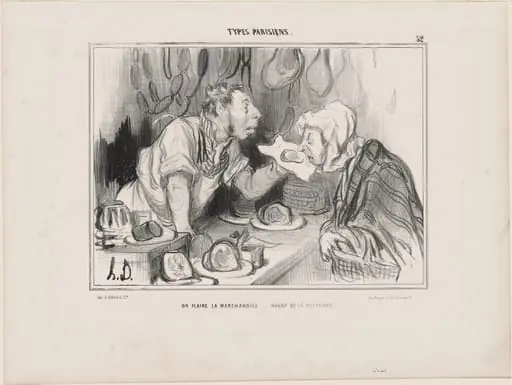 On flaire la marchandise... avant de la mécaniser!...
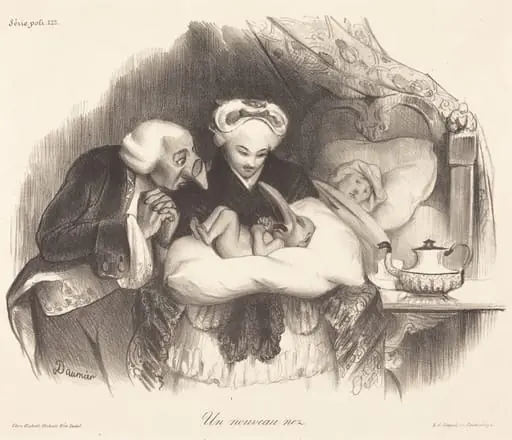 Un nouveau nez
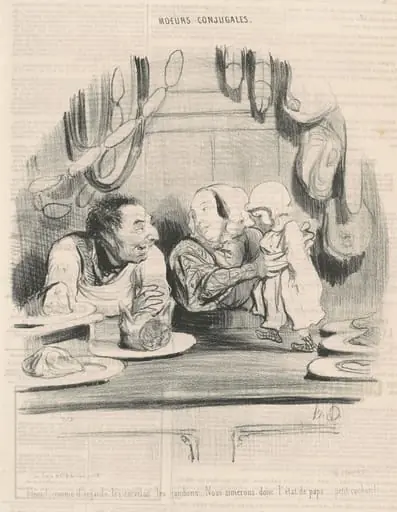 Hein! comme il regarde les cervelas...
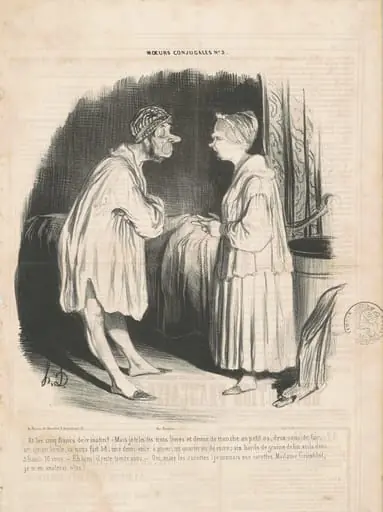 Et les cinq francs de ce matin?
 L'Éducation au biberon
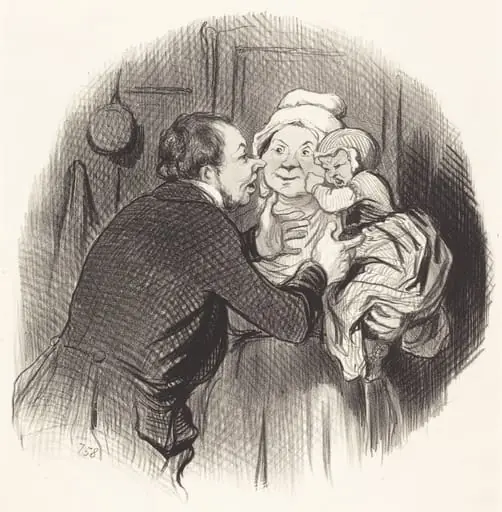 La Visite a la nourrice
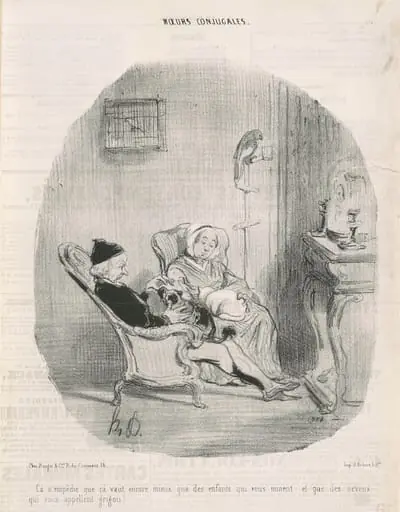 Ça n'empêche que ça vaut encore mieux....
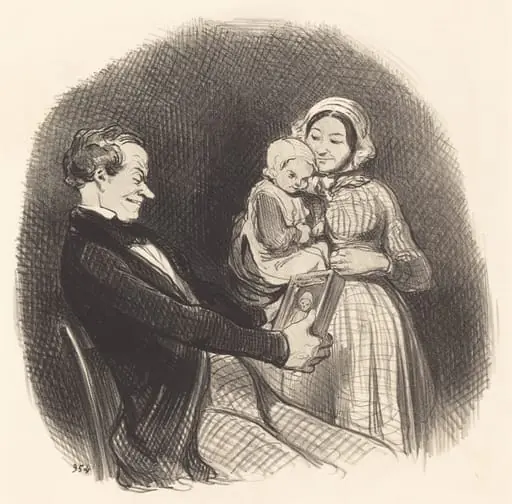 Papa contemplant l'image de son image
 Lolo qu'aimes-tu mieux de ton papa ou de ta maman...