Artwork
Le Nouveau pavage en bois... de Paris
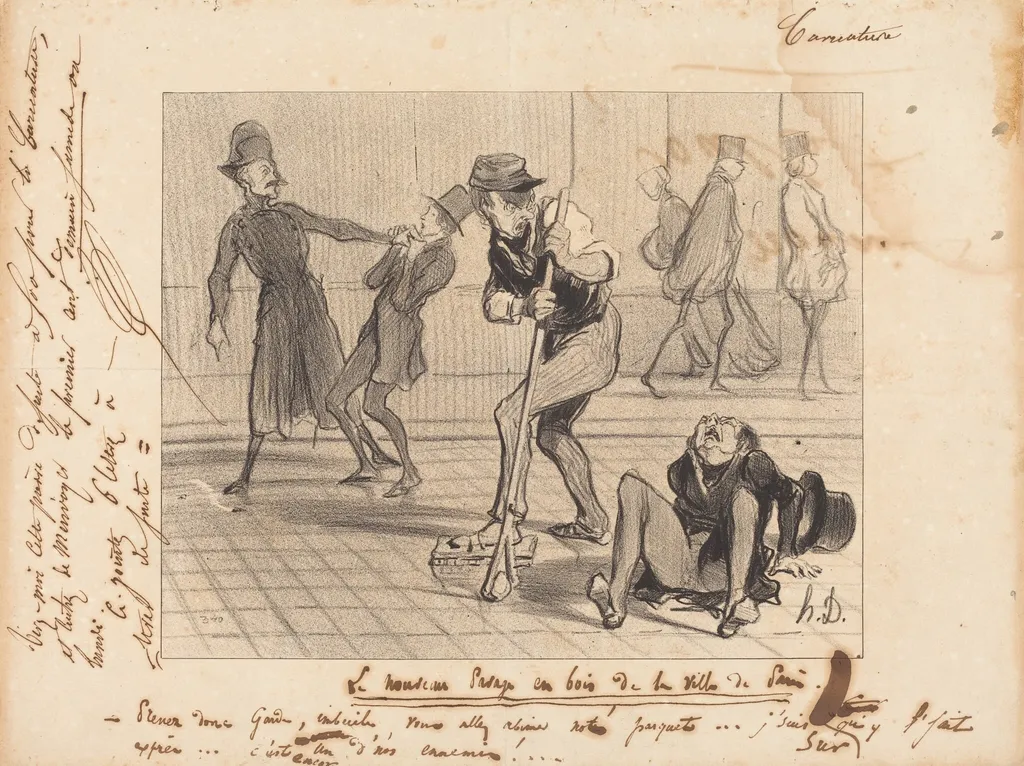
Le Nouveau pavage en bois... de Paris is an ink print by the Romanticist artist Honoré Daumier. It dates from 1842 and is held in the collection of the National Gallery of Art.
About this work
Overview
Honoré Daumier’s lithograph *Le Nouveau pavage en bois… de Paris*, produced in 1842, depicts a crowded urban street newly covered with wooden planks.
Honoré Daumier’s lithograph *Le Nouveau pavage en bois… de Paris*, produced in 1842, depicts a crowded urban street newly covered with wooden planks. A group of men in long coats and hats populate the scene: one sweeps the pavement, another is hauled away by a companion, while a fourth watches from the ground. The blurred wall behind them suggests the bustle of a modernizing Parisian thoroughfare.
Subject & Meaning
The composition highlights the everyday labor and tension of city life, using the newly laid wooden pavement as a symbol of rapid urban change. By focusing on ordinary figures engaged in mundane yet strained activities, Daumier underscores the social dislocation and class friction that accompanied the July Monarchy’s ambitious redevelopment projects.
Technique & Style
Executed as a lithographic print, the work employs bold line work and stark contrasts to convey movement and atmosphere. While Daumier is often linked to Realist observation, the piece also carries Romantic traits through its emphasis on emotional intensity and the dramatic interplay of light and shadow across the figures and the blurred background.
History & Provenance
The lithograph appeared in the satirical journals *La Caricature* and *Le Charivari*, venues where Daumier regularly published his politically charged images. Created during the early years of the July Monarchy, the print circulated widely, reinforcing the artist’s reputation as a visual commentator on contemporary social and political issues.
Context
Set against the backdrop of Paris’s extensive street‑paving initiatives, the image reflects the broader tension between modernization efforts and the lived experience of the city’s working class. Daumier’s republican sympathies informed his critique, positioning the work within a tradition of 19th‑century French prints that used humor and exaggeration to challenge authority.
Artist & collection

Artist
Honoré-Victorin Daumier was a French painter, sculptor, and printmaker, whose many works offer commentary on the social and political life in France, from the Revolution of 1830 to the fall of the Second French Empire in 1870.









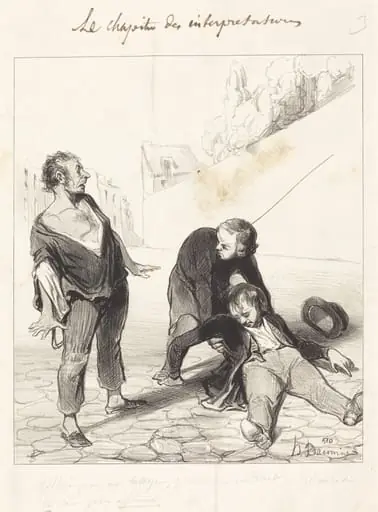 Fallait pas me tutoyer, j'suis dans...
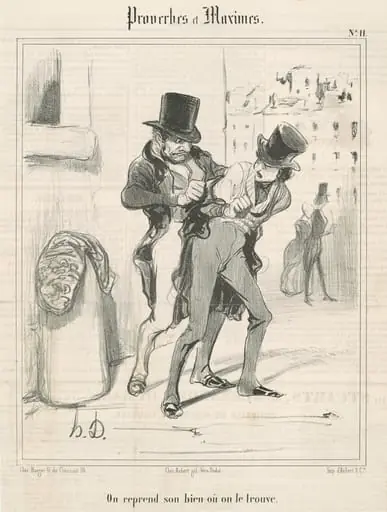 On reprend son bien ou on le trouve
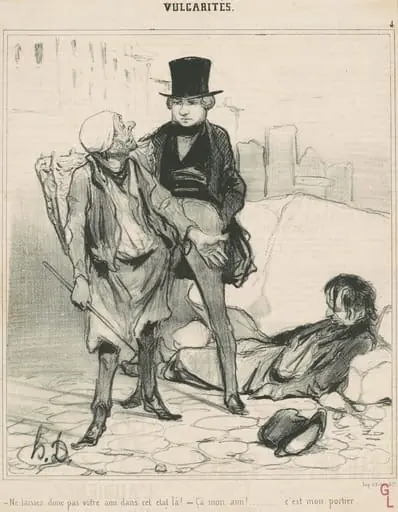 Ne laissez donc pas votre ami dans cet état la!
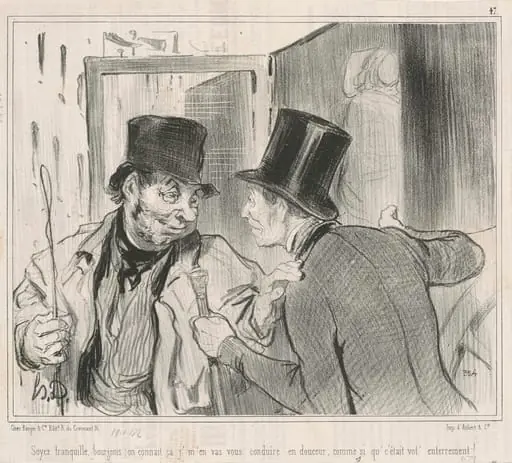 Soyez tranquille bourgeois, on connait
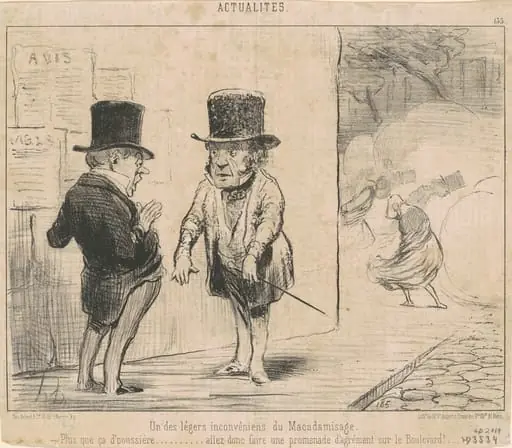 Un des ... inconvéniens du macadamisage ...
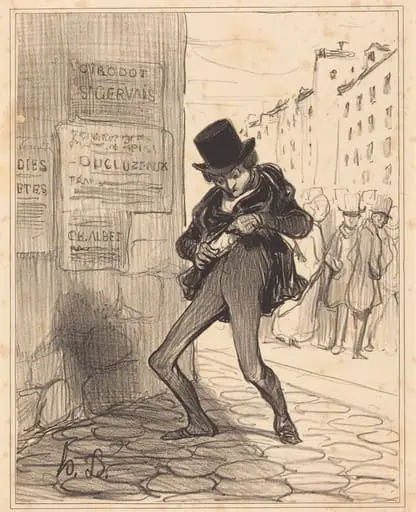 Volé!... Rue vide-gousset...
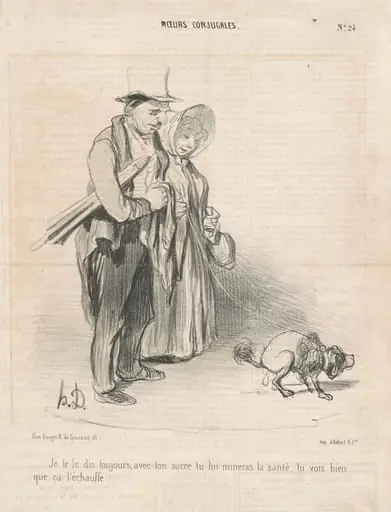 Je te le dis toujours, avec ton sucre...
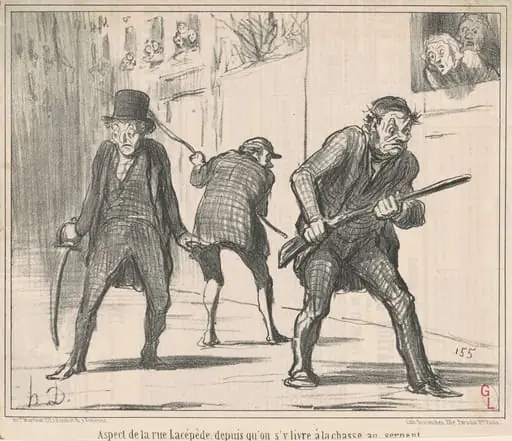 Aspect de la rue Lacépède ...
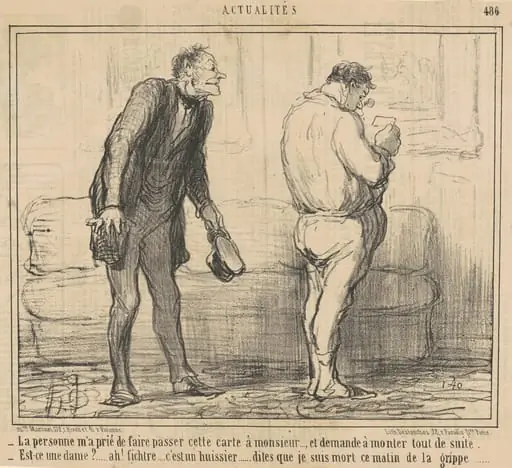 La personne ... demande a monter tout de suite ...
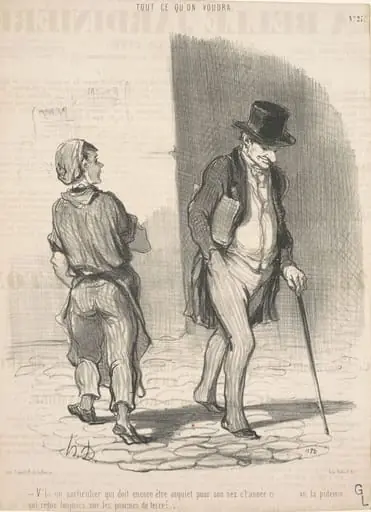 V'la un particulier qui doit ...être inquiet ...
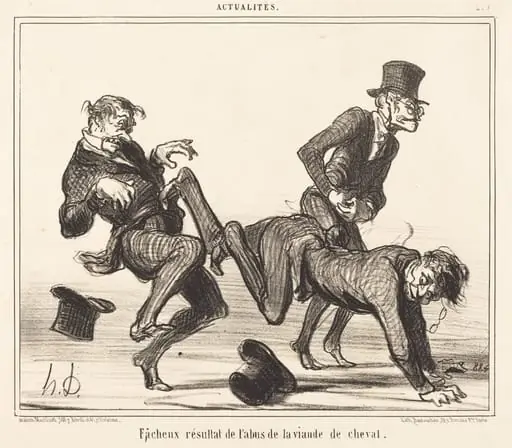 Facheux résultat... de la viande de cheval
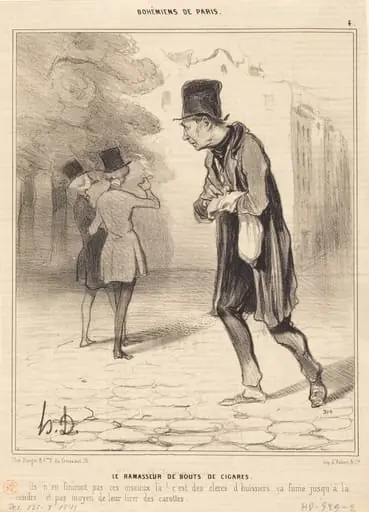 Le Ramasseur de bouts de cigares