Artwork
Grrrrand Déménagement du Constitutionnel
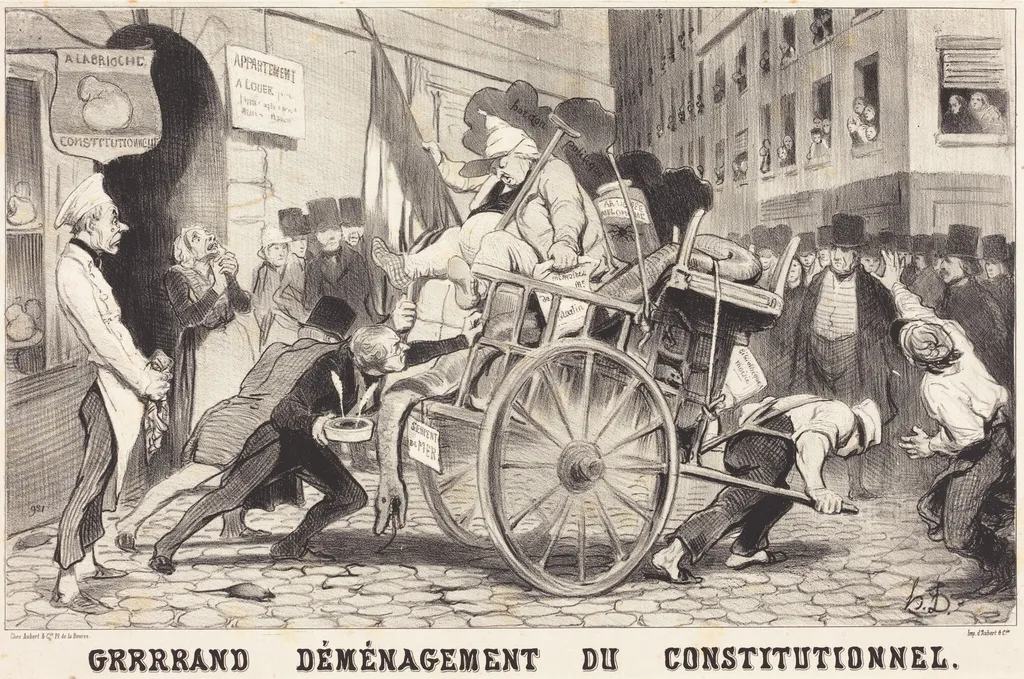
Grrrrand Déménagement du Constitutionnel is an ink print by the Romanticist artist Honoré Daumier. It dates from 1846 and is held in the collection of the National Gallery of Art.
About this work
Overview
Honoré Daumier's 1846 lithograph *Grrrrand Déménagement du Constitutionnel* presents a chaotic, satirical scene of a move, critiquing the political press of his era. Characteristic of Daumier's socially conscious and politically charged oeuvre, this print conveys his republican democratic stance.
Subject & Meaning
The lithograph depicts a group struggling with a giant wheelbarrow containing a finely dressed individual. Surrounding chaos, signs for apartments, and a 'Constitutional' club hint at a commentary on the 'weight' of political institutions or the struggle to advance democratic ideals amidst turmoil.
Technique & Style
Executed in lithograph on wove paper, the work showcases Daumier's mastery of the medium, utilizing bold lines and expressive composition to convey satirical intent. The chaotic visual language is typical of his caricatural approach, emphasizing the absurdity of the situation.
History & Provenance
Created during Daumier's prolific period of contributing to *La Caricature* and *Le Charivari*, this lithograph reflects his consistent targeting of monarchical, aristocratic, and clerical powers through satire. Specific provenance details are not provided.
Context
Emerging in 1846, the work is situated within a climate of political tension in France, where the monarchy's influence and the role of the press were under scrutiny. Daumier's republican sympathies align with the broader political discourse of the time.
Legacy
*Grrrrand Déménagement du Constitutionnel* contributes to Daumier's legacy as a pioneering figure in political caricature and lithography. His use of humor to address serious political issues continues to influence satirical art and commentary.
Artist & collection

Artist
Honoré-Victorin Daumier was a French painter, sculptor, and printmaker, whose many works offer commentary on the social and political life in France, from the Revolution of 1830 to the fall of the Second French Empire in 1870.









 Great Removal of the Constitutional Establishment
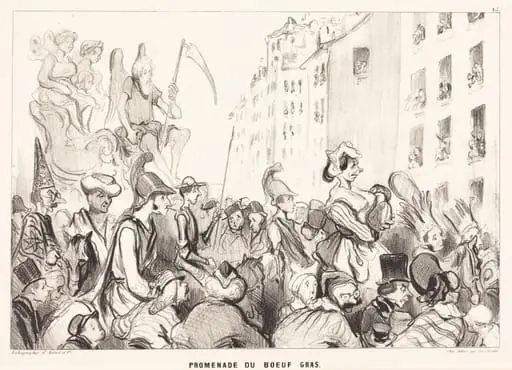 Promenade du Boeuf gras
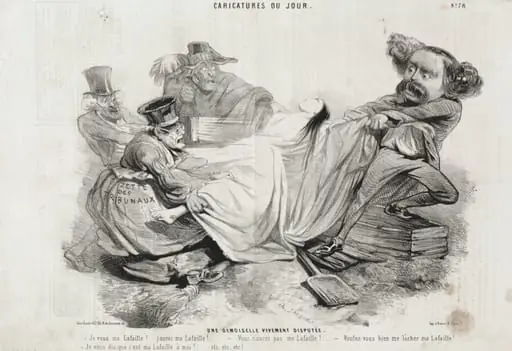 An Intensely Contested Young Woman
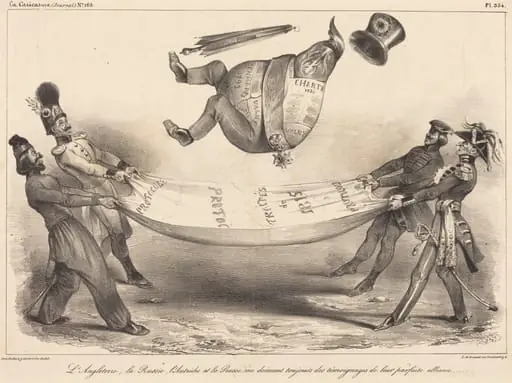 L'Angleterre, la Russie, l'Autriche...leur parfaite alliance
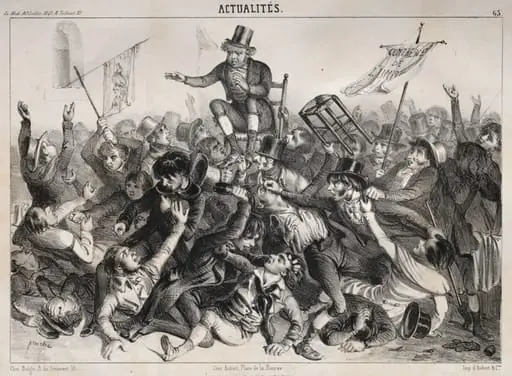 Actualités: Élections d'Angleterre
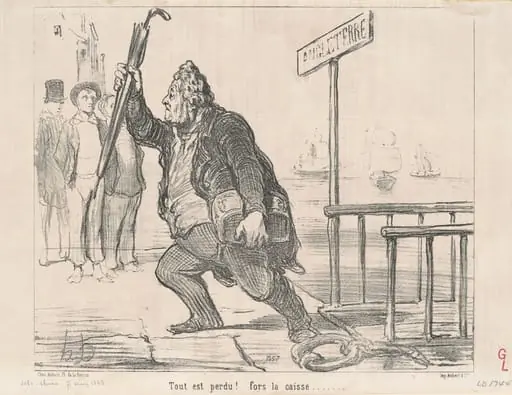 Tout est perdu! Fors la caisse
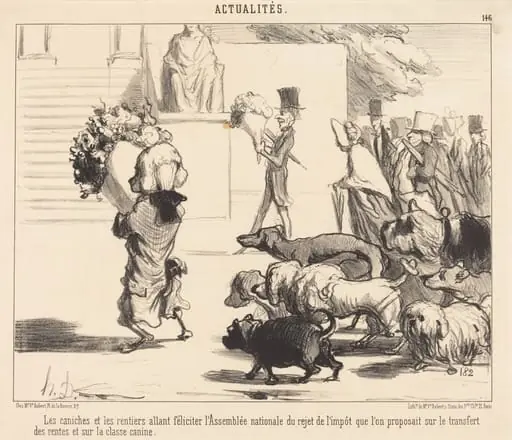 Les Caniches et les rentiers allant féliciter l'Assemblée...
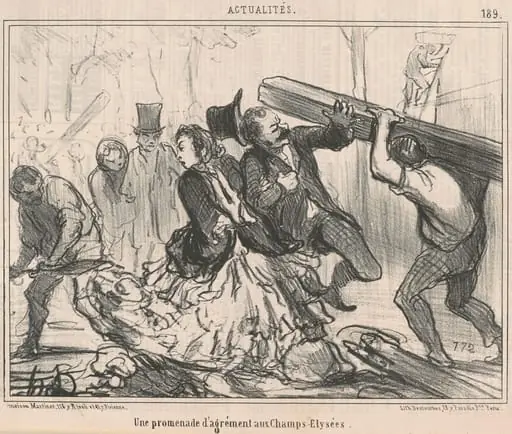 Une promenade d'argrément aux Champs-Elysées
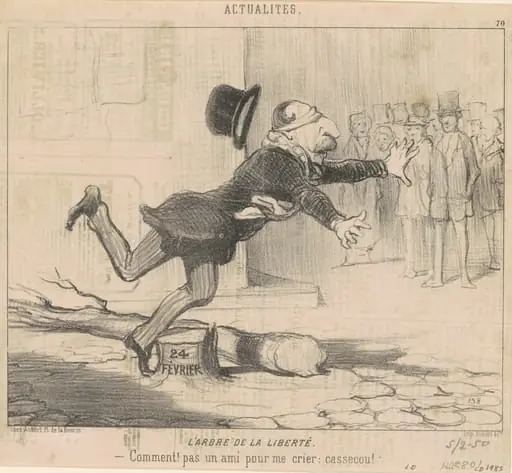 L'arbre de la liberté
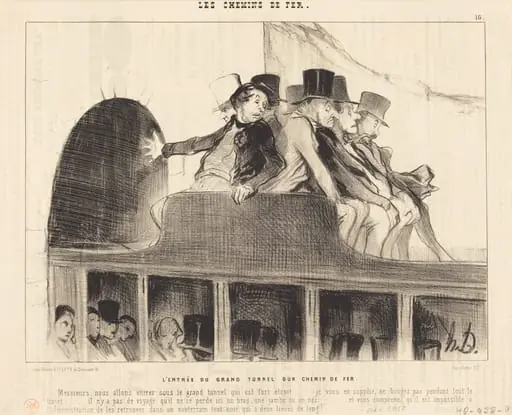 L'Entrée du Grand tunnel d'un chemin de fer