Artwork
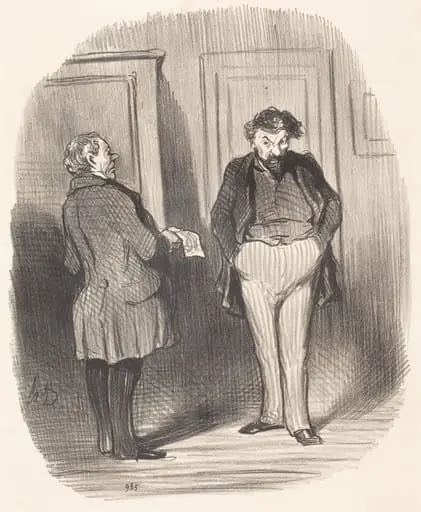
Il y a trois mois, m'sieu l'vicomte posait... comme ça...
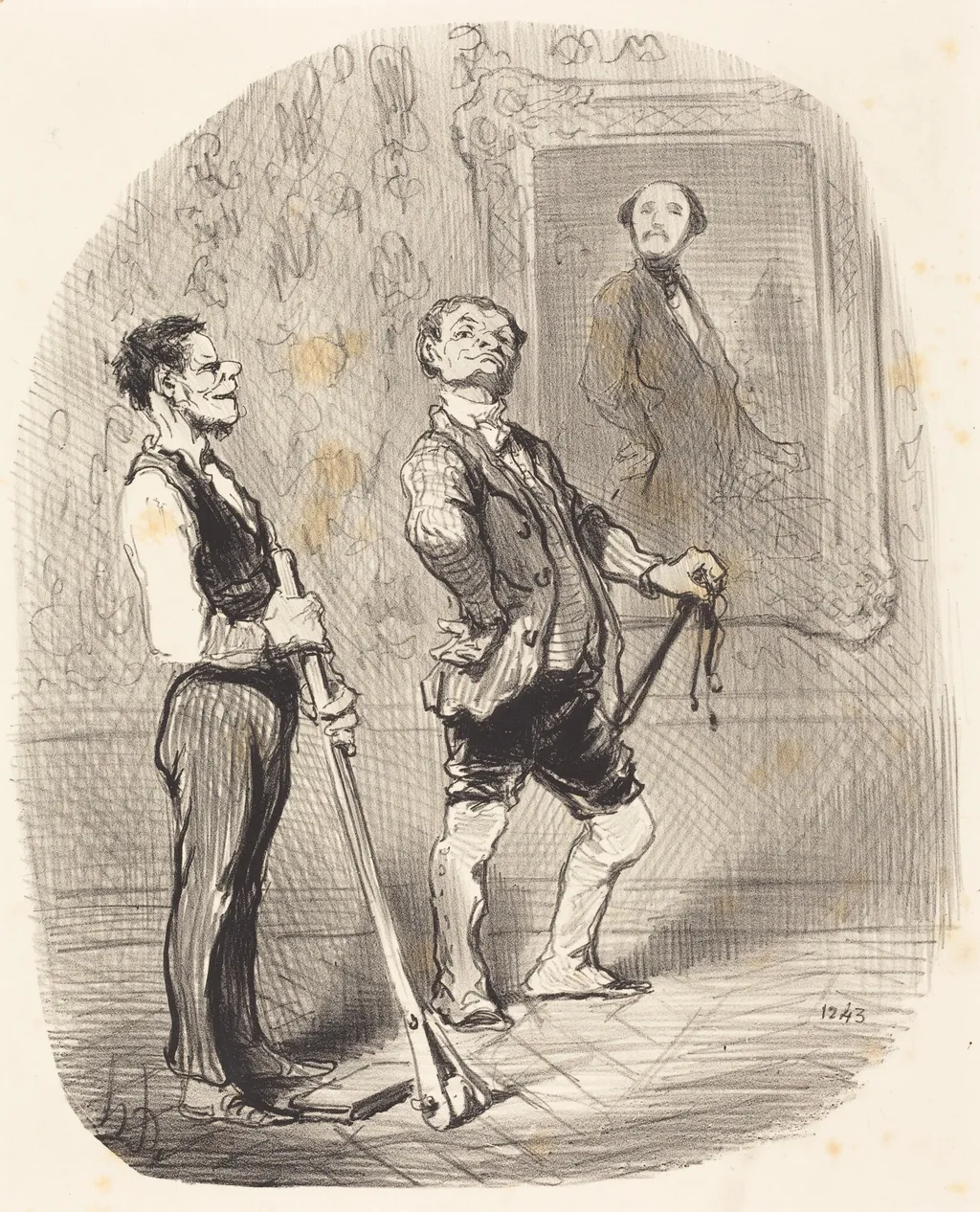
Il y a trois mois, m'sieu l'vicomte posait... comme ça... is an ink print by the Romanticist artist Honoré Daumier. It dates from 1848 and is held in the collection of the National Gallery of Art.
About this work
Overview
Executed with rapid, expressive lines, it captures a fleeting moment of social absurdity.
Created in 1848, this lithograph by Honoré Daumier is part of a series of satirical prints responding to the shifting political landscape of post-revolutionary France. Executed with rapid, expressive lines, it captures a fleeting moment of social absurdity. Daumier, known for his sharp observations of class dynamics, used the accessibility of print media to reach a broad audience, turning everyday scenes into subtle critiques of power and pretension.
Subject & Meaning
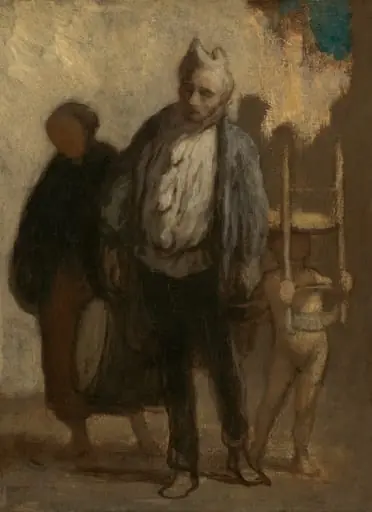
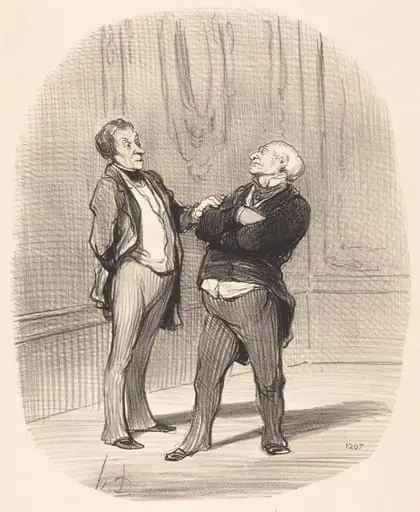
The scene portrays a disheveled nobleman, cane in hand, smirking beside a figure holding a leash—possibly a servant or a dog—while a third man stands rigidly in the doorway. The awkwardness of their postures and the dim, cramped setting suggest a decline in aristocratic dignity. The title, referencing a past pose, implies the nobility’s clinging to outdated rituals, now rendered ridiculous by changing times and diminished status.
Technique & Style
Daumier employed loose, gestural lines typical of his lithographic work, favoring immediacy over polish. The sketchy quality enhances the sense of spontaneity, as if capturing a candid moment. Shading is minimal, relying on contrast and contour to define form and mood. The worn clothing and uneven lighting reinforce the atmosphere of decay, aligning the visual language with the subject’s social erosion.
History & Provenance
Produced during the turbulent year of the 1848 Revolution, the print likely appeared in a radical newspaper such as *Le Charivari*, where Daumier regularly published. Though many of his works were censored or seized, this piece survived in private collections and institutional archives. Its survival reflects its status as a quiet but potent document of mid-century French social anxiety, preserved more for its historical value than its original public reception.
Context
In the decades following the July Revolution of 1830, France oscillated between republicanism and monarchy, with the aristocracy struggling to retain relevance. Daumier’s prints responded to this instability, portraying the nobility not as grand figures but as out-of-place relics. His work resonated with a growing middle class that viewed inherited privilege with skepticism, using humor to expose the fragility of social hierarchies.
Legacy
Daumier’s lithographs, including this one, influenced later generations of satirical artists and cartoonists by demonstrating how everyday observation could carry political weight. His unidealized depictions of class and character helped shift the focus of visual satire from caricature to psychological realism. Though little known to the public during his lifetime, his prints are now recognized as foundational to modern social commentary in art.
Artist & collection
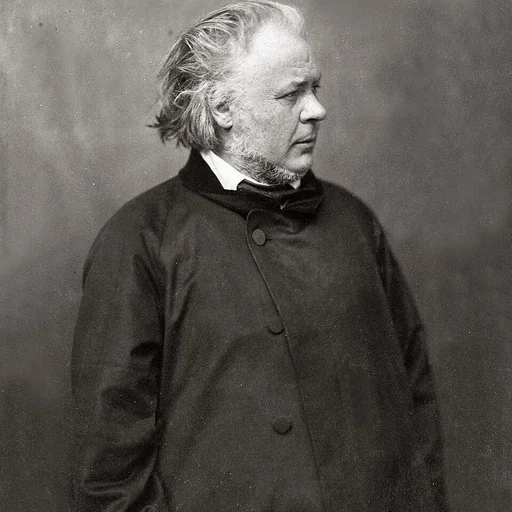
Artist
Honoré-Victorin Daumier was a French painter, sculptor, and printmaker, whose many works offer commentary on the social and political life in France, from the Revolution of 1830 to the fall of the Second French Empire in 1870.

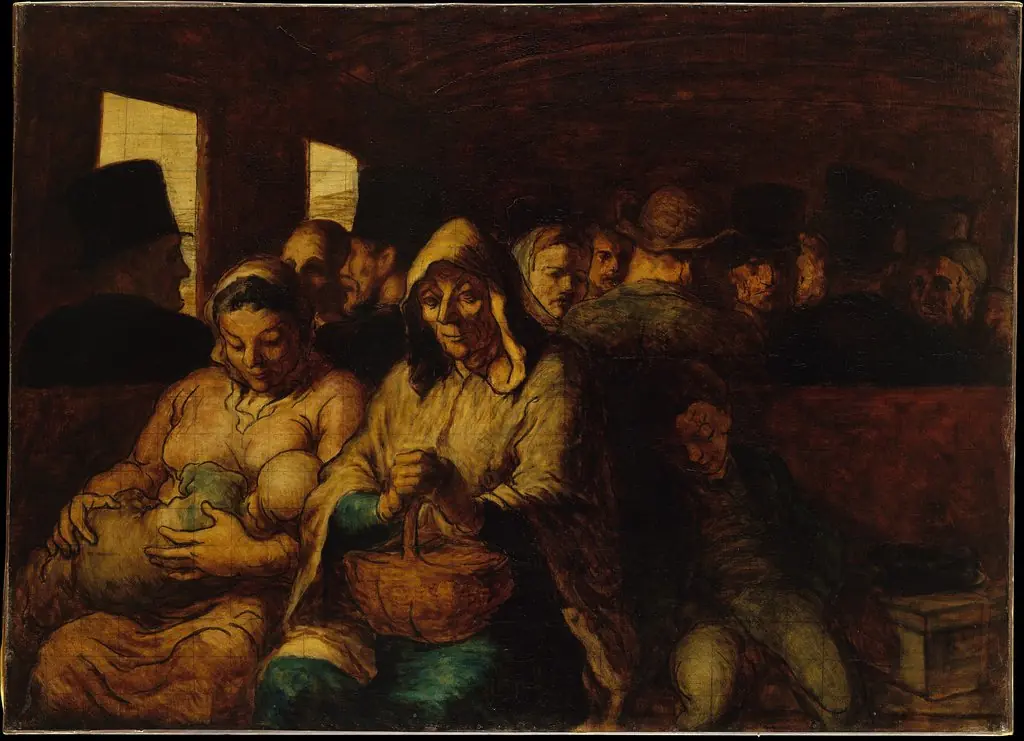
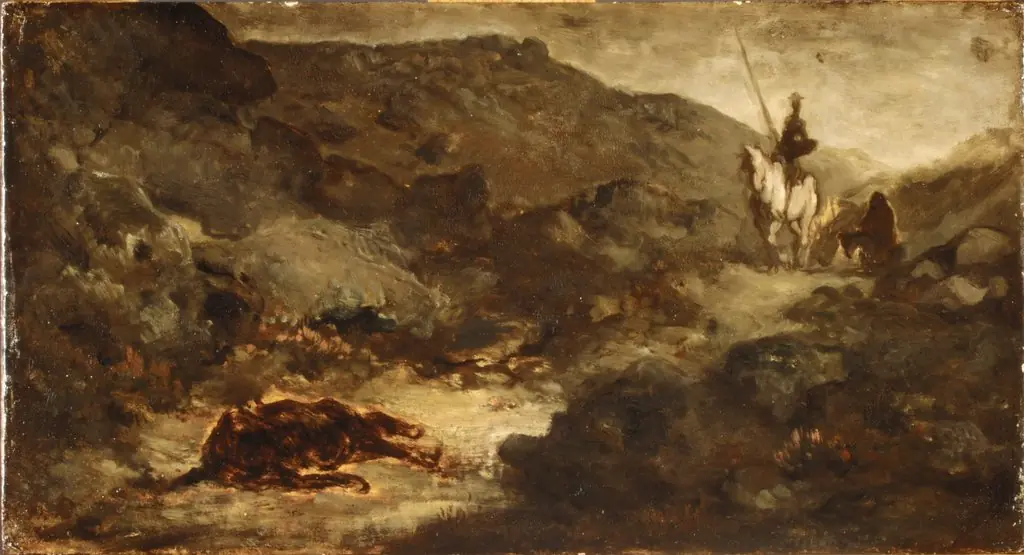
 Il y a la guerre... les loyers vont... diminuer...
 Tiens... je ne te reconnaissais pas...
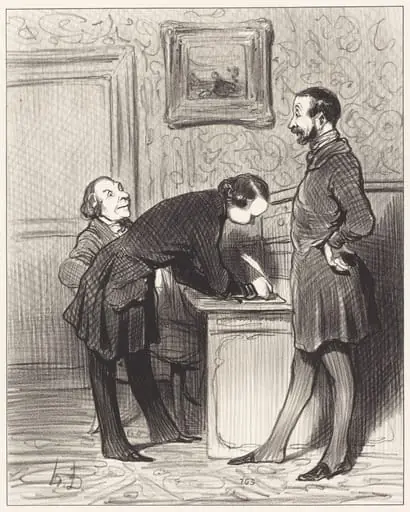 C'est bien parce que c'est votre ami...
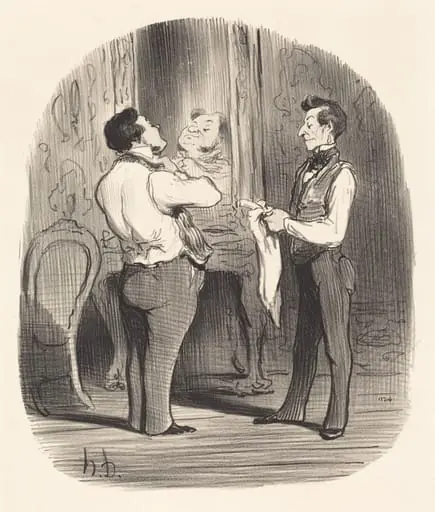 Le Jour ou il s'agit de faire une conquête
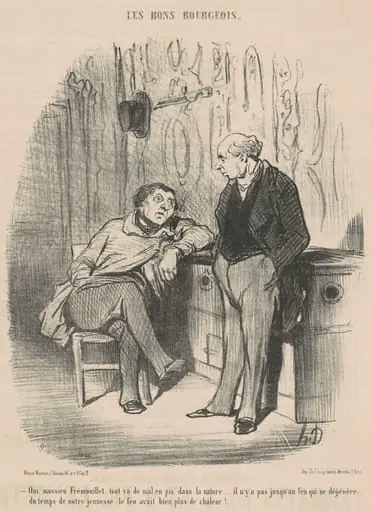 Oui, Mossieu Fremouillet, tout va de mal en pis ...
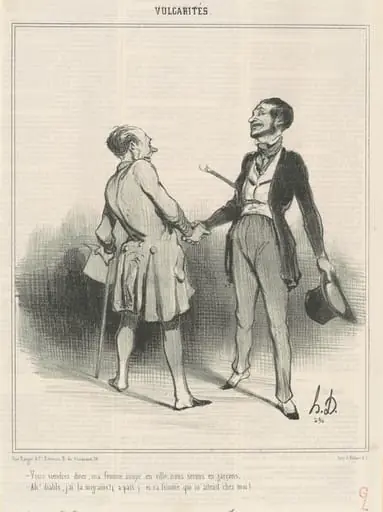 Vous viendrez diner, ma femme soupe en ville ...
 Pourriez-vous me dire...? J'ai la grippe!...
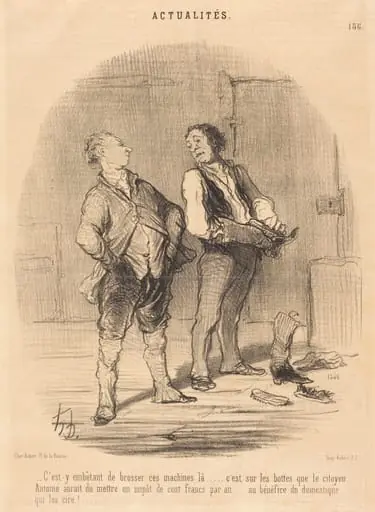 C'est-y embêtant de brosser ces machines là...
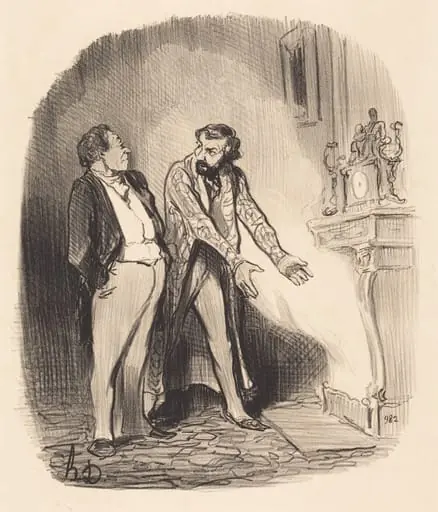 Mais monsieur le propriétaire, voyez...
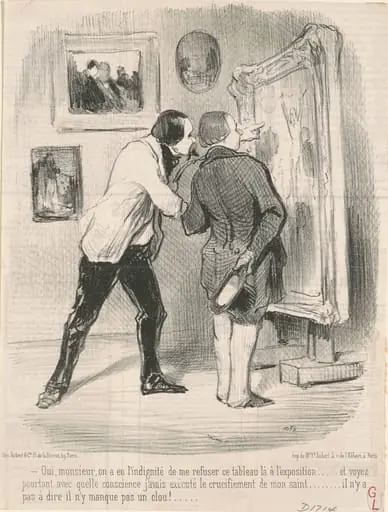 Oui ... on a eu l'indignité de me refuser ce tableau ...