Artwork
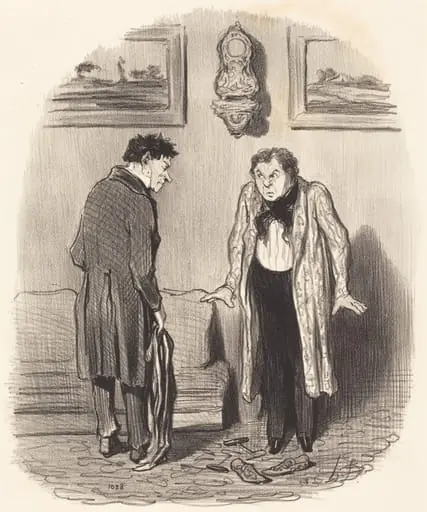
Inconvénient de demander des réparations...
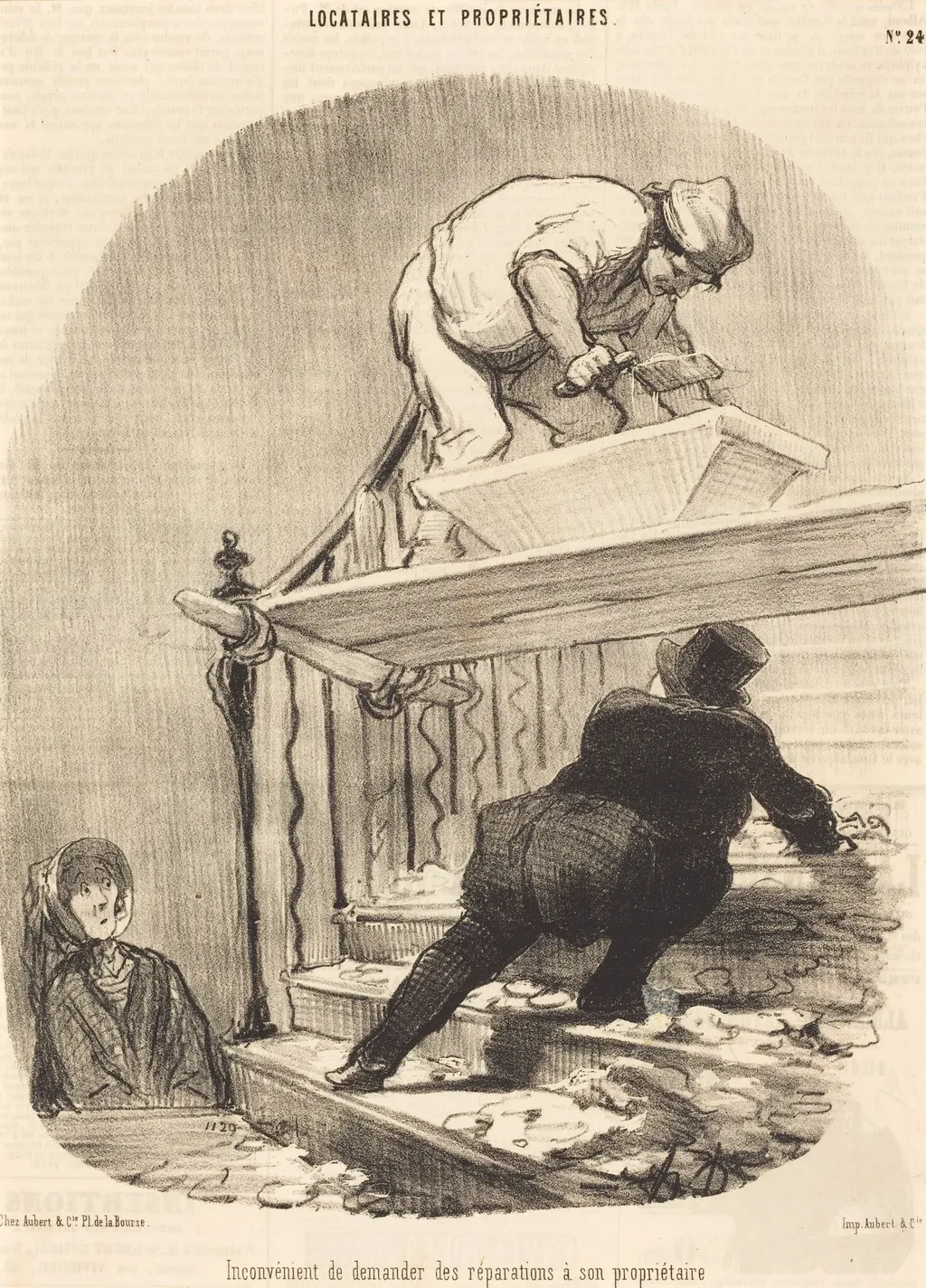
Inconvénient de demander des réparations... is an ink print by the Romanticist artist Honoré Daumier. It dates from 1847 and is held in the collection of the National Gallery of Art.
About this work
Overview
Its modest materials and widespread distribution reflect Daumier’s commitment to reaching ordinary readers with critiques of urban life under the July Monarchy.
Created in 1847, this lithograph on newsprint by Honoré Daumier captures a moment of domestic neglect in a Parisian tenement. Executed in the rapid, expressive style typical of his journalistic work, the image was likely published in a satirical periodical. Its modest materials and widespread distribution reflect Daumier’s commitment to reaching ordinary readers with critiques of urban life under the July Monarchy.
Subject & Meaning
The scene depicts three residents of a dilapidated apartment: one man repairs a collapsing ceiling, another holds a bucket to catch dripping water, and a woman watches helplessly. The title, 'Inconvenient to ask the landlord for repairs,' underscores the futility of seeking redress. Daumier frames housing neglect not as misfortune but as systemic indifference, exposing the gap between official rhetoric and lived reality for the urban poor.
Technique & Style
Daumier employed lithography on newsprint to achieve immediacy and affordability. His loose, gestural lines convey urgency and decay, with minimal detail suggesting rather than rendering the environment. The ink’s smudged edges and rough texture mirror the building’s deterioration. This technique allowed for mass reproduction, aligning his art with the rhythms of daily news and public discourse.
History & Provenance
Produced during a period of heightened censorship under King Louis-Philippe, Daumier’s prints often skirted legal boundaries by using allegory and irony. Though the original publication context is unconfirmed, similar works appeared in *Le Charivari*, where his social commentary was both popular and controversial. The print’s survival in institutional collections reflects its recognition as a document of 19th-century urban struggle.
Context
In 1840s Paris, rapid urbanization outpaced housing infrastructure, leaving working-class families in overcrowded, unsafe dwellings. Landlords routinely ignored repair requests, and legal recourse was costly or inaccessible. Daumier’s image resonated because it mirrored daily frustrations shared by readers of satirical journals, turning private hardship into public critique within a climate of political repression.
Legacy
Daumier’s lithographs helped establish printmaking as a vehicle for social critique in modern art. This work, like others in his oeuvre, influenced later realist and documentary artists by demonstrating how everyday scenes could reveal structural injustice. Its enduring presence in museum collections affirms its role as a quiet but persistent witness to the material conditions of urban life in industrializing Europe.
Artist & collection
Artist
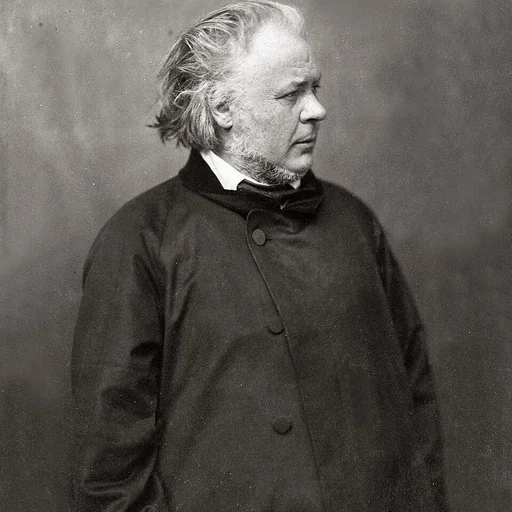
Honoré-Victorin Daumier was a French painter, sculptor, and printmaker, whose many works offer commentary on the social and political life in France, from the Revolution of 1830 to the fall of the Second French Empire in 1870.

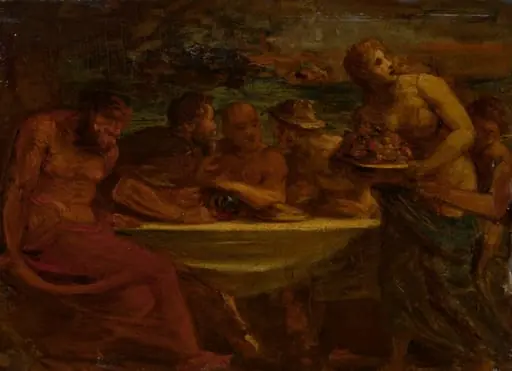
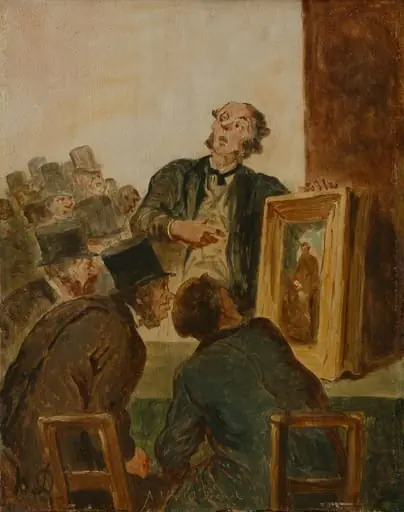
 Mais quand je vous dis que je ne peux pas remuer les pieds...
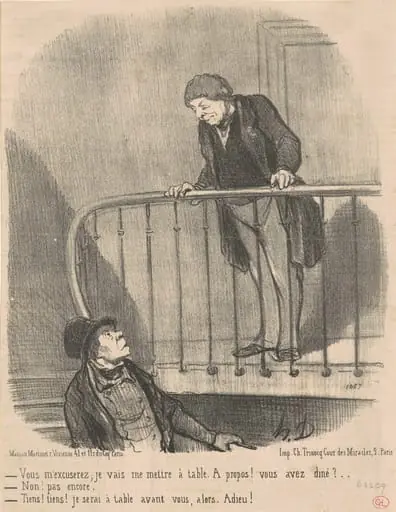 Vous m'excuserez: je vais me mettre a table ...
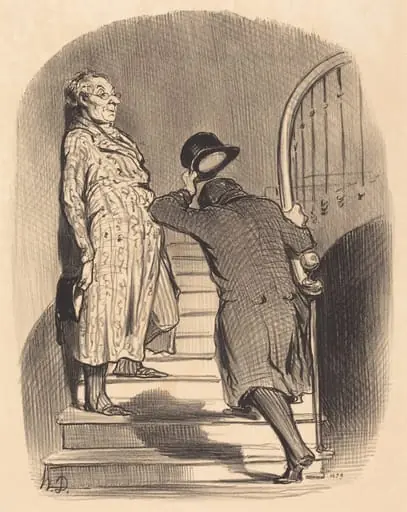 Un Locataire qui paie exactement son terme
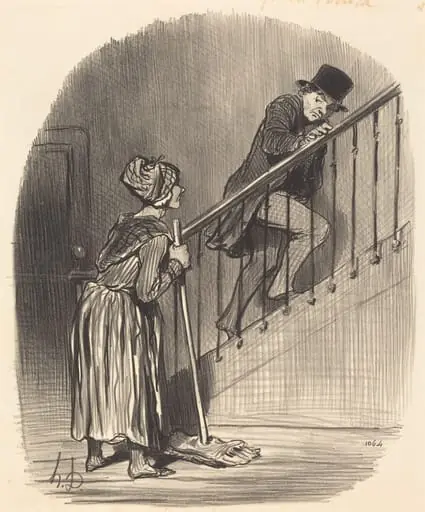 Ma femme est-elle a la maison?
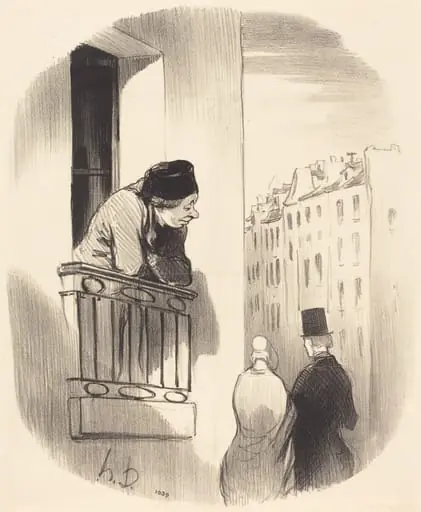 Moi aussi j'ai été jeune...
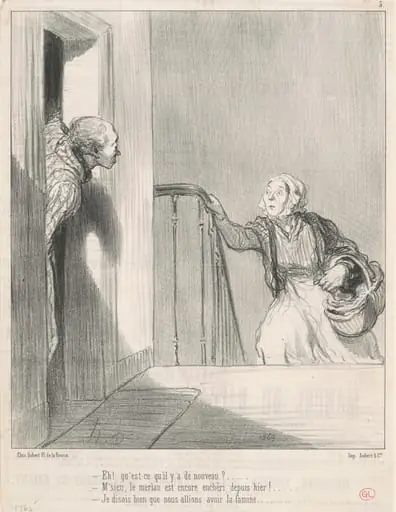 Eh! Qu'est-ce qu'il y a de nouveau? ...
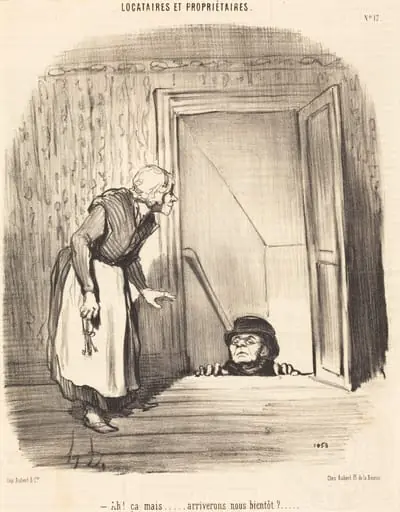 Ah! ça mais... arriverons-nous bientôt?
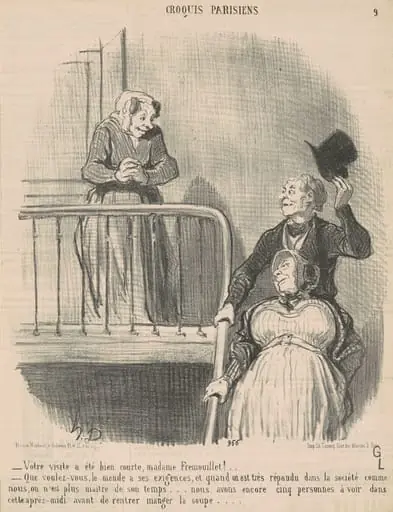 Votre visite a été bien courte ...
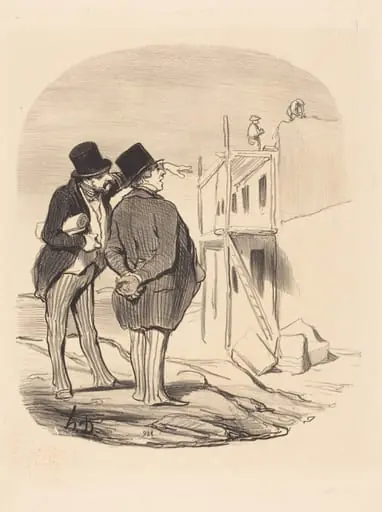 Two Men Amid Ruins
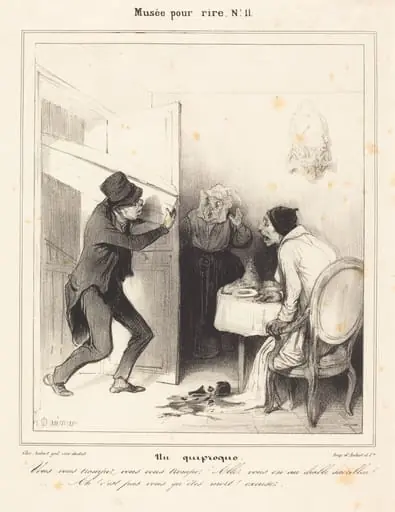 Un quiproquo - Vous vous trompez... allez... au diable...