Artwork
J. Marie-Anne Degousée
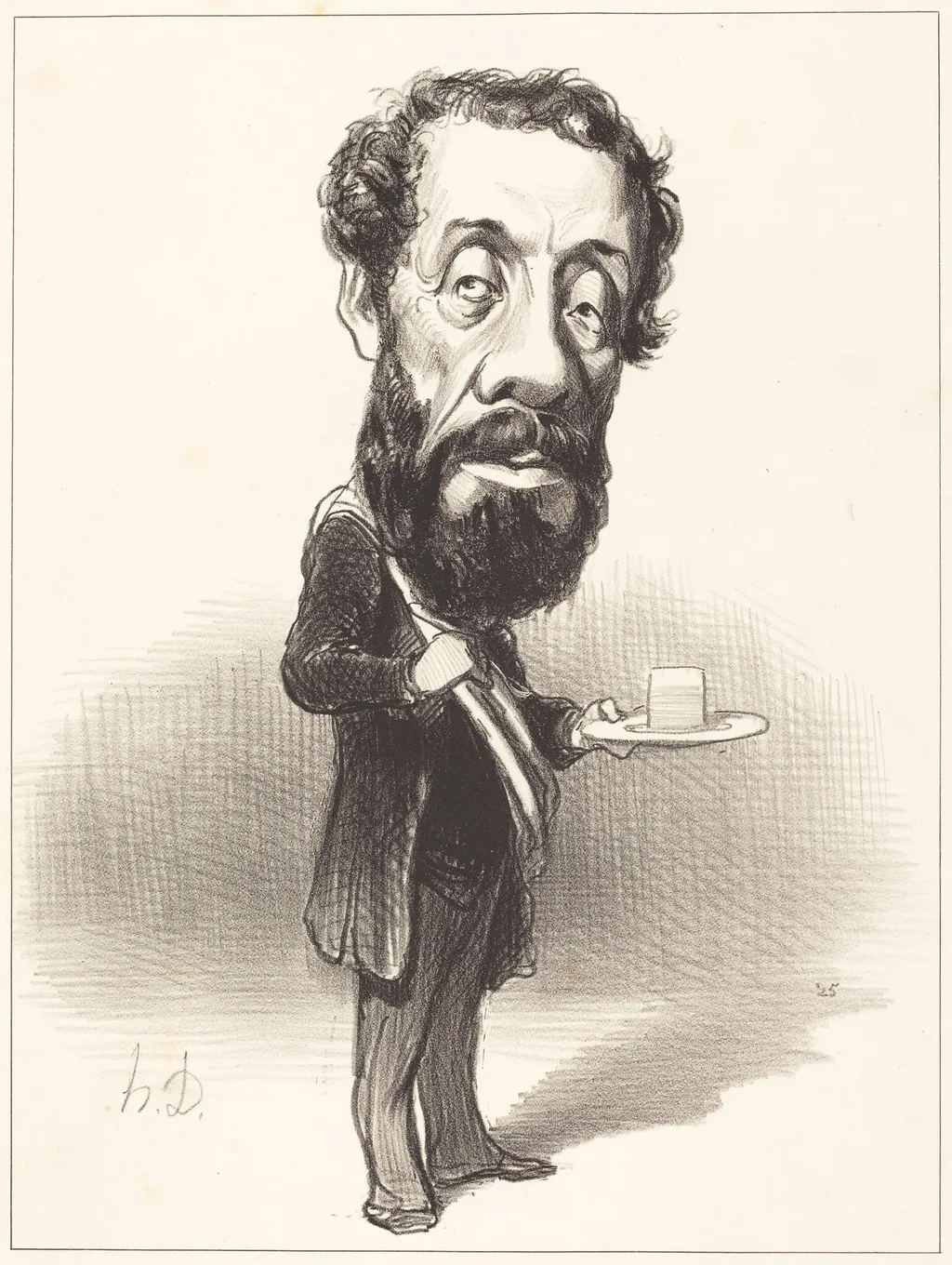
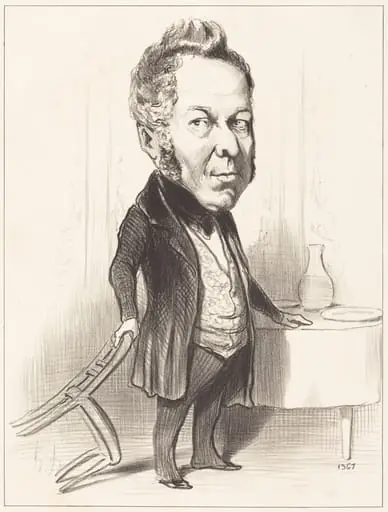
J. Marie-Anne Degousée is an ink print by the Romanticist artist Honoré Daumier. It dates from 1849 and is held in the collection of the National Gallery of Art.
About this work
Overview
Unlike his overtly political cartoons, this piece focuses on an individual, revealing his interest in the dignity of ordinary people.
This 1849 lithograph by Honoré Daumier portrays a man named J. Marie-Anne Degousée, captured in a moment of quiet service. Executed during a period of political upheaval in France, the work belongs to Daumier’s extensive series of printmaking that observed everyday life with unflinching realism. Unlike his overtly political cartoons, this piece focuses on an individual, revealing his interest in the dignity of ordinary people.
Subject & Meaning
The subject, likely a servant or attendant, holds a tray with a small cylindrical object—possibly a bottle or flask—suggesting a role in domestic or institutional service. His formal attire and composed demeanor contrast with the anonymity of his position. Daumier presents him not as a caricature but as a person of substance, subtly challenging societal hierarchies by granting visibility to those often rendered invisible.
Technique & Style
Daumier employed lithography with bold, fluid lines and nuanced tonal shading to model the figure’s form and texture. The contrast between the dark suit and the pale shirt enhances depth, while the roughness of the beard and fabric suggests immediacy. The composition avoids theatricality, favoring a grounded, observational approach that aligns with Romanticism’s emphasis on human emotion and authenticity over idealization.
History & Provenance
Created during Daumier’s tenure as a prolific contributor to satirical journals, this print was likely produced for private circulation or as part of a thematic collection rather than public publication. Its subject’s name implies a specific commission or personal observation. Unlike his widely distributed political cartoons, this portrait remains relatively obscure, with limited documentation on its early ownership or exhibition history.
Context
In the late 1840s, France transitioned from the July Monarchy to the Second Republic, intensifying debates over class and labor. Daumier’s work during this time often highlighted the lives of servants, workers, and the marginalized. While this portrait lacks overt satire, it fits within his broader project of documenting social structures—not through ridicule, but through quiet, respectful observation.
Legacy
This lithograph exemplifies Daumier’s shift from political caricature to intimate portraiture, influencing later realist artists who sought dignity in everyday subjects. Though less known than his satirical works, it reveals his capacity to convey humanity without exaggeration. Its restrained power contributed to the evolving perception of printmaking as a medium capable of profound social insight.
Artist & collection
Artist
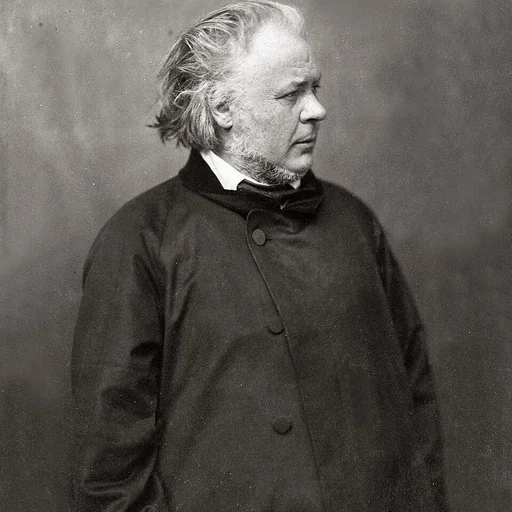
Honoré-Victorin Daumier was a French painter, sculptor, and printmaker, whose many works offer commentary on the social and political life in France, from the Revolution of 1830 to the fall of the Second French Empire in 1870.









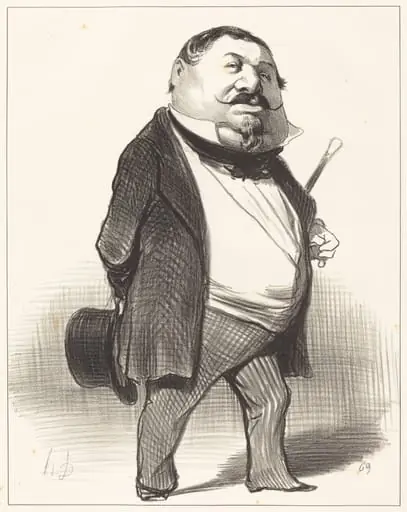 Prince Lucien Murat
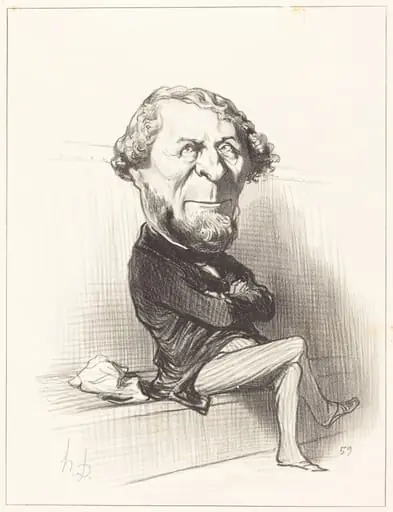 Marie Denis Larabit
 A.P.F. Deslongrais
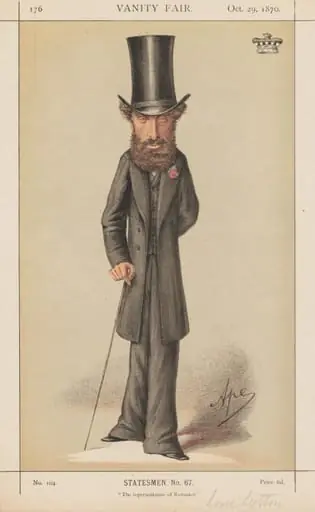 Vanity Fair: Statesmen No. 67 "The representative of Romance"
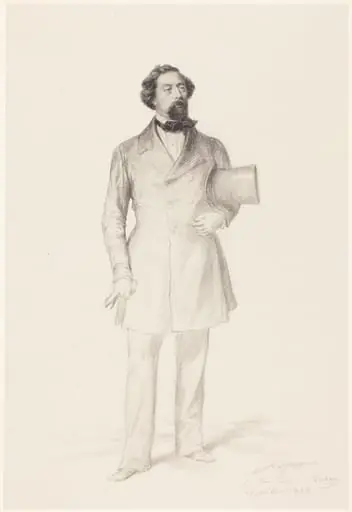 M. Pochez
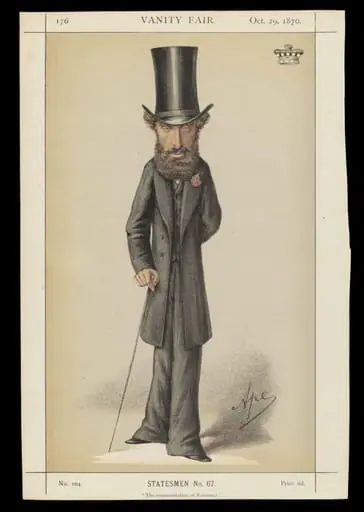 H Beard Print Collection
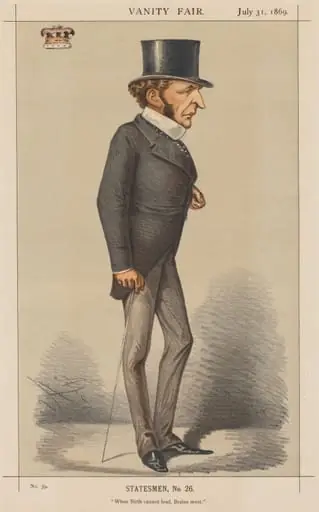 Vanity Fair: Statesman No. 26 "When Birth cannot lead, Brains must."
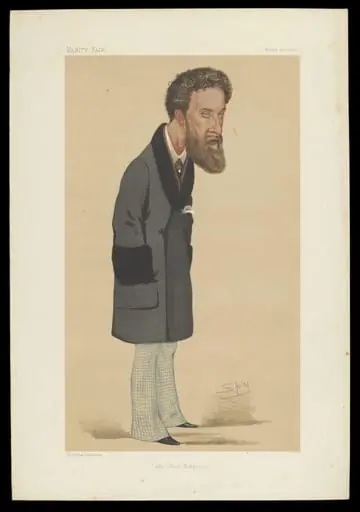 H Beard Print Collection
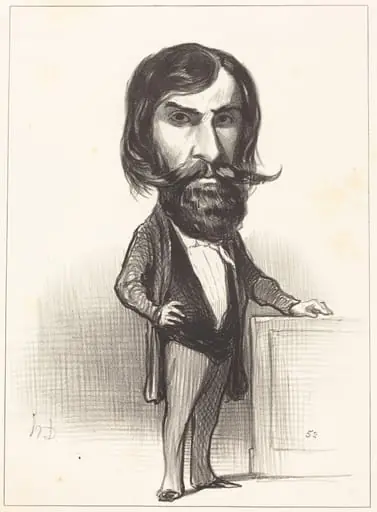 Ch. Ferdinand Gambon
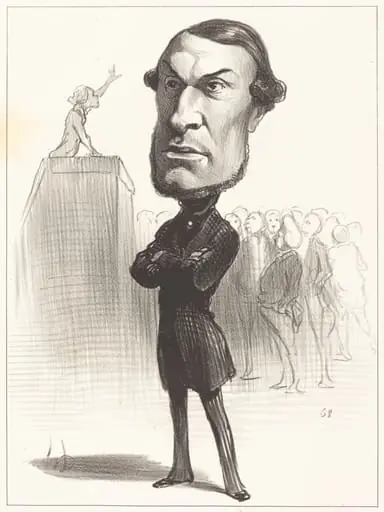 Achille Fould
 Anne, duc de Joyeuse
 Maréchal Bugeaud