Artwork
L'Héritier présomptif
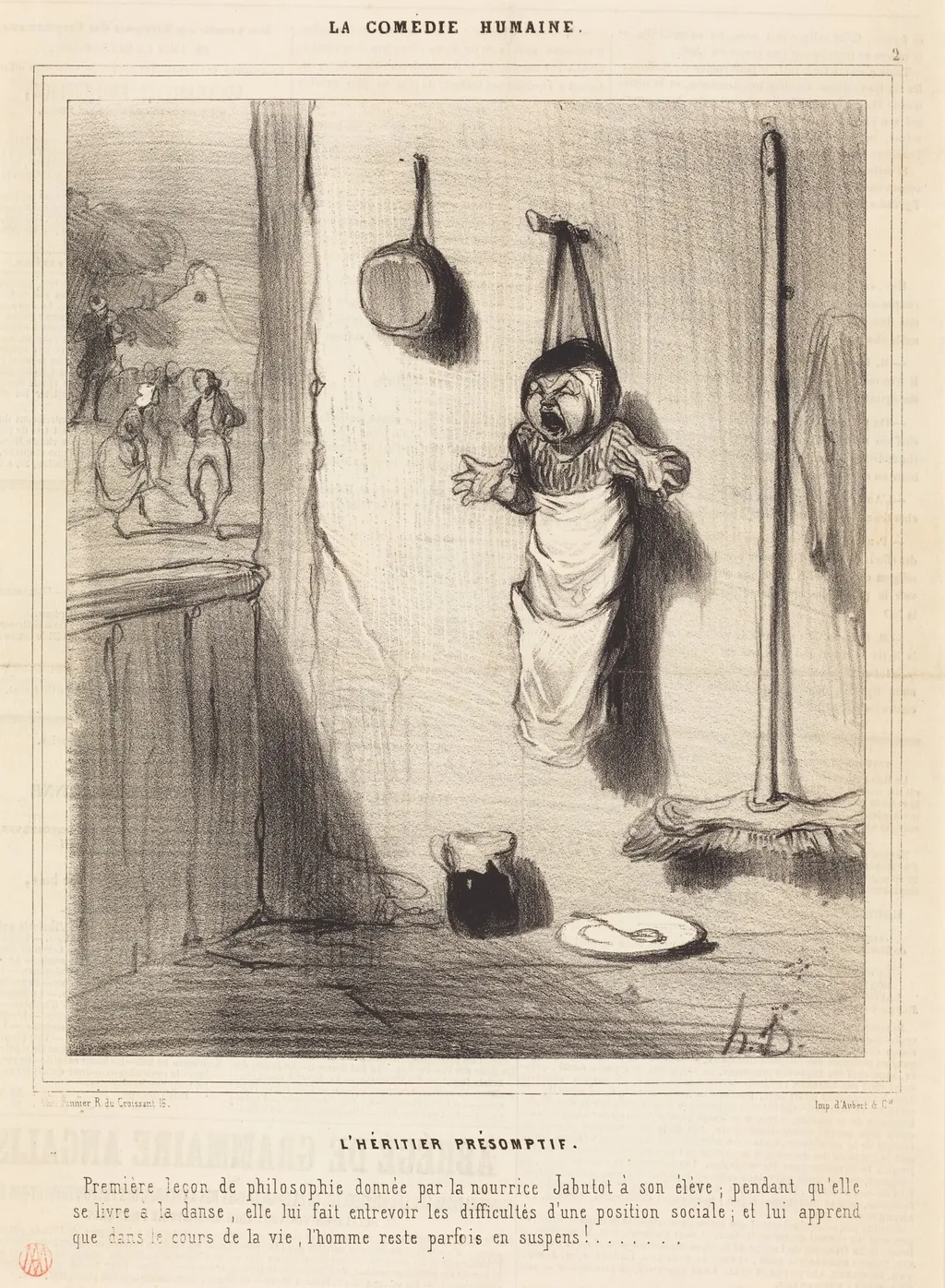
L'Héritier présomptif is an ink print by the Romanticist artist Honoré Daumier. It dates from 1843 and is held in the collection of the National Gallery of Art.
About this work
Overview
Created in 1843, this lithograph by Honoré Daumier was published in a Parisian satirical journal, reflecting his role as a visual commentator on contemporary society. Printed on inexpensive newsprint, the work was designed for mass circulation, aligning with the growing public appetite for political and social critique during a turbulent era in French history.
Subject & Meaning
The image depicts a man suspended upside down from a kitchen hook, his contorted expression suggesting distress.
The image depicts a man suspended upside down from a kitchen hook, his contorted expression suggesting distress. Below him, mundane household objects—a bucket, broom, hanging pot—anchor the scene in domestic chaos. Two miniature figures on a shelf observe passively, reinforcing the absurdity. The caption frames the scene as a 'first lesson in philosophy,' using physical inversion to mock the instability of social status and the illusion of inherited privilege.
Technique & Style
Daumier employed lithography to achieve rapid, expressive lines suited to journalistic deadlines. The ink washes and loose, gestural strokes convey movement and emotion with minimal detail. The use of newsprint, a humble material, heightened the work’s immediacy and accessibility. His style prioritizes emotional impact over refinement, capturing the raw energy of everyday life and social absurdity.
History & Provenance
Produced during Daumier’s tenure with *La Caricature* and *Le Charivari*, the print emerged amid government crackdowns on press freedom. Though he faced imprisonment for earlier satires, this piece avoided direct political figures, instead using domestic metaphor to critique societal hierarchies. Its survival in public and private collections attests to its resonance beyond its original publication context.
Context
In 1840s France, the July Monarchy faced mounting public discontent. Daumier’s prints responded to this climate by translating political tensions into relatable, often humorous domestic scenes. By placing a figure of presumed status in a lowly kitchen, he inverted expectations of power, using the kitchen—a space associated with labor and disorder—as a stage for social commentary.
Legacy
This work exemplifies Daumier’s enduring influence on social satire in visual art. His ability to fuse everyday settings with profound critique paved the way for later cartoonists and realist painters. Though created for ephemeral publication, its sharp observation of human folly continues to resonate as a quiet, enduring commentary on the fragility of social standing.
Artist & collection

Artist
Honoré-Victorin Daumier was a French painter, sculptor, and printmaker, whose many works offer commentary on the social and political life in France, from the Revolution of 1830 to the fall of the Second French Empire in 1870.









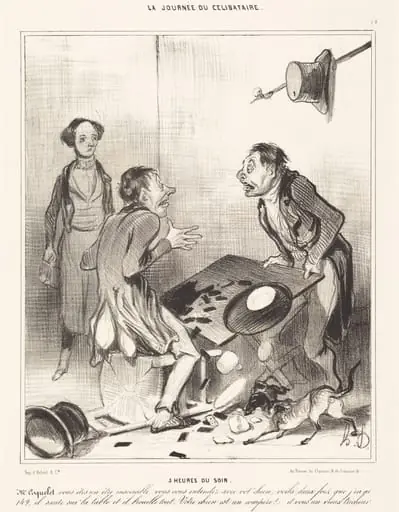 5 heures du soir
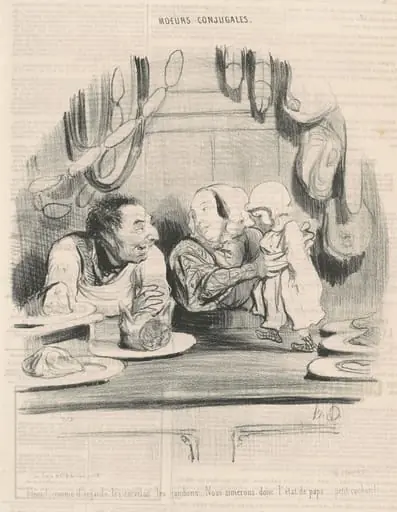 Hein! comme il regarde les cervelas...
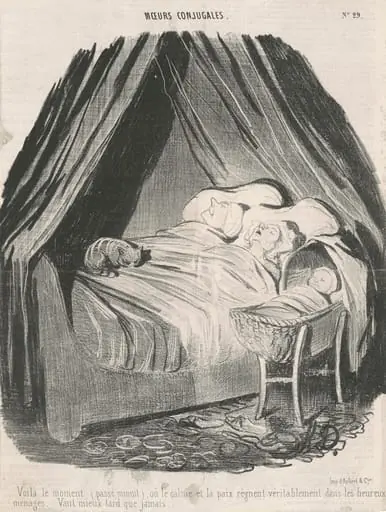 Voilà le moment (passé minuit) o∙ le calme et la paix règnent véritablement dans les heureux ménages. Vaut mieux tard que jamais.
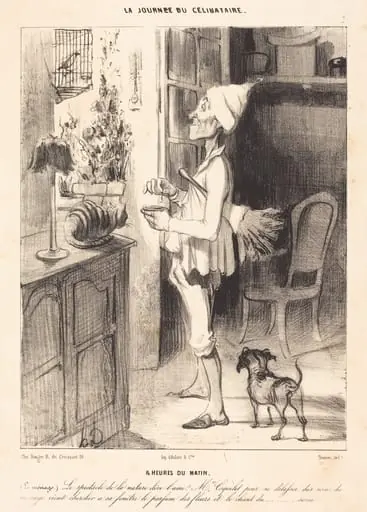 8 heures du matin
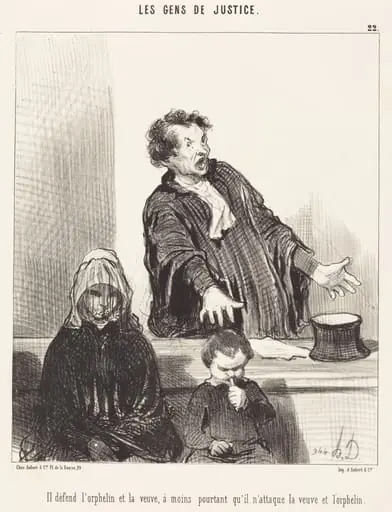 Il défend l'orphelin et la veuve, a moins...
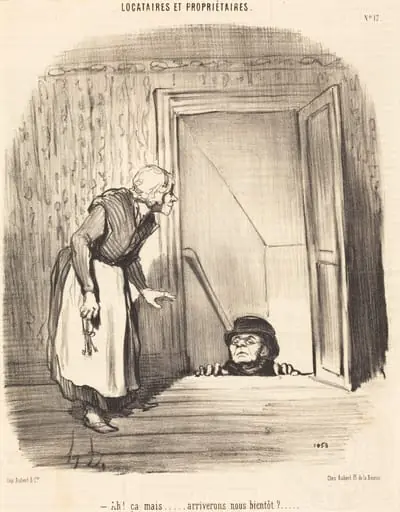 Ah! ça mais... arriverons-nous bientôt?
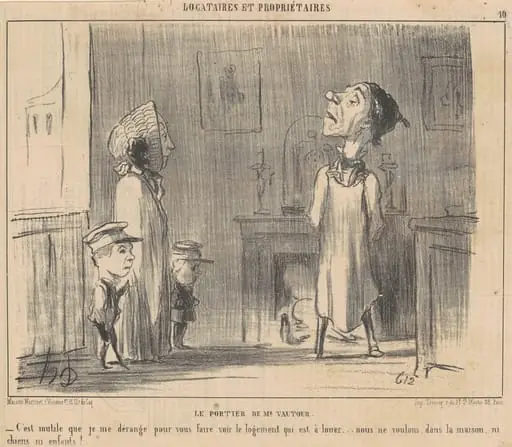 Le portier de Mr Vautour
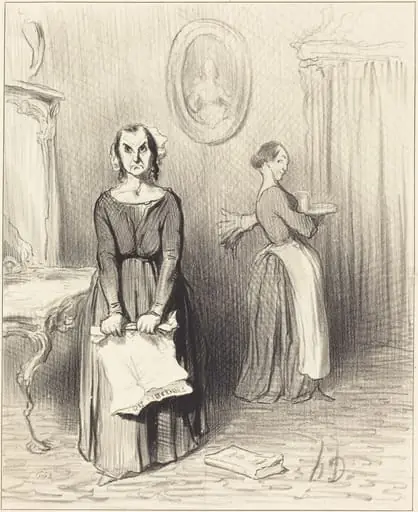 Ce Journal trouve mon ouvrage pitoyable...
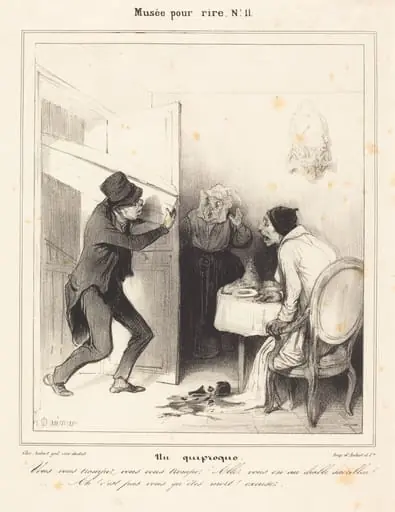 Un quiproquo - Vous vous trompez... allez... au diable...
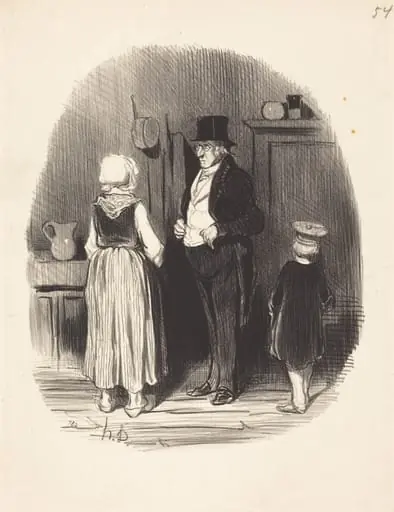 Comment!... tous mes moutons sont morts...
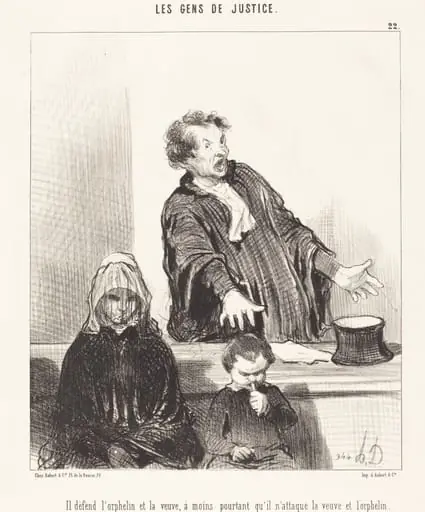 Il défend l'orphelin et la veuve, a moins...
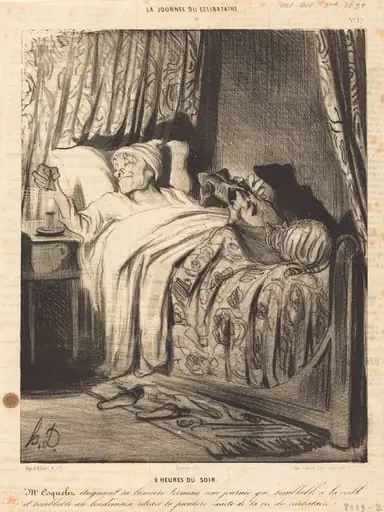 9 heures du soir