Artwork
L'Élection
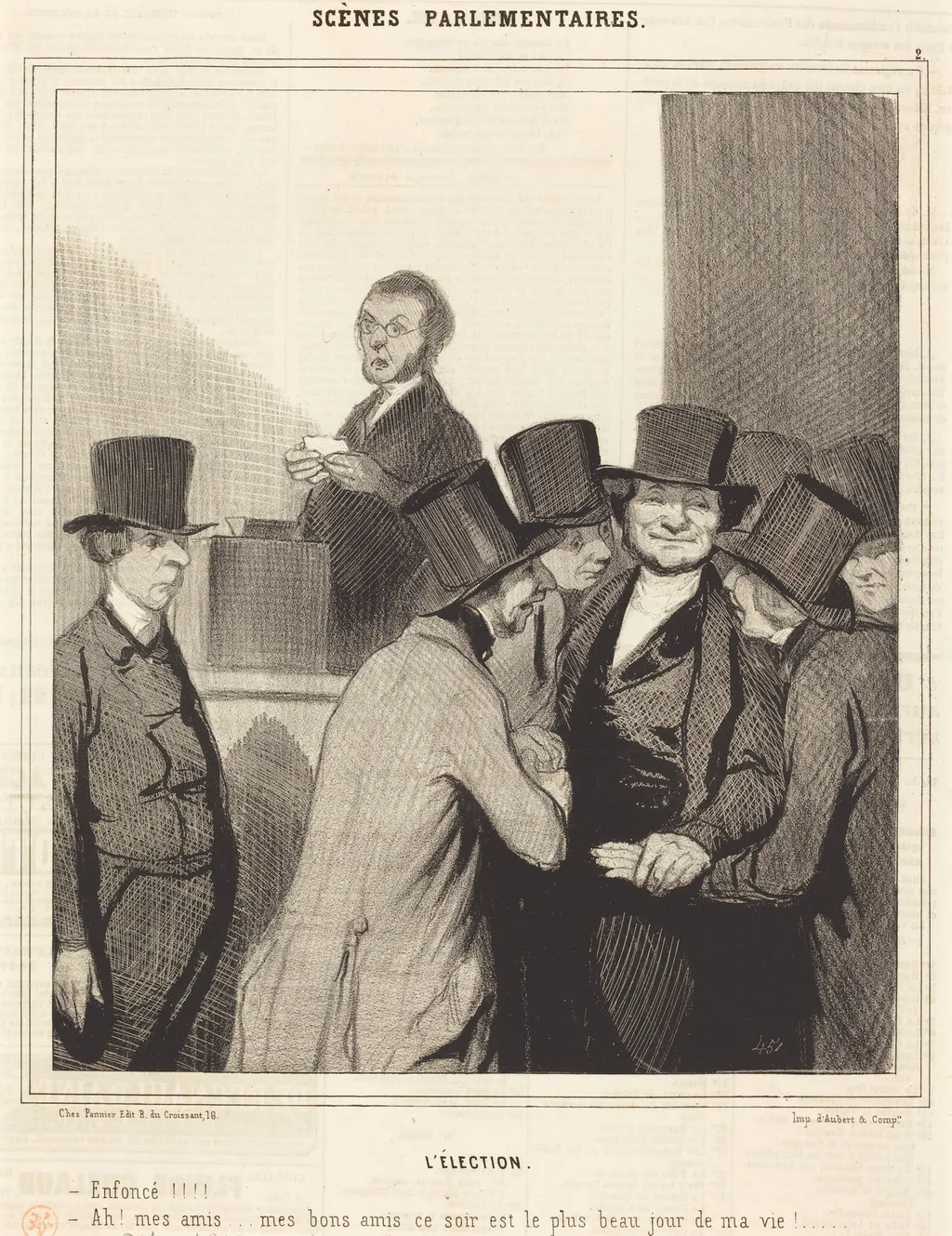
L'Élection is an ink print by the Romanticist artist Honoré Daumier. It dates from 1843 and is held in the collection of the National Gallery of Art.
About this work
Overview
Executed with rapid, expressive lines, the print captures a moment of political theater among bourgeois men.
L'Élection is a lithograph on newsprint created by Honoré Daumier in 1843, part of a series of political satires published in French periodicals like *La Caricature* and *Le Charivari*. Executed with rapid, expressive lines, the print captures a moment of political theater among bourgeois men. Daumier, primarily known for his journalistic illustrations, used lithography to deliver incisive social commentary, often at personal risk under repressive regimes.
Subject & Meaning
The scene depicts a group of men in formal attire gathered in a room, one standing on a raised platform holding a glass, likely toasting or addressing the assembly. Their varied expressions—smiling, scowling, or averted—suggest tension and manipulation behind a veneer of civility. The title implies a vote or political selection, but the composition critiques the performative nature of electoral processes, revealing underlying power dynamics rather than democratic integrity.
Technique & Style
Daumier employed lithography on inexpensive newsprint to achieve immediacy and wide circulation. His brushwork is loose and energetic, using stark contrasts of black ink and white paper to define forms with minimal detail. The rough, sketch-like lines convey motion and emotional volatility, prioritizing expressive impact over refinement. This approach mirrored the urgency of daily journalism and allowed for rapid production in response to current events.
History & Provenance
Created during the July Monarchy under Louis-Philippe, the print emerged from a climate of censorship and political repression. Daumier had been imprisoned in 1832 for a previous satirical lithograph, yet continued producing critical imagery under pseudonyms. *L'Élection* was likely published anonymously in a newspaper, avoiding direct attribution. Its survival in public collections today reflects its historical value as a document of dissent.
Context
France in the 1840s was marked by rising tensions between the monarchy and republican factions. The press, though restricted, became a key battleground for political expression. Daumier’s work resonated with urban middle-class readers disillusioned by elite corruption. His prints functioned as visual pamphlets, translating complex political frustrations into accessible, emotionally charged imagery that bypassed formal education barriers.
Legacy
Daumier’s lithographs, including *L'Élection*, helped define modern political cartooning by merging artistic skill with journalistic intent. His influence extended to later satirists and illustrators across Europe and America. Though created for ephemeral publication, these works are now recognized as vital records of 19th-century social conflict, preserving the voice of dissent through the raw immediacy of print.
Artist & collection
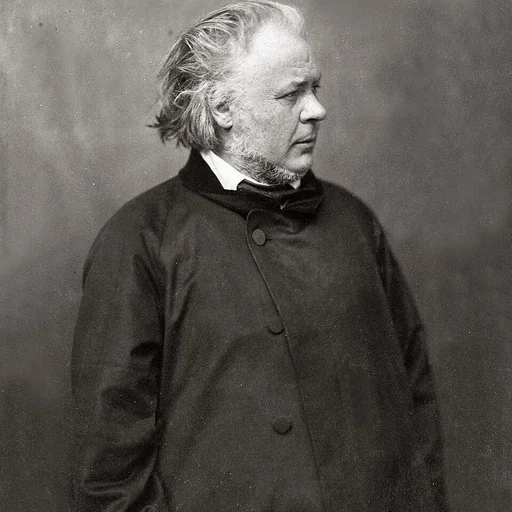
Artist
Honoré-Victorin Daumier was a French painter, sculptor, and printmaker, whose many works offer commentary on the social and political life in France, from the Revolution of 1830 to the fall of the Second French Empire in 1870.









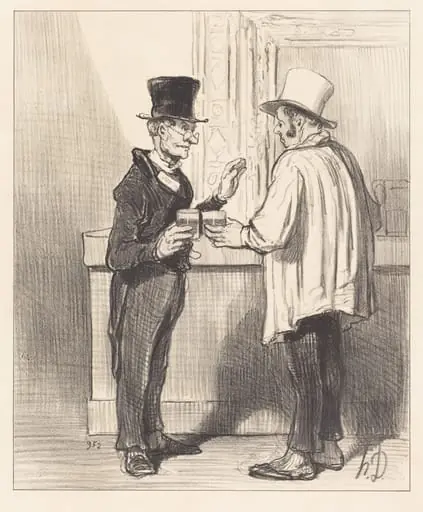 Un Défenseur... causant... dans son cabinet habituel
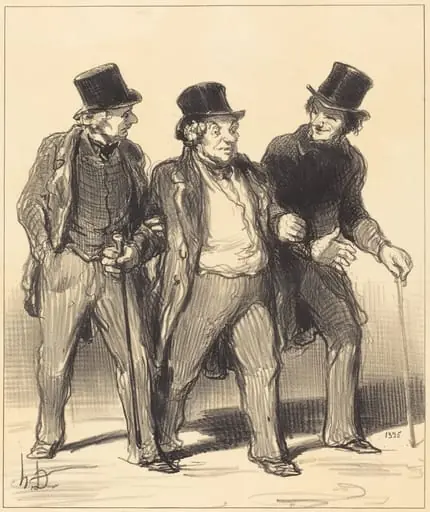 Il me semble que j'aperçois... un... chien... pas muselé!...
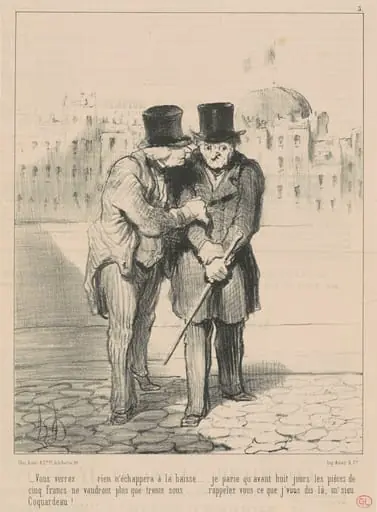 Vous verrez ... rien n'échappera a la baisse ...
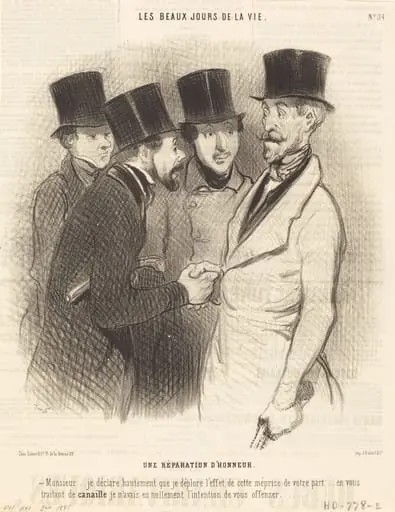 Une Réparation d'honneur
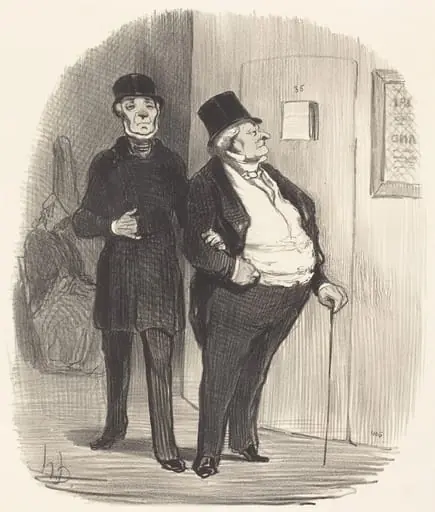 Un Jour de représentation a bénéfice...
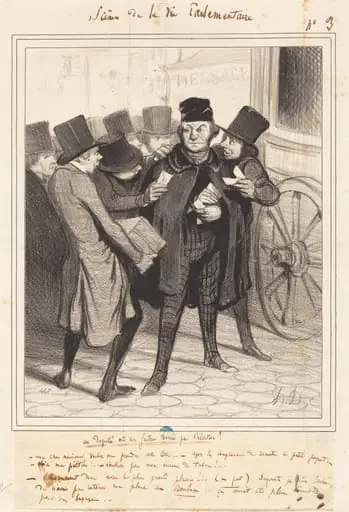 Un Voyage d'agrément a Paris
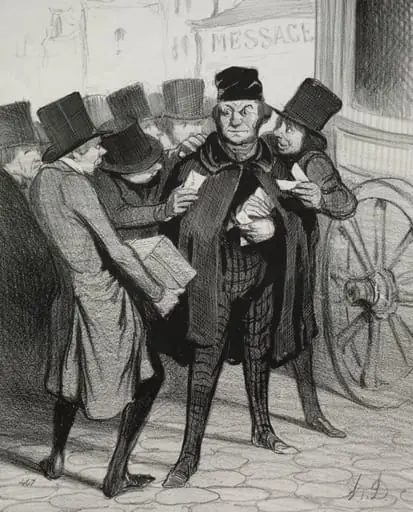 A Pleasure Trip to Paris
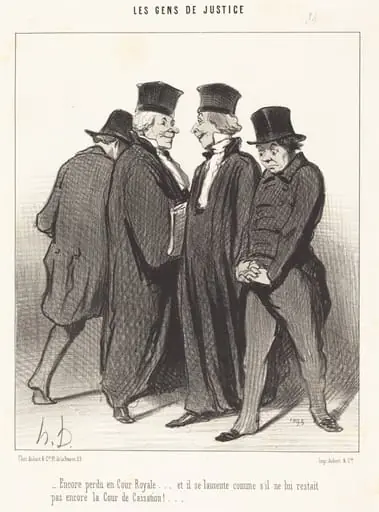 Encore perdu en Cour Royale... et il se lamente...
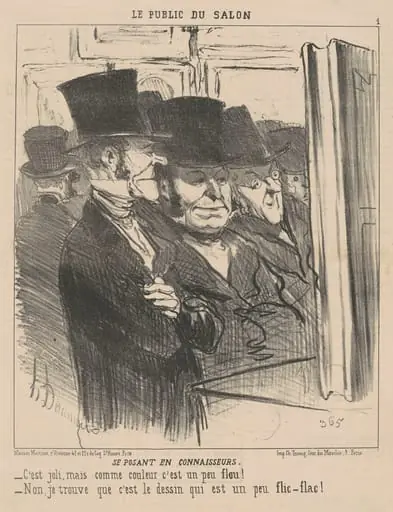 Se posant en connaisseurs
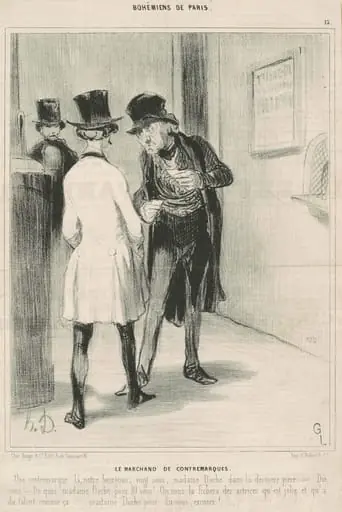 Le marchand de contremarques