Artwork
La Presse réactionnaire cherchant en vain...
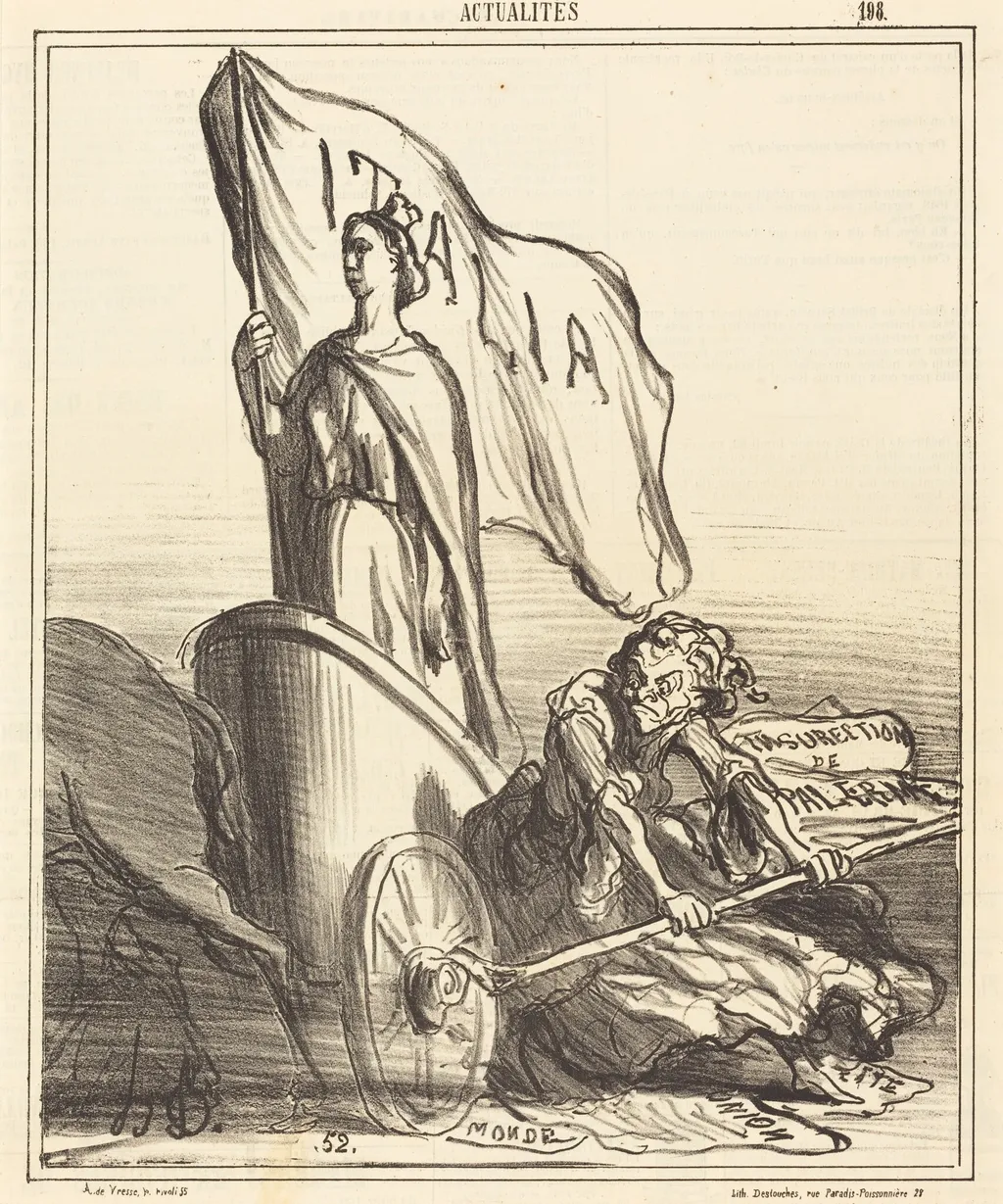
La Presse réactionnaire cherchant en vain... is an ink print by the Impressionist artist Honoré Daumier. It dates from 1866 and is held in the collection of the National Gallery of Art.
About this work
Overview
This 1866 lithograph by Honoré Daumier exemplifies his sharp political satire, rendered on newsprint. Part of a broader body of work created for Parisian journals, the print critiques the ideological conflicts of Second Empire France. Daumier’s visual language—exaggerated figures, symbolic props, and stark contrasts—condenses complex social tensions into a single, legible scene.
Subject & Meaning
The imagery mocks conservative media’s futile attempts to suppress progressive dissent, framing their efforts as both overbearing and doomed.
The composition pits a towering, spectral figure brandishing a banner marked *La Presse* against a prostrate, skeletal figure clutching a placard that alludes to a failed revival. The imagery mocks conservative media’s futile attempts to suppress progressive dissent, framing their efforts as both overbearing and doomed. The title’s irony underscores the perceived impotence of reactionary journalism.
Technique & Style
Daumier employs lithography’s capacity for bold, fluid lines to create dramatic tonal shifts and expressive distortion. The sketch-like quality—visible hatching and minimal shading—amplifies the scene’s urgency while retaining immediacy. This approach aligns with his broader practice of using rapid, economical marks to convey biting social commentary in mass-produced prints.
History & Provenance
The print originally appeared in a periodical, likely *Le Charivari*, where Daumier regularly contributed satirical works. Its survival on newsprint reflects the ephemeral nature of such publications, though later collections preserved it as a document of mid-19th-century political discourse. The work’s exact circulation and reception remain unrecorded, typical for prints of this era.
Context
Created during Napoleon III’s authoritarian rule, the lithograph responds to the regime’s censorship and the press’s polarized role in shaping public opinion. Daumier’s recurring targets—aristocratic privilege, clerical influence, and state repression—align with republican critiques of the period. The work’s timing coincides with heightened tensions between conservative and reformist factions.
Legacy
Though not among Daumier’s most reproduced images, this print contributes to his reputation as a chronicler of political hypocrisy. Its themes resonate with later satirical traditions, particularly in graphic journalism. Modern scholarship often revisits such works to analyze 19th-century media’s visual rhetoric and its intersection with democratic debate.
Artist & collection
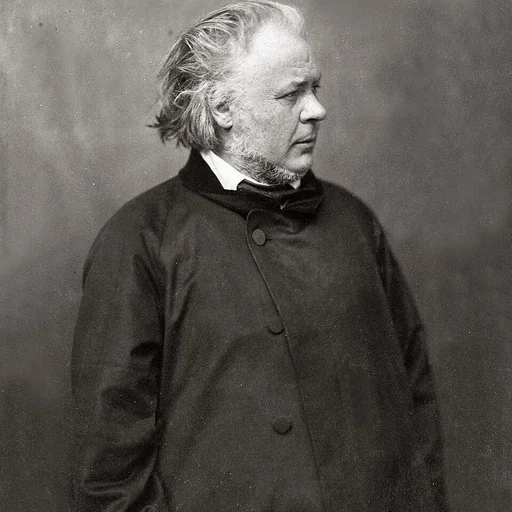
Artist
Honoré-Victorin Daumier was a French painter, sculptor, and printmaker, whose many works offer commentary on the social and political life in France, from the Revolution of 1830 to the fall of the Second French Empire in 1870.









 La république de Milo...
 La république de Milo...
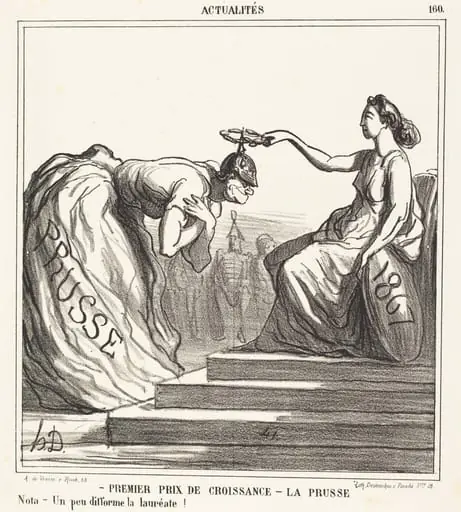 Premier prix de croissance - La Prusse
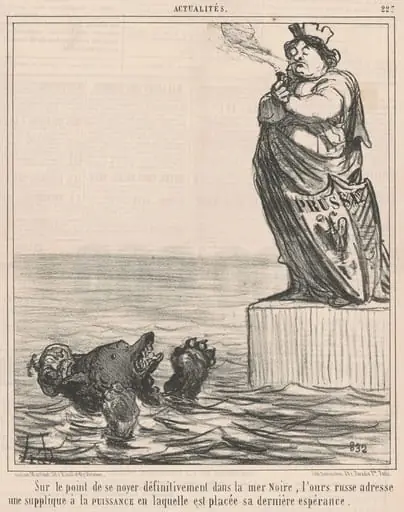 Sur le point de se noyer ...
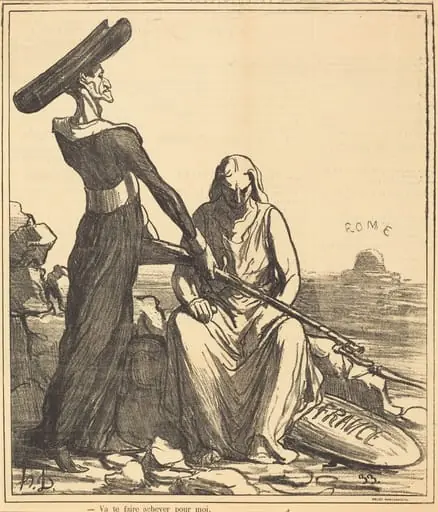 Va te faire achever pour moi
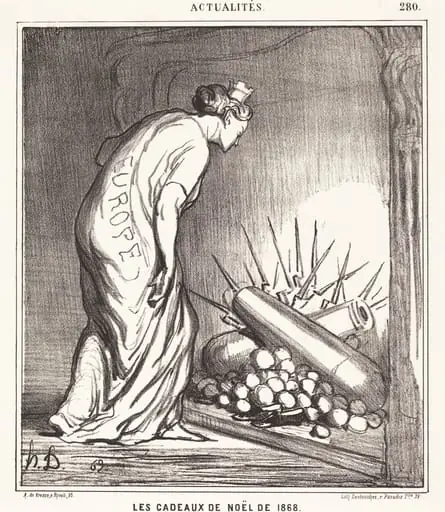 Les Cadeaux de Noël de 1868
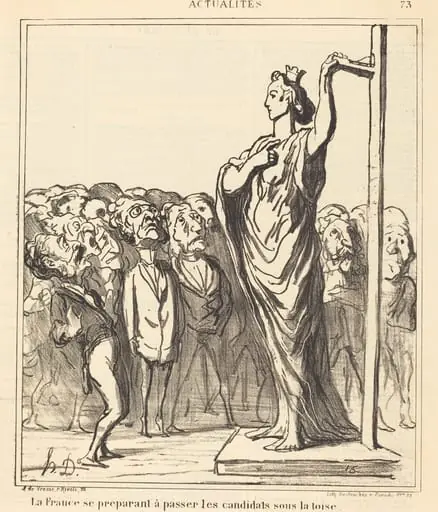 La France se préparant a passer...
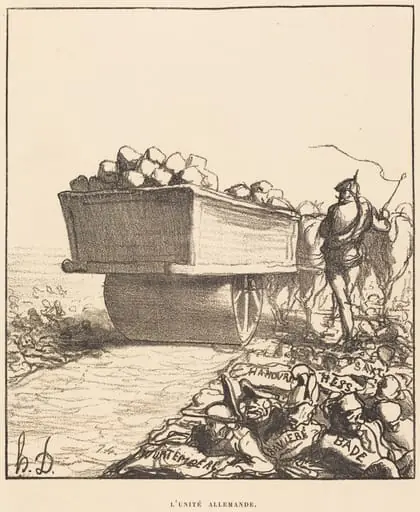 L'unité allemande
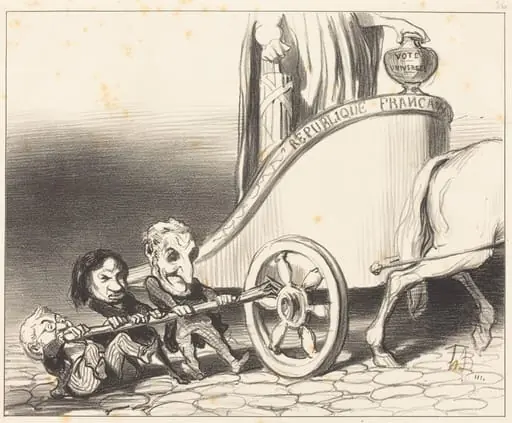 Ce char marchera toujours...
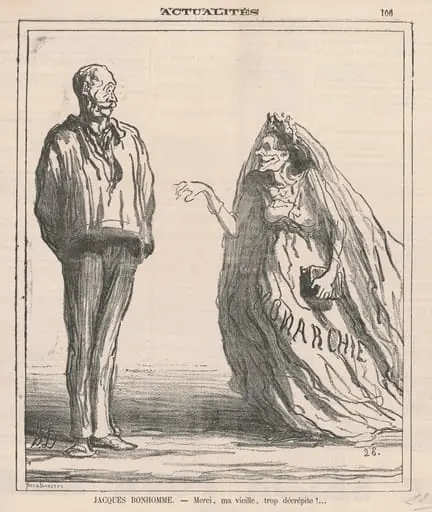 Merci, ma vieille, trop décrépite! ...
 Trop étroit pour deux
 Vous aurez beau faire, ma pauvre presse...