Artwork
L'unité allemande
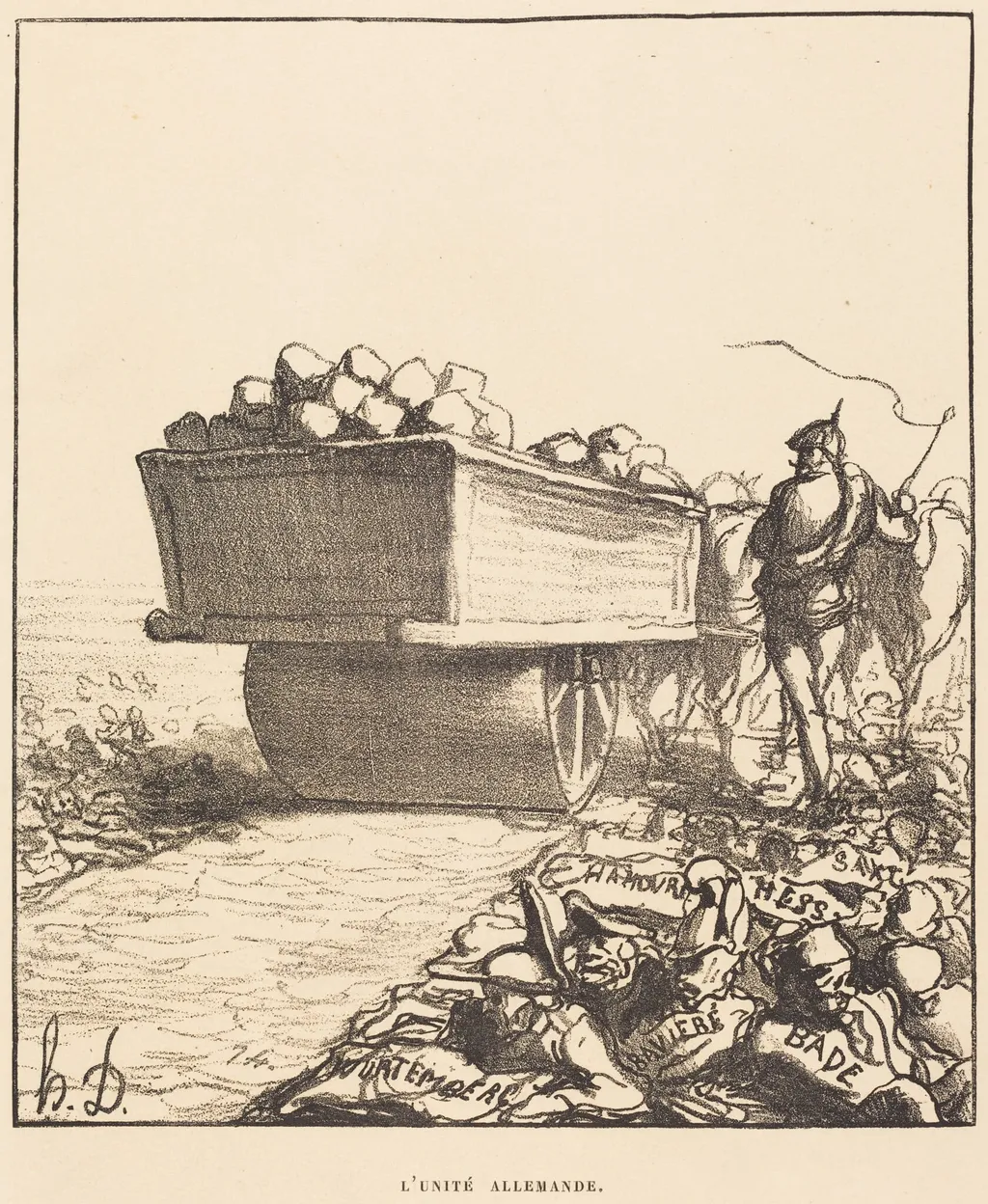
L'unité allemande is an ink print by the Impressionist artist Honoré Daumier. It dates from 1870 and is held in the collection of the National Gallery of Art.
About this work
Overview
L'unité allemande is a lithograph created by Honoré Daumier in 1870, exemplifying his late-career engagement with political satire amidst France's turbulent political landscape.
Subject & Meaning
The print depicts a man hauling a cart loaded with a large box labeled with various German states (e.g., Hannover, Bade) and stacked with smaller boxes. Beneath the cart lies a pile of bones and broken chains, symbolizing the unification of previously fragmented German territories and the discarding of past conflicts.
Technique & Style
Characteristic of Daumier's satirical approach, the lithograph employs visual humor to convey a political message, consistent with his contributions to publications like La Caricature and Le Charivari. The style reflects his republican and democratic leanings through subtle yet effective commentary.
History & Provenance
Created in 1870, near the end of Daumier's career, L'unité allemande coincides with France's navigation of the aftermath of the Second Empire's fall, following decades of political upheaval since the 1830 Revolution.
Context
The work contextualizes the broader European political climate, commenting on German unification. While created from a French perspective, it highlights Daumier's interest in international political developments and their implications.
Legacy
As part of Daumier's prolific output of politically charged lithographs, L'unité allemande contributes to his legacy as a pioneering figure in satirical printmaking, influencing future generations of artists in using art for social and political commentary.
Artist & collection
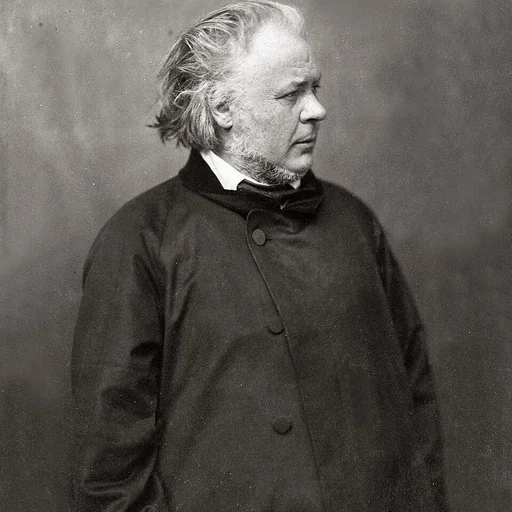
Artist
Honoré-Victorin Daumier was a French painter, sculptor, and printmaker, whose many works offer commentary on the social and political life in France, from the Revolution of 1830 to the fall of the Second French Empire in 1870.

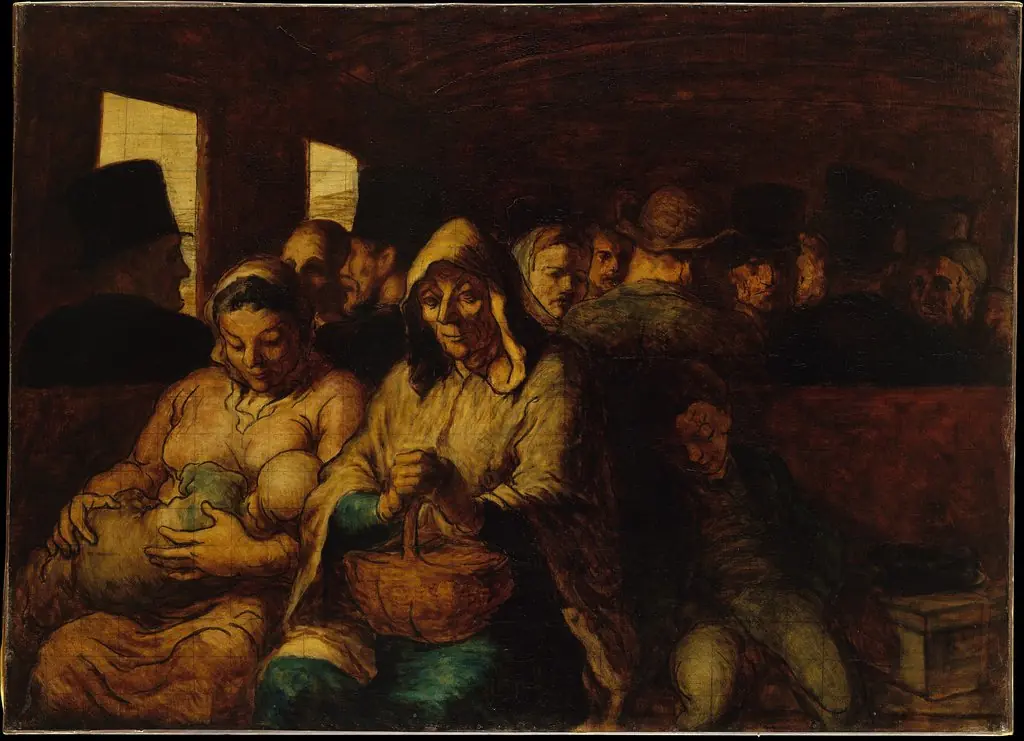
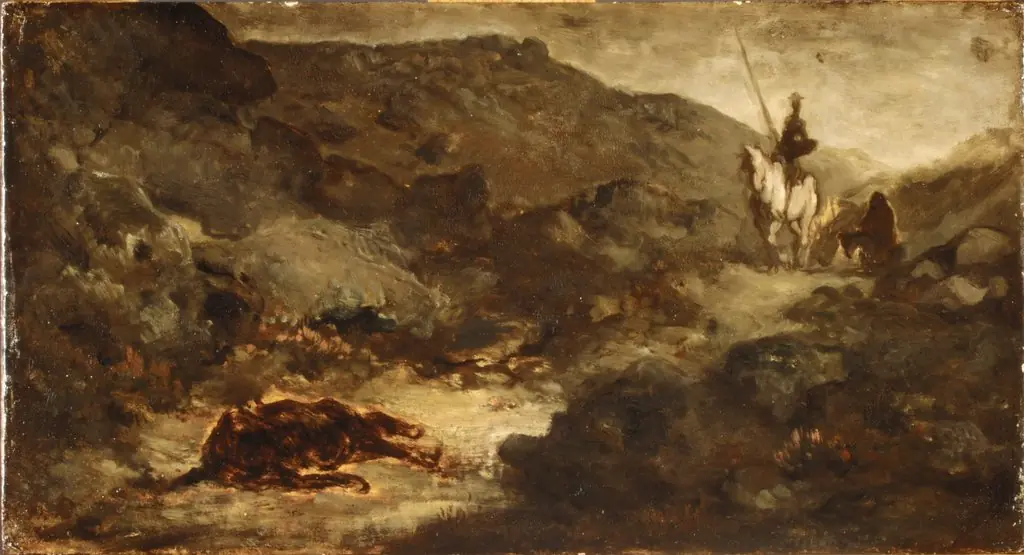
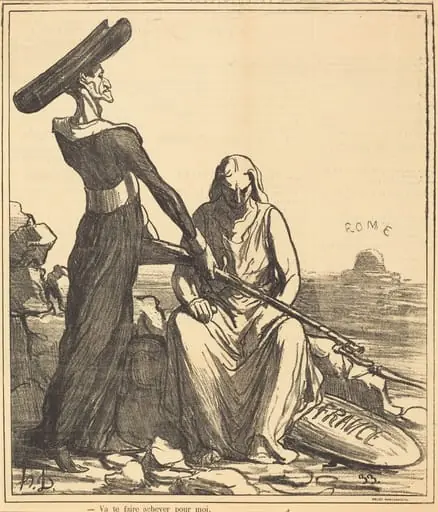 Va te faire achever pour moi
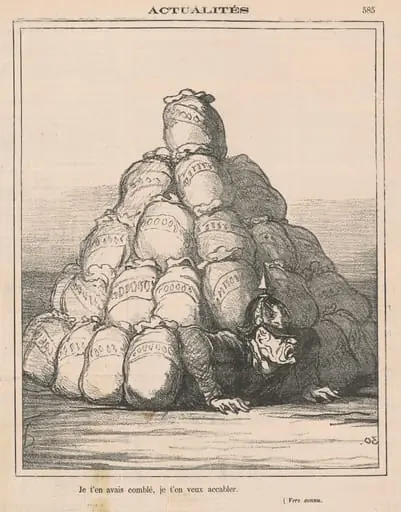 Je t'en avais comblé ...
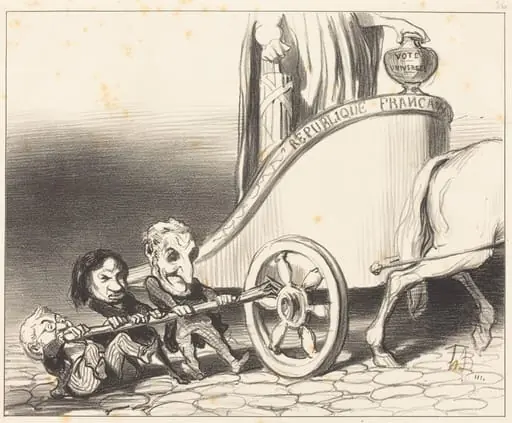 Ce char marchera toujours...
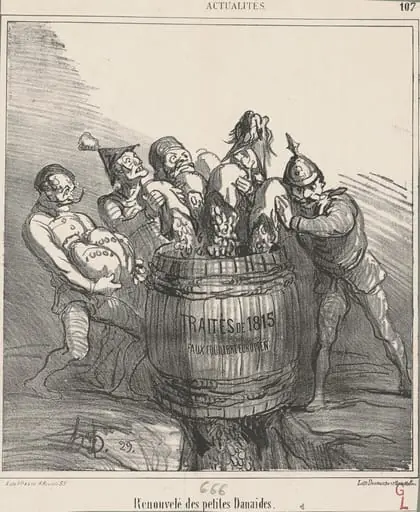 Renouvelé des petites Danaides
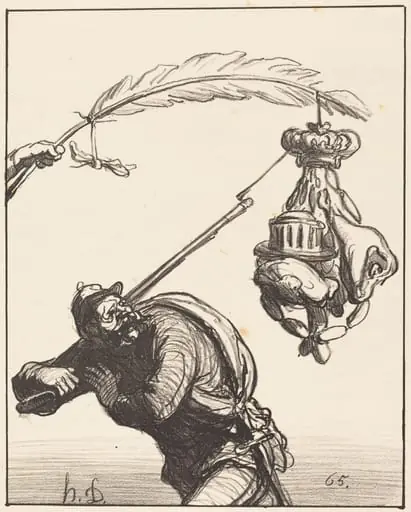 La paix a tout prix
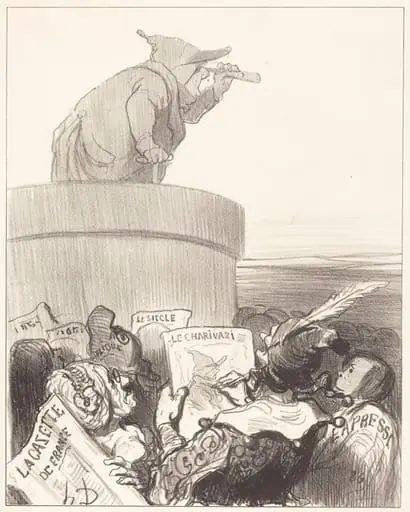 Le Constitutionnel contemplant l'horizon politique
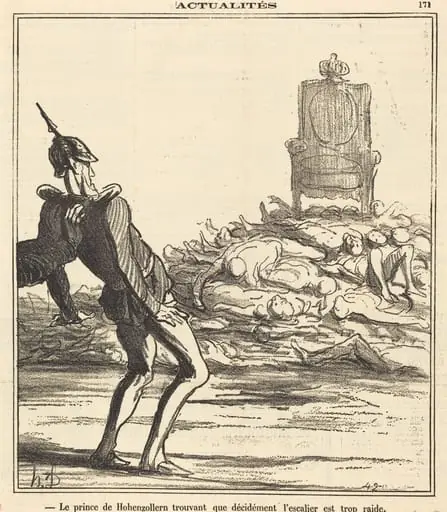 Le Prince de Hohenzollern...
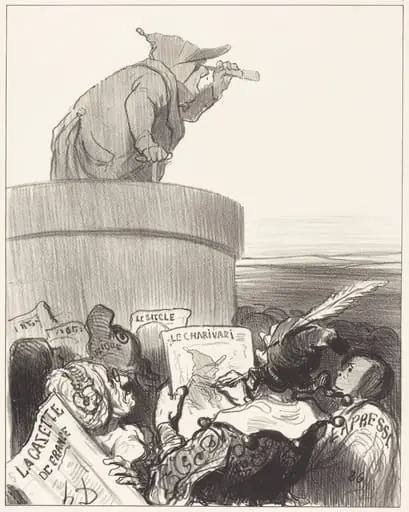 Le Constitutionnel contemplant l'horizon politique
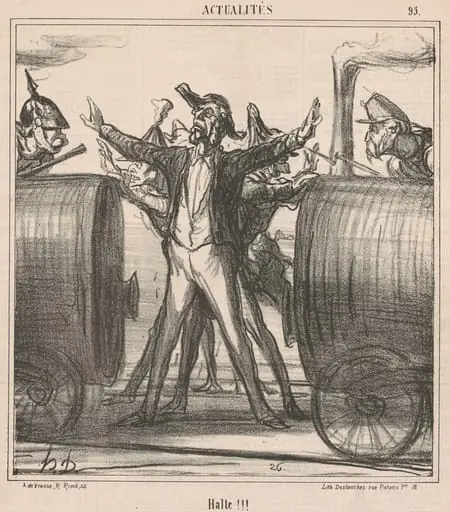 Halte!!!
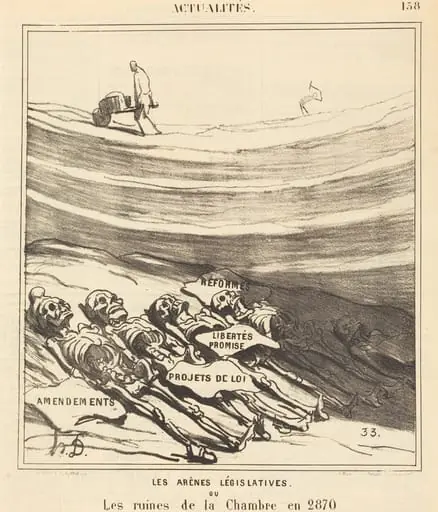 Les arènes législatives
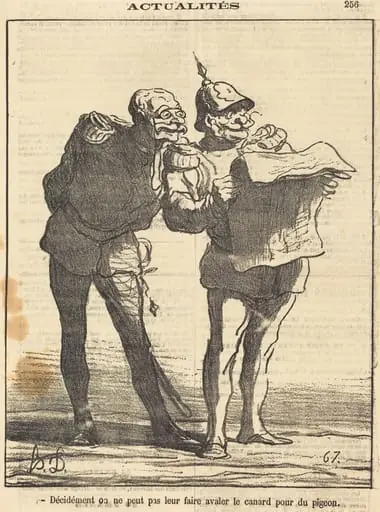 Décidément on ne peut pas...
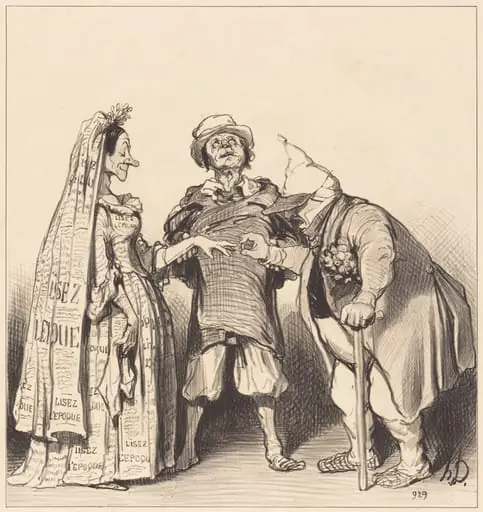 Mariage de l'Époque et du Constitutionnel