Artwork
Le Claqueur
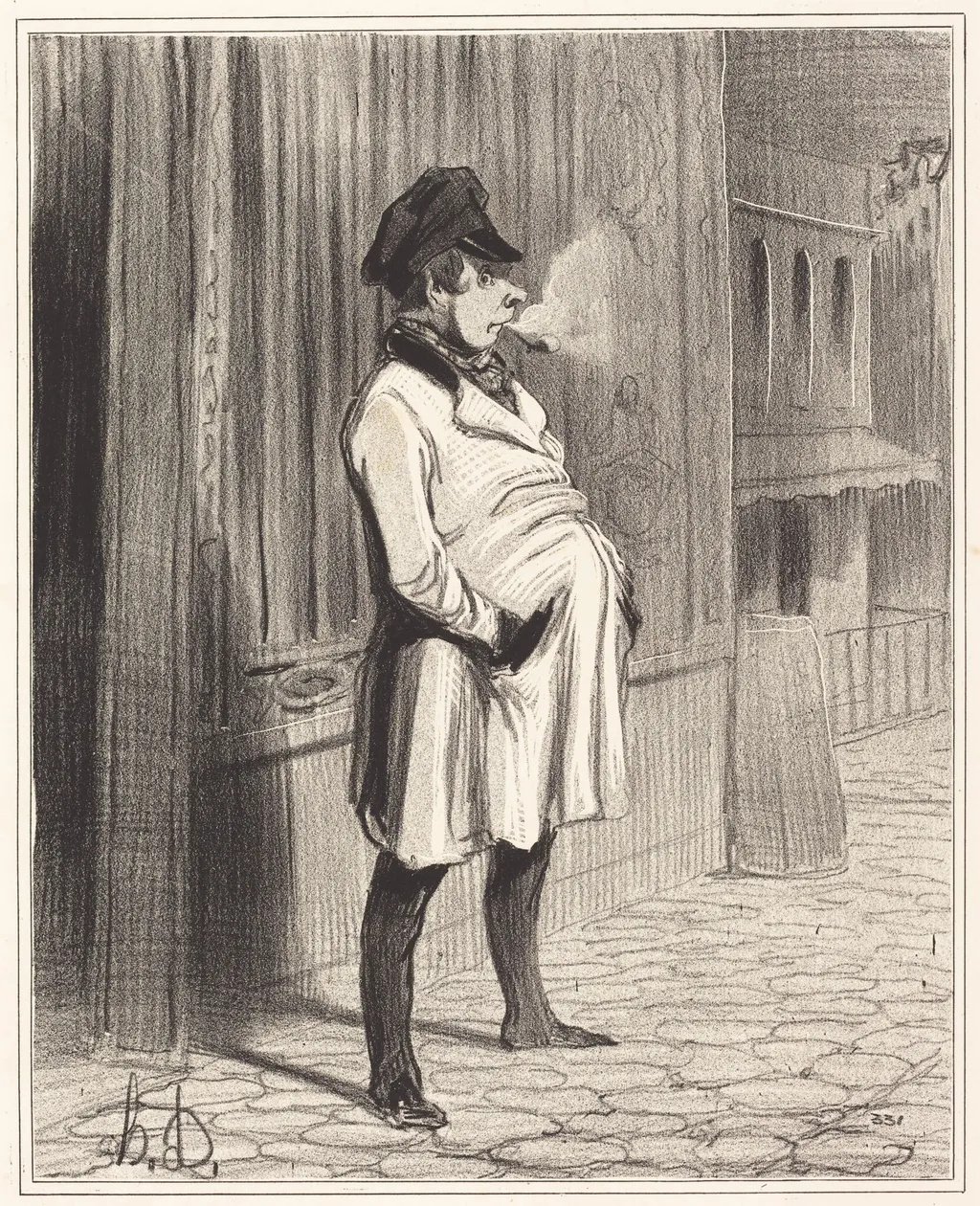
Le Claqueur is an ink print by the Romanticist artist Honoré Daumier. It dates from 1842 and is held in the collection of the National Gallery of Art.
About this work
Overview
Created in 1842, *Le Claqueur* is a lithographic print by French artist Honoré Daumier. The work belongs to his prolific output of socially charged caricatures produced during the turbulent years of the July Monarchy and the early Second Republic. It presents a solitary figure caught in a moment of exaggerated applause, rendered with the brisk line work typical of Daumier’s printmaking practice.
Subject & Meaning
The central character is a man in dated attire, leaning against a doorway, hat in one hand, his gaze turned away. His posture and the exaggerated clapping gesture suggest a satirical take on insincere praise, likely aimed at the performative loyalty of political and clerical elites of the period. The image functions as a visual critique of hypocrisy within French society.
Technique & Style
Executed as a lithograph, the piece relies on swift, gestural strokes that convey a sense of immediacy. Daumier’s use of loose, sketch‑like lines emphasizes the figure’s fatigue and boredom, while the uneven ground and rough texture add a quotidian atmosphere. The limited tonal range typical of lithography enhances the stark, observational quality of the scene.
History & Provenance
Daumier produced *Le Claqueur* while contributing to satirical journals such as *La Caricature* and *Le Charivari*, venues that disseminated his political commentary to a broad readership. The print circulated among the period’s newspaper audience before entering museum collections, where it now serves as an example of mid‑19th‑century French print culture and dissent.
Artist & collection
Artist
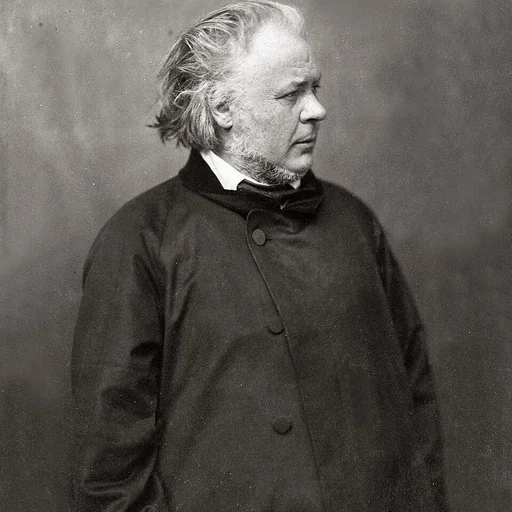
Honoré-Victorin Daumier was a French painter, sculptor, and printmaker, whose many works offer commentary on the social and political life in France, from the Revolution of 1830 to the fall of the Second French Empire in 1870.









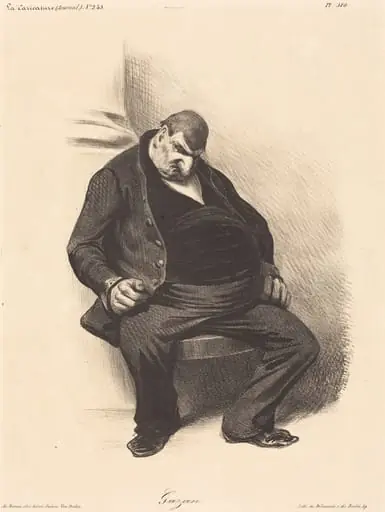 Gazan
Gazan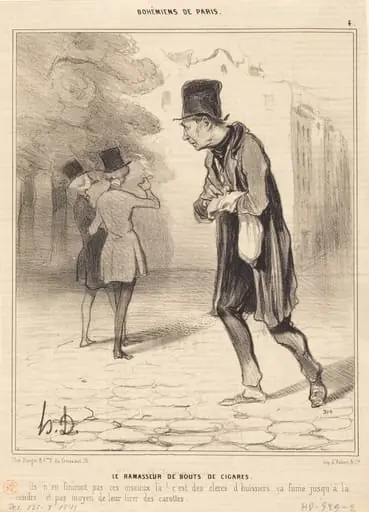 Le Ramasseur de bouts de cigares
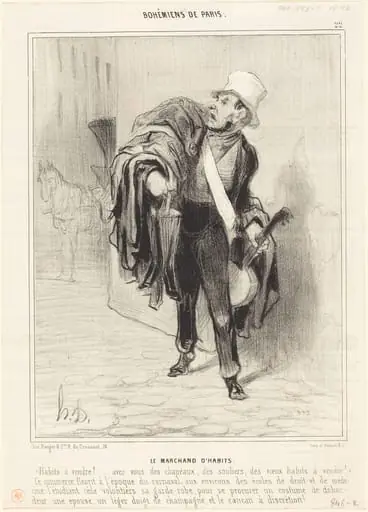 Le Marchand d'habits
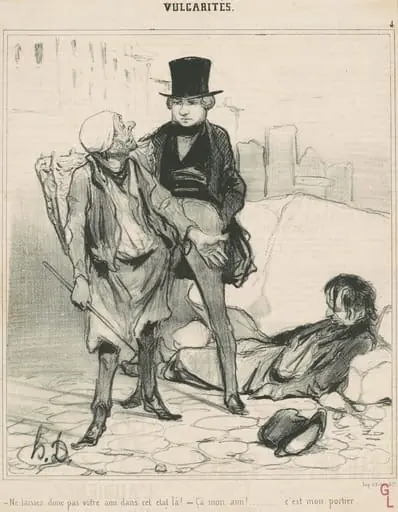 Ne laissez donc pas votre ami dans cet état la!
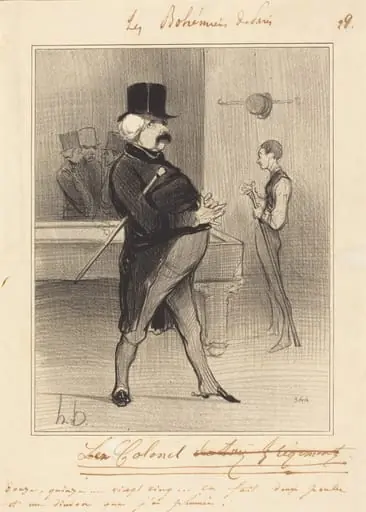 L'Ex-Colonel
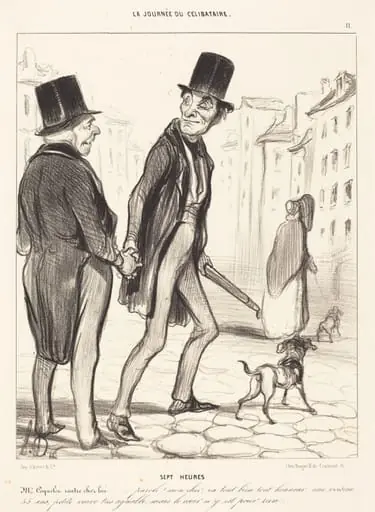 Sept heures
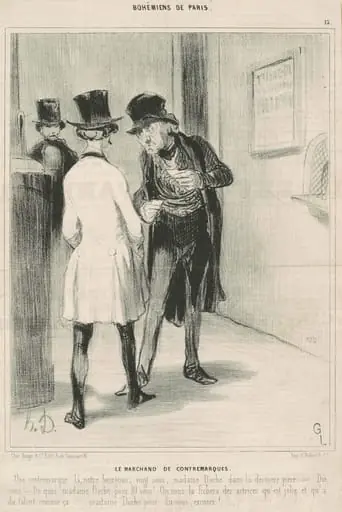 Le marchand de contremarques
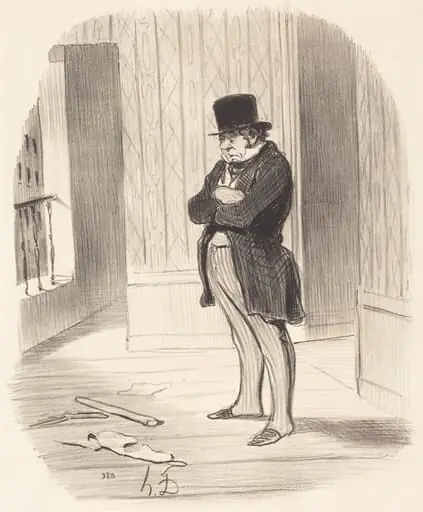 Déménagé!...
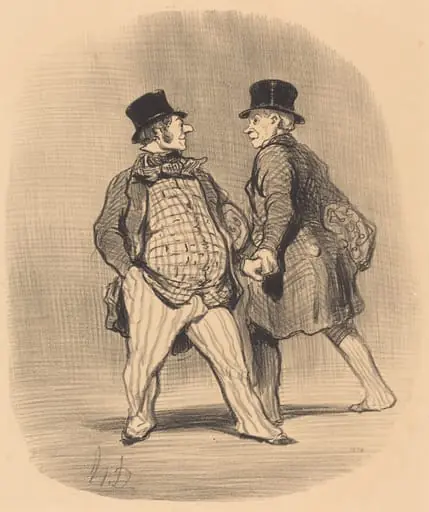 Confrère, méfiez-vous du petit baron...
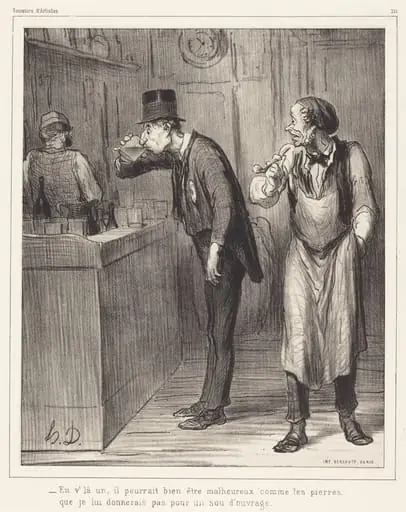 En v'la un, il pourrait bien être malheureux...
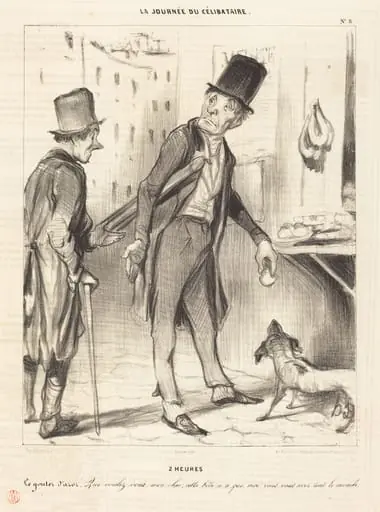 2 heures - Le gouter d'Azor
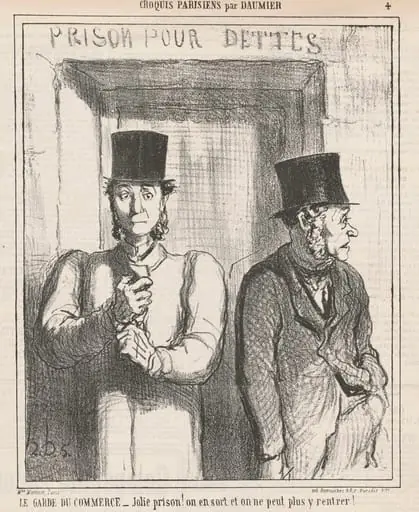 Le garde du commerce