Artwork
Le rêve d'un marguillier
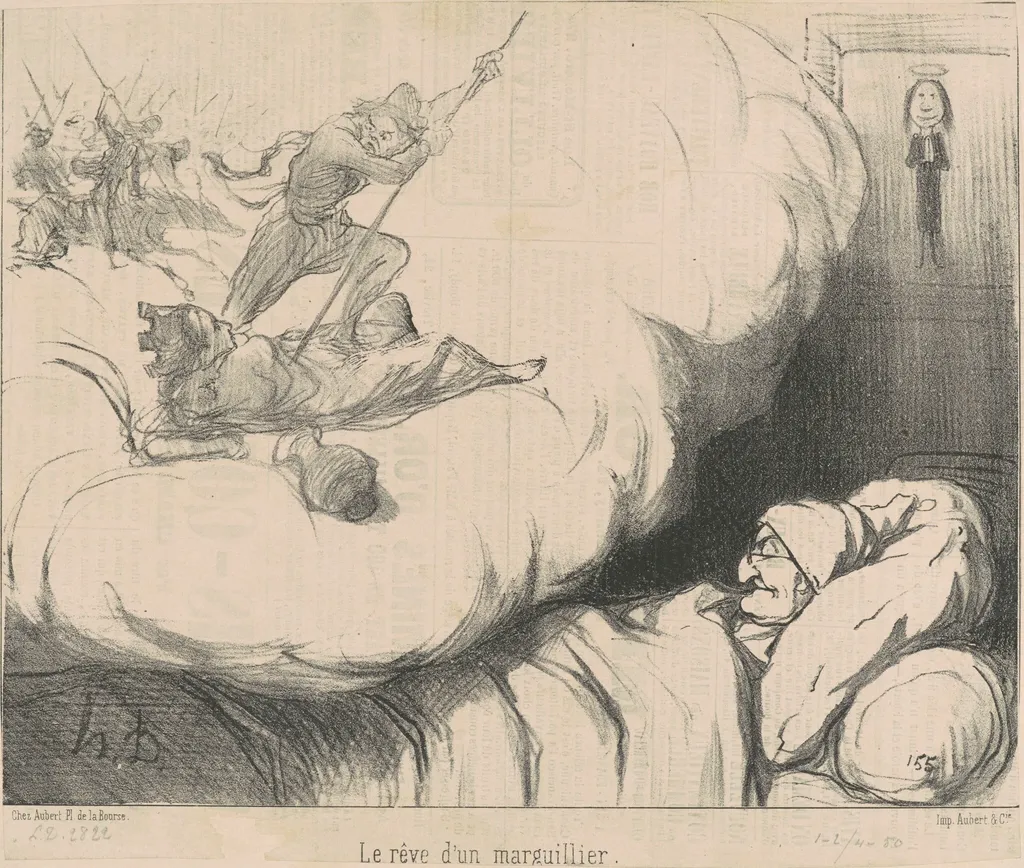
Le rêve d'un marguillier is an ink print by the Impressionist artist Honoré Daumier. It dates from 1850 and is held in the collection of the National Gallery of Art.
About this work
Overview
Daumier employed lithography’s capacity for rapid reproduction to deliver a layered, satirical commentary accessible to a broad audience.
Le rêve d'un marguillier is a lithograph by Honoré Daumier, created in the mid-19th century. It portrays a municipal official, or marguillier, asleep in bed, while a turbulent celestial scene unfolds above him. The contrast between the quiet, grounded figure and the chaotic vision overhead defines the work’s emotional and visual tension. Daumier employed lithography’s capacity for rapid reproduction to deliver a layered, satirical commentary accessible to a broad audience.
Subject & Meaning
The marguillier, a low-ranking church official, dreams of divine intervention or judgment, as angels and soldiers clash above him in a storm of motion and light. His calm demeanor contrasts sharply with the violence in his vision, suggesting either spiritual anxiety or ironic detachment from the power struggles he nominally serves. The scene may reflect societal disillusionment with religious authority or the absurdity of earthly ambitions projected onto the divine.
Technique & Style
Daumier used lithography to achieve stark contrasts between deep blacks and stark whites, emphasizing dramatic lighting and fluid, expressive lines. The composition layers the mundane bedroom below with a swirling, almost theatrical heavenscape above, using overlapping forms and minimal detail to suggest motion. The medium’s immediacy allowed for bold, unrefined strokes that heighten the dreamlike, chaotic quality of the upper register.
History & Provenance
Created around 1845–1850, the print was likely published in a periodical or as a standalone sheet, common for Daumier’s social critiques. It circulated among Parisian middle-class readers familiar with the role of marguilliers in parish administration. No early ownership records are widely documented, but its inclusion in major museum collections since the late 19th century confirms its recognition within artistic circles of the time.
Context
Daumier produced this work during a period of political instability in France, when the Church and local governance were frequent targets of satire. Lithography enabled artists to bypass official censorship and reach the public directly. The dream motif was a familiar literary device, but Daumier subverted it by anchoring the fantasy in the ordinary life of a minor bureaucrat, subtly mocking both piety and power.
Legacy
The print exemplifies Daumier’s ability to merge social observation with imaginative symbolism using accessible print media. It influenced later illustrators and cartoonists who used dream imagery to critique authority. While not as widely known as his political caricatures, Le rêve d'un marguillier remains a key example of how everyday subjects could carry profound, layered meaning in 19th-century French graphic art.
Artist & collection

Artist
Honoré-Victorin Daumier was a French painter, sculptor, and printmaker, whose many works offer commentary on the social and political life in France, from the Revolution of 1830 to the fall of the Second French Empire in 1870.









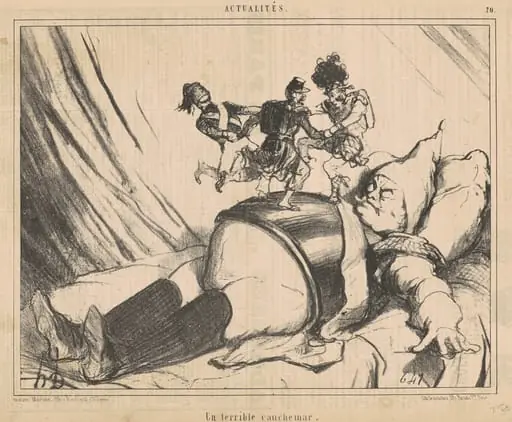 Un terrible cauchemar
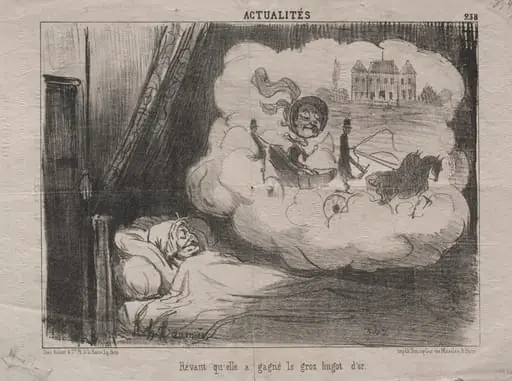 Dreaming that she won the big gold bar
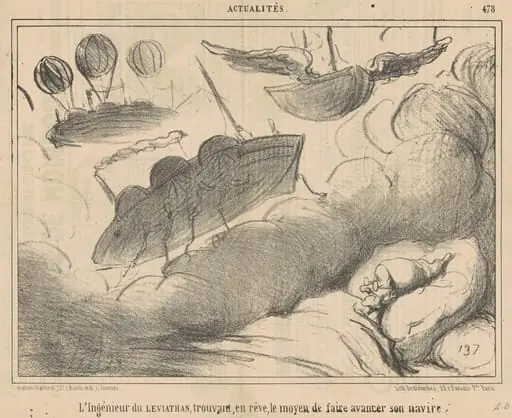 L'ingénieur du Leviathan trouvant, en rève ...
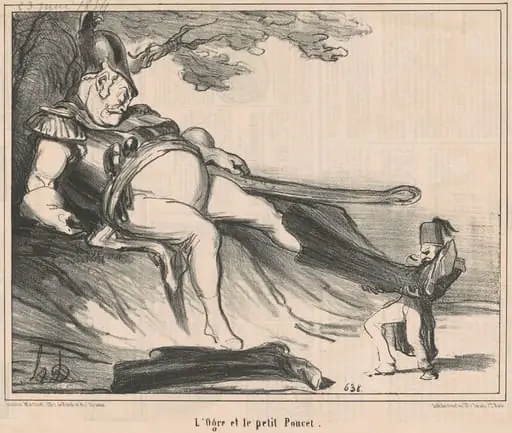 L'ogre et le petit poucet
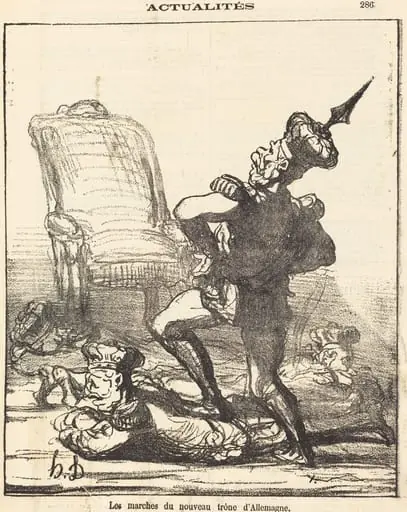 Les marches du nouveau trone d'Allemagne
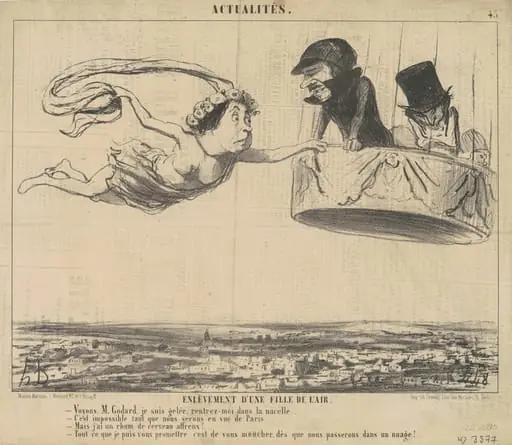 Enlèvement d'une fille de l'air
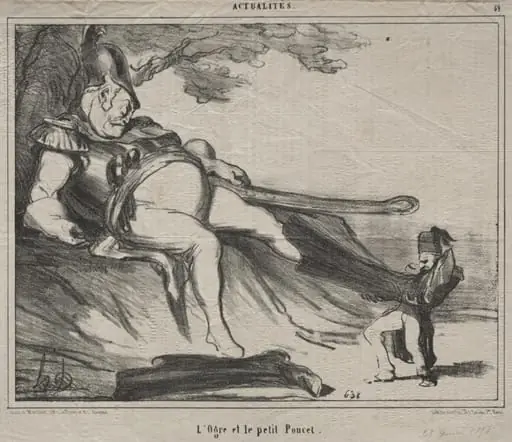 The ogre and his little Tom Thumb
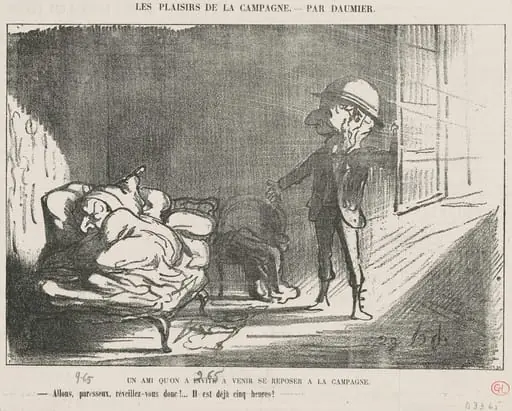 Un ami qu'on a invité ...
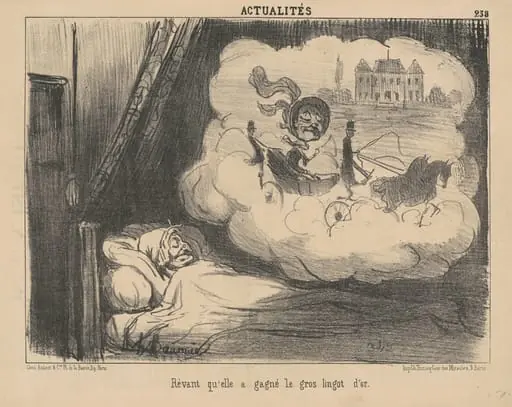 Rêvant qu'elle a gagné le gros lingot d'or.
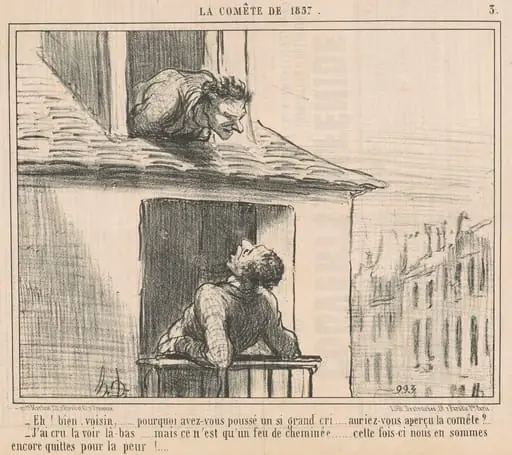 Eh! Bien, voisin ... pourquoi avez-vous poussé ...