Artwork
Les honneurs du Panthéon
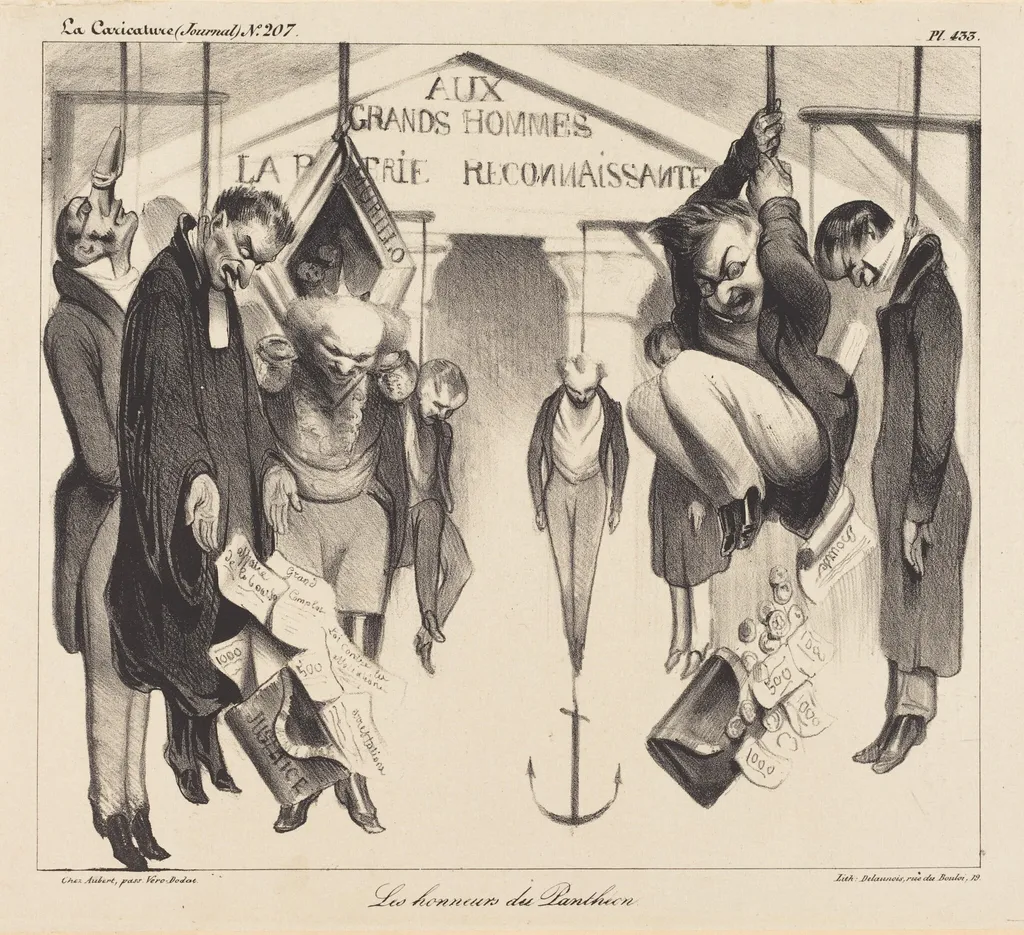
Les honneurs du Panthéon is an ink print by the Romanticist artist Honoré Daumier. It dates from 1834 and is held in the collection of the National Gallery of Art.
About this work
The sign reads *"Aux Grands Hommes"* and *"La Patrie Reconnaissante"*—meaning something like "To Great Men" and "A Grateful Country.
This sketch shows a group of men hanging upside down from a sign. The sign reads *"Aux Grands Hommes"* and *"La Patrie Reconnaissante"*—meaning something like "To Great Men" and "A Grateful Country." They’re dressed in old-fashioned suits, and some hold papers with numbers like 500 and 1000. One man is dangling by his feet, and another looks like he’s being dragged by a rope.
The upside-down pose is a joke about how these "great men" are treated after death. The numbers on the papers might be mocking how much money was spent on them.
If you like this kind of sharp political humor, check out lithography.
Overview
Les honneurs du Panthéon is a 1834 lithograph by Honoré Daumier, exemplifying his satirical approach to social and political commentary. The work critiques the treatment of esteemed figures through a humorous, inverted scenario.
Subject & Meaning
The print depicts a group of men, dressed in antiquated attire, suspended upside down from a sign labeled 'Aux Grands Hommes' (To Great Men) and 'La Patrie Reconnaissante' (A Grateful Country). The absurd pose satirizes the posthumous honors bestowed upon these individuals, while papers with numerical values (e.g., 500, 1000) likely mock the financial expenditures associated with their recognition.
Technique & Style
Executed in lithograph, a medium Daumier frequently used for caricatures, the work showcases his characteristic blend of sharp satire and simple, expressive line work, suited for mass publication in periodicals like *La Caricature* and *Le Charivari*.
History & Provenance
Created in 1834, amidst France's political turmoil, the lithograph reflects Daumier's republican and democratic sympathies, aligning with his body of work critiquing monarchy, aristocracy, and clergy.
Context
This piece is part of Daumier's broader output of politically charged caricatures, contributing to the satirical discourse of 19th-century France, where such works were disseminated through popular press.
Legacy
Les honneurs du Panthéon contributes to Daumier's legacy as a pioneering satirical artist, influencing the development of lithography as a vehicle for social commentary, and remaining a notable example of his acerbic critique of societal norms.
Own this work as a print
Artist & collection

Artist
Honoré-Victorin Daumier was a French painter, sculptor, and printmaker, whose many works offer commentary on the social and political life in France, from the Revolution of 1830 to the fall of the Second French Empire in 1870.









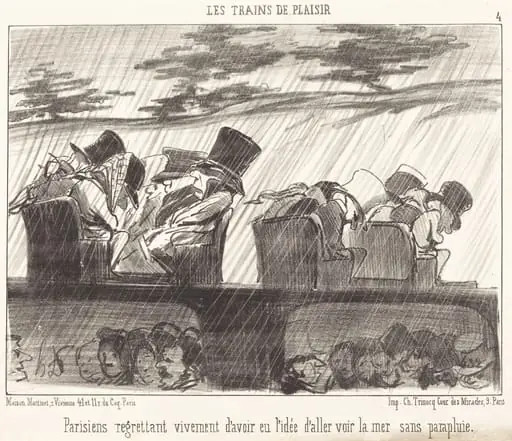 Parisiens regrettant vivement...
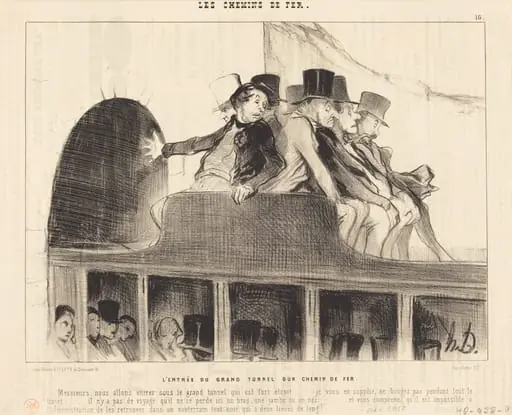 L'Entrée du Grand tunnel d'un chemin de fer
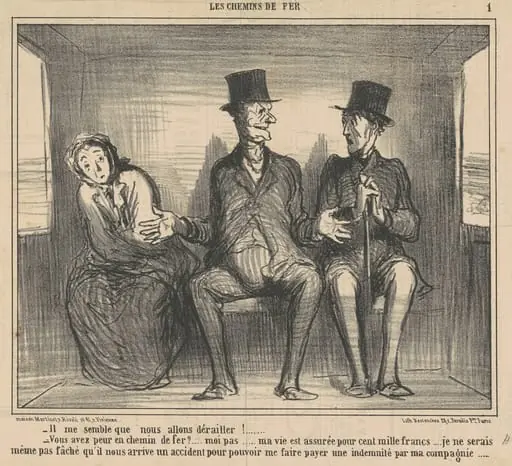 Il me semble que nous allons dèrailler ...
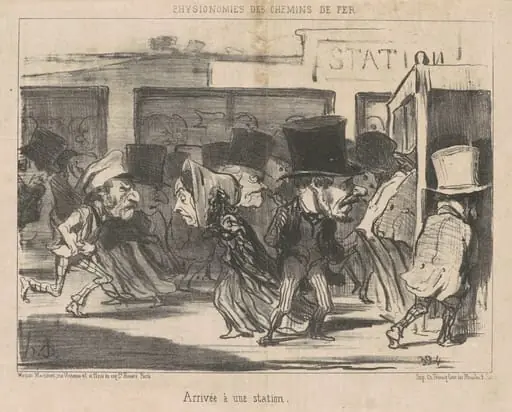 Arrivée a une station
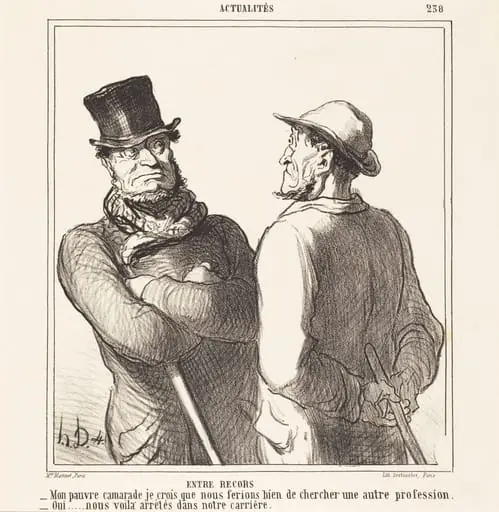 Entre recors
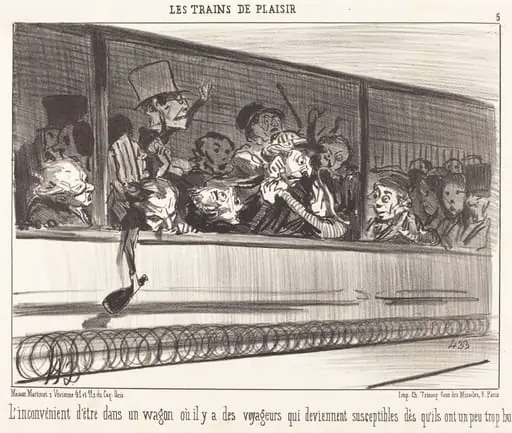 L'Inconvénient d'être dans un wagon...
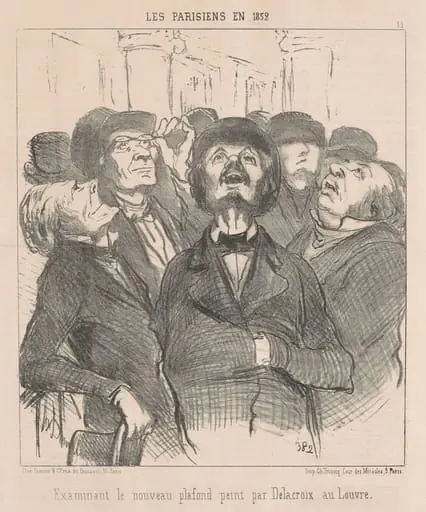 Examinant le nouveau plafond ...
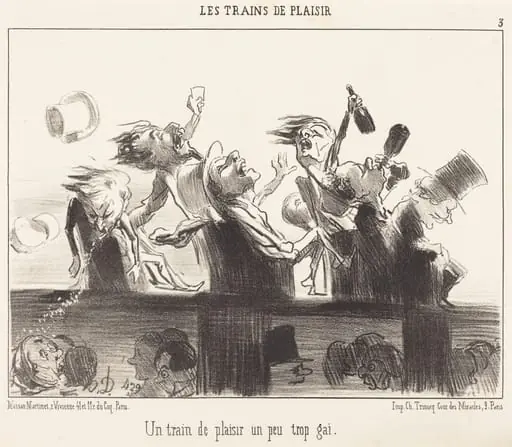 Un Train de plaisir un peu trop gai
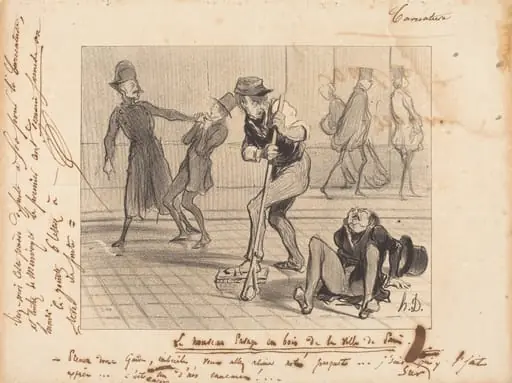 Le Nouveau pavage en bois... de Paris
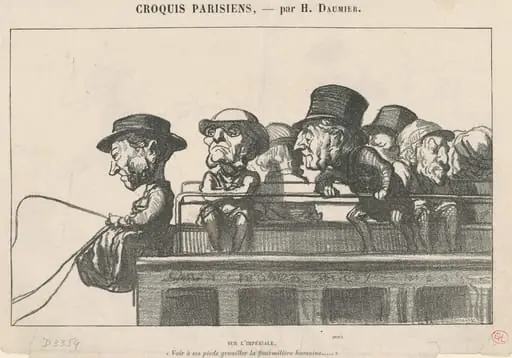 Sur l'Impériale
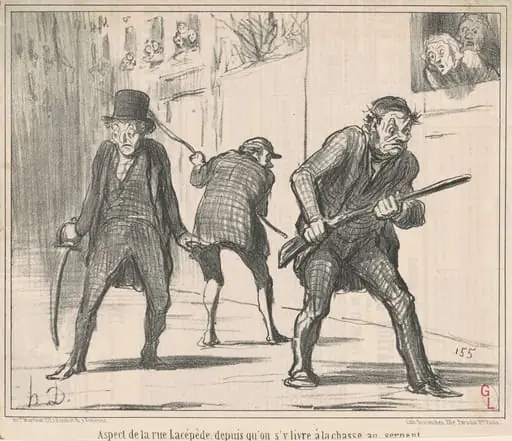 Aspect de la rue Lacépède ...
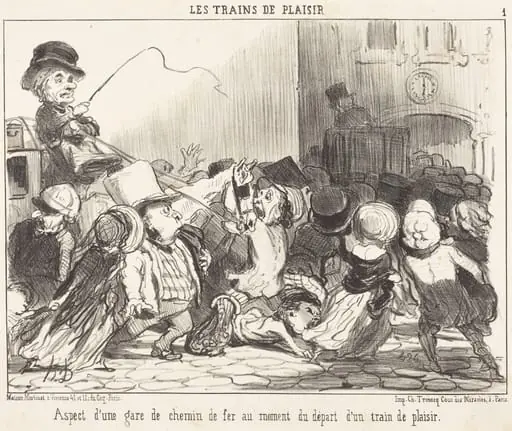 Aspect d'une gare de chemin de fer...