Artwork
Madame Gargantua
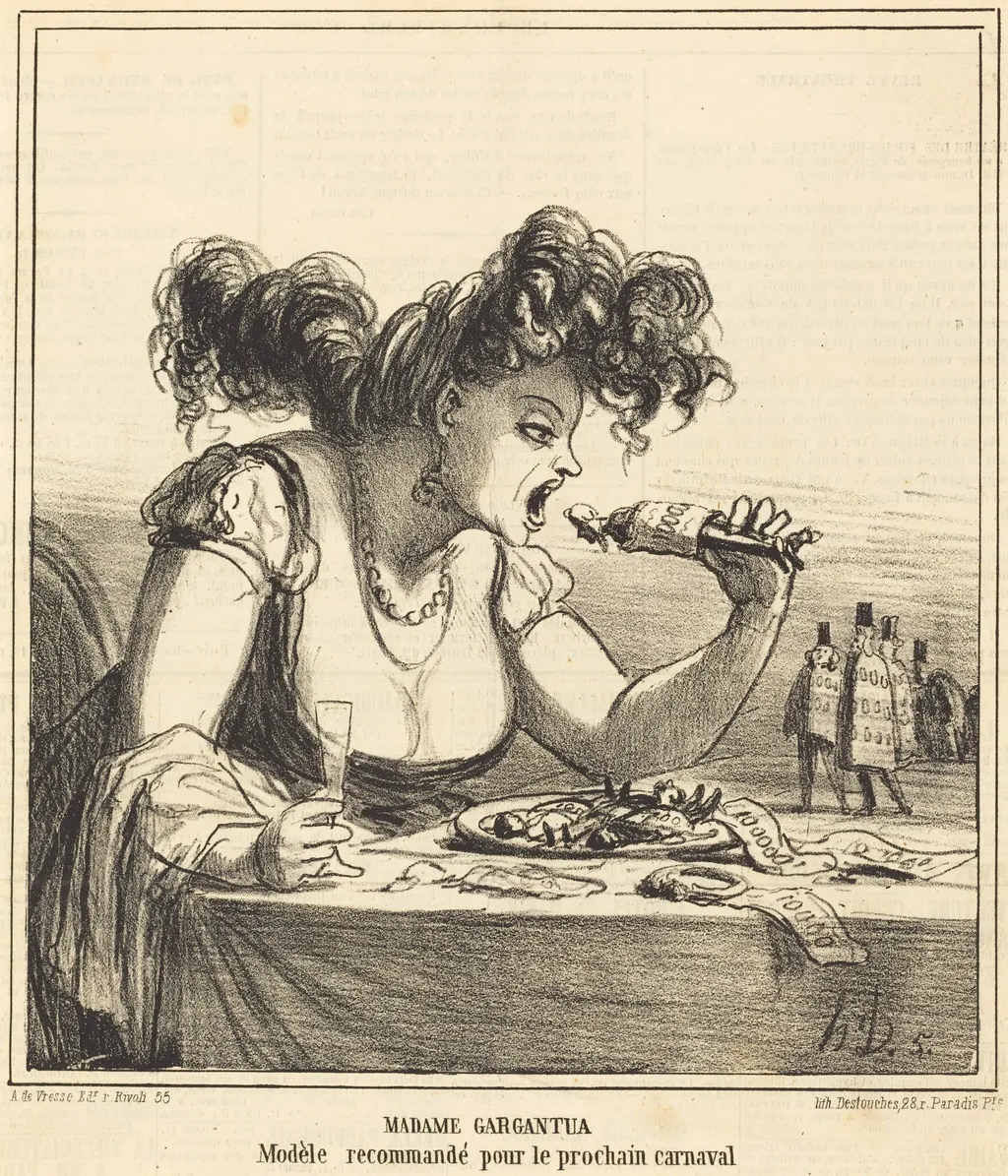
Madame Gargantua is an ink print by the Impressionist artist Honoré Daumier. It dates from 1866 and is held in the collection of the National Gallery of Art.
About this work
Overview
Madame Gargantua is an 1866 lithographic print on newsprint by Honoré Daumier. The work presents a grotesquely enlarged female figure seated on a throne that resembles a toilet, indulging in a massive meal while a crowd of supplicants offers money and gifts. Produced for the satirical newspaper Le Charivari, the image exemplifies Daumier’s use of caricature to lampoon contemporary excesses.
Subject & Meaning
The central figure caricatures a well‑known literary character, inflating her size and appetite to mock gluttony and greed. Her laughing pose, low‑cut dress, and half‑eaten feast underscore a satirical critique of indulgent behavior among the elite, while the surrounding onlookers symbolize a society eager to profit from such excess.
Technique & Style
Daumier employed the lithographic process, drawing directly onto a stone with greasy ink before transferring the image onto newsprint. The lines are deliberately sketchy and rapid, emphasizing the exaggerated anatomy and lively expression. This loose handling reinforces the work’s humorous, almost spontaneous quality, typical of Daumier’s caricatural style.
History & Provenance
Created for Le Charivari, a Parisian satirical weekly, Madame Gargantua circulated as a political cartoon during the Second French Empire. Daumier, primarily a printmaker and cartoonist, used such publications to disseminate his commentary on corruption and social inequality, reaching a broad readership in mid‑19th‑century France.
Context
The lithograph emerged amid the turbulent years of the Second Empire, when press satire served as a vital outlet for dissent. Daumier’s work aligned with a broader tradition of French caricature that targeted the aristocracy and government officials, reflecting public frustration with authoritarian rule and moral decadence.
Artist & collection

Artist
Honoré-Victorin Daumier was a French painter, sculptor, and printmaker, whose many works offer commentary on the social and political life in France, from the Revolution of 1830 to the fall of the Second French Empire in 1870.









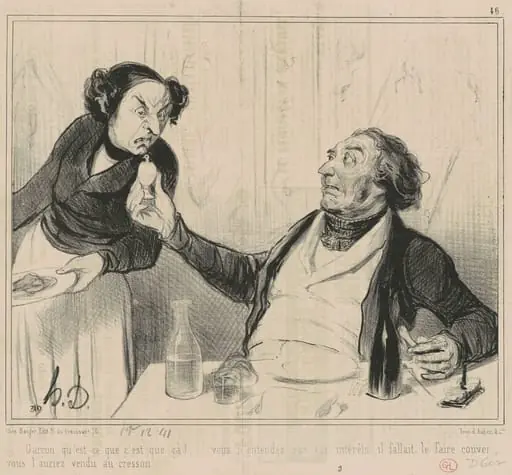 Garçon, qu'est-ce que c'est que ça?...
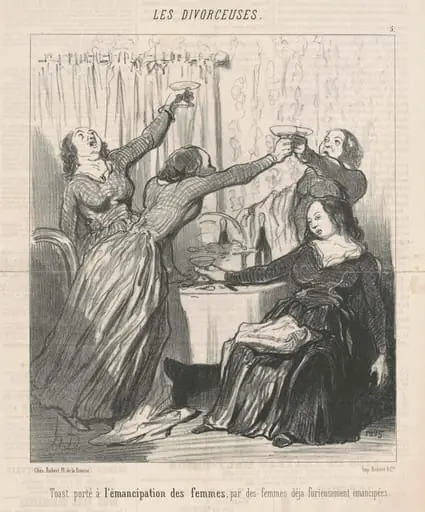 Toast porté a l'émancipation des femmes ...
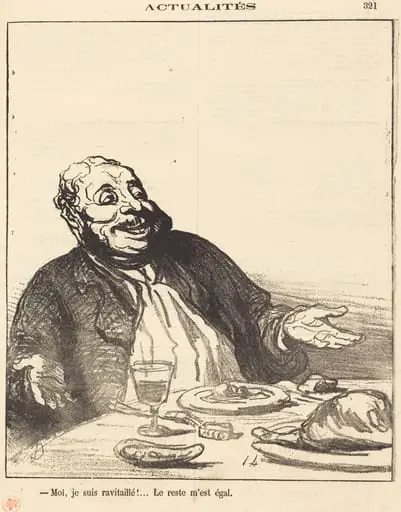 Moi je suis ravitaillé!...
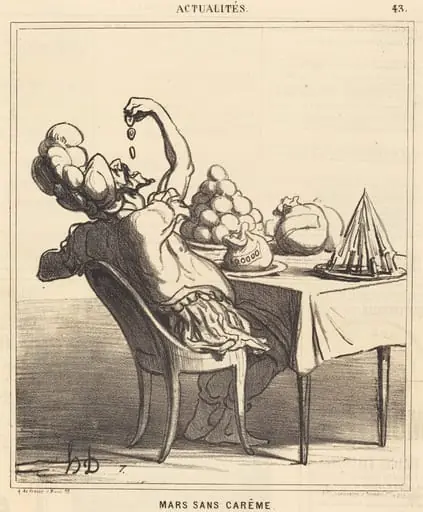 Mars sans carême
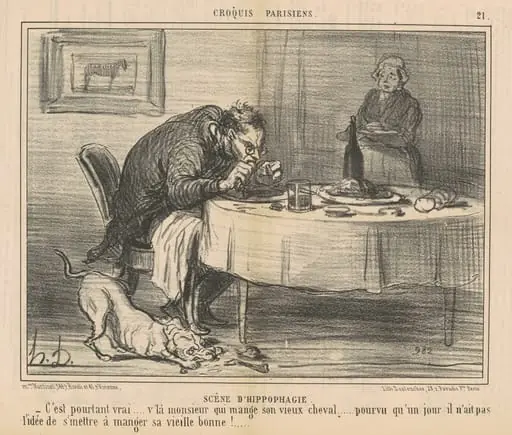 Scène d'Hippophagie
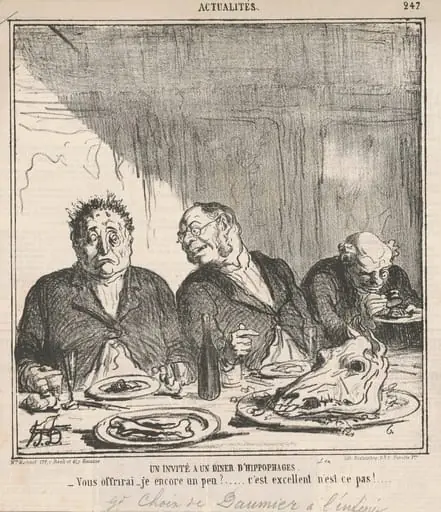 Un invité à un dîner d'hippophages: Vous offrirai-je encore un peu? C'est excellent, n'est-ce pas?
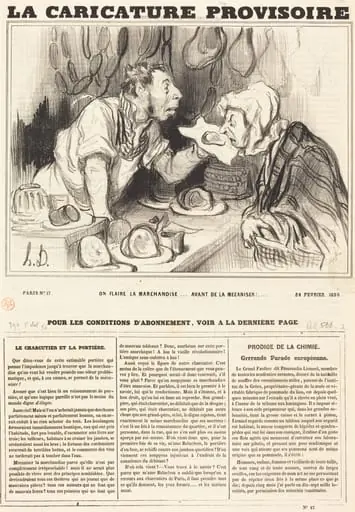 On flaire la marchandise... avant de la mécaniser!...
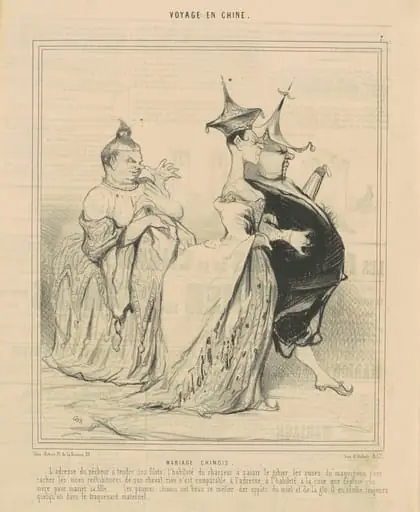 Mariage chinois
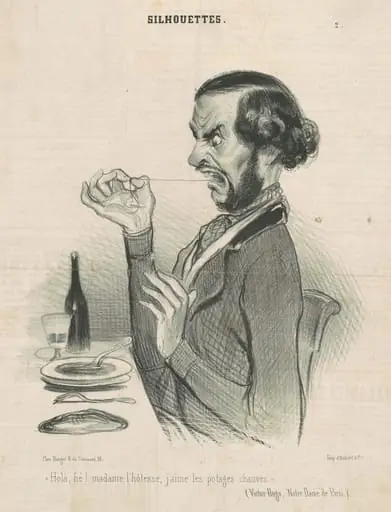 Hola, hé! Madame l'hotesse
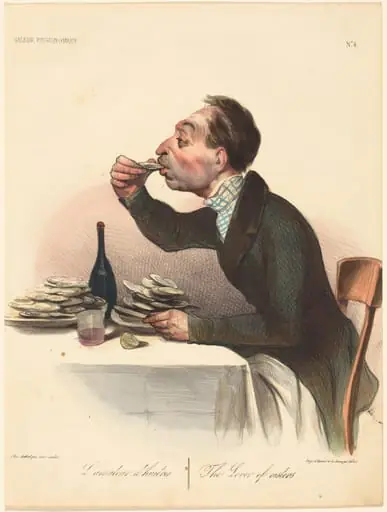 L'amateur d'huitres
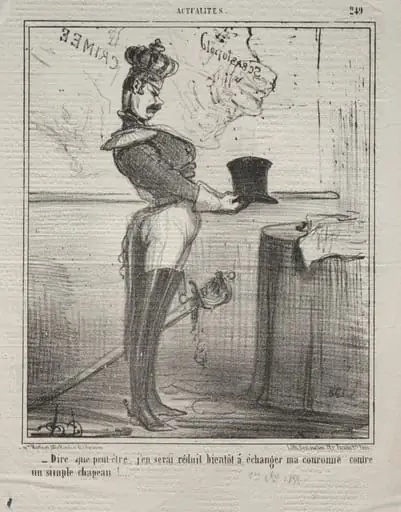 To think that I might soon be reduced to exchanging my crown for a simple hat!
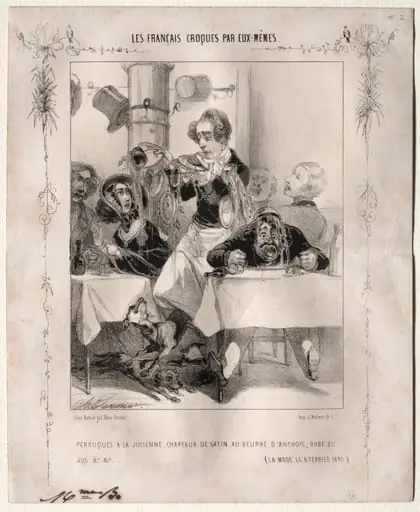 Les Français croquès par eux-mêmes: Perruques a la Julienne, Chapeaux de satin au beurre d'anchois, robe au jus