Artwork
O douleur!... avoir rêvé... un époux...
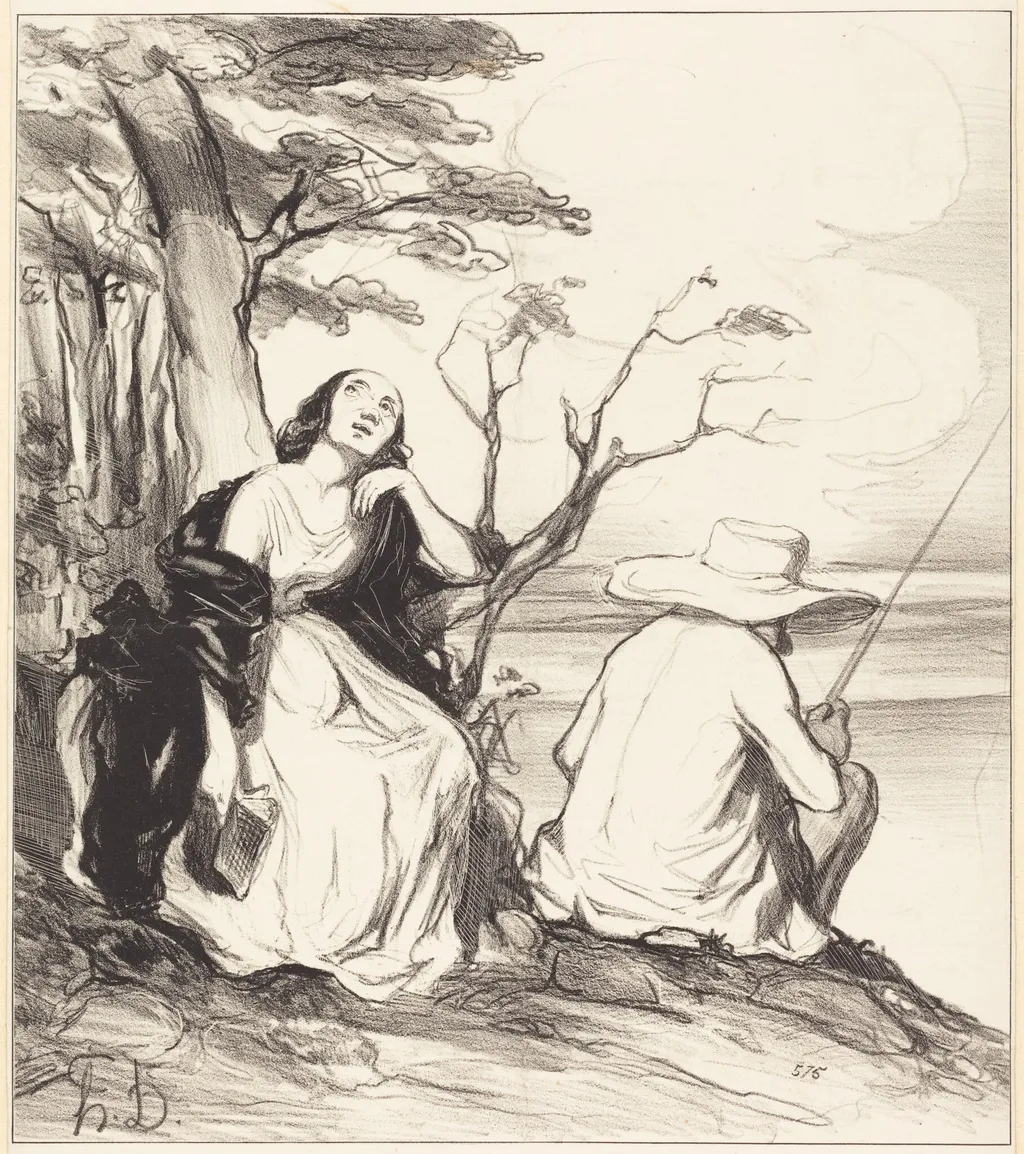
O douleur!... avoir rêvé... un époux... is an ink print by the Romanticist artist Honoré Daumier. It dates from 1844 and is held in the collection of the National Gallery of Art.
About this work
Overview
Created in 1844, this lithograph by Honoré Daumier is one of many satirical works produced for Parisian periodicals. Executed using the lithographic process, it captures a fleeting emotional moment with minimal detail and expressive line work. Daumier’s skill in translating social observation into visual shorthand is evident in the composition’s economy and emotional weight.
Subject & Meaning
The title suggests a lament over lost illusion—perhaps the dream of marital happiness.
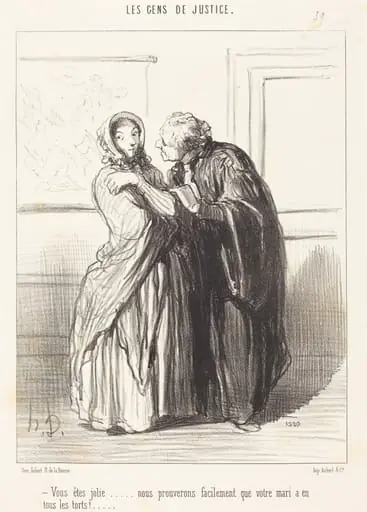
The image depicts two figures in a natural setting: one, dressed in loose garments, gazes upward with arms raised in anguish; the other, cloaked in a wide-brimmed hat, stands passively, leaning on a cane. The title suggests a lament over lost illusion—perhaps the dream of marital happiness. Daumier uses this intimate scene to critique romantic idealism, particularly among the bourgeoisie, contrasting emotional vulnerability with detached indifference.
Technique & Style
Daumier employed lithography to draw directly onto a limestone plate, allowing rapid, spontaneous mark-making. The composition relies on loose, gestural lines to suggest form and movement, with minimal shading and no defined contours. Trees and clouds are rendered as fluid, scribbled textures, emphasizing emotional atmosphere over realism. This sketchlike quality heightens the sense of immediacy and inner turmoil.
History & Provenance
The print was published in 1844, likely in *Le Charivari*, where Daumier regularly contributed satirical imagery. It was part of a broader series critiquing social pretensions and domestic illusions in post-revolutionary France. Though not widely exhibited in its time, it entered institutional collections in the late 19th and early 20th centuries as interest in Daumier’s graphic work grew among collectors and scholars.
Context
In the 1840s, France’s political climate remained volatile after the July Monarchy’s consolidation. Daumier’s prints responded to public disillusionment, targeting not only political elites but also the emotional contradictions of middle-class life. This work reflects a cultural moment in which romantic ideals were being questioned, and satire became a tool for exposing the gap between aspiration and reality.
Legacy
Daumier’s lithographs, including this one, influenced later generations of artists seeking to convey psychological depth through simplified forms. His use of everyday scenes to explore universal emotions helped bridge 19th-century social commentary with modernist approaches to figuration. The work remains a quiet but potent example of how printmaking could articulate private sorrow as public critique.
Artist & collection

Artist
Honoré-Victorin Daumier was a French painter, sculptor, and printmaker, whose many works offer commentary on the social and political life in France, from the Revolution of 1830 to the fall of the Second French Empire in 1870.









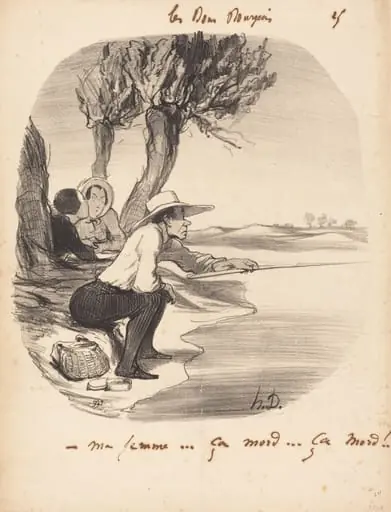 Ma femme... ça mord... ça mord!
 Rest on the Flight into Egypt
 Fishing
 The Robber from the Mountain
 Une Rencontre en pleine eau
 The Holy Family Being Ferried Across the River
 Ma femme... ça mord... ça mord!
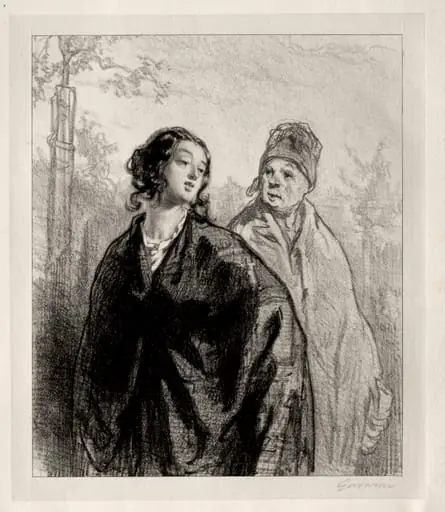 La Fille et la mère
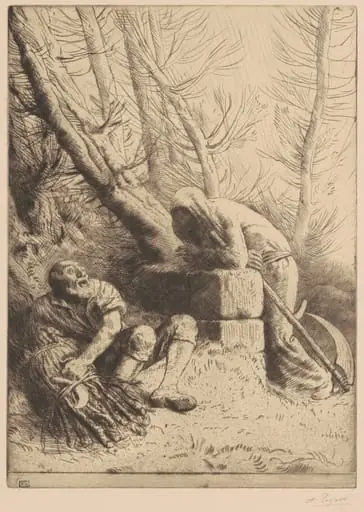 Death and the Woodcutter, 4th plate (La Mort et le bûcheron)
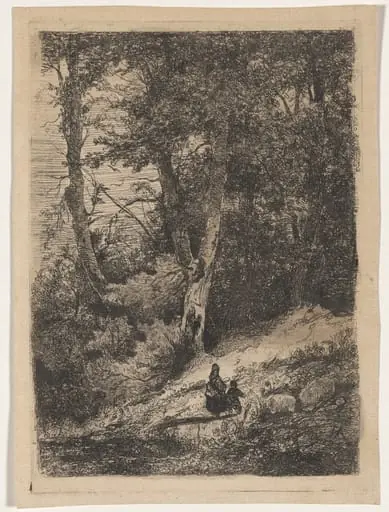 The Inner Forest (Intérieur du bois)
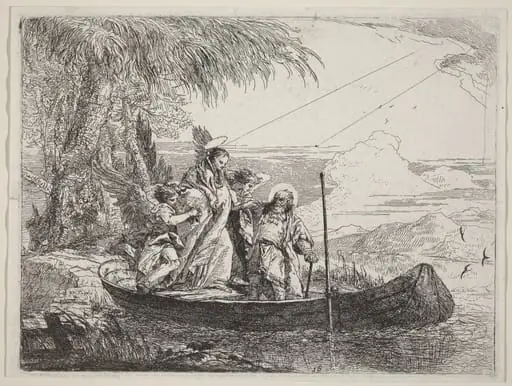 The Madonna, Child, and Angels Entering the Boat
 Vous êtes jolie...