Artwork
Avons saisi dito... un pot a eau, sans eau
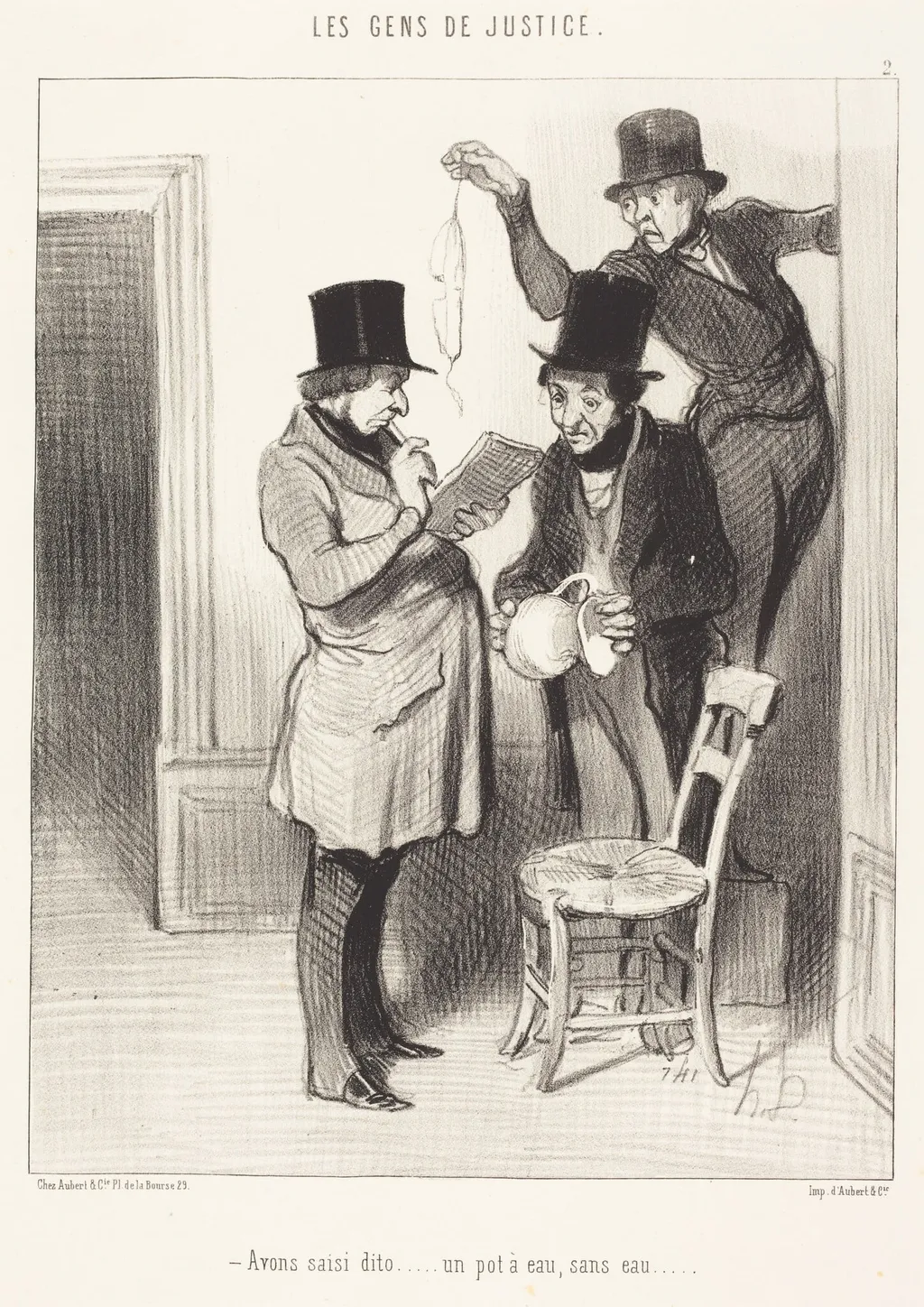
Avons saisi dito... un pot a eau, sans eau is an ink print by the Romanticist artist Honoré Daumier. It dates from 1845 and is held in the collection of the National Gallery of Art.
About this work
Overview
As part of his extensive output for satirical journals, Daumier employed lithography to distill complex social critiques into single, sharp images.
Created in 1845, this lithograph by Honoré Daumier captures a moment of bureaucratic farce under the July Monarchy. As part of his extensive output for satirical journals, Daumier employed lithography to distill complex social critiques into single, sharp images. The work’s title and imagery combine legal jargon with mundane failure, revealing the absurdity of authority figures performing duties devoid of purpose or substance.
Subject & Meaning
Three officials, dressed in outdated attire, are shown in a sparse room, each engaged in a futile act: one holds a noosed rope, another stares at a document in confusion, and the third clutches an empty water pot. The title—'Seized, likewise... a water pot without water'—mocks the hollow formalism of their mission. The scene suggests a failed seizure, where procedure is followed but meaning is absent, highlighting institutional incompetence.
Technique & Style
Daumier used lithography to achieve rapid, expressive lines that convey motion and tension with minimal detail. His loose, sketch-like marks define figures and space without ornament, emphasizing immediacy over polish. The composition is tightly framed, forcing the viewer’s attention onto the men’s awkward postures and the emptiness of their surroundings, reinforcing the work’s satirical tone through visual economy.
History & Provenance
Produced during Daumier’s most active period as a political caricaturist, this print likely appeared in *Le Charivari*, where he regularly published critiques of the French state. Though specific publication records for this image are sparse, its style and theme align with dozens of similar works from the mid-1840s, a time when press censorship intensified and Daumier’s satire grew more pointed.
Context
Under Louis-Philippe’s July Monarchy, public institutions were often seen as tools of elite control, riddled with red tape and symbolic gestures. Daumier’s prints responded to this climate by portraying officials as inept or detached. The empty water pot becomes a metaphor for hollow authority—performing acts of power without real function, a recurring theme in his critique of the French bureaucracy.
Legacy
Daumier’s lithographs, including this one, helped redefine printmaking as a vehicle for social commentary. His ability to distill systemic critique into single, resonant images influenced later generations of satirists and cartoonists. Though not widely exhibited in his lifetime, his work gained recognition in the 20th century as foundational to modern visual satire and the depiction of institutional absurdity.
Artist & collection
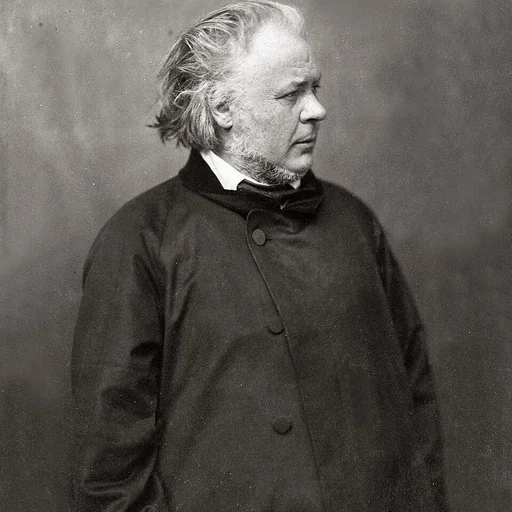
Artist
Honoré-Victorin Daumier was a French painter, sculptor, and printmaker, whose many works offer commentary on the social and political life in France, from the Revolution of 1830 to the fall of the Second French Empire in 1870.









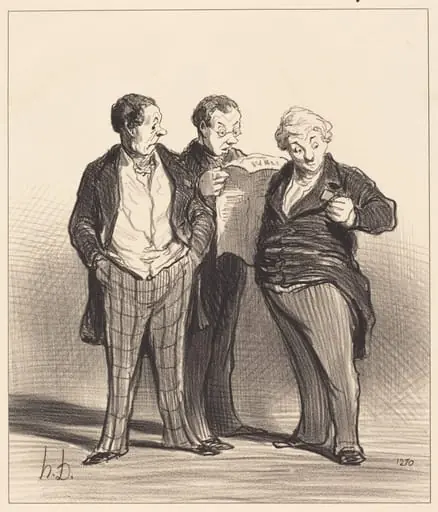 L'Interdiction du port des décorations
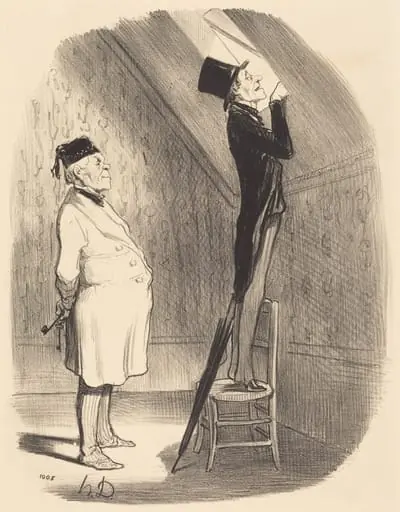 Oh! quant a la vue, vous ne trouverez pas mieux qu'ici!
 C'est bien parce que c'est votre ami...
 Le marchand de contremarques
 Ton habit me convient, je te l'emprunte...
 La Souscription Napoléonienne
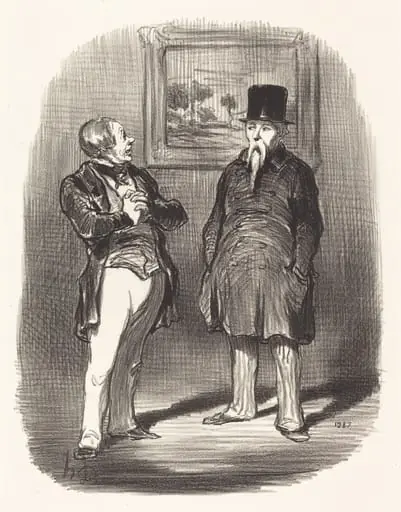 Tiens... je ne te reconnaissais pas...
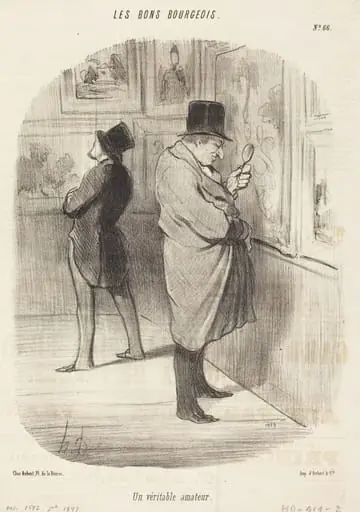 Un Veritable amateur
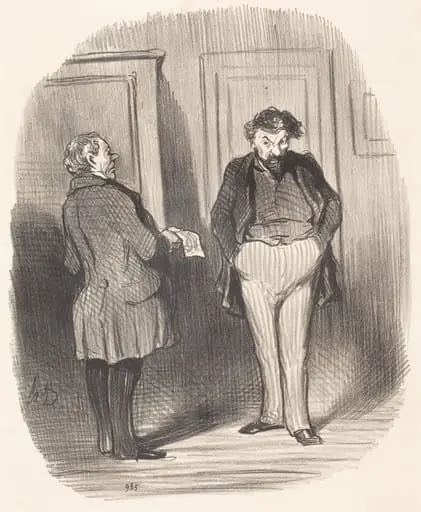 Pourriez-vous me dire...? J'ai la grippe!...
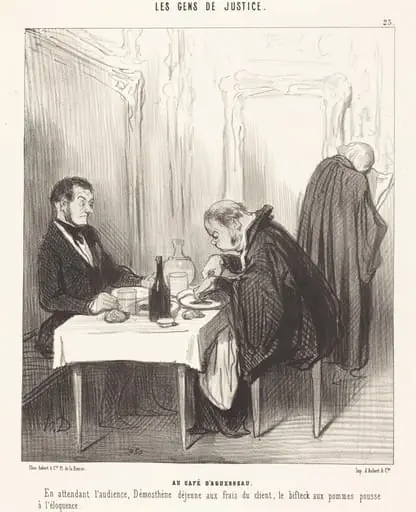 Au Café d'Aguesseau