Artwork
Séance de nuit
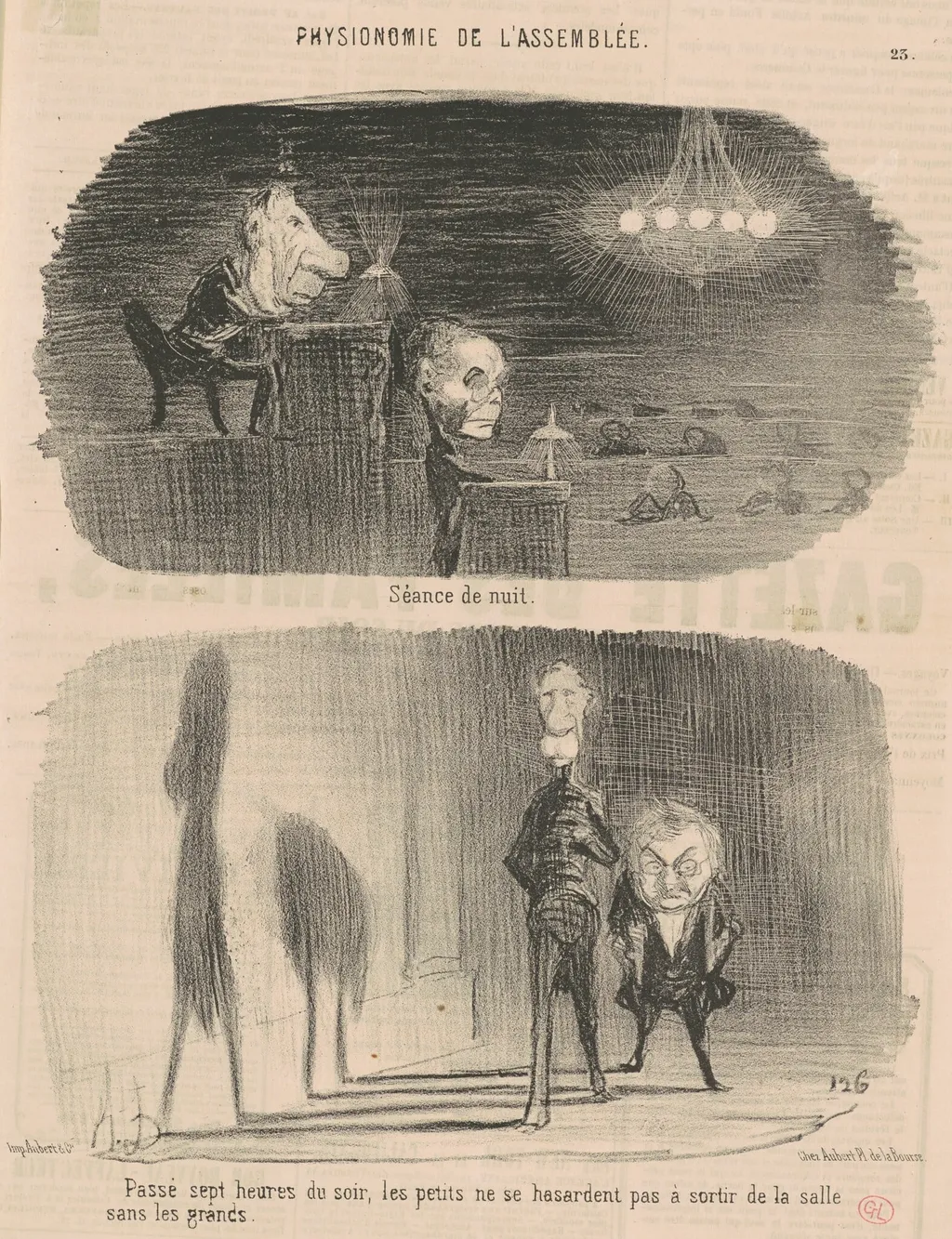
Séance de nuit is an ink print by the Impressionist artist Honoré Daumier. It dates from 1850 and is held in the collection of the National Gallery of Art.
About this work
Overview
Honoré Daumier’s lithograph Séance de nuit presents a satirical view of a parliamentary gathering after hours.
Honoré Daumier’s lithograph Séance de nuit presents a satirical view of a parliamentary gathering after hours. The print is divided horizontally, the upper half showing a dimly lit space occupied by a few diminutive figures, while the lower half opens onto a spacious hall populated by oversized, exaggerated characters. The contrast between the two zones underscores the artist’s critique of the institution’s pomp and inefficacy.
Subject & Meaning
Through caricature, Daumier lampoons the solemnity of legislative sessions, depicting the participants as grotesquely enlarged and almost puppet‑like. The absurdity of the setting—figures rendered in a half‑dark, half‑bright environment—highlights the perceived emptiness and theatricality of political discourse, inviting viewers to question the seriousness of governmental authority.
Technique & Style
Executed in lithography, the work relies on bold, precise lines that accentuate the distorted anatomy of the characters. Daumier’s use of stark chiaroscuro within the split composition creates a visual tension between light and shadow, while the exaggerated proportions and simplified forms are characteristic of his satirical caricature style.
History & Provenance
Created during Daumier’s prolific period of social commentary in the mid‑19th century, Séance de nuit was produced as part of his series of political prints. The lithograph circulated among contemporary audiences via print shops, contributing to the artist’s reputation as a keen observer of French public life. Its later acquisition by museum collections has preserved its role as a document of political satire.
Artist & collection
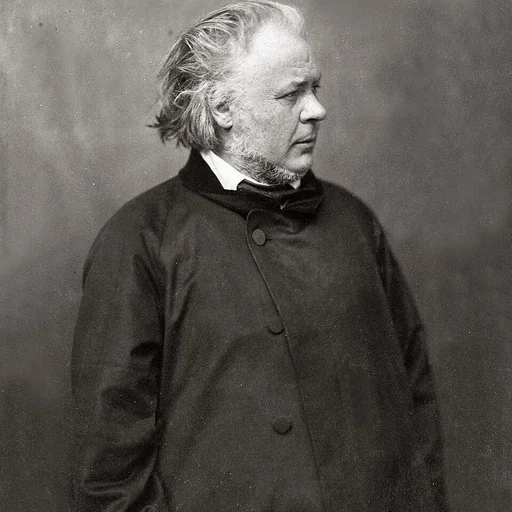
Artist
Honoré-Victorin Daumier was a French painter, sculptor, and printmaker, whose many works offer commentary on the social and political life in France, from the Revolution of 1830 to the fall of the Second French Empire in 1870.









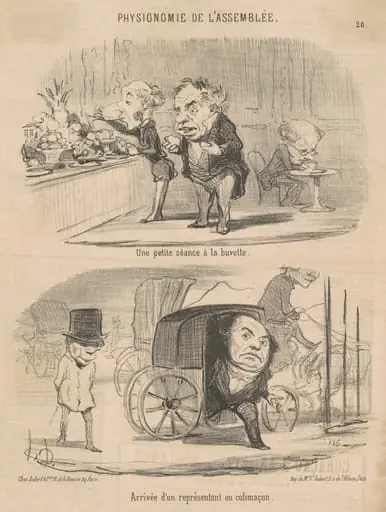 Une petite séance a la buvette
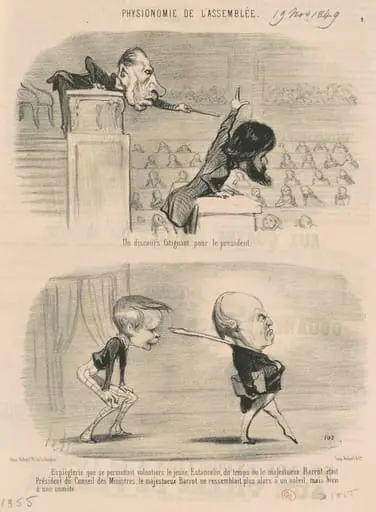 Un discours fatiguant pour le président
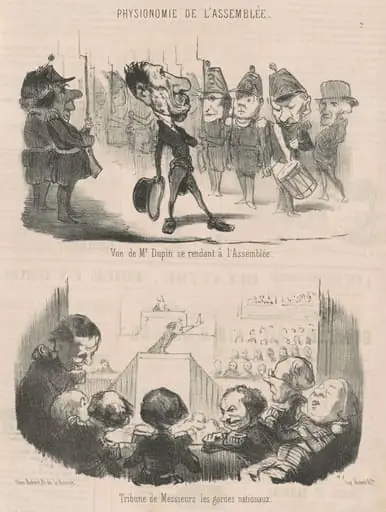 Vue de M. Dupin se rendant a l'assemblée
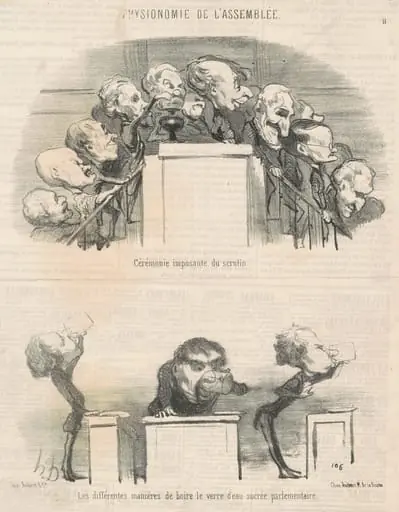 Cérémonie imposante du scrutin
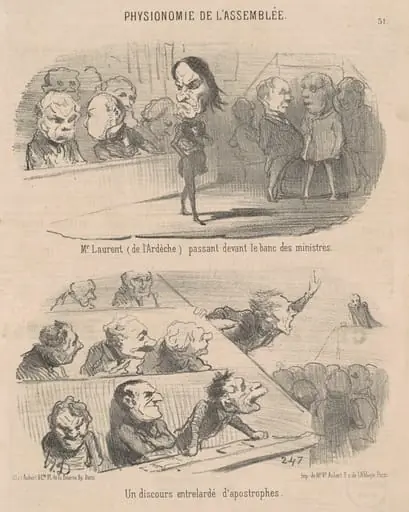 M. Laurent (de l'ardèche) Passant ...
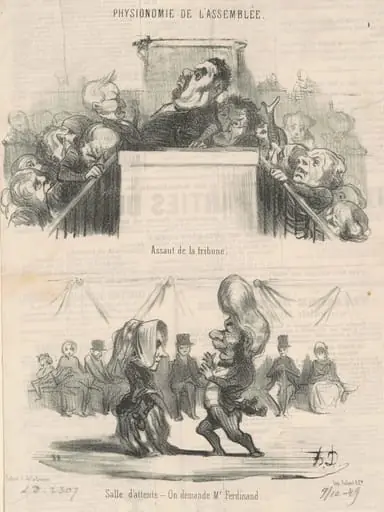 Assaut de la tribune
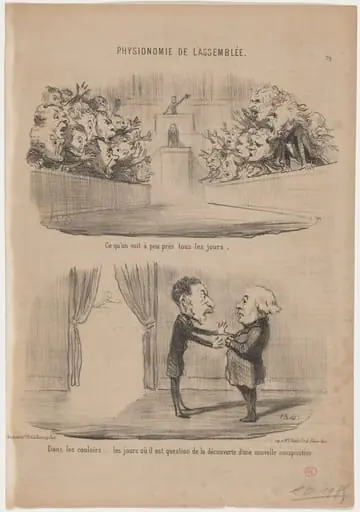 Ce qu'on voit a peu près tous les jours
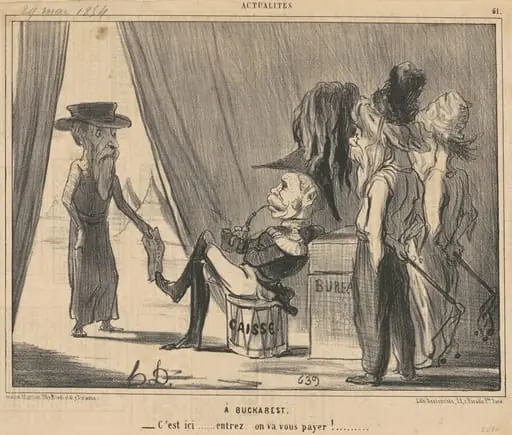 A Bucharest
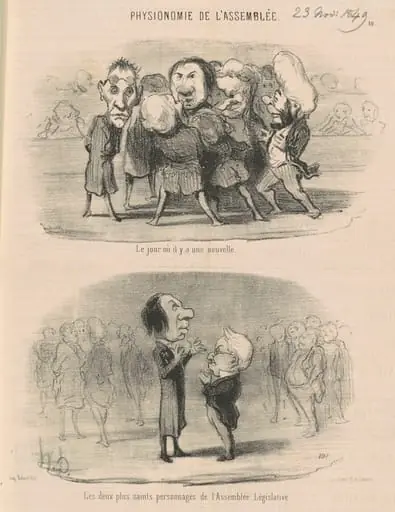 Le jour ou il y a une nouvelle
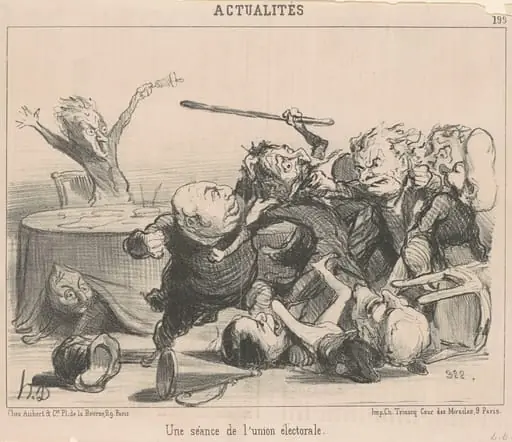 Une séance de l'union électorale
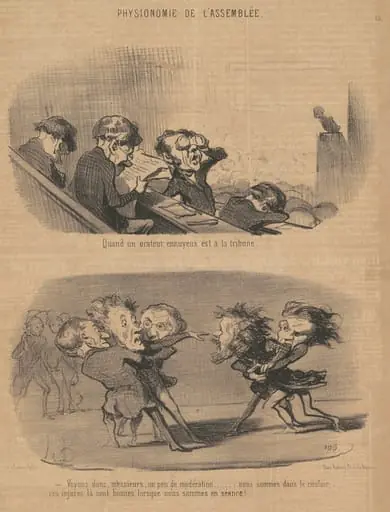 Quand un orateur ennuyeux est a la tribune