Artwork
Cérémonie imposante du scrutin
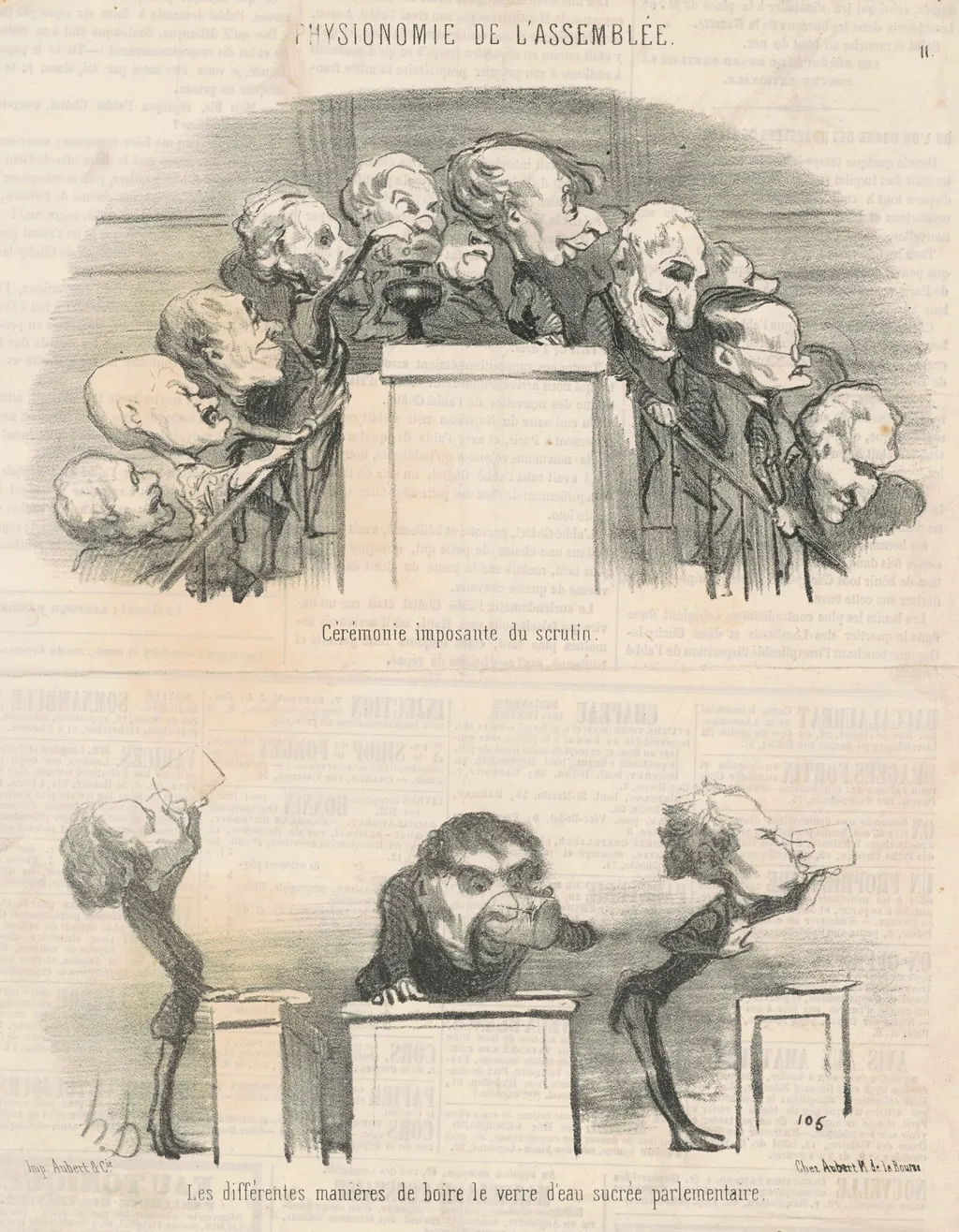
Cérémonie imposante du scrutin is an ink print by the Romanticist artist Honoré Daumier. It dates from 1849 and is held in the collection of the National Gallery of Art.
About this work
Overview
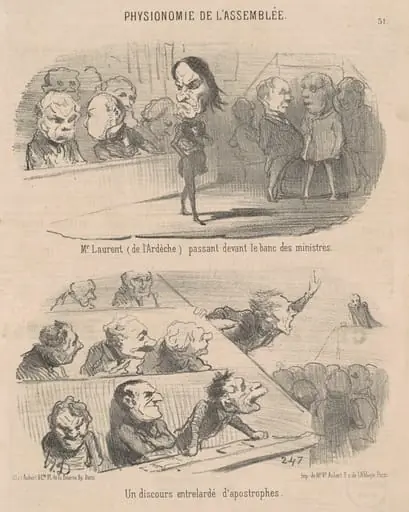
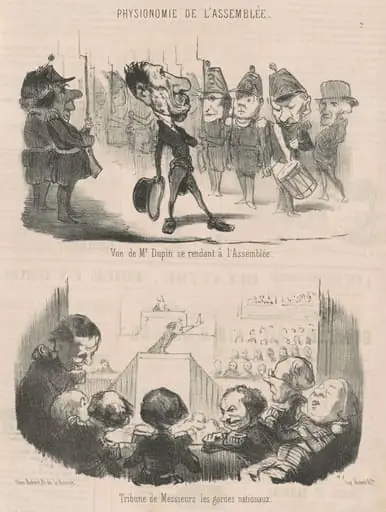
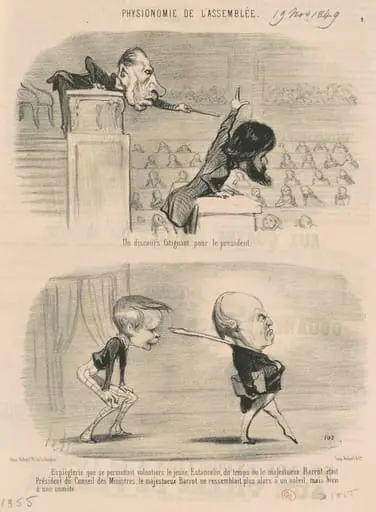
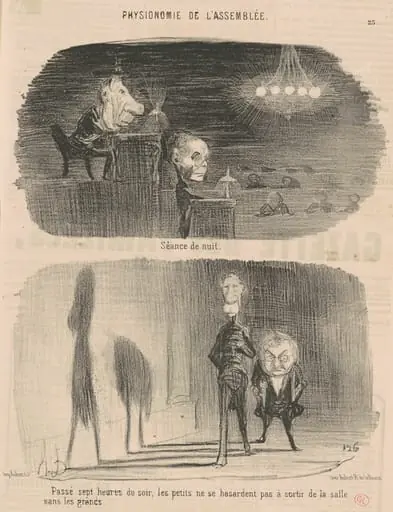
Cérémonie imposante du scrutin is a lithograph by Honoré Daumier, satirically portraying a political assembly through exaggerated caricatures, emphasizing the absurdity of formal political proceedings.
Subject & Meaning
The print depicts a crowded, all-male gathering of suited political figures, ridiculing their postures and expressions. The scene highlights the theatricality of political rituals, with some figures engaged in comical toasting, underscoring Daumier's critique of political pomp.
Technique & Style
Executed in expressive black and white, the lithograph features thick, scratchy lines, distorted facial features, and exaggerated body language, enhancing the humorous and satirical tone of the piece.
History & Provenance
Originally published in a magazine, this print was part of Daumier's use of the press to satirize contemporary political leaders, reflecting its dual role as both art and social commentary in its time.
Context
Created amidst the political climate of 19th-century France, the work exemplifies Daumier's penchant for turning political critique into public spectacle through accessible mediums like lithography.
Legacy
While specific lasting impacts of 'Cérémonie imposante du scrutin' are not detailed, it contributes to Daumier's broader legacy as a satirical artist who effectively used lithography to engage the public with political commentary.
Artist & collection

Artist
Honoré-Victorin Daumier was a French painter, sculptor, and printmaker, whose many works offer commentary on the social and political life in France, from the Revolution of 1830 to the fall of the Second French Empire in 1870.