Artwork
Une Famille chez qui réside l'instinct guerrier
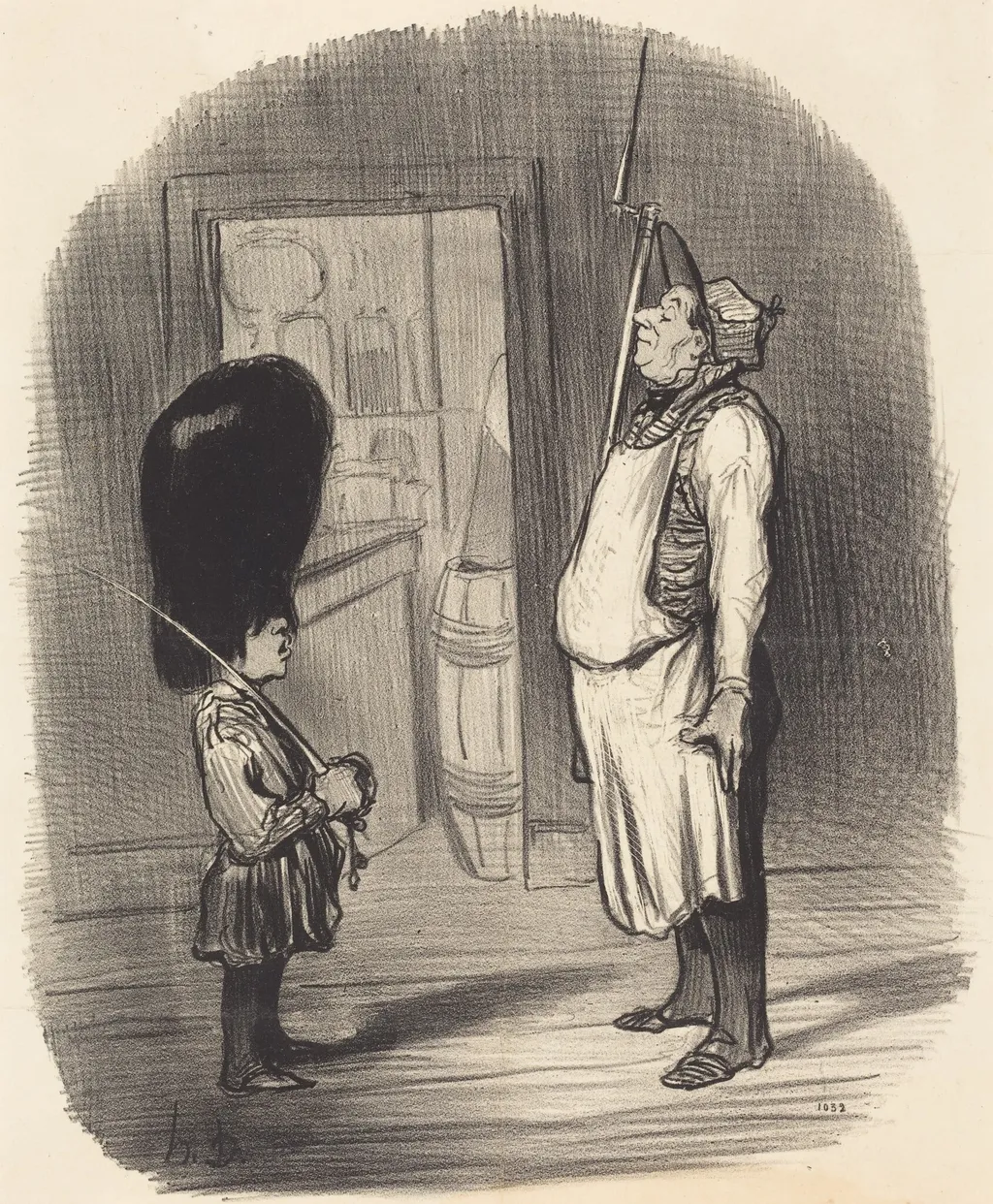
Une Famille chez qui réside l'instinct guerrier is an ink print by the Romanticist artist Honoré Daumier. It dates from 1847 and is held in the collection of the National Gallery of Art.
About this work
Overview
Une Famille chez qui réside l'instinct guerrier is a lithograph created by Honoré Daumier in 1847. Characteristic of Daumier's socially conscious body of work, this print conveys satirical commentary through its depiction of a domestic scene.
Subject & Meaning
The lithograph portrays a contrasted duo in a humble, dimly lit room: a tall, formally attired soldier with a rifle and a young boy in simple, outdated clothing, gazing up at the soldier with a serious expression. This juxtaposition may critique the influence of militarism on youth or the societal pressures fostering a 'warrior instinct' within familial environments.
Technique & Style
Executed in lithography, a technique allowing for widespread dissemination of images, the work features Daumier's distinctive sketchy, quickly drawn aesthetic. The blurred soldier's face and the overall rough texture underscore the artist's emphasis on expressive immediacy over detailed realism.
History & Provenance
Produced during a period of significant political turmoil in France, this 1847 lithograph aligns with Daumier's republican and democratic sympathies. It was likely created for publication in a satirical journal, such as *La Caricature* or *Le Charivari*, where Daumier regularly published his critiques of French monarchy, aristocracy, and clergy.
Context
Within the broader context of Daumier's oeuvre, *Une Famille chez qui réside l'instinct guerrier* sits alongside numerous caricatures and prints that targeted the social and political elite of 19th-century France, reflecting the artist's commitment to social commentary and reform.
Own this work as a print
Artist & collection

Artist
Honoré-Victorin Daumier was a French painter, sculptor, and printmaker, whose many works offer commentary on the social and political life in France, from the Revolution of 1830 to the fall of the Second French Empire in 1870.









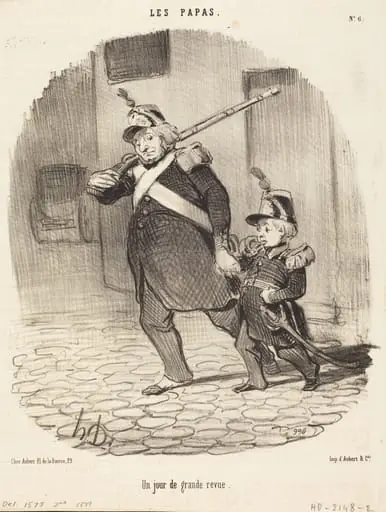 Un Jour de grande revue
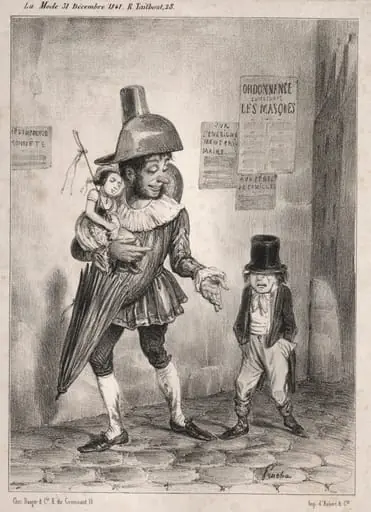 Pochades de carnaval: Vois-tu, si ton maître est bien content de toi et si tu as le prix de sagesse cette année! je te laisserai deguiser en paillasse! ...l'année prochaine!!
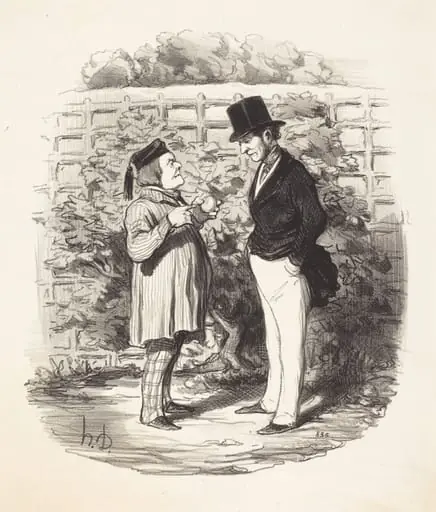 Monsieur voila vingt ans que je poursuis l'union de...
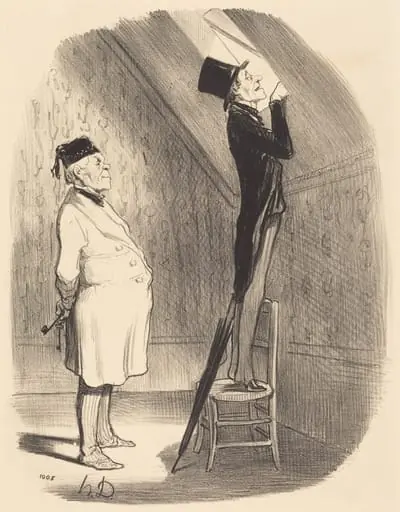 Oh! quant a la vue, vous ne trouverez pas mieux qu'ici!
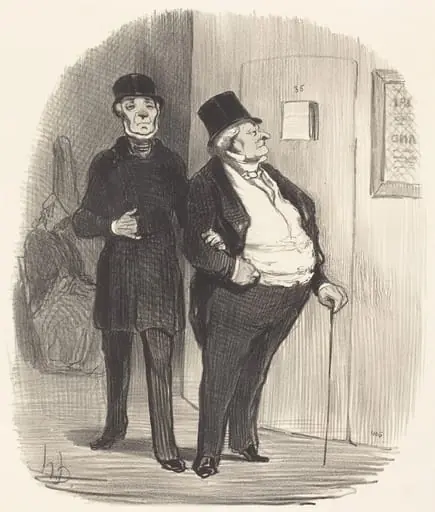 Un Jour de représentation a bénéfice...
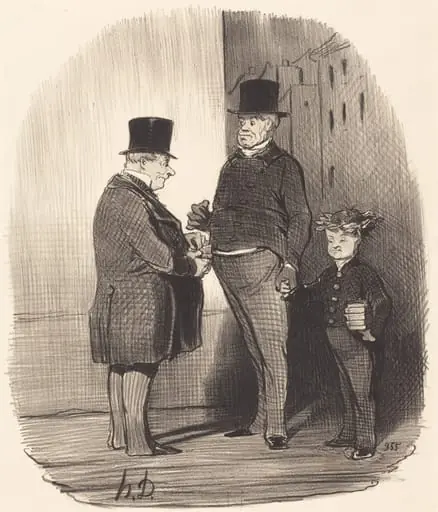 Ah! vous êtes fort en vers latins, jeune homme...
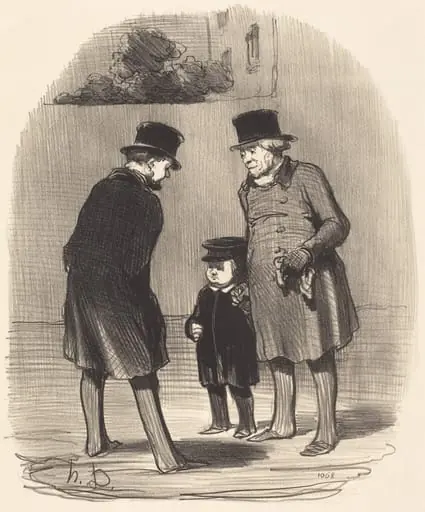 Oui, monsieur Chapuzot...
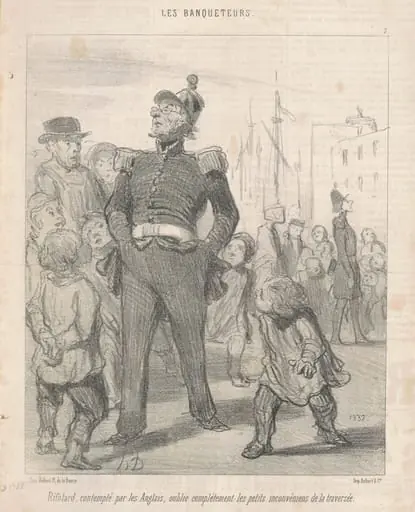 Rifolard ... oublie ... les inconvénients de la traversée
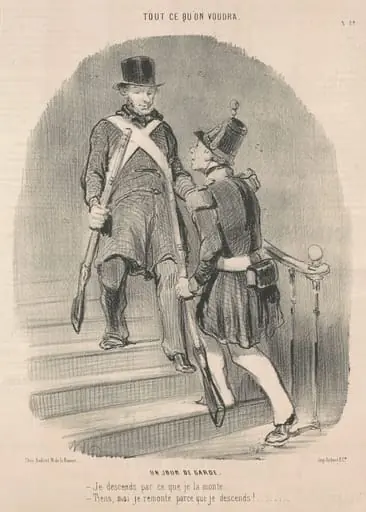 Un jour de garde