Artwork
Interior of a House
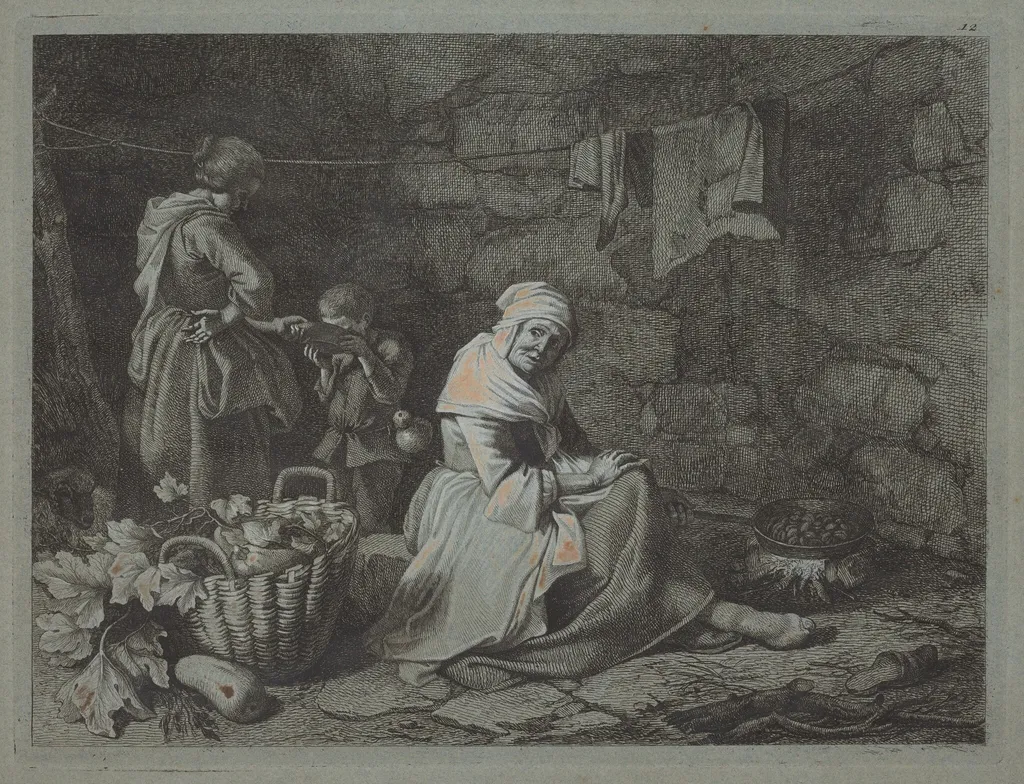
Interior of a House is a gouache print by the Baroque artist Francesco Londonio. It dates from 1763 and is held in the collection of the National Gallery of Art.
About this work
Overview
Created in 1763, *Interior of a House* is an etching enhanced with white gouache on blue laid paper. The work depicts a modest interior scene populated by two figures, a basket of fish and shellfish, and assorted shells and foliage on the floor, all rendered with a combination of dark line work and delicate highlights.
Subject & Meaning
The composition presents a domestic environment where a kneeling figure handles a small bird beside a basket of seafood, while another cloaked individual reaches toward a child holding a stick. The inclusion of fish, shells and everyday objects suggests a focus on routine activities, possibly related to market or household labor in a rural setting.
Technique & Style
Londonio employed traditional etching methods, incising the design into a copper plate before printing onto blue laid paper. White gouache was applied afterward to accentuate fabrics, textures and highlights, creating a subtle contrast between deep shadows and luminous surfaces characteristic of late‑Baroque and Rococo genre prints.
History & Provenance
The artist, Francesco Londonio, trained in Milan under painters Ferdinando Porta and Giovanni Battista Sassi and learned engraving from Benigno Bossi. His career included trips to Rome and Naples, and his output often catered to Northern Italian patrons who favored rustic, pastoral subjects.
Context
During the mid‑18th century, Northern Italy saw a demand for genre scenes that celebrated everyday life and the countryside. Londonio’s work aligns with this trend, reflecting the tastes of affluent buyers who commissioned images of peasants, animals and domestic interiors as a form of genteel nostalgia.
Legacy
Londonio’s prints, including this interior view, contributed to the visual vocabulary of Italian genre art, influencing later depictions of rural and domestic themes. The piece remains a representative example of how etching and gouache were combined to achieve nuanced tonal effects in the period’s printmaking.
Artist & collection

Artist
Francesco Londonio (1723–1783) was an Italian painter, engraver, and scenographer, active mainly in his native Milan in a late-Baroque or Rococo style.

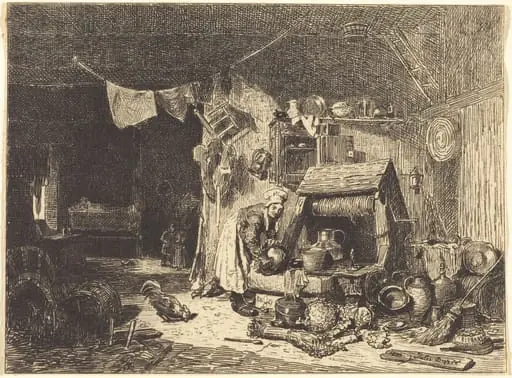 Interior of a Farmhouse
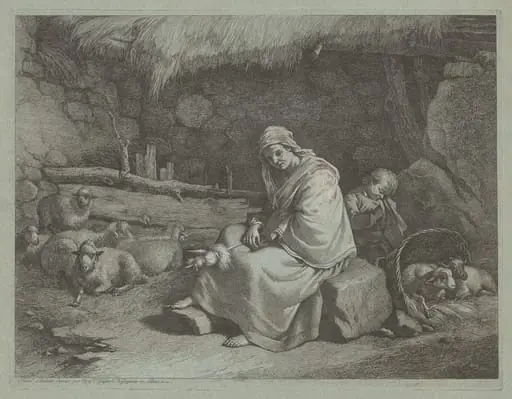 Interior of a Stable with a Seated Spinner and Sleeping Child
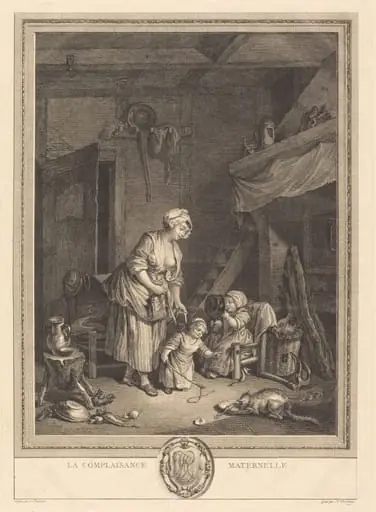 La Complaisance maternelle
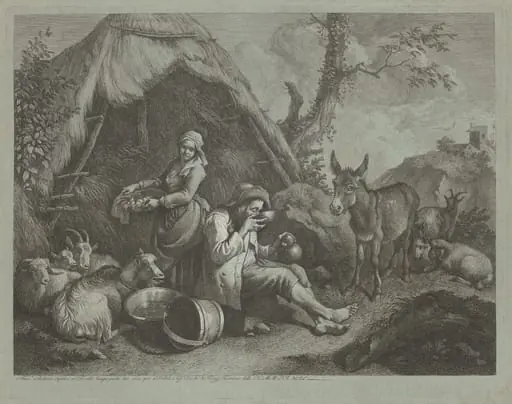 Seated Old Man and Woman with a Basket of Eggs
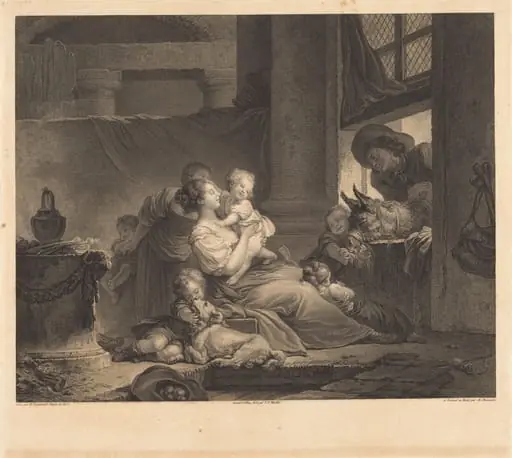 La famille du fermier
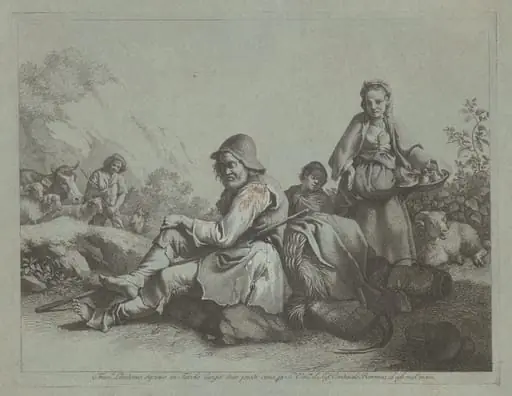 Seated Shepherd and a Peasant Woman with a Basket
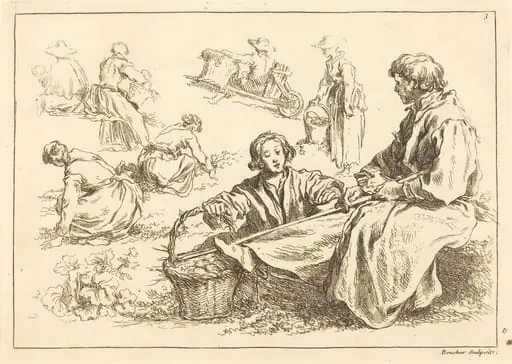 Figure Studies including Two Seated Peasants
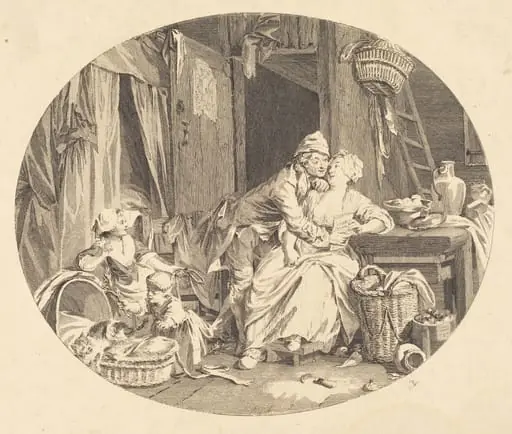 La Félicité villageoise
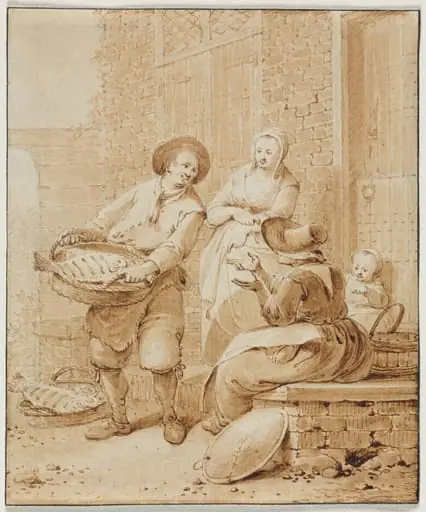 The Fish Monger
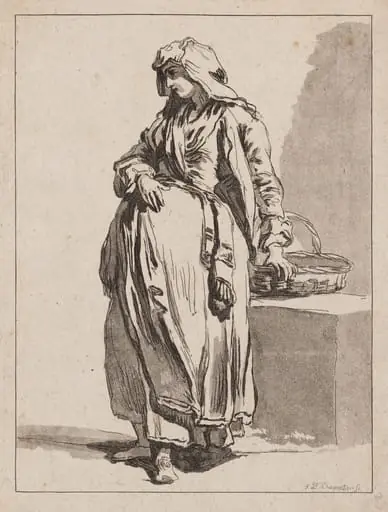 Italian Peasant Woman
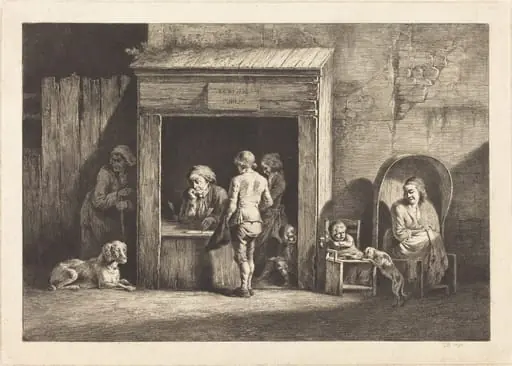 The Public Scribe
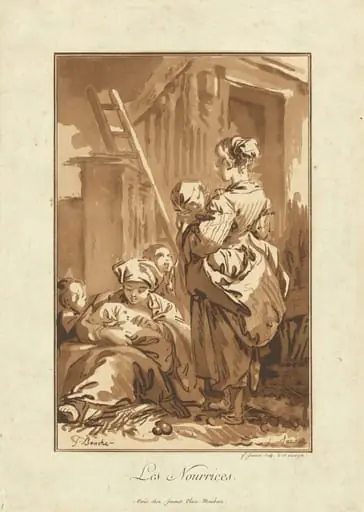 Les Nourrices (The Nurses)