Artwork
Orante from the Villa Medici
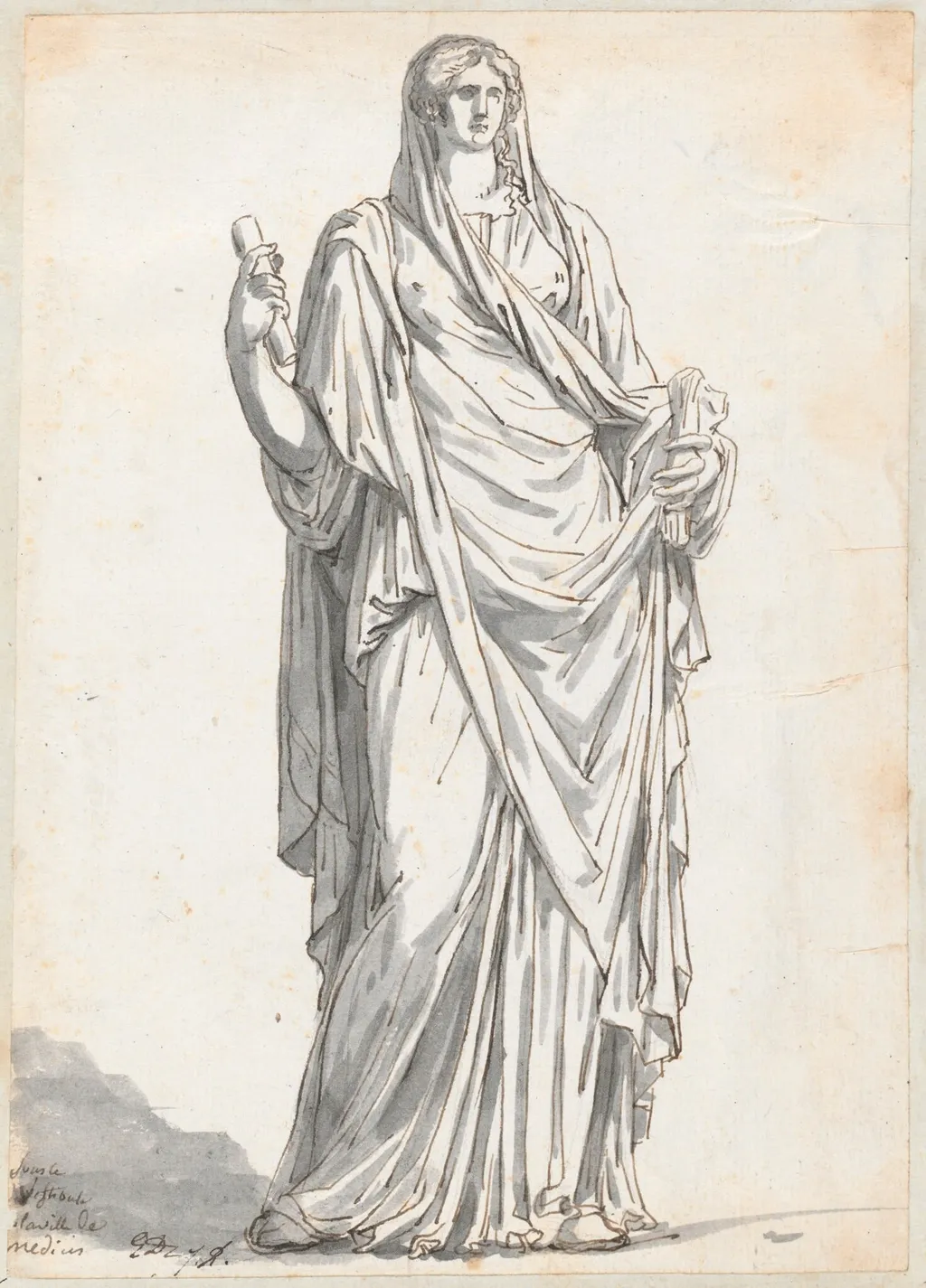
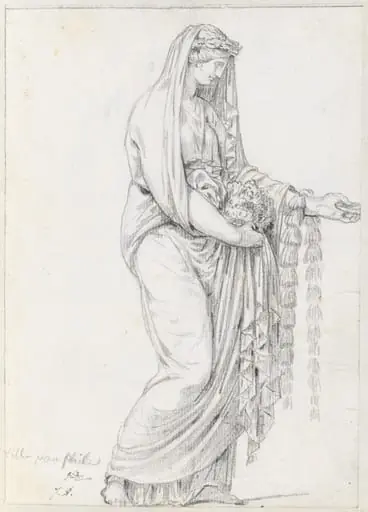
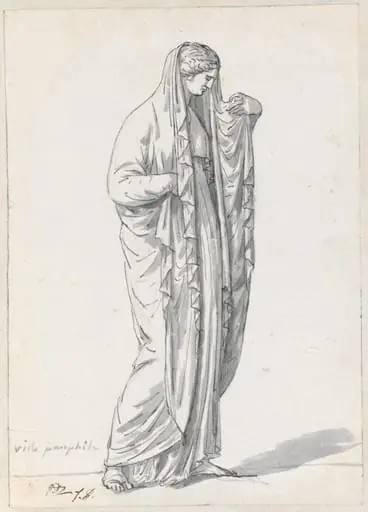
Orante from the Villa Medici is an ink drawing by the Neoclassicist artist Jacques-Louis David. It dates from 1778 and is held in the collection of the National Gallery of Art.
About this work
Overview
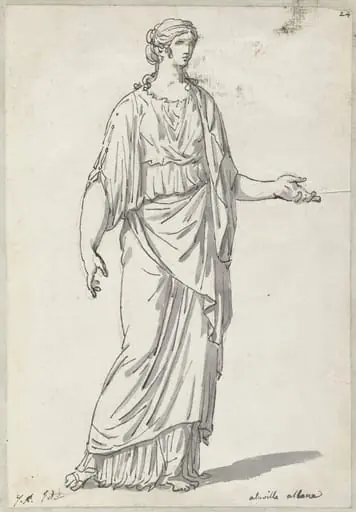
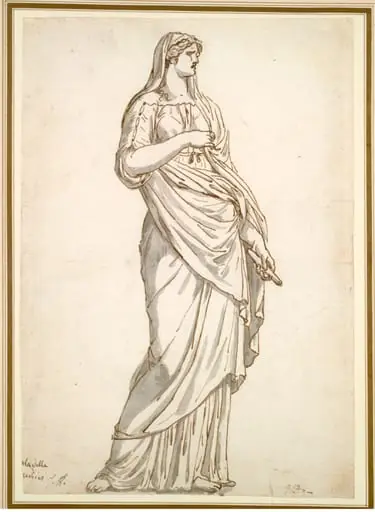
It depicts a standing female figure, likely intended as a classical allegory, rendered with careful attention to drapery and posture.
This drawing, dated 1778, is a study by Jacques-Louis David executed in brown ink and gray wash over graphite on laid paper. It depicts a standing female figure, likely intended as a classical allegory, rendered with careful attention to drapery and posture. The plain background isolates the figure, emphasizing form and gesture over setting. The work reflects David’s early engagement with academic drawing practices and his interest in classical ideals.
Subject & Meaning
The figure, identified as an orante—a praying or orating woman from ancient iconography—holds a scroll, suggesting wisdom or prophecy. Her solemn expression and restrained posture align with Enlightenment-era ideals of rational virtue. The pose, with weight shifted onto one leg and hand gently holding the robe, evokes classical statuary. The subject is not a portrait but a symbolic representation, possibly linked to David’s preparatory studies for larger historical or mythological compositions.
Technique & Style
David employed layered brown ink with subtle gray washes to model volume and texture, particularly in the folds of the robe. Traces of graphite beneath the ink reveal an initial underdrawing, indicating a methodical approach to form. The precision in rendering the scroll and the careful gradation of shadow suggest a focus on anatomical accuracy and tactile realism. The lack of background detail directs attention to the figure’s sculptural presence.
History & Provenance
The drawing originates from David’s time in Rome, where he studied ancient art and developed his neoclassical style. It was likely made during his stay at the Villa Medici, the French Academy’s residence, between 1775 and 1780. The work remained in his possession and later entered institutional collections, reflecting its role as a personal study rather than a commissioned piece.
Context
Created during David’s formative years in Rome, this drawing reflects his immersion in classical antiquity and the academic emphasis on figure drawing. Contemporary artists were encouraged to study ancient sculptures and literary sources to inform their compositions. The orante motif, drawn from Roman funerary art, was a common subject for academic exercises, reinforcing moral and aesthetic ideals central to the Academy’s curriculum.
Legacy
Though not a finished painting, this study exemplifies David’s disciplined approach to form and his commitment to classical principles that would later define his major historical works. It stands as a testament to the rigorous training of 18th-century French artists and the foundational role of drawing in neoclassical practice. The work remains a key reference for understanding his artistic development before his rise to prominence in revolutionary France.
Own this work as a print
Artist & collection
Artist
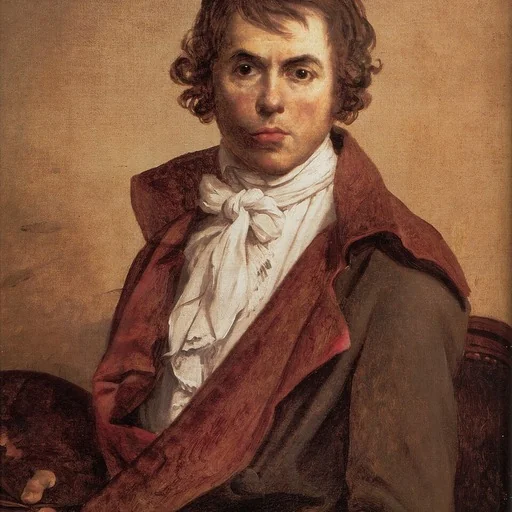
Jacques-Louis David was born in Paris on 30 August 1748 into a bourgeois family; his father died in a duel when the boy was nine, and a maternal uncle guided his education.

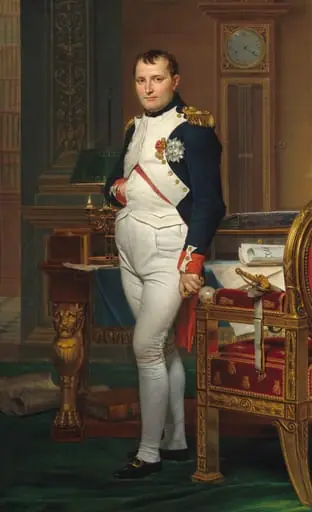 The Emperor Napoleon in His Study at the Tuileries
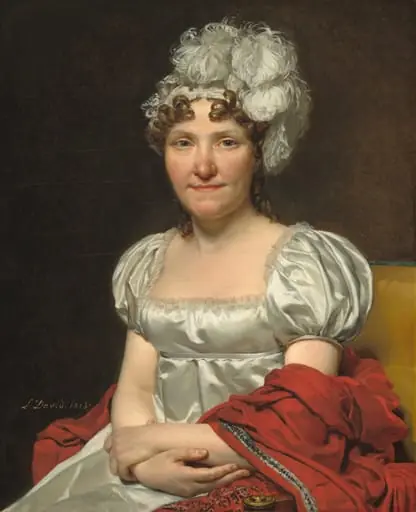 Madame David
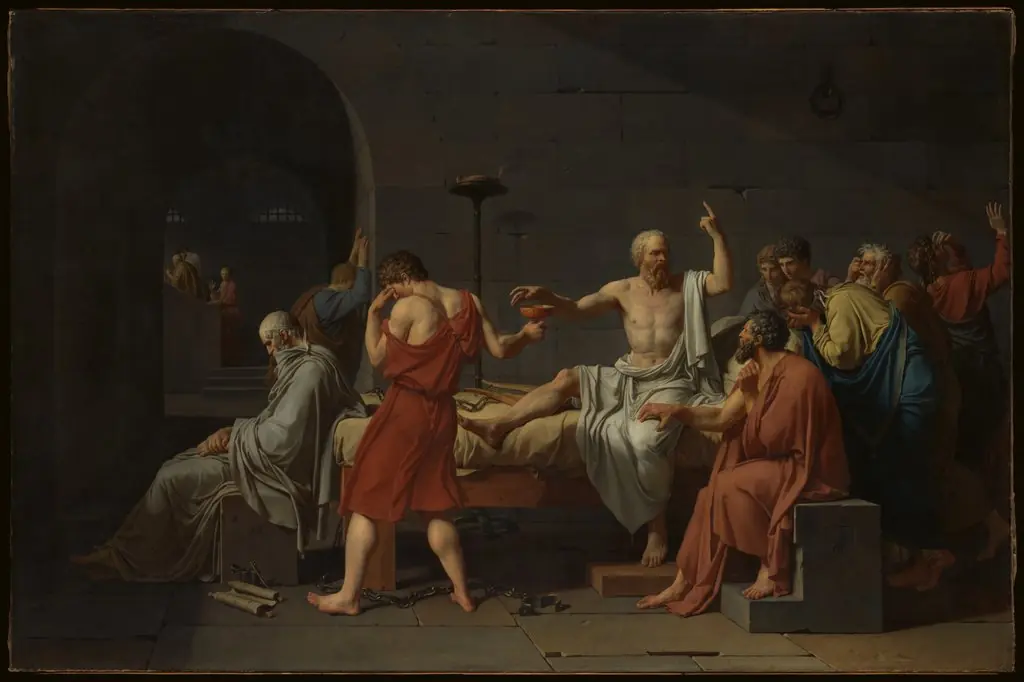 The Death of Socrates
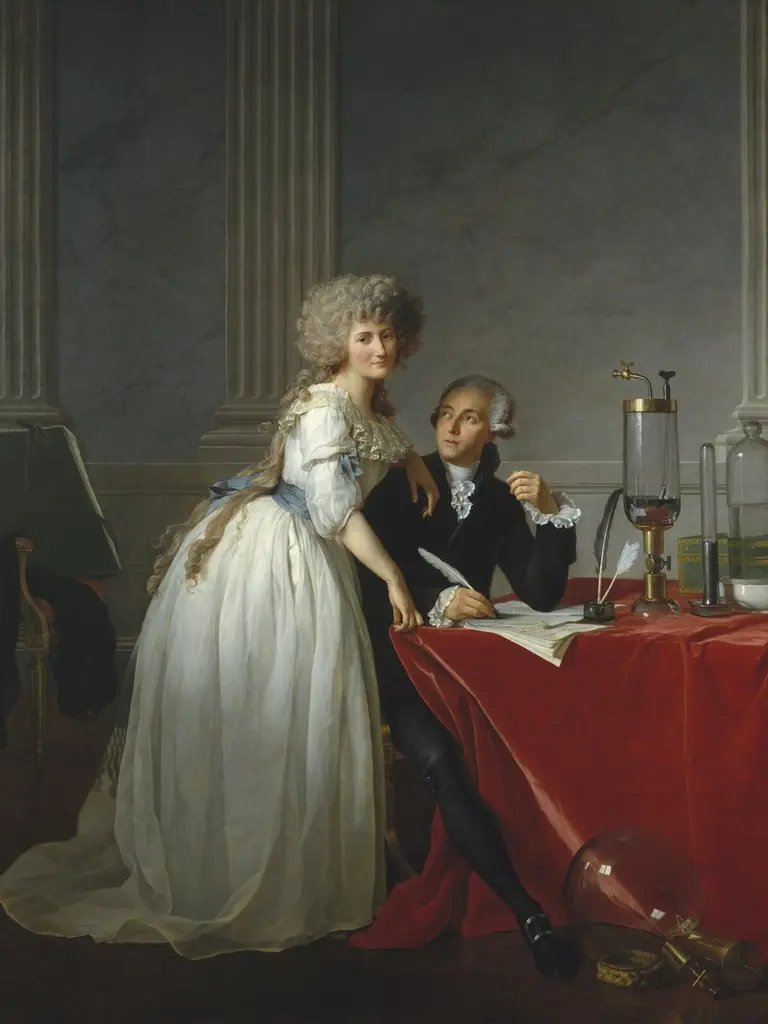 Portrait of Antoine-Laurent Lavoisier and his wife
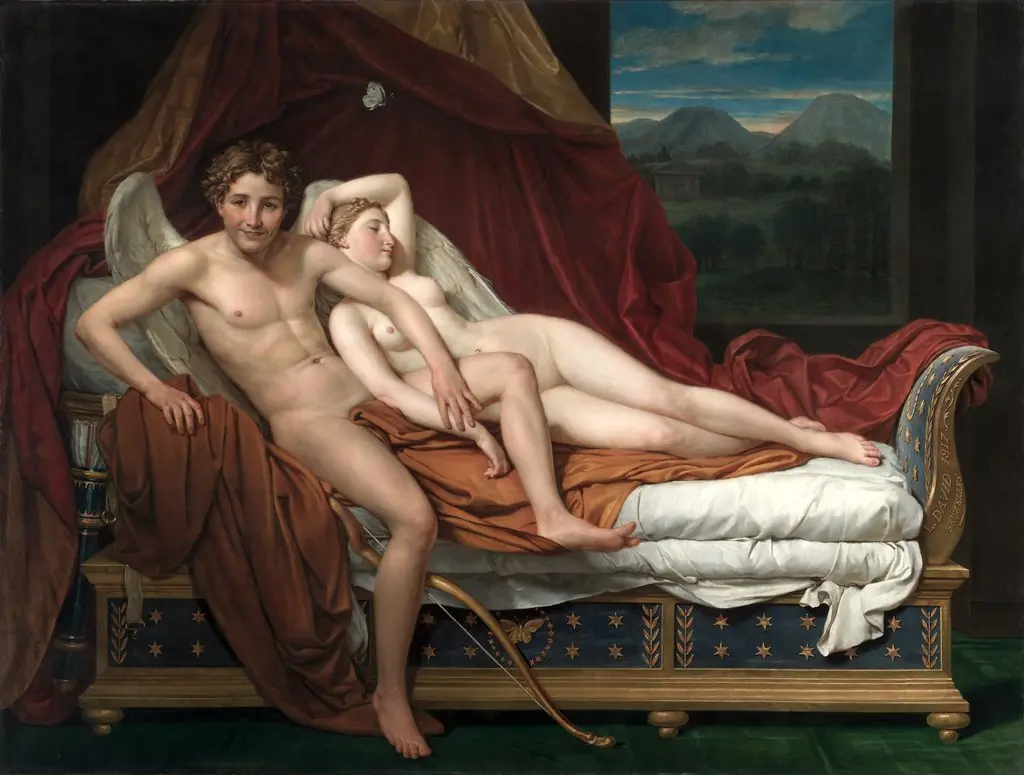 Cupid and Psyche
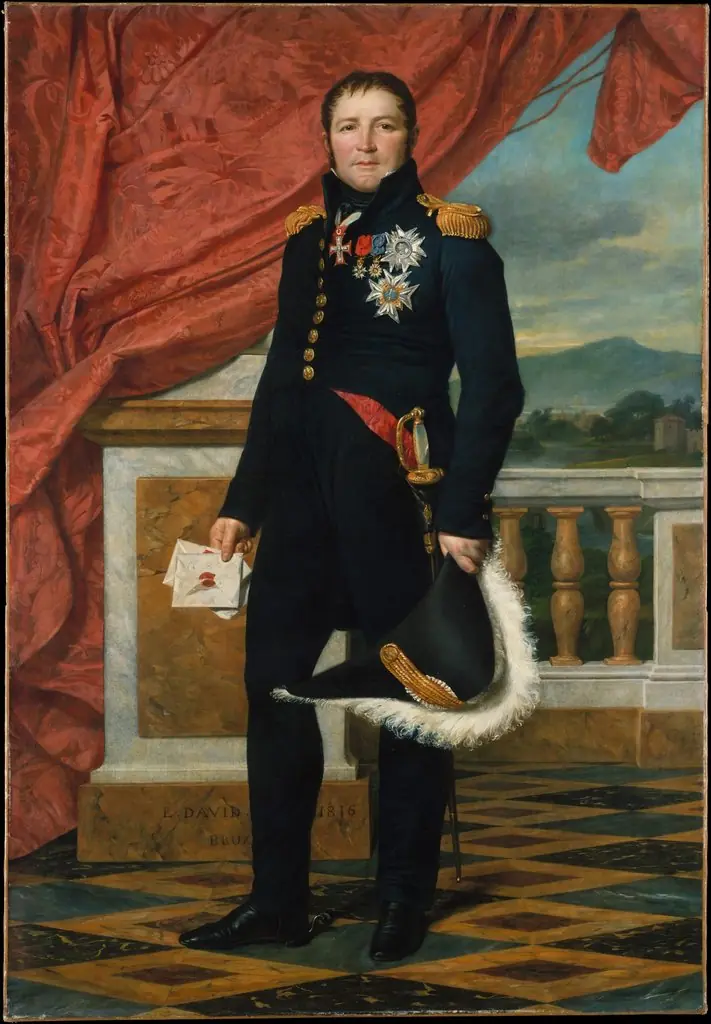 General Étienne-Maurice Gérard (1773–1852), Marshal of France
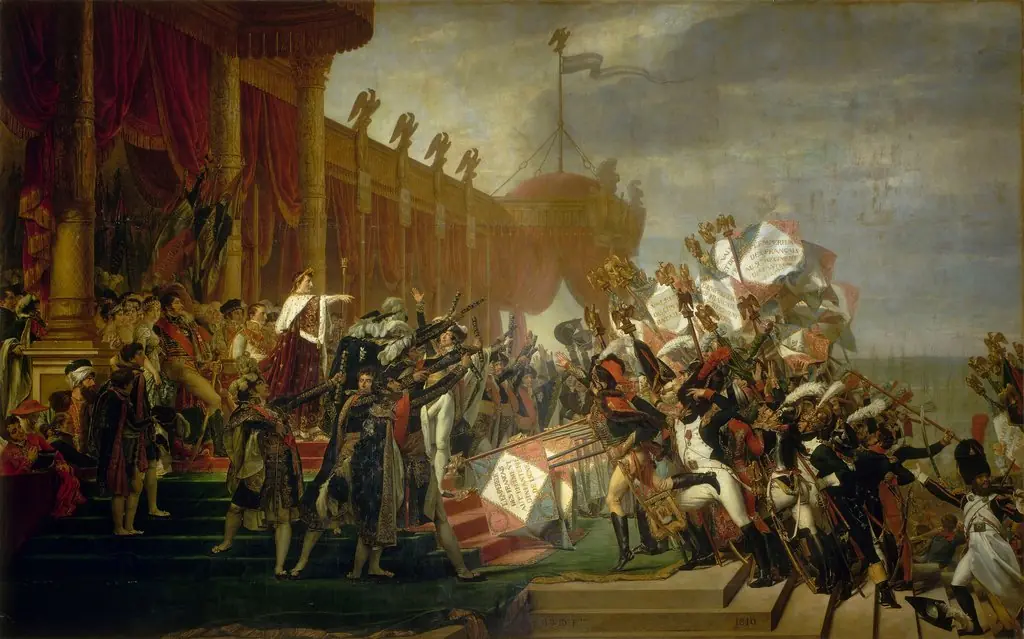 The Distribution of the Eagle Standards
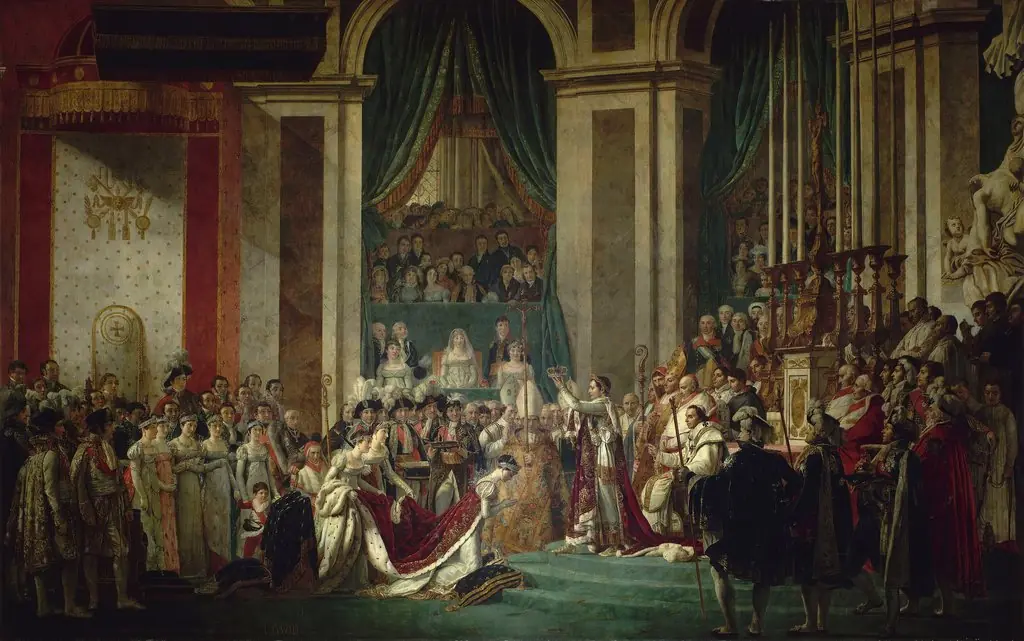 Coronation of Emperor Napoleon I and Coronation of the Empress Josephine