Artwork
Faustine
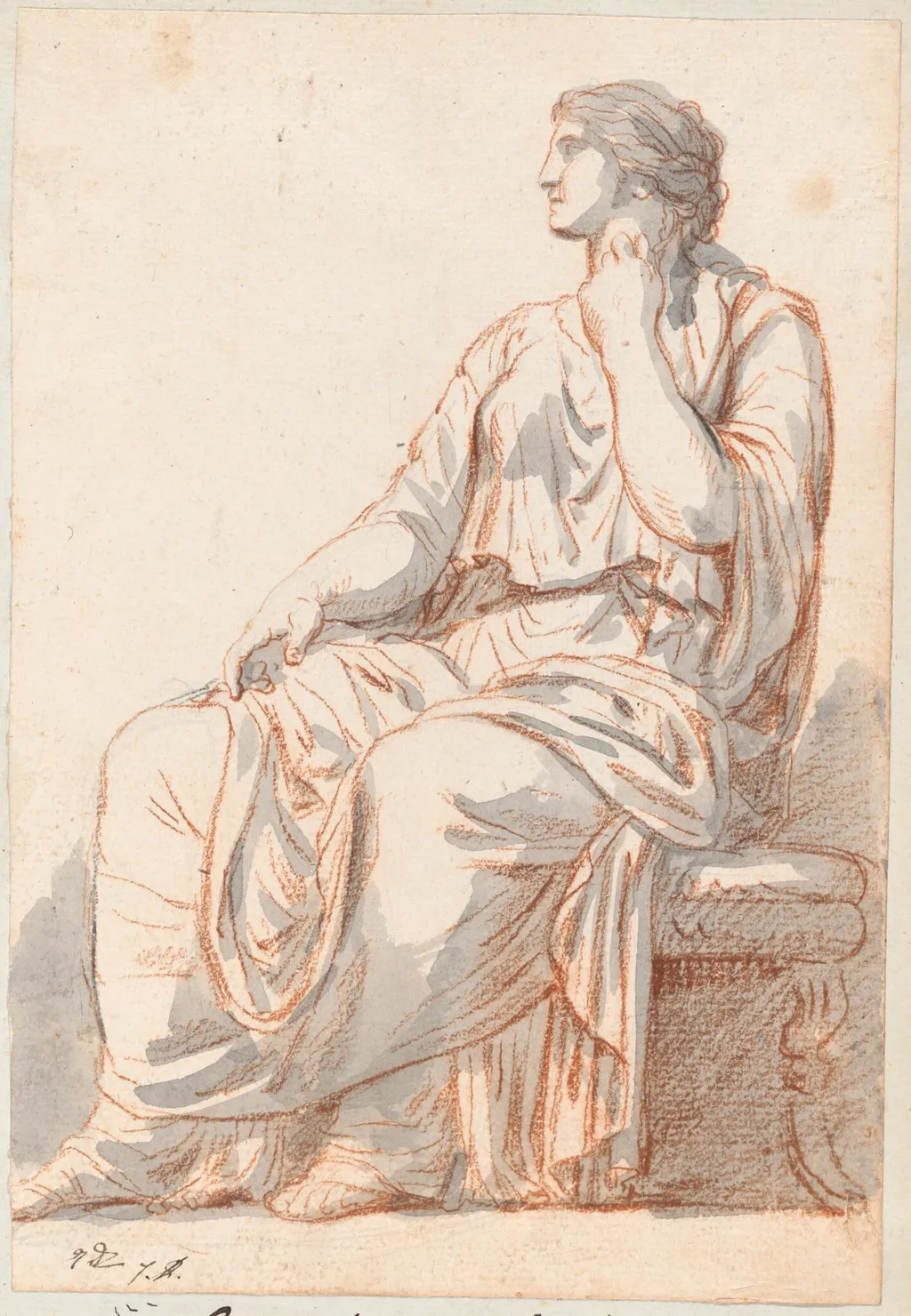
Faustine is a graphite drawing by the Neoclassicist artist Jacques-Louis David. It dates from 1778 and is held in the collection of the National Gallery of Art.
About this work
Overview
Faustine is a drawing by Jacques-Louis David, executed in 1778. The work depicts a seated female figure in a relaxed pose, rendered in red chalk, gray wash, and touches of black chalk on beige laid paper.
Subject & Meaning
The subject, Faustine, is portrayed in a contemplative state, sitting sideways with her chin resting on her hand. Her attire consists of a loose, flowing robe and a headscarf tied under her chin, conveying a sense of informal, everyday life.
Technique & Style
David employed soft, sketchy lines with selective darker shading to indicate fabric folds. The visible beige paper beneath the red chalk and gray wash gives the drawing an unfinished, spontaneous appearance, characteristic of a quick study.
History & Provenance
Created in 1778, Faustine serves as an example of David's preliminary sketchwork. While specific provenance details are not provided, such sketches were integral to his creative process for larger, finished paintings.
Context
Faustine reflects David's practice of capturing everyday poses and gestures, which would later inform his more composed, neoclassical works. This sketch represents a moment of informal study within his broader oeuvre.
Legacy
As a representative of David's sketching technique, Faustine illustrates the artist's approach to capturing figure and form in preliminary studies, influencing the development of his subsequent, more polished paintings.
Artist & collection
Artist
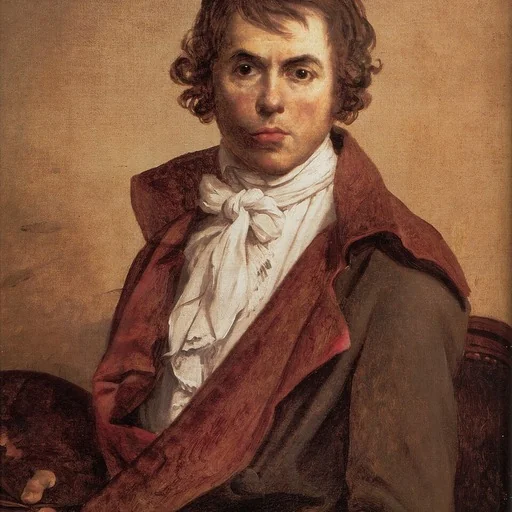
Jacques-Louis David was born in Paris on 30 August 1748 into a bourgeois family; his father died in a duel when the boy was nine, and a maternal uncle guided his education.

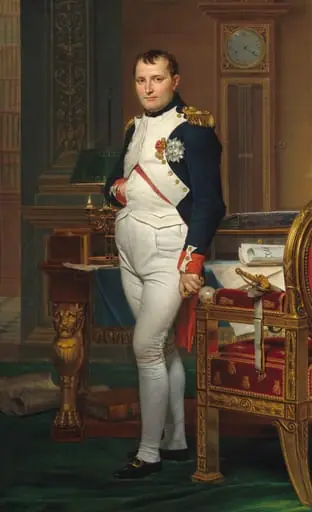 The Emperor Napoleon in His Study at the Tuileries
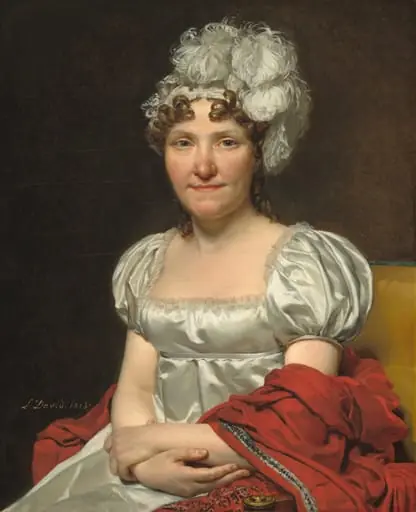 Madame David
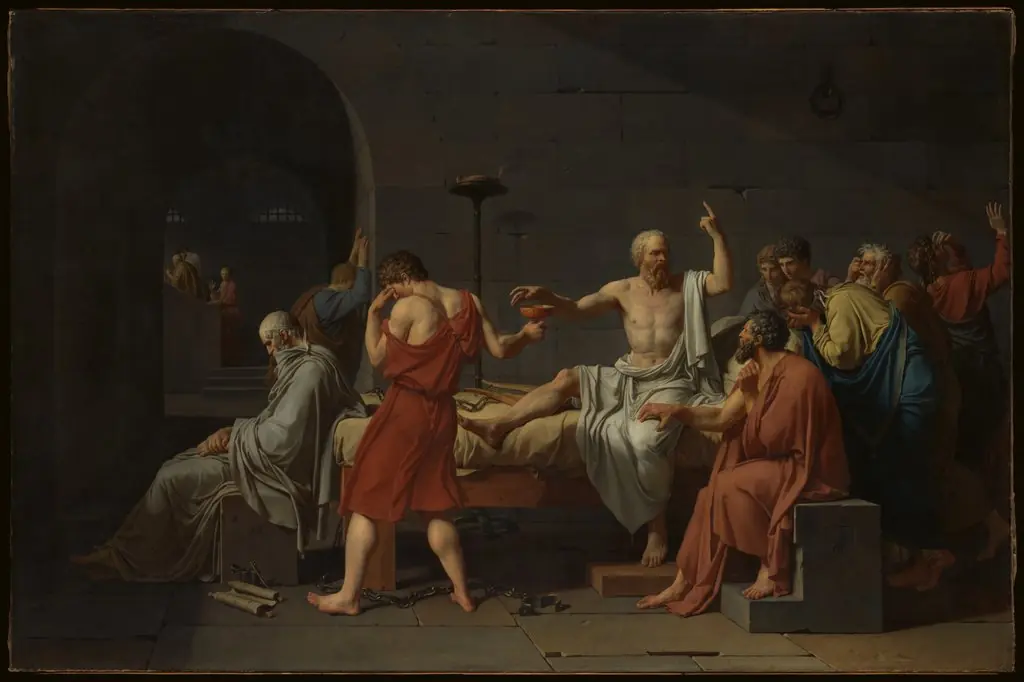 The Death of Socrates
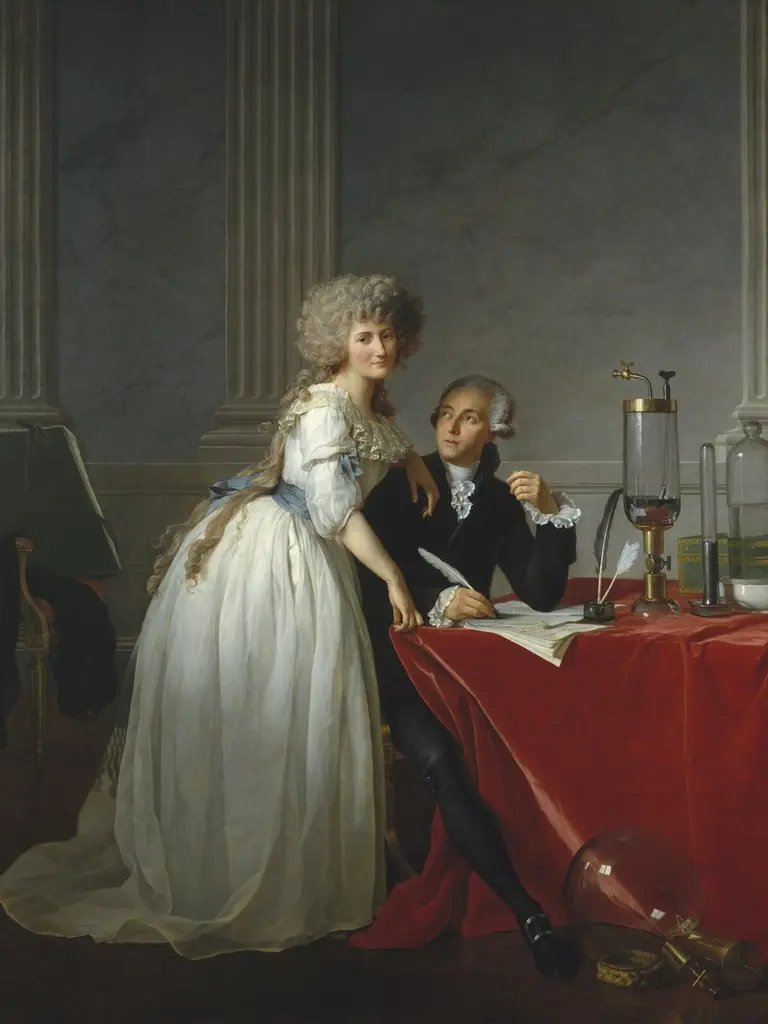 Portrait of Antoine-Laurent Lavoisier and his wife
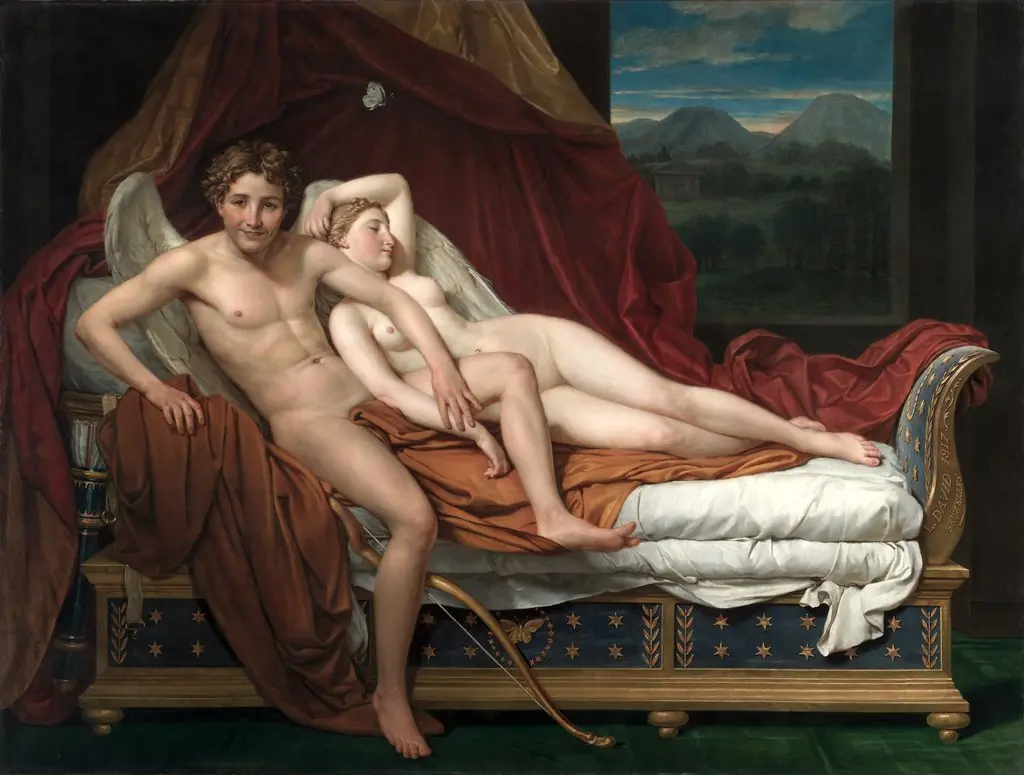 Cupid and Psyche
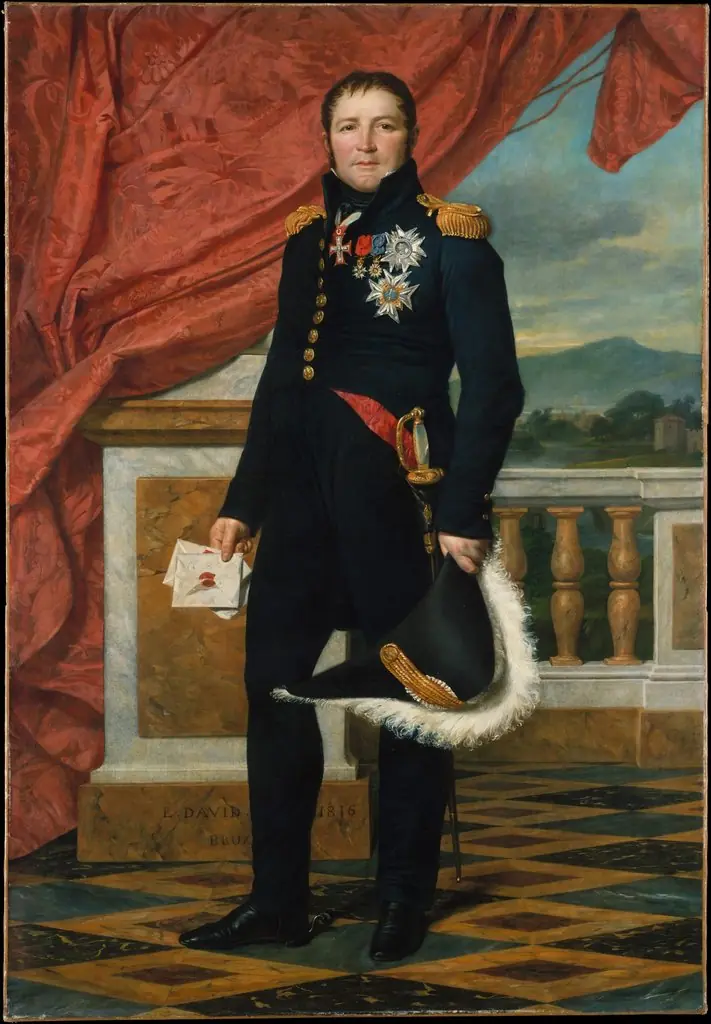 General Étienne-Maurice Gérard (1773–1852), Marshal of France
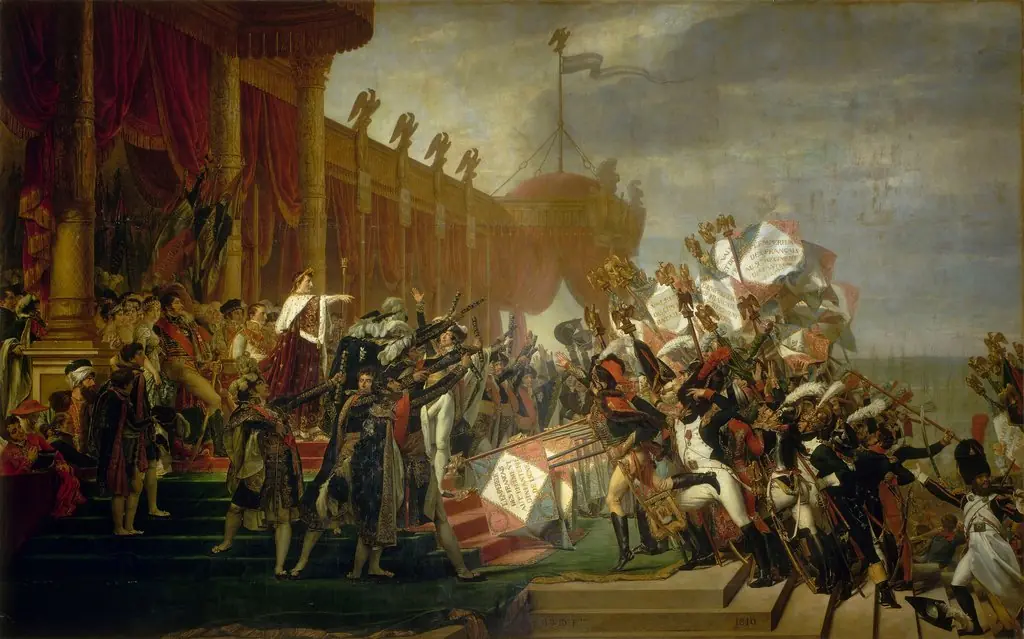 The Distribution of the Eagle Standards
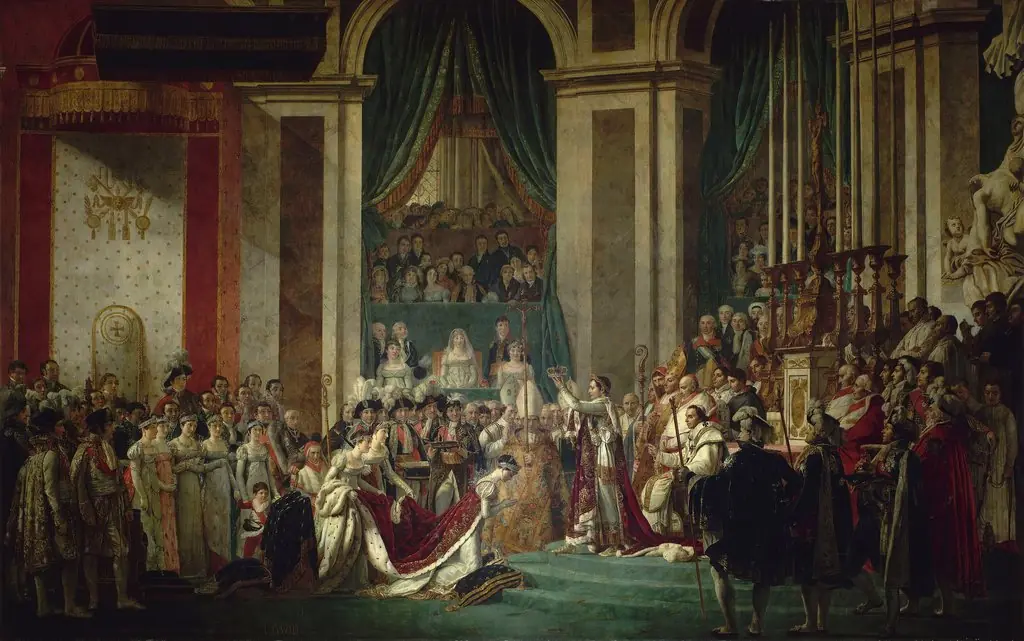 Coronation of Emperor Napoleon I and Coronation of the Empress Josephine
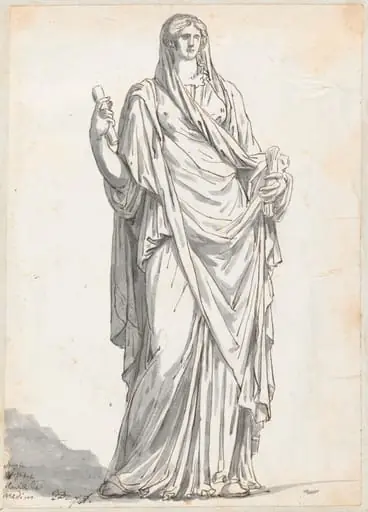 Orante from the Villa Medici
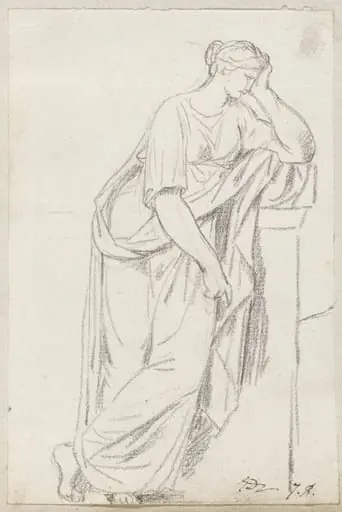 A Muse from the Sarcophagus of the Muses
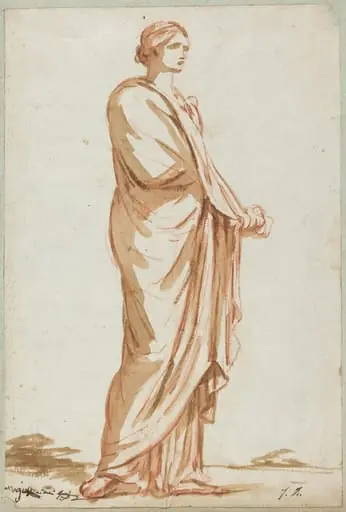 Roman Statue of a Standing Woman
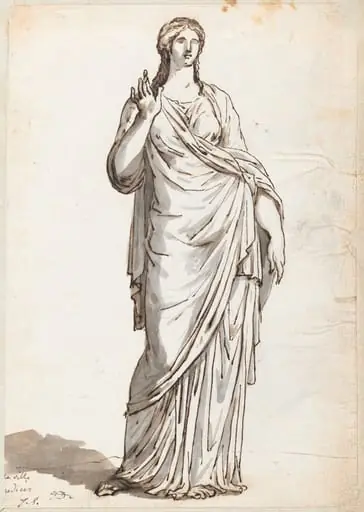 Woman with a Raised Hand, from the Villa Medici
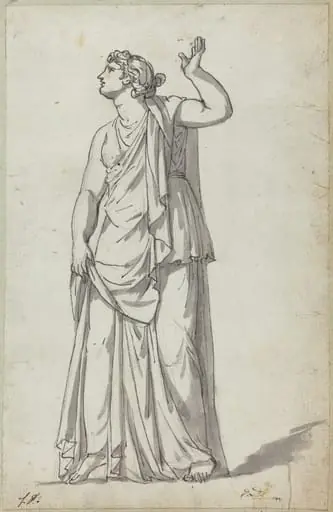 Roman Statue of a Muse (Anchyrrhoe)
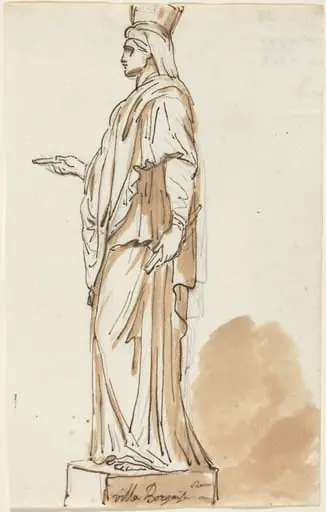 The Borghese Cybele
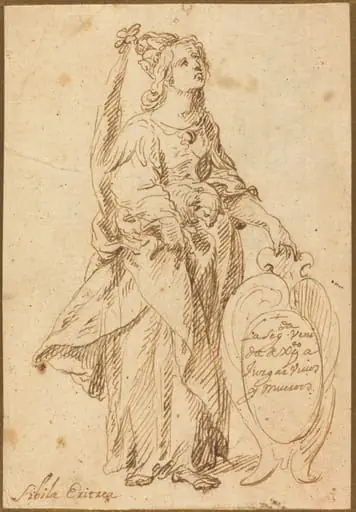 Eritrean Sibyl
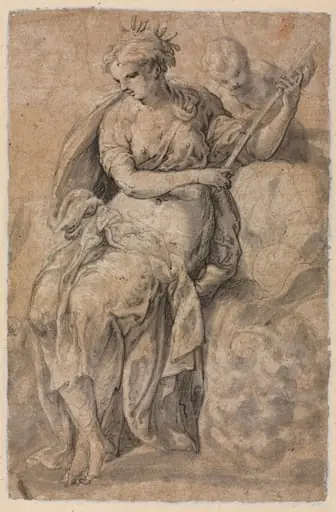 Allegorical Figure (verso)
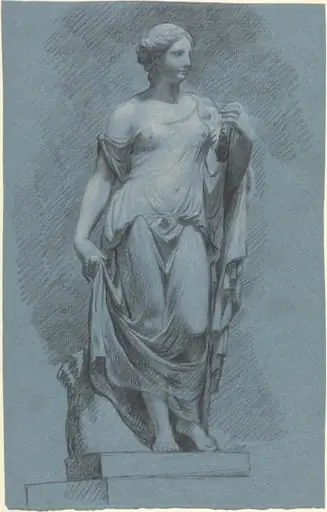 The "Farnese Flora" at Stourhead
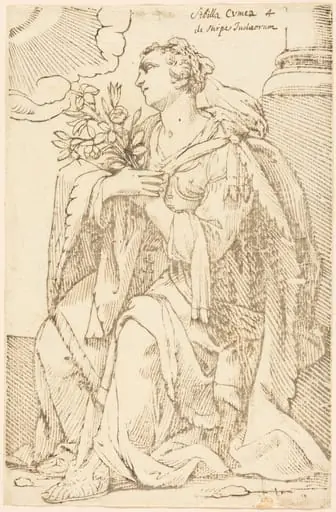 Sibylla Cimmeria
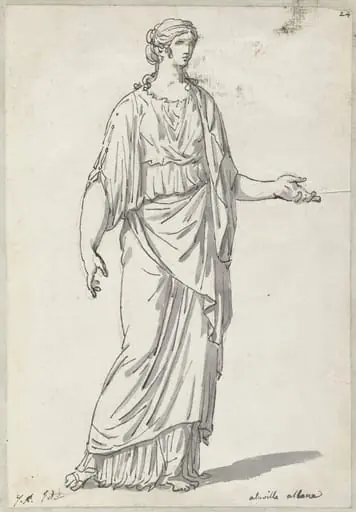 Classical Sculpture of a Woman with an Outstretched Arm
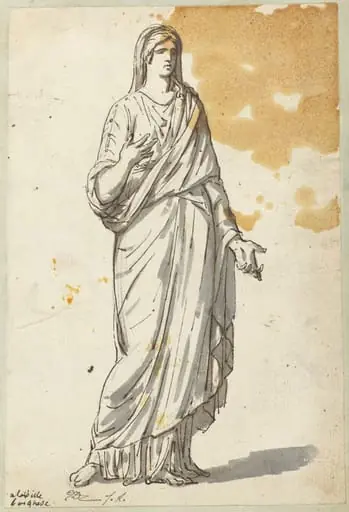 Woman from the Villa Borghese