Artwork
Roman Statue of a Muse (Anchyrrhoe)
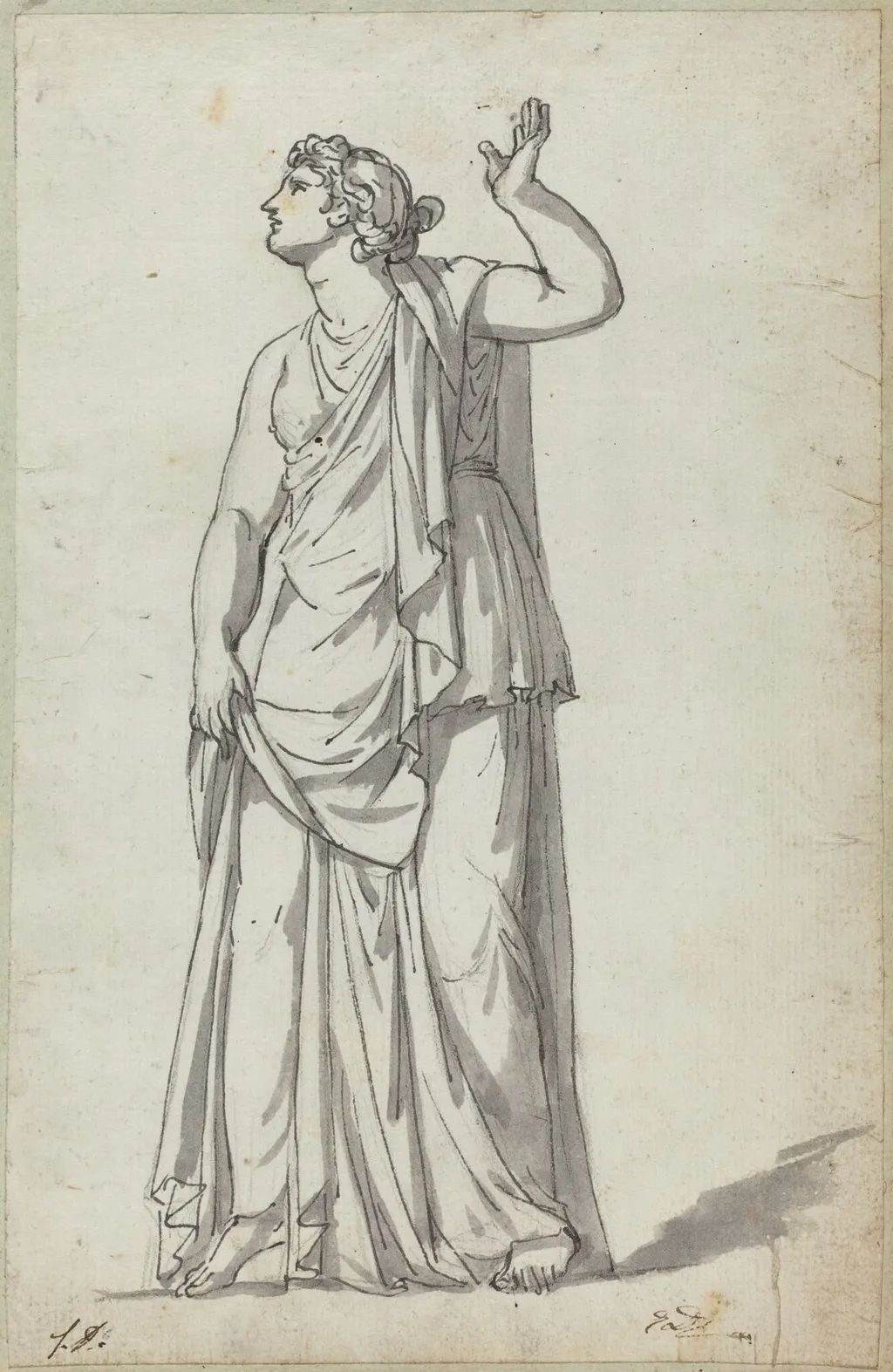
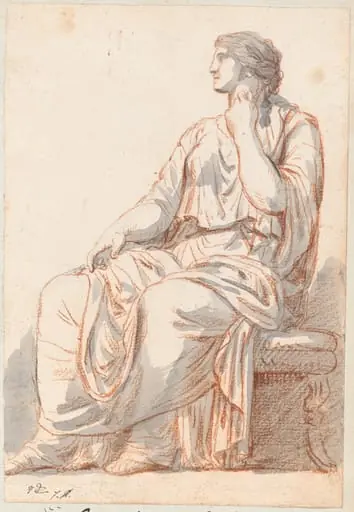
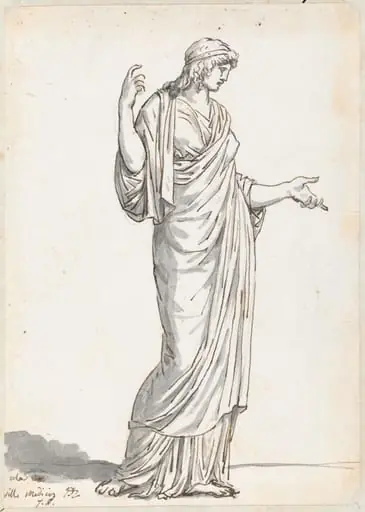
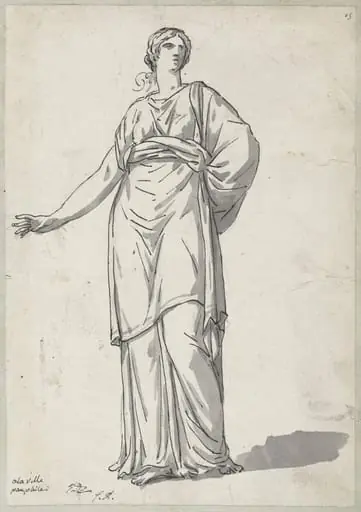
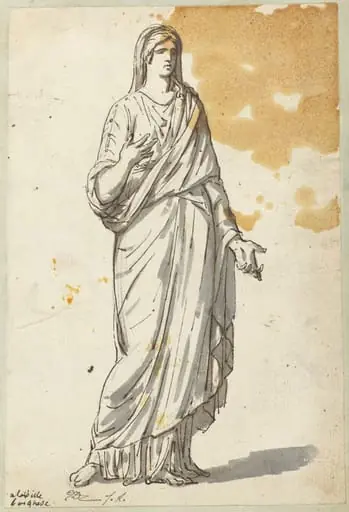
Roman Statue of a Muse (Anchyrrhoe) is an ink drawing by the Baroque artist Jacques-Louis David. It dates from 1786 and is held in the collection of the National Gallery of Art.
About this work
Overview
Roman Statue of a Muse (Anchyrrhoe) is a drawing by Jacques-Louis David, executed in 1786 on laid paper using pen and black ink with gray wash. The work depicts a female figure, identified as a muse, standing in a dynamic pose with one arm elevated. Characteristic of David's attention to detail, the figure's long dress features intricate, numerous folds.
Subject & Meaning
The subject of the drawing is a muse, specifically referenced as Anchyrrhoe, a figure from ancient mythology associated with inspiration. The pose, with one arm raised, suggests a gesture of inspiration or invocation, aligning with the mythological role of muses as sources of artistic inspiration.
Technique & Style
Technically, the drawing showcases David's mastery of pen and black ink with gray wash, achieving depth and texture, particularly in the rendering of the dress's folds. However, the attribution to Baroque style in the source description is inaccurate; the work's neoclassical tendencies, emphasizing clarity and classical influence, are more characteristic of David's oeuvre.
History & Provenance
Created in 1786, the drawing bears the artist's signature. Detailed provenance information (ownership history) is not provided in the source materials.
Context
This drawing reflects the late 18th-century artistic shift towards neoclassicism, with David at the forefront. The focus on classical mythology and the precise, detailed technique situates the work within this broader artistic movement.
Legacy
As part of Jacques-Louis David's body of work, 'Roman Statue of a Muse (Anchyrrhoe)' contributes to the artist's legacy in bridging late Baroque and early neoclassical styles in European art. Its specific influence or reception history is not detailed in the provided sources.
Artist & collection
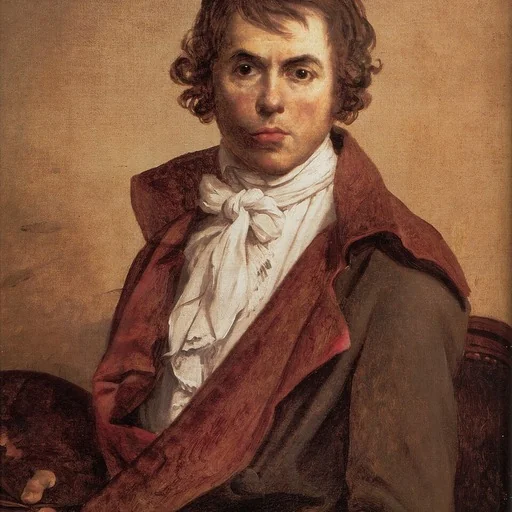
Artist
Jacques-Louis David was born in Paris on 30 August 1748 into a bourgeois family; his father died in a duel when the boy was nine, and a maternal uncle guided his education.

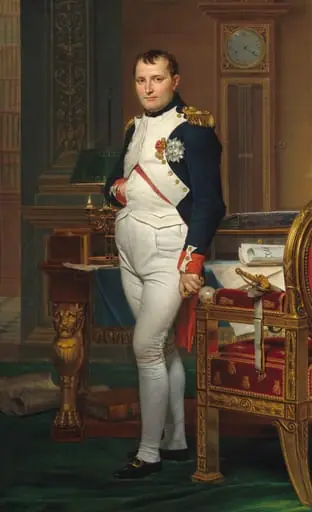 The Emperor Napoleon in His Study at the Tuileries
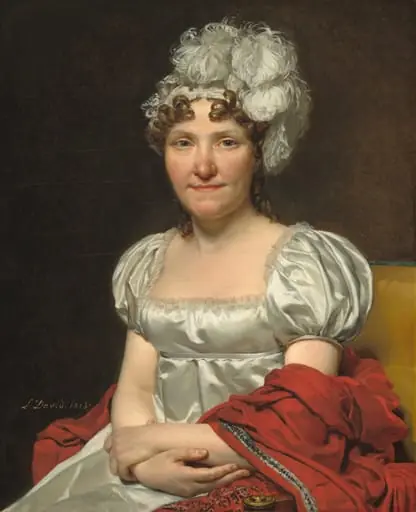 Madame David
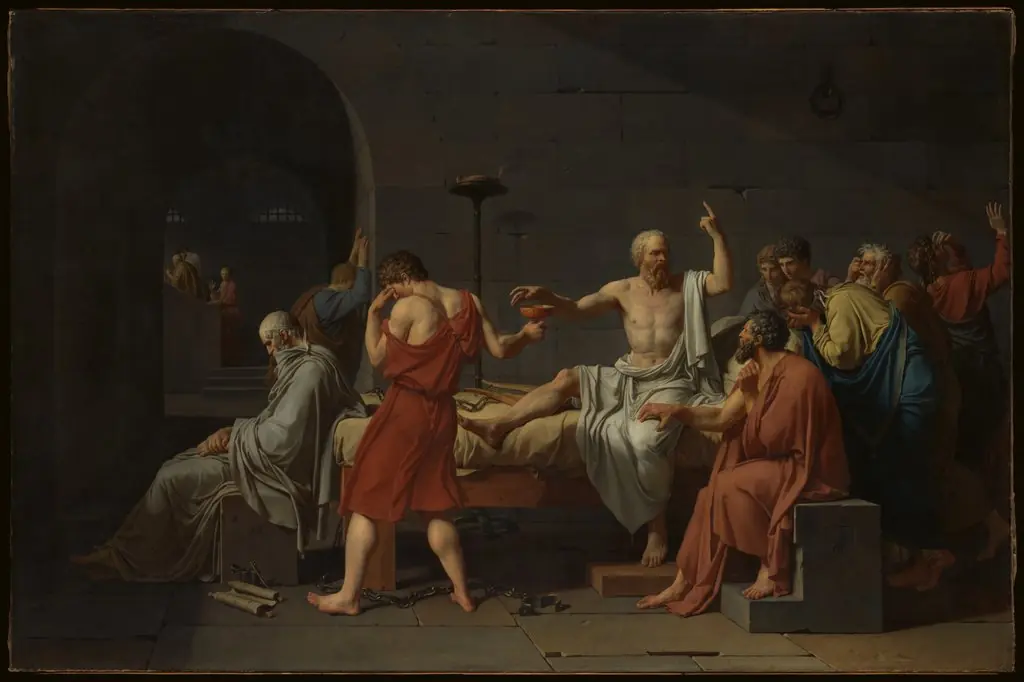 The Death of Socrates
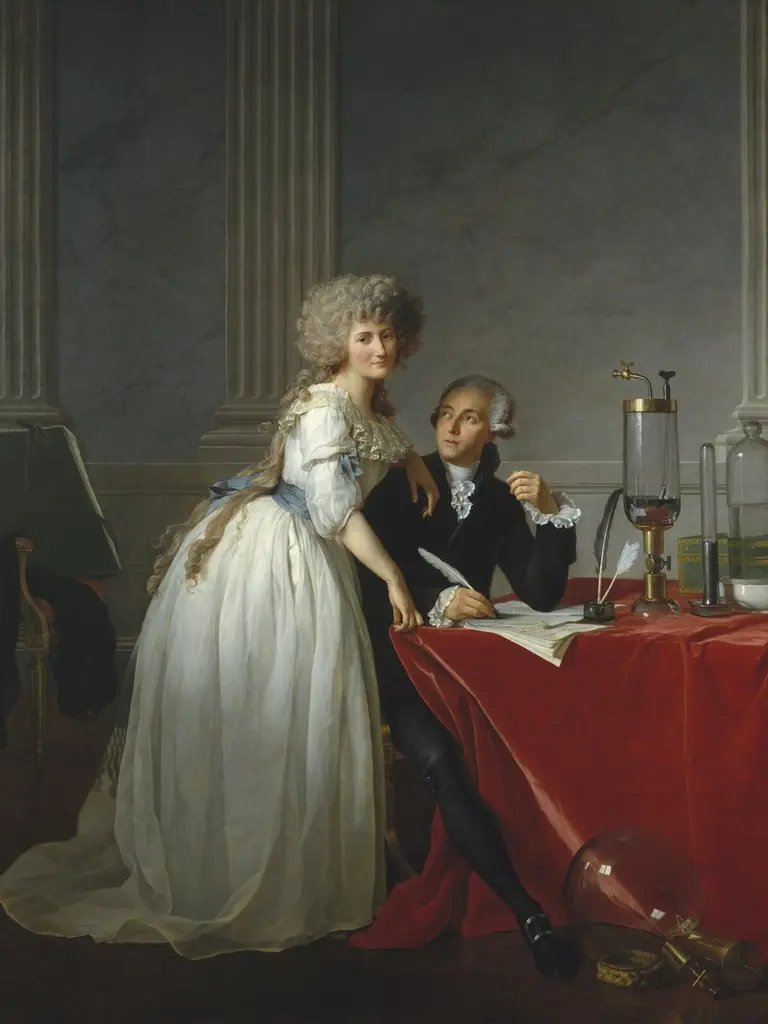 Portrait of Antoine-Laurent Lavoisier and his wife
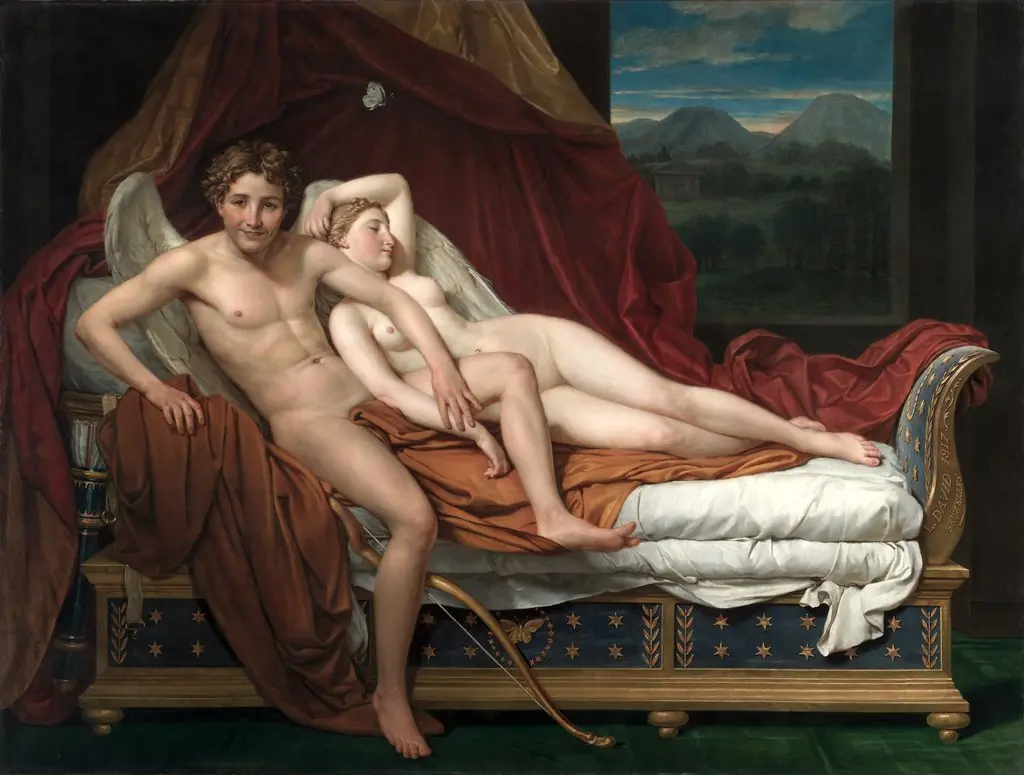 Cupid and Psyche
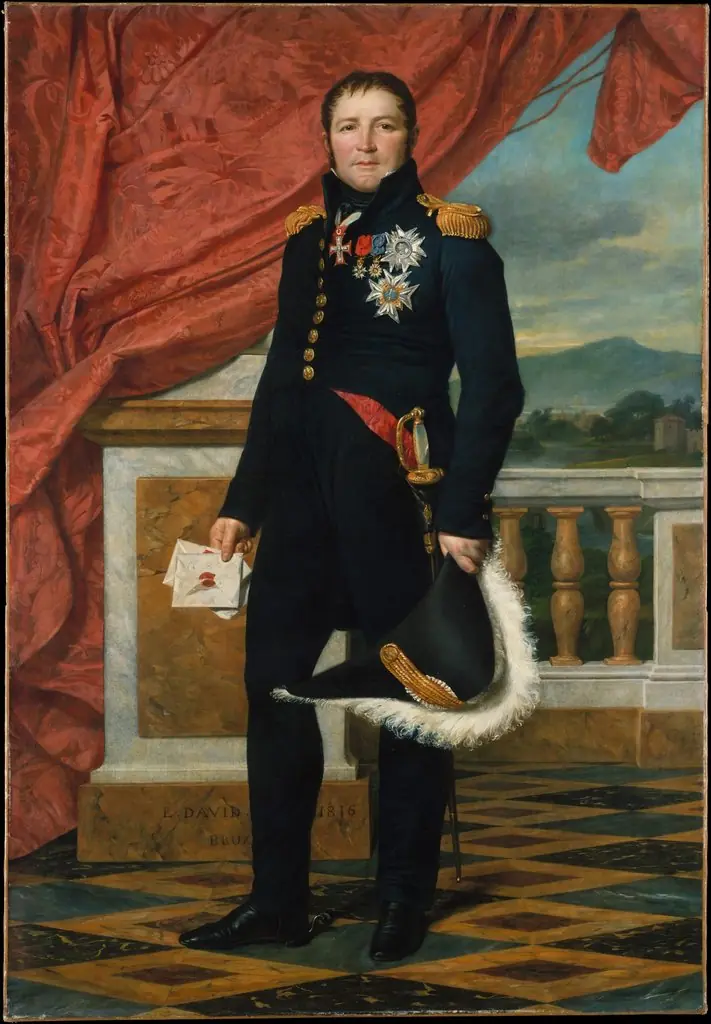 General Étienne-Maurice Gérard (1773–1852), Marshal of France
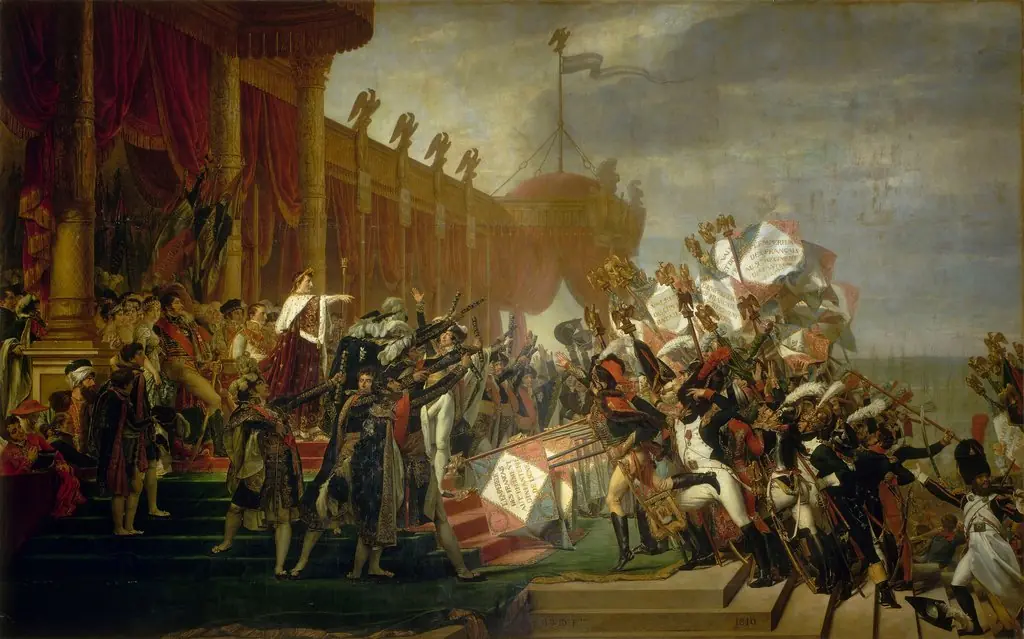 The Distribution of the Eagle Standards
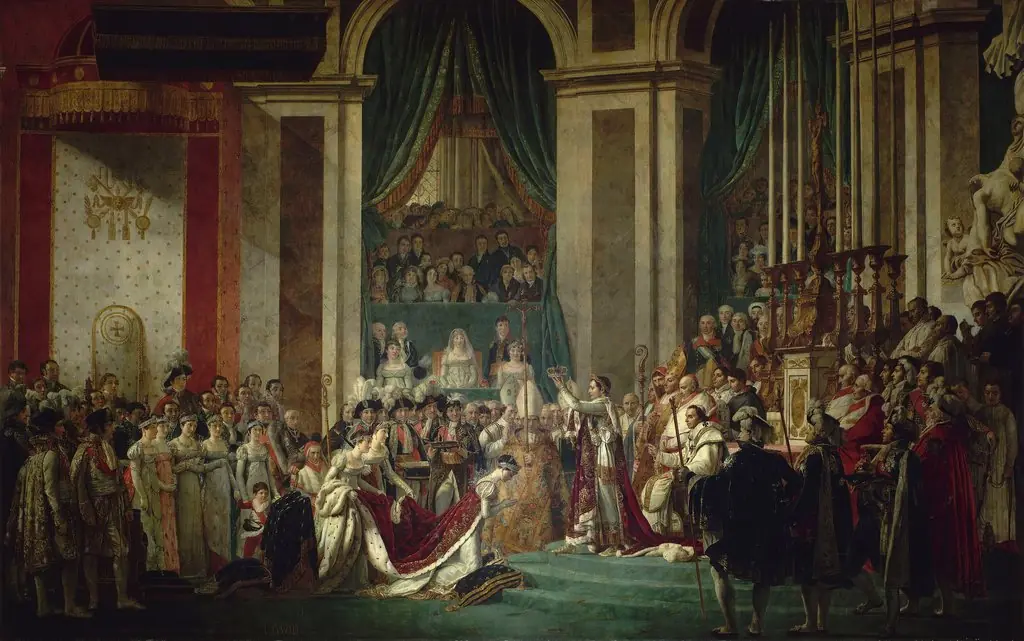 Coronation of Emperor Napoleon I and Coronation of the Empress Josephine