Artwork
Women at an Altar
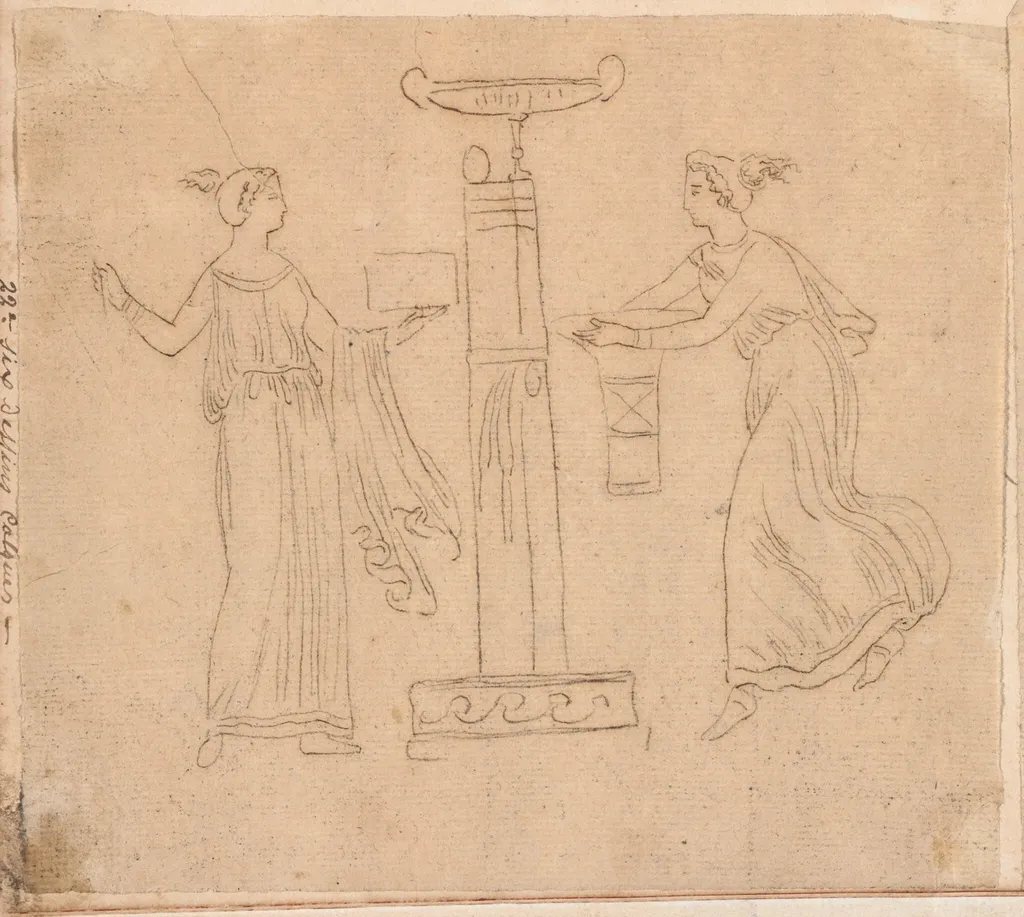
Women at an Altar is an oil drawing by the Neoclassicist artist Jacques-Louis David. It dates from 1778 and is held in the collection of the National Gallery of Art. This drawing, executed in transfer tracing on oiled laid paper, depicts two women positioned beside a tall, ornate structure.
About this work
Overview
This drawing, executed in transfer tracing on oiled laid paper, depicts two women positioned beside a tall, ornate structure. Created in 1778, it is a preparatory study by Jacques-Louis David, likely related to a larger religious composition. The medium suggests a focus on form and composition rather than color or finish, typical of early academic studies.
Subject & Meaning
The two figures, dressed in long, modest garments with hair neatly gathered, appear engaged with a ceremonial object resembling an altar.
The two figures, dressed in long, modest garments with hair neatly gathered, appear engaged with a ceremonial object resembling an altar. Their posture and proximity imply ritual activity, possibly devotion or offering. The absence of overt narrative details leaves the specific religious context ambiguous, but the setting evokes quiet solemnity characteristic of David’s early interest in classical piety.
Technique & Style
The work employs transfer tracing, a method used to transfer sketches onto a prepared surface, indicating a deliberate, repeatable approach to composition. The lines are precise and restrained, emphasizing silhouette and spatial arrangement over texture or shading. Oiled paper enhances the clarity of the traced forms, reflecting David’s academic training and emphasis on draftsmanship.
History & Provenance
Created during David’s formative years after winning the Prix de Rome, this drawing predates his major historical paintings. It likely served as a study for an intended religious work, though no finished oil painting of the same subject is known. The piece remains in private or institutional collections, valued for its insight into David’s preparatory process.
Context
In late 1770s France, academic artists were expected to master religious and historical subjects as part of their training. David, then under the influence of Neoclassical ideals, turned to antiquity and Christian themes to refine his compositional discipline. This drawing reflects the period’s emphasis on moral clarity and formal order in sacred imagery.
Legacy
Though not a finished work, this study illustrates David’s methodical approach to figure placement and spatial harmony—principles that later defined his monumental paintings. It stands as a quiet example of how academic artists used drawing to explore religious themes before committing to large-scale commissions.
Artist & collection
Artist
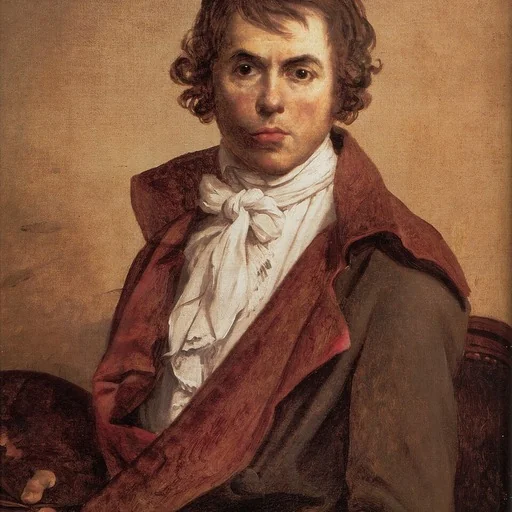
Jacques-Louis David was born in Paris on 30 August 1748 into a bourgeois family; his father died in a duel when the boy was nine, and a maternal uncle guided his education.

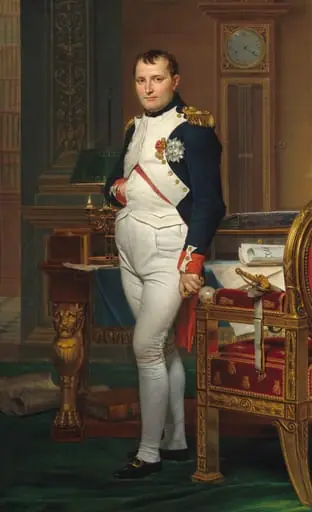 The Emperor Napoleon in His Study at the Tuileries
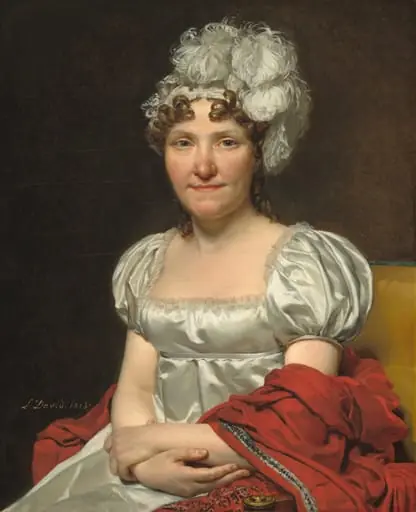 Madame David
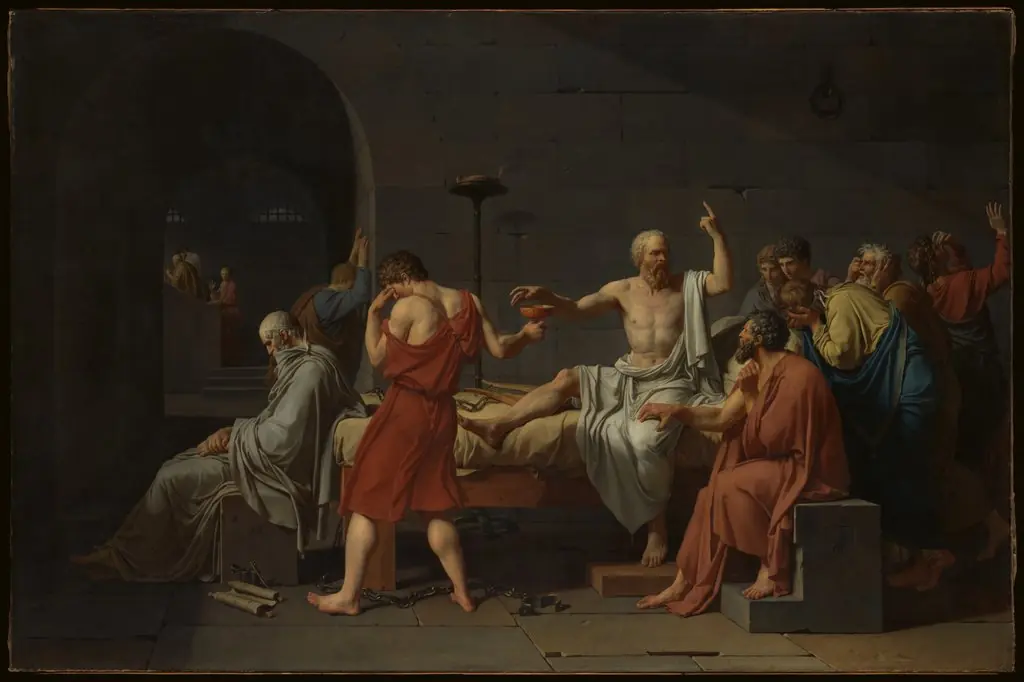 The Death of Socrates
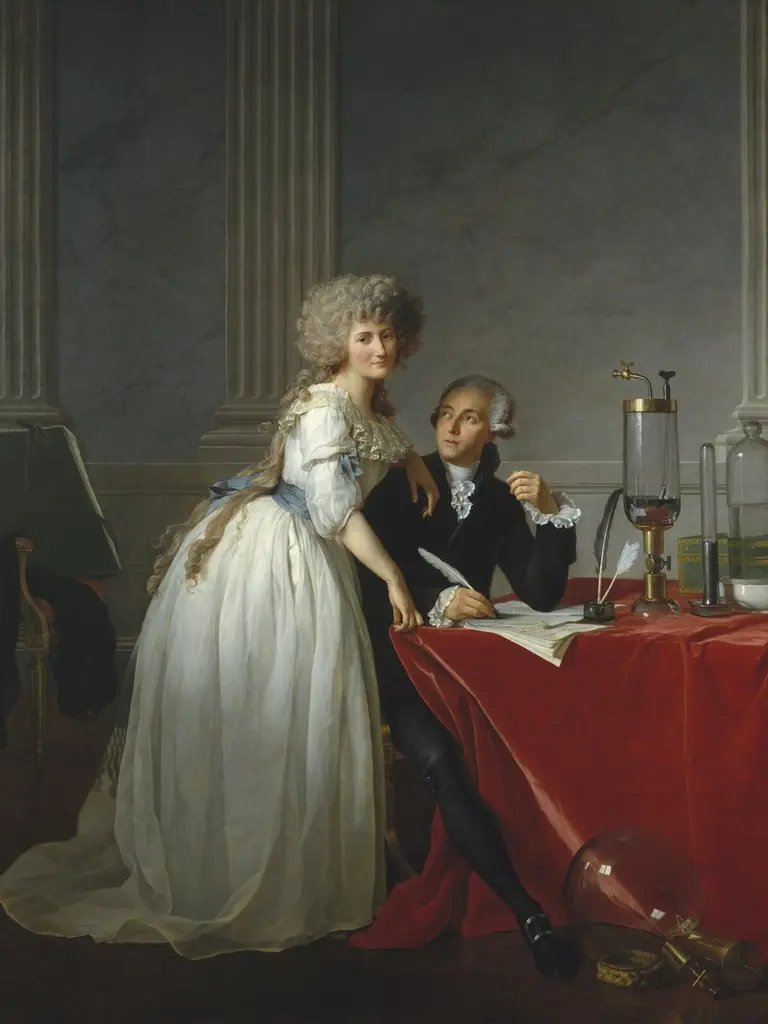 Portrait of Antoine-Laurent Lavoisier and his wife
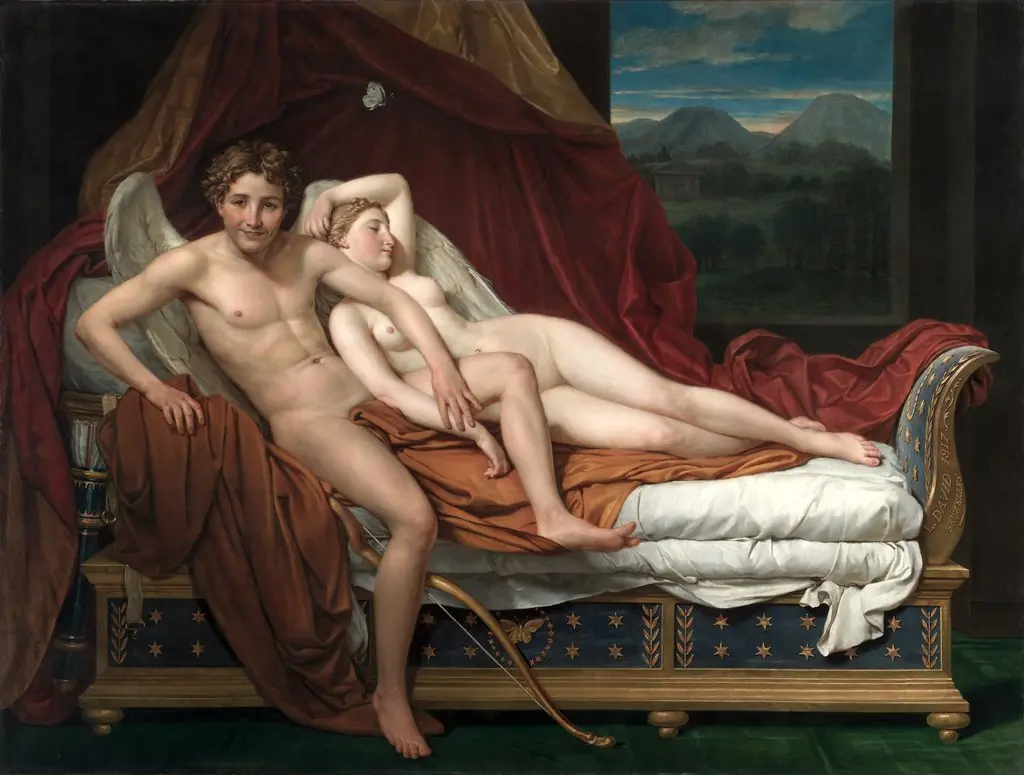 Cupid and Psyche
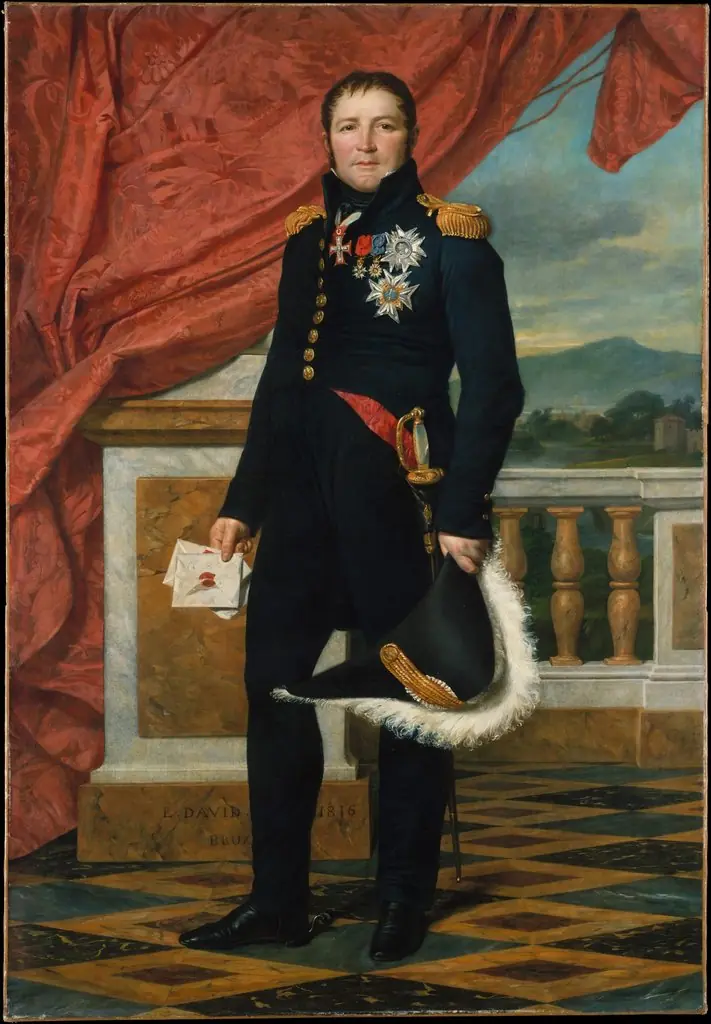 General Étienne-Maurice Gérard (1773–1852), Marshal of France
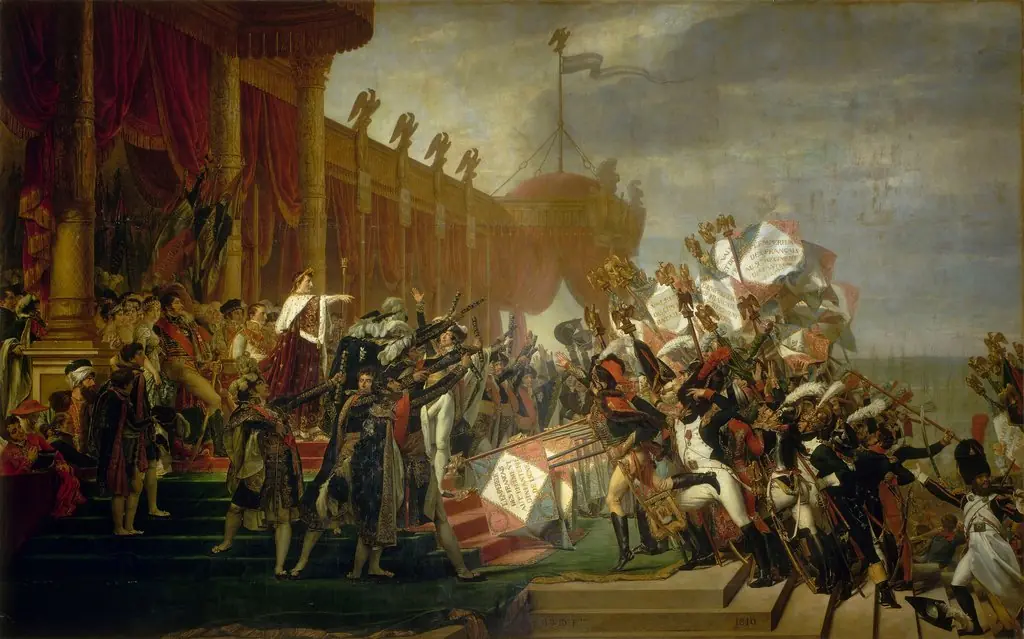 The Distribution of the Eagle Standards
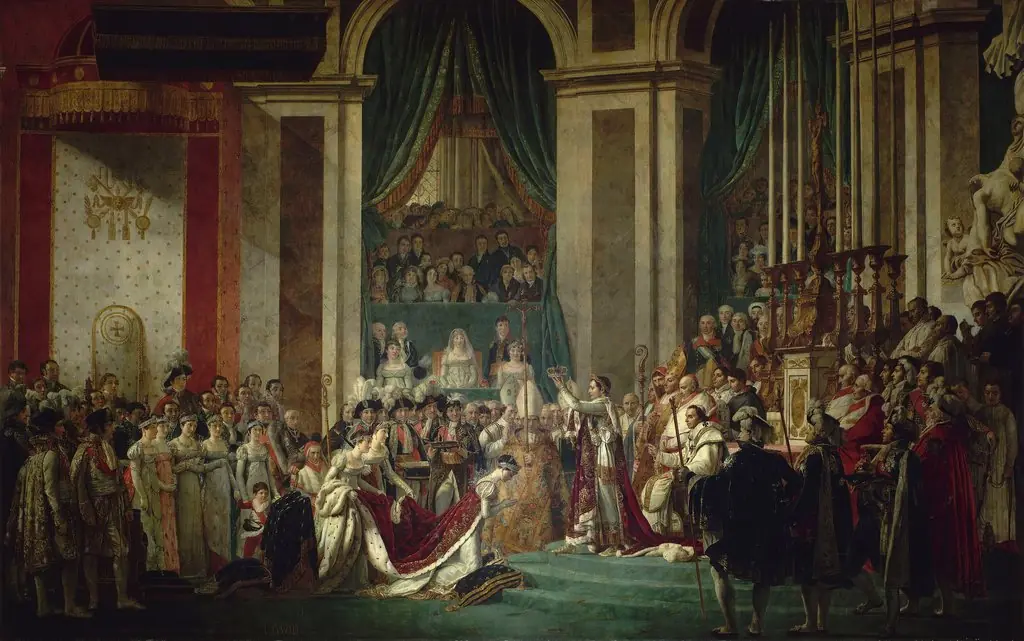 Coronation of Emperor Napoleon I and Coronation of the Empress Josephine
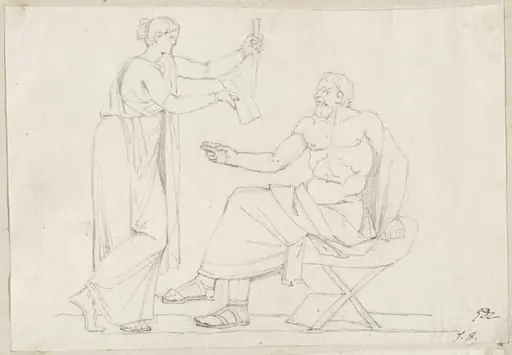 Socrates and Diotime
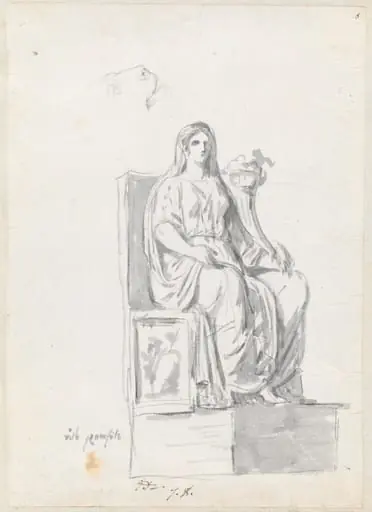 Abundance and the Face of a Lion, from the Villa Pamphili
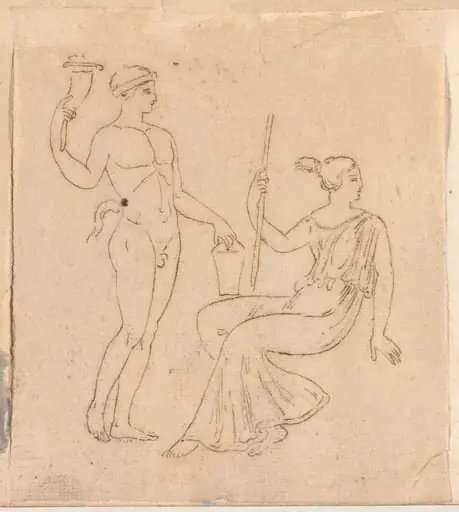 Man with a Cornucopia and Seated Woman
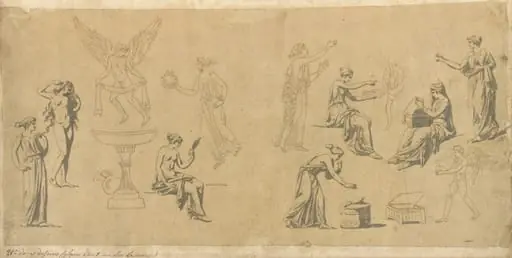 Studies of Classical Women, with Eros
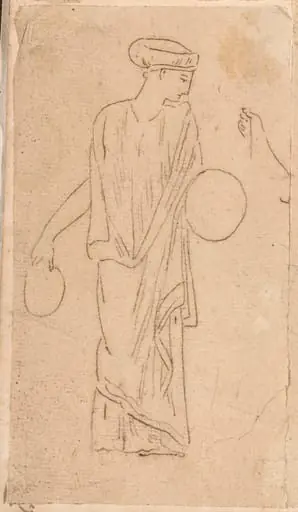 Woman with Tambourines
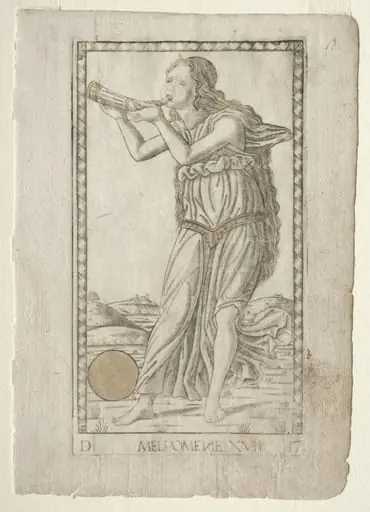 Melpomene (tragedy) (from the Tarocchi series D: Apollo and the Muses, #17)
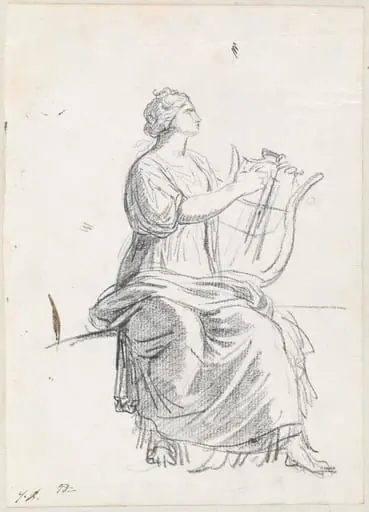 Woman with a Lyre
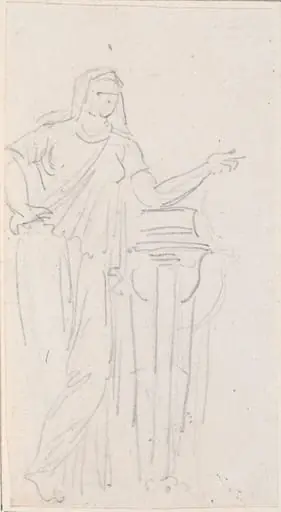 Statue of a Vestal Virgin
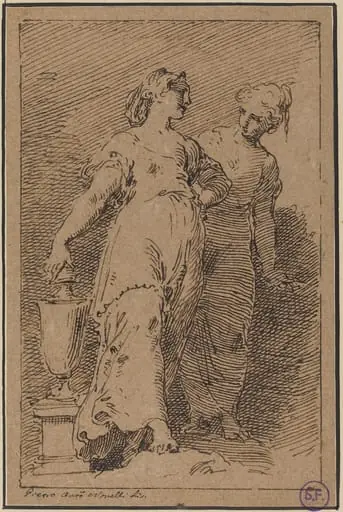 Two Young Women
![Statue of Abundance [recto], by Hubert Robert](https://artifactworldgallery.com/img/hubert-robert--statue-of-abundance-recto--af10c767ab97b269-w320.webp) Statue of Abundance [recto]
Statue of Abundance [recto]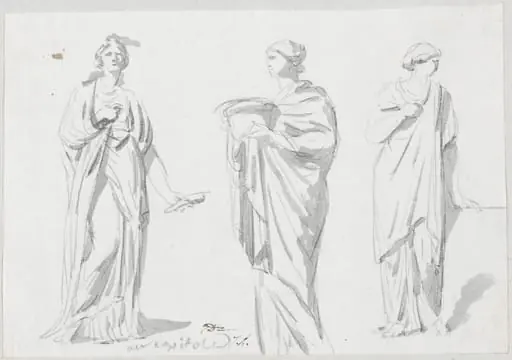 A Muse and Two Female Figures
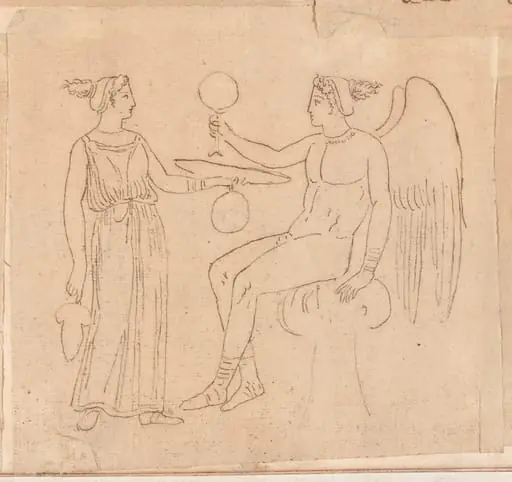 Two Figures with a Mirror