Artwork
Buckingham House, St James's Park
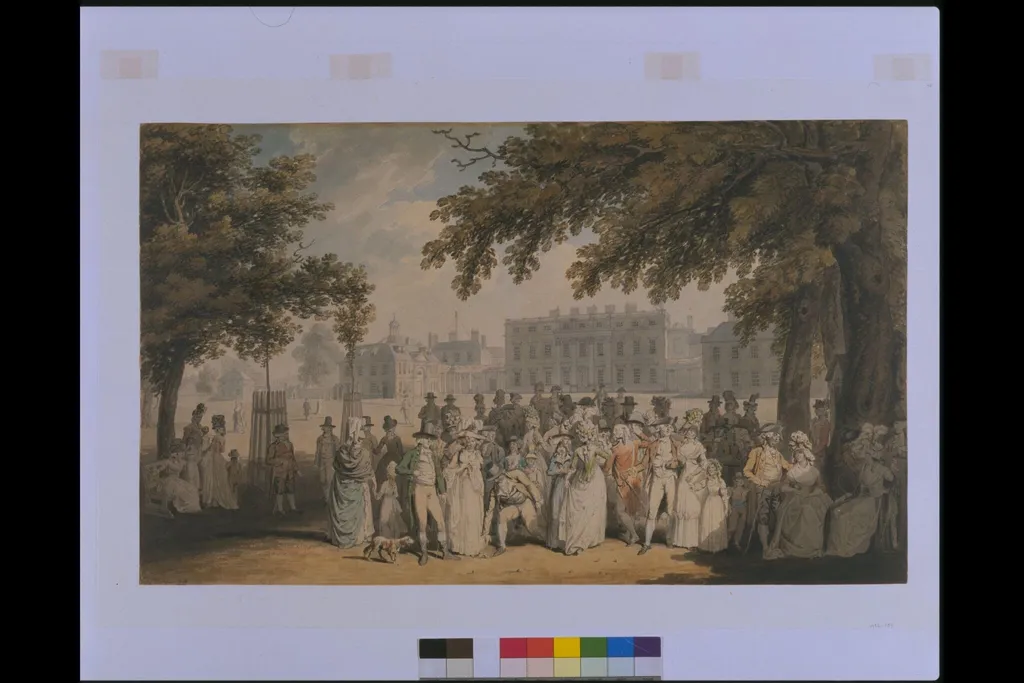
Buckingham House, St James's Park is a watercolor work on paper by the British Romanticist artist Edward Dayes. It dates from 1790 and is held in the collection of the Victoria and Albert Museum.
About this work
Overview
Edward Dayes (1763–1804) created this watercolour of Buckingham House, set in St James’s Park. The composition presents a tranquil lake before a grand building, its surface mirroring the sky, while figures walk along a nearby path. The work exemplifies late‑18th‑century British watercolour practice and reflects Dayes’s reputation as a leading artist of his time.
Subject & Meaning
The scene captures Buckingham House before its 19th‑century expansion, showing the structure as a dignified yet modest edifice framed by natural surroundings. The presence of strolling figures emphasizes the everyday use of the parkland and subtly contrasts human activity with the architectural grandeur, suggesting a harmonious relationship between the built environment and public leisure.
Technique & Style
Dayes began with a precise pen‑and‑ink outline, then laid down broad grey‑blue washes to establish atmosphere. Over these underpaintings he applied richer pigments to define details and surface effects. This layered approach, typical of the period, allowed him to render the reflective water and delicate sky while maintaining a controlled, atmospheric quality.
History & Provenance
The building depicted was later altered and enlarged by architect John Nash in the 1820s for George IV, after which it became known as Buckingham Palace. Dayes’s watercolour, produced in the late 1700s, documents the house prior to those changes. The work is part of the Victoria and Albert Museum’s collection, reflecting the artist’s significance in British watercolour history.
Artist & collection


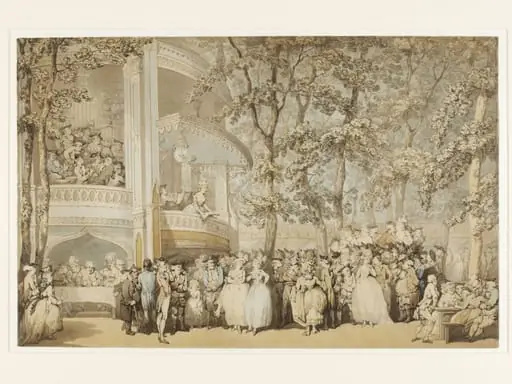 Vauxhall Gardens
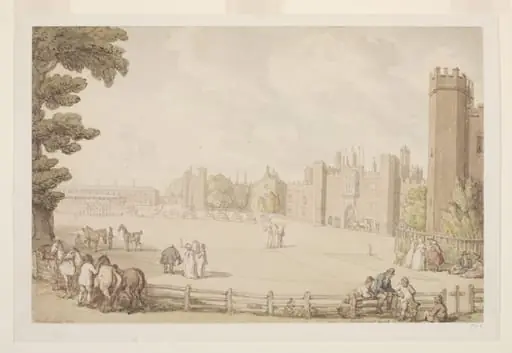 Hampton Court Palace
 Exeter seen from Alphinton Fields, 1796
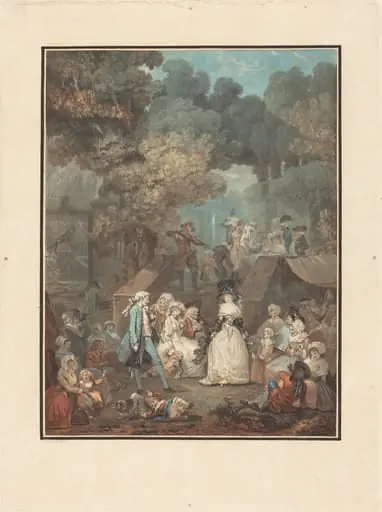 La Noce au Chateau
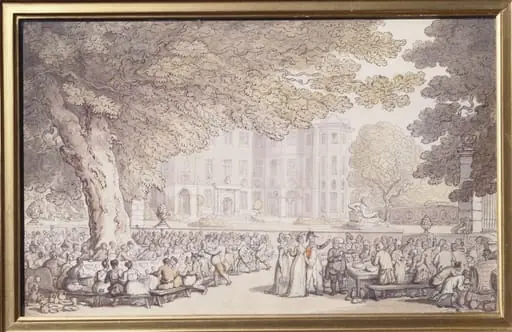 An Entertainment in the grounds of Ham House
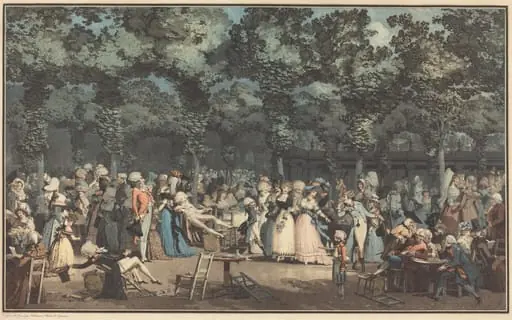 La Promenade Publique
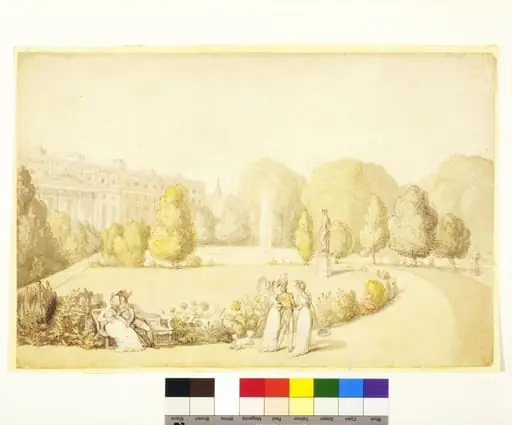 Hampton Court Palace: The Garden Front
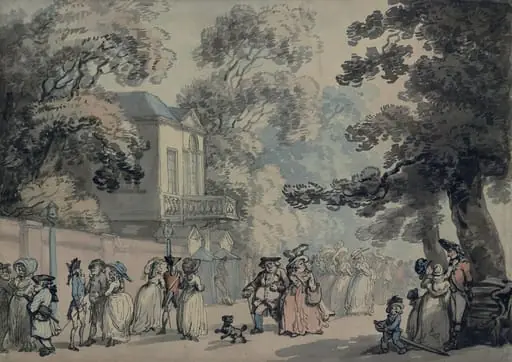 Entrance to the Mall, Spring Gardens
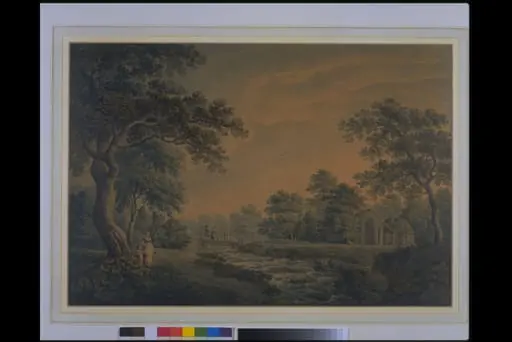 Landscape with stream and bridge
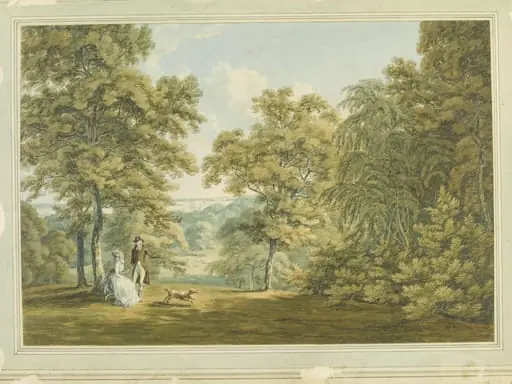 Greenwich Park
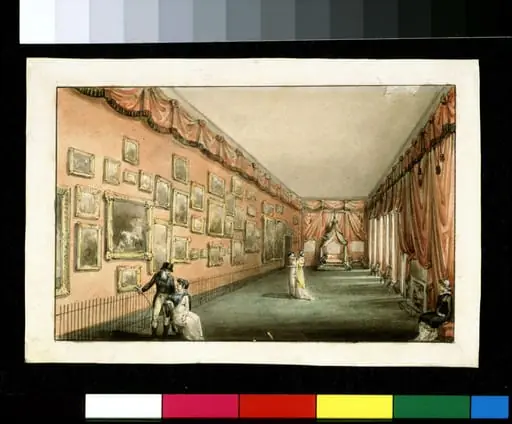 View of Mary Linwood's gallery
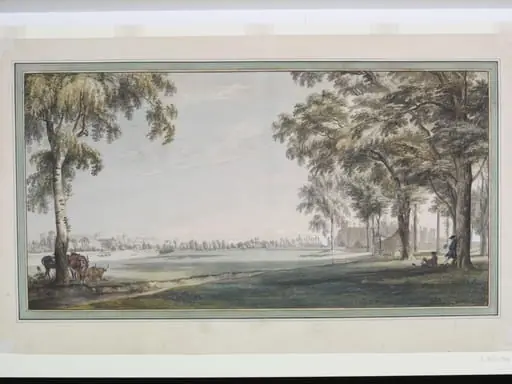 Eton College and Windsor from the Playing Fields