Artwork
Hercules Strangling the Nemean Lion
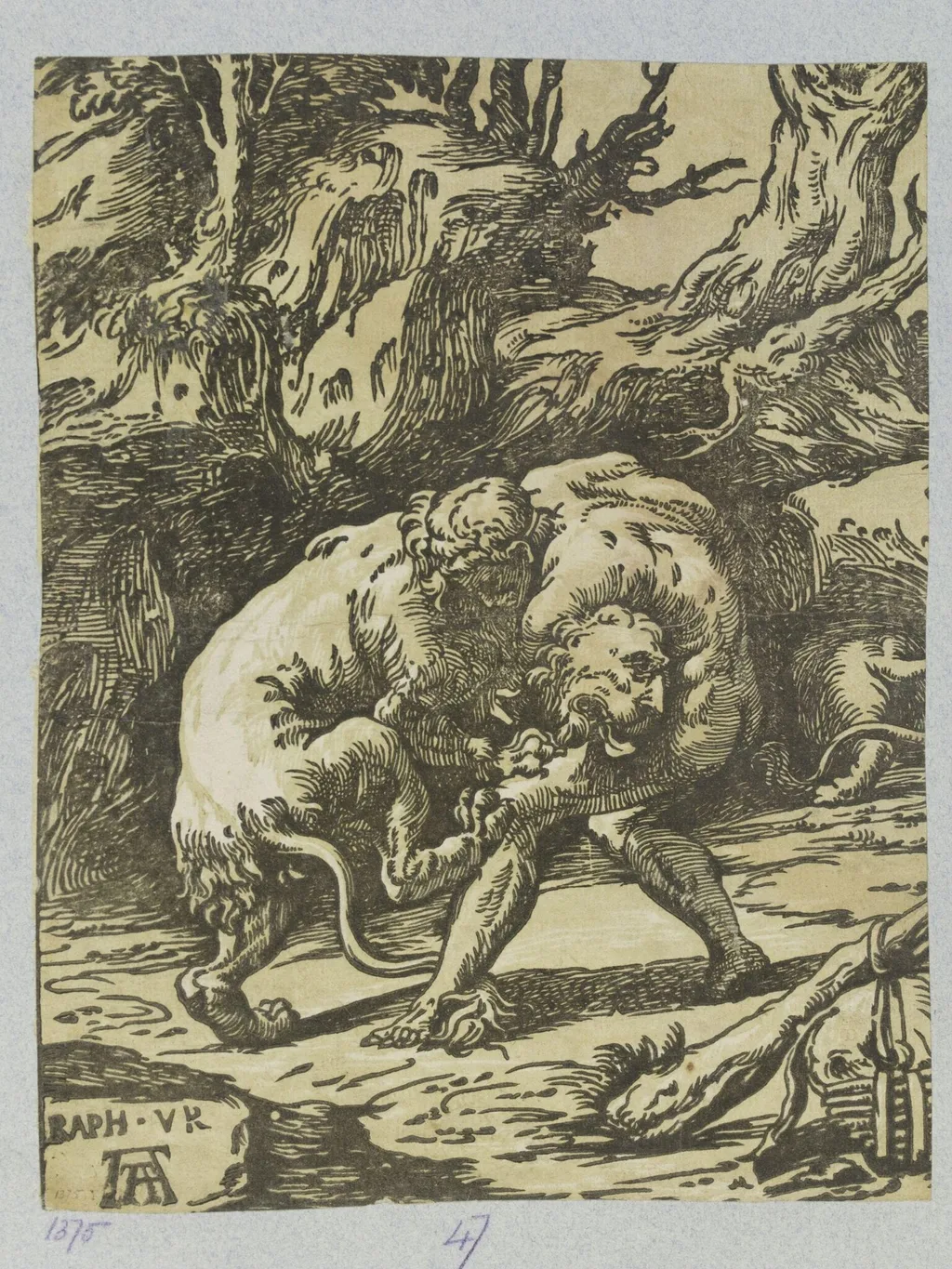
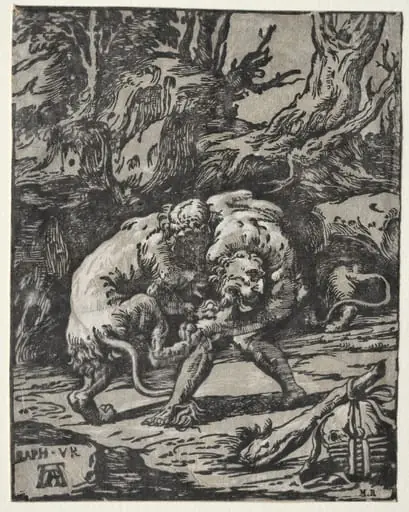
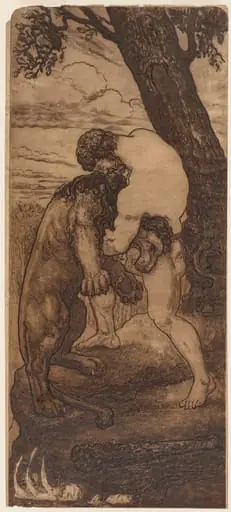
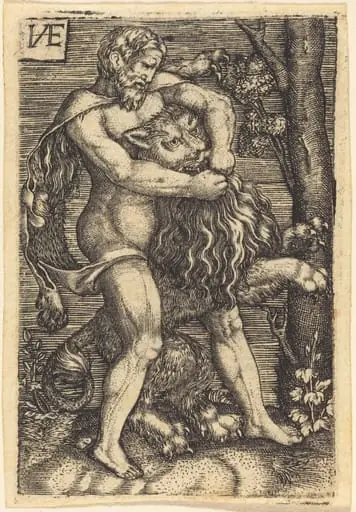
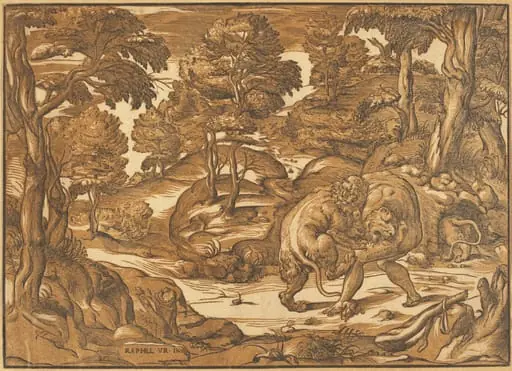
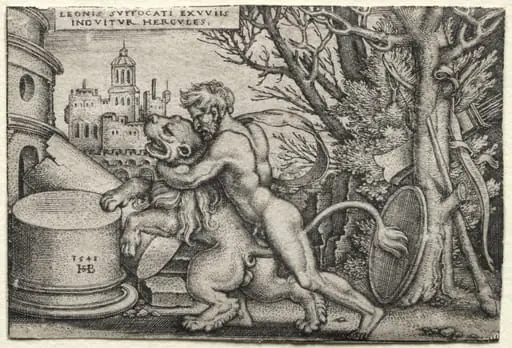
Hercules Strangling the Nemean Lion is a print by Andrea Andreani. It is held in the collection of the Victoria and Albert Museum. This chiaroscuro woodcut captures Hercules in the moment of subduing the Nemean Lion, a scene drawn from classical myth.
About this work
Overview
It was produced in the mid-1600s, adapting an earlier Renaissance design into the technical language of Northern European printmaking.
This chiaroscuro woodcut captures Hercules in the moment of subduing the Nemean Lion, a scene drawn from classical myth. Executed in black ink on paper, the print relies on layered tonal contrasts to model form and depth. Though colorless, the interplay of light and shadow gives the figures volume and dramatic tension. It was produced in the mid-1600s, adapting an earlier Renaissance design into the technical language of Northern European printmaking.
Subject & Meaning
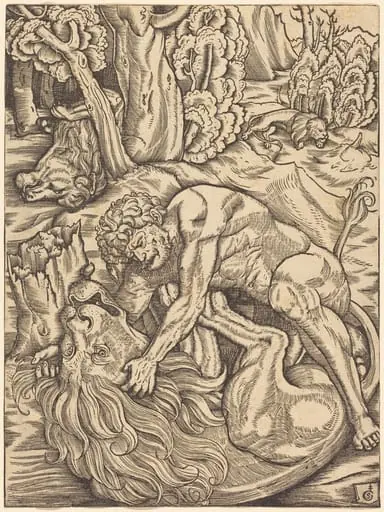
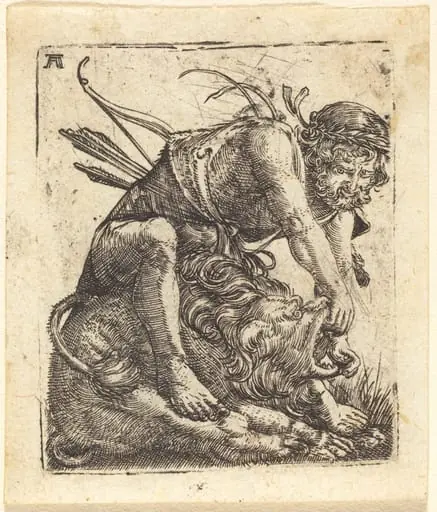
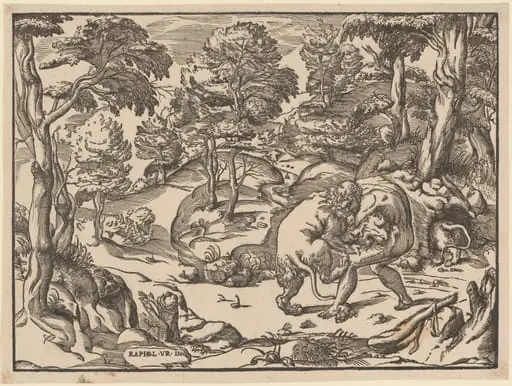
The print illustrates one of Hercules’ twelve labors: the slaying of an invulnerable lion whose hide could not be pierced by weapons. By depicting the hero grappling with the beast through direct physical force, the image emphasizes strength, endurance, and triumph over nature’s raw power. The lion’s open mouth and tangled fur suggest desperation, while Hercules’ strained posture conveys the immense effort required to overcome it.
Technique & Style
The image was made using a chiaroscuro woodcut technique, involving multiple carved blocks to produce gradations of tone. Deep blacks define contours and shadows, while areas left unprinted or lightly inked suggest highlights. The absence of color focuses attention on form and texture, particularly the contrast between the lion’s coarse fur and the hero’s taut musculature. The carving is bold, with strong, incised lines that enhance the sense of physical struggle.
History & Provenance
The composition originates from a drawing by Raphael, later adapted into prints by Northern European artisans. This particular version was likely produced in the Netherlands or Germany during the mid-seventeenth century, a period when Italian Renaissance motifs were widely circulated through prints. Its survival in collections such as the Victoria and Albert Museum indicates its continued relevance as an example of transregional artistic exchange.
Context
During the 17th century, mythological subjects remained popular in print culture, serving both educational and decorative purposes. Chiaroscuro woodcuts, though technically demanding, allowed artists to emulate the tonal richness of paintings in a reproducible format. This print reflects a broader trend of reinterpreting Italian High Renaissance compositions through Northern European printmaking traditions, bridging artistic centers across Europe.
Legacy
Though not widely attributed to a single known artist, the print exemplifies how Renaissance iconography was sustained and transformed through printmaking. Its emphasis on anatomical precision and dramatic tension influenced later depictions of mythological subjects in graphic arts. Surviving examples in major collections attest to its role in disseminating classical themes to broader audiences beyond elite painting patrons.
Artist & collection


![The Triumph of Julius Caesar [no.9 plus 2 columns], by Andrea Andreani](https://artifactworldgallery.com/img/andrea-andreani--the-triumph-of-julius-caesar-no-9-plus-2-columns--26f4d2249baf2916-w320.webp)
![The Triumph of Julius Caesar [no.3 and 4 plus 2 columns], by Andrea Andreani](https://artifactworldgallery.com/img/andrea-andreani--the-triumph-of-julius-caesar-no-3-and-4-plus-2-columns--58c944449efc96df-w320.webp)
![The Triumph of Julius Caesar [no.1 and 2 plus 2 columns], by Andrea Andreani](https://artifactworldgallery.com/img/andrea-andreani--the-triumph-of-julius-caesar-no-1-and-2-plus-2-columns--72fc49376c9f9633-w320.webp)
![The Triumph of Julius Caesar [no.7 and 8 plus 2 columns], by Andrea Andreani](https://artifactworldgallery.com/img/andrea-andreani--the-triumph-of-julius-caesar-no-7-and-8-plus-2-columns--75ccf1616a5609e2-w320.webp)