Artwork
At Minehead
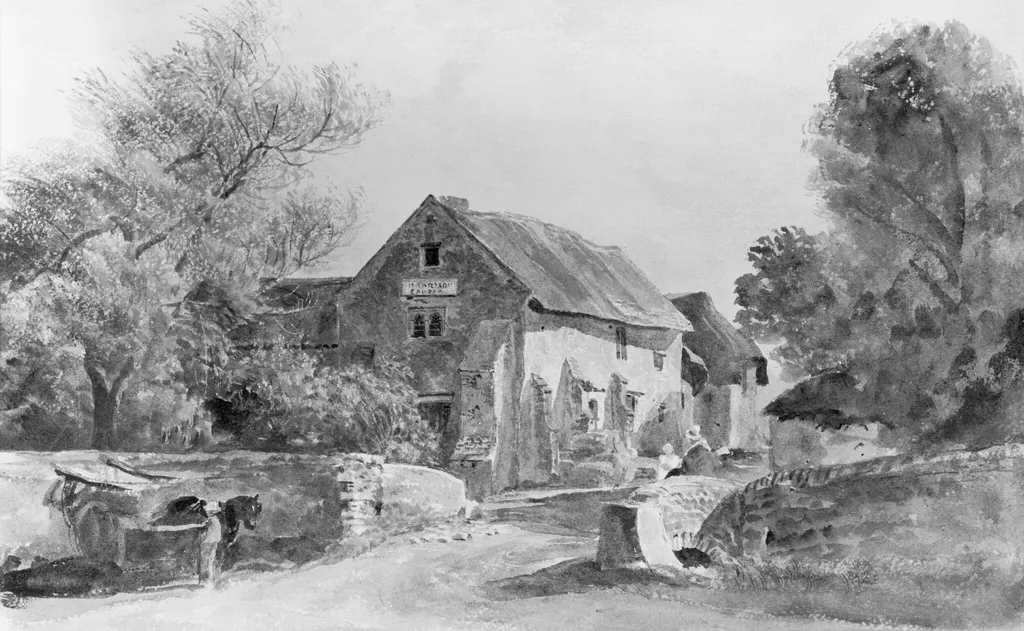
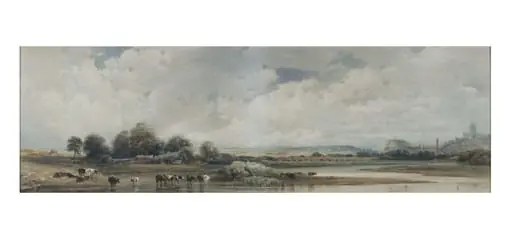
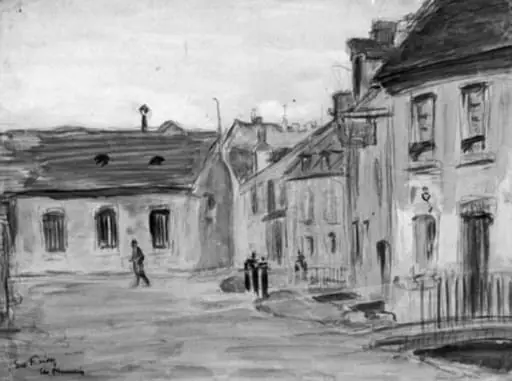
At Minehead is a watercolor work on paper by the British Romanticist artist Peter De Wint. It dates from 1841 and is held in the collection of the Victoria and Albert Museum.
About this work
Overview
The composition avoids dramatic action, instead emphasizing quiet observation and the subtle interplay of light and terrain.
Painted in 1841, *At Minehead* is a watercolour by Peter De Wint that captures a rural lane in Somerset. The scene centers on a stone bridge crossing a narrow stream, flanked by modest thatched cottages and dense foliage. Delicate washes convey a hazy, atmospheric quality, typical of De Wint’s approach to landscape. The composition avoids dramatic action, instead emphasizing quiet observation and the subtle interplay of light and terrain.
Subject & Meaning
The painting presents an unassuming village moment: a seated figure on a bench, a cow grazing near the water, and a single sign above a doorway. These elements suggest daily life in a remote hamlet, rendered without idealization. The absence of human drama or grandeur reflects a quiet reverence for ordinary rural existence, aligning with 19th-century English sensibilities that valued stillness and place over spectacle.
Technique & Style
De Wint employed loose, transparent watercolour washes to suggest form through tone rather than line. The misty atmosphere is achieved by wet-on-wet blending, allowing pigments to bleed softly into one another. Details like the stone bridge and thatched roof are hinted at with minimal strokes, relying on the paper’s texture to imply materiality. This method prioritized mood over precision, characteristic of British watercolour practice in the period.
History & Provenance
Created in 1841, the work belongs to De Wint’s later period, when he focused on English countryside scenes after years of continental travel. It was likely painted on-site during one of his sketching trips through Somerset. The piece remained in private hands for much of the 19th century and entered a public collection in the early 20th, where it is now preserved as an example of regional topographical watercolour.
Context
In the mid-19th century, British artists increasingly turned to local landscapes as subjects worthy of serious attention. De Wint’s work reflects this shift, influenced by Romantic ideals that found emotional resonance in humble natural settings. Unlike grand historical or exotic scenes, *At Minehead* embodies a growing cultural interest in the authenticity of everyday rural life, a trend supported by the rise of amateur watercolour societies.
Legacy
Though not widely exhibited during his lifetime, De Wint’s watercolours like *At Minehead* contributed to the legitimization of the medium in British art. His restrained technique and focus on quiet observation influenced later generations of landscape painters. The work remains a quiet testament to the aesthetic value placed on unadorned English scenery in the decades before industrialization transformed the countryside.
Artist & collection


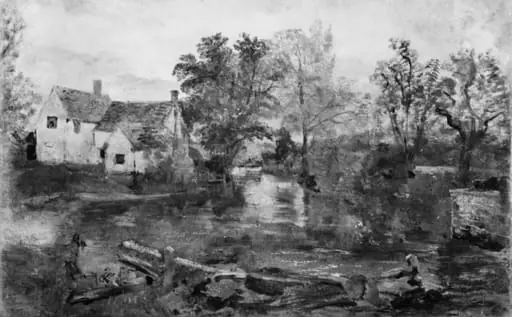 The Mill Stream
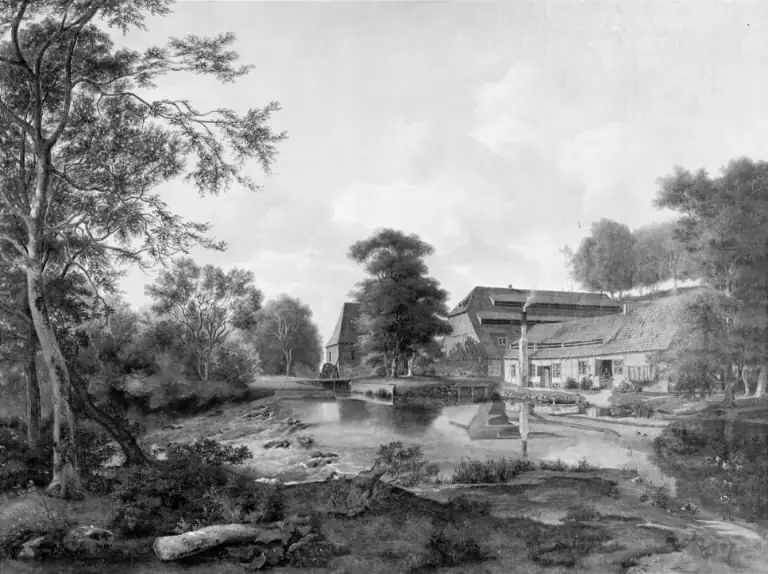 Rassdorfs papirværk mellem Preetz og Plön i Holsten
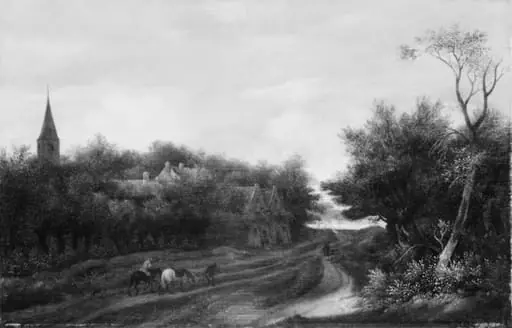 Road near Village
 Views of Villages in Brabant and Campine: A Moated Village
 An Avenue. Frederiksværk
 The Mill Stream
 Landscape with House by a Pond
 Worth: A Lane
 View of the Country House Oversteen
 Higham Abbey near Rochester
 Hut along a Roadside
 Garverierne i Falaise, Normandiet