Artwork
Potter Gate, Lincoln
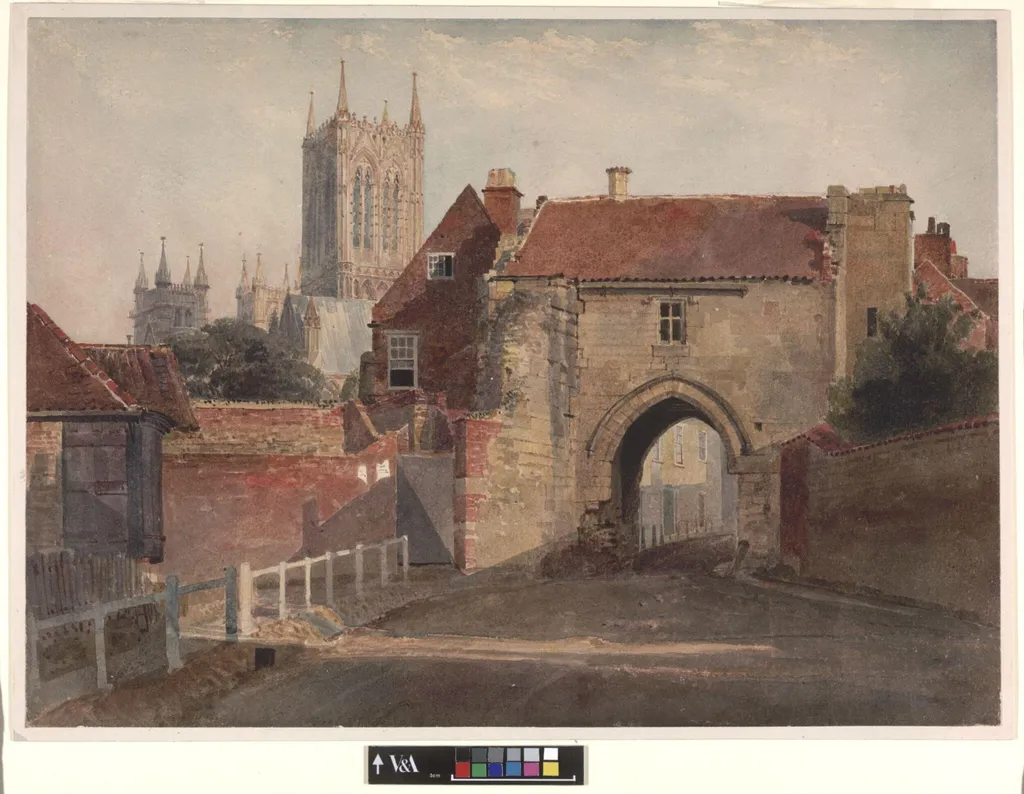
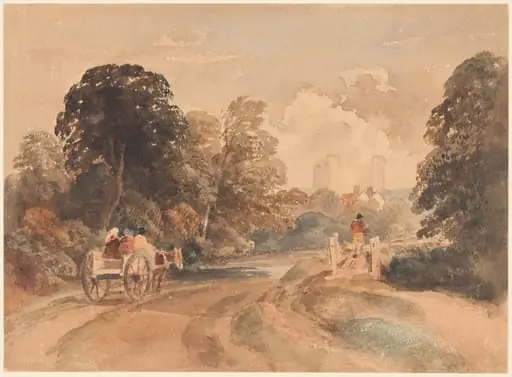
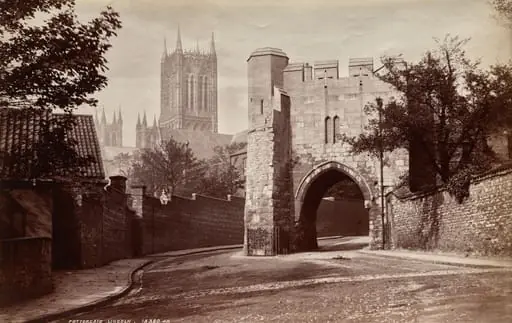
Potter Gate, Lincoln is a watercolor work on paper by the Romanticist artist Peter De Wint. It dates from 1800 and is held in the collection of the Victoria and Albert Museum.
About this work
Overview
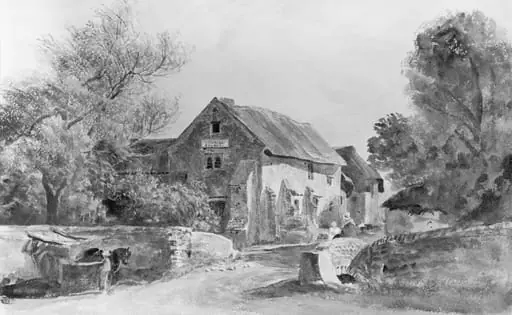
Potter Gate, Lincoln is a watercolour painting depicting a quiet urban lane in the historic English city of Lincoln. Created by Peter De Wint, the work captures a moment at twilight, with the city’s cathedral rising subtly in the background. The scene is rendered with quiet precision, emphasizing stillness and the soft transition from day to evening.
Subject & Meaning
The painting focuses on a modest gate and a narrow street, framed by domestic architecture, with Lincoln Cathedral visible in the distance. The absence of figures enhances the sense of solitude. De Wint’s repeated visits to Lincoln, where his wife and brother-in-law were raised, suggest a personal attachment, reflected in the tender, unembellished portrayal of the town’s everyday landscape.
Technique & Style
De Wint employs watercolour with restrained washes and careful tonal gradations to suggest the warmth of late afternoon light. Long, sharp shadows define the architecture, creating depth without heavy outlines. The technique avoids dramatic contrast, instead favoring a subdued chiaroscuro that enhances the painting’s calm, observational quality.
History & Provenance
De Wint visited Lincoln frequently during the 1820s and 1830s, drawn by familial ties to the city. Potter Gate, Lincoln was likely painted during one of these stays, possibly between 1825 and 1835. The work remained within the artist’s circle before entering public collections, preserving its connection to his personal experience of the place.
Context
In early 19th-century Britain, topographical watercolours gained popularity among artists seeking to document local landscapes with accuracy and sensitivity. De Wint’s work aligns with this trend, yet distinguishes itself through its intimate scale and emotional restraint, contrasting with more grandiose depictions of architecture common at the time.
Legacy
Potter Gate, Lincoln exemplifies De Wint’s contribution to British watercolour tradition, emphasizing quiet observation over spectacle. The painting continues to be studied for its nuanced handling of light and its quiet celebration of ordinary urban spaces, influencing later artists interested in the poetic potential of everyday scenes.
Artist & collection