Artwork
Lincoln Cathedral
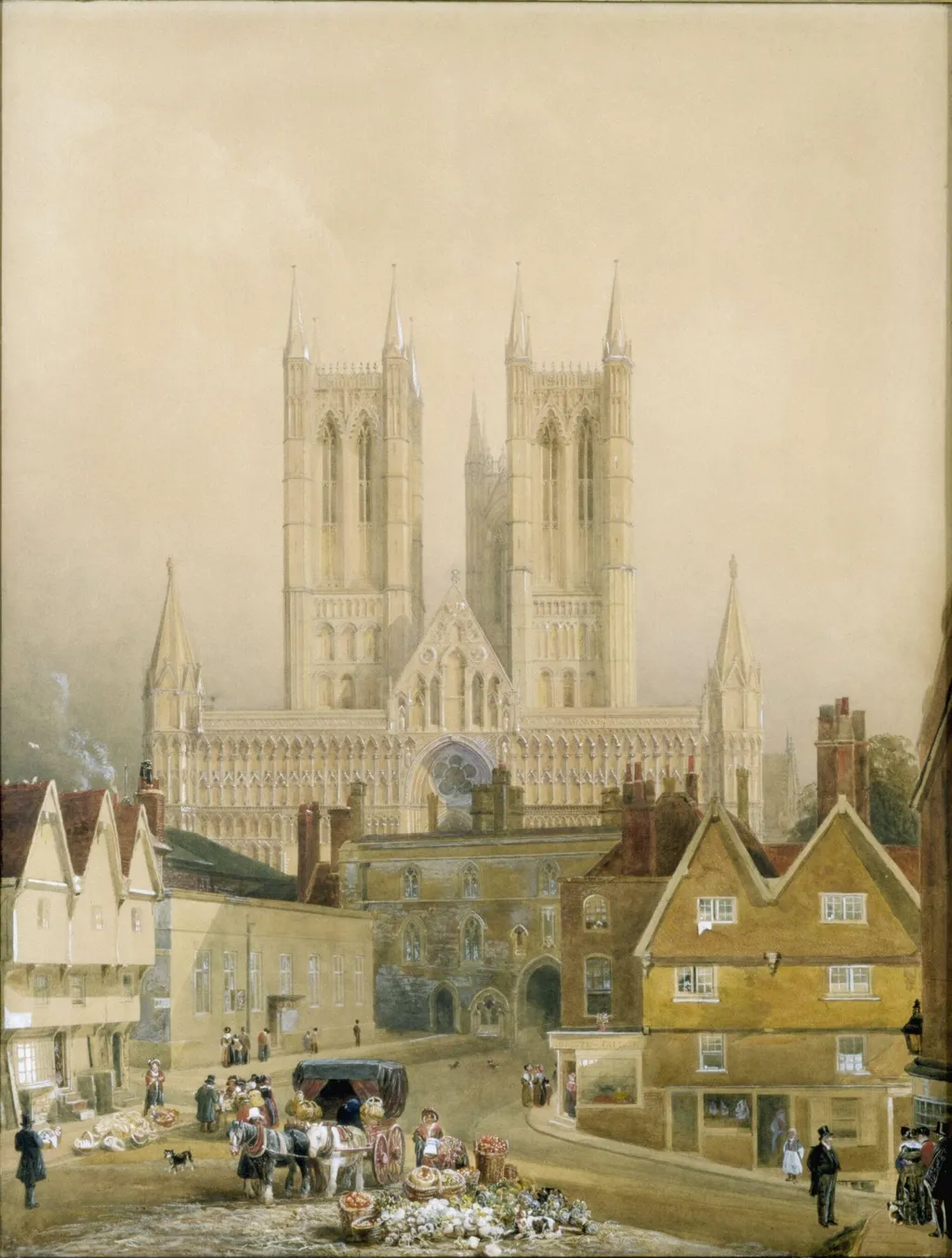
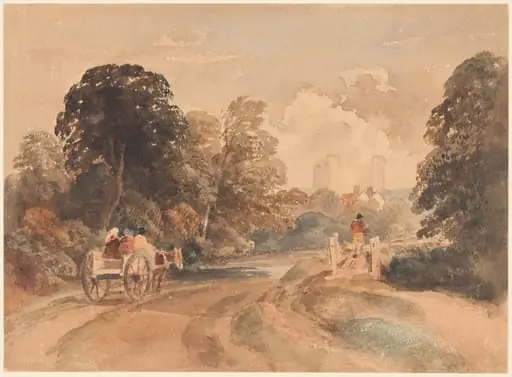
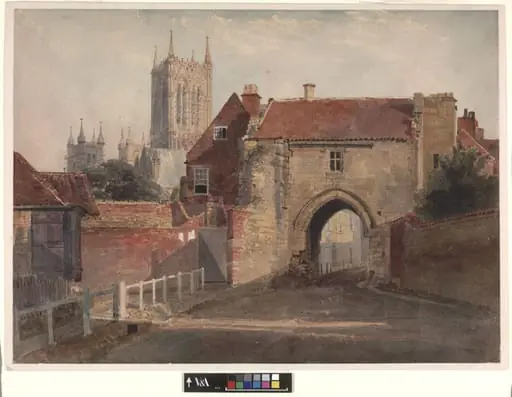
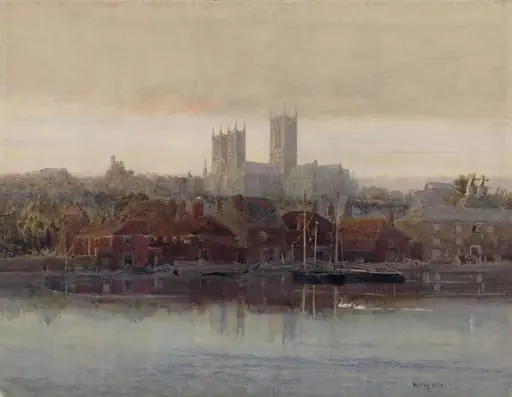
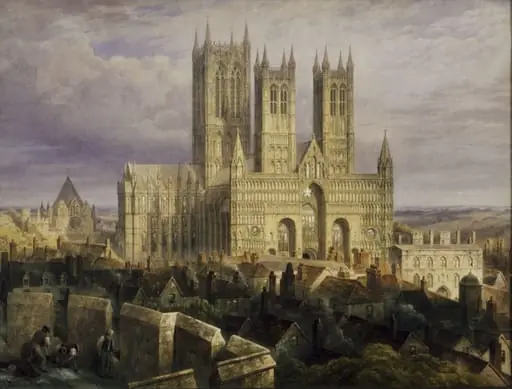
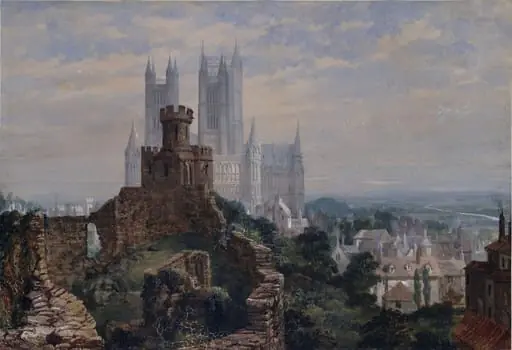
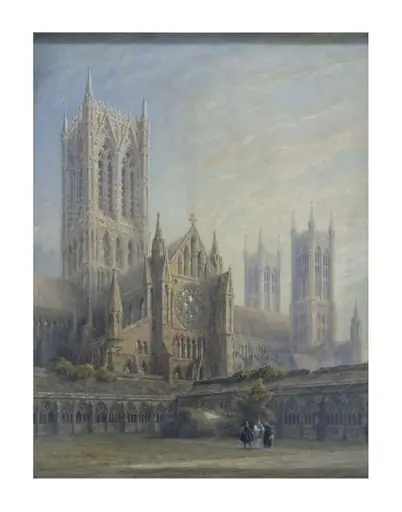
Lincoln Cathedral is a watercolor work on paper by the British Romanticist artist Peter De Wint. It dates from 1841 and is held in the collection of the Victoria and Albert Museum.
About this work
Overview
De Wint’s restrained palette and delicate washes convey both architectural precision and a quiet, luminous mood, characteristic of his topographical approach.
Painted in 1841, Peter De Wint’s watercolour captures Lincoln Cathedral as seen from a modest vantage point in the surrounding town. The structure rises behind a layer of domestic architecture and daily activity, its verticality softened by atmospheric haze. De Wint’s restrained palette and delicate washes convey both architectural precision and a quiet, luminous mood, characteristic of his topographical approach.
Subject & Meaning
The cathedral, a symbol of enduring religious and civic identity, is framed by ordinary urban life—pedestrians, a carriage, a market stall—grounding its grandeur in the everyday. Rather than idealizing the scene, De Wint presents it as a lived environment, where history and routine coexist. The human figures offer scale without drama, reinforcing the cathedral’s quiet dominance rather than its spectacle.
Technique & Style
De Wint employed thin, layered watercolour washes to model form and suggest depth, allowing the paper’s white to suggest light. The cathedral’s stonework is rendered with careful detail, while the foreground buildings and figures are looser, creating a visual rhythm between clarity and ambiguity. The hazy distance enhances spatial recession, a hallmark of his atmospheric technique.
History & Provenance
The work was completed near the end of De Wint’s career and later sold for the highest price achieved by his works at that time. Its reception reflected growing appreciation for topographical art as a serious genre. The painting remained in private hands for decades before entering institutional collections, where its historical and technical value was further recognized.
Context
In early Victorian England, watercolour was increasingly valued for its ability to document architecture and landscape with fidelity. De Wint’s work aligned with a broader cultural interest in preserving regional heritage amid industrial change. His focus on provincial cathedrals resonated with Romantic-era reverence for historical continuity, even as his style remained grounded in observation rather than emotion.
Legacy
De Wint’s Lincoln Cathedral exemplifies the quiet authority of topographical watercolour in the 19th century. His influence extended to later artists who sought to balance architectural accuracy with atmospheric tone. The painting endures as a record of a specific moment in urban life, valued for its restraint, clarity, and unembellished depiction of place.
Artist & collection